Joyful Path of Good Fortune

 83
83

Joyful Path of Good Fortune
Kelsang Gyatso's "Joyful Path of Good Fortune" offers a clear, step-by-step guide to understanding and applying Buddhist principles for a happier life. Its strength lies in its systematic approach, breaking down complex doctrines into digestible sections that build upon one another. The author's exposition on the relationship between our actions and subsequent experiences, particularly concerning the cultivation of positive karma, is particularly lucid. However, the text's directness, while beneficial for clarity, might feel somewhat didactic to readers accustomed to more metaphorical or poetic spiritual writing. A passage detailing the four noble truths as the bedrock for understanding suffering and its cessation provides a solid, if unadorned, foundation. Ultimately, it serves as a practical manual for those seeking tangible results from their spiritual efforts.
📝 Description
83
### What It Is
"Joyful Path of Good Fortune" is a foundational text presenting Buddhist philosophy and practice for cultivating happiness and positive circumstances. It systematically outlines the path to achieving good fortune, not as a matter of luck, but as the direct result of cultivating virtuous actions and a disciplined mind. The work distills complex spiritual principles into actionable steps, making them accessible to a broad audience seeking to improve their lives through inner transformation.
### Who It's For
This book is intended for individuals who are seeking a practical framework for spiritual development and a more meaningful, joyful existence. It appeals to those interested in Buddhist teachings, particularly Mahayana Buddhism, who wish to understand how ethical conduct and mental cultivation directly lead to favorable outcomes in life. It serves both newcomers to Buddhist philosophy and seasoned practitioners looking to deepen their understanding of the causes of happiness and well-being.
### Historical Context
First published in 1995, "Joyful Path of Good Fortune" emerged during a period of increasing global interest in Eastern spiritual traditions, particularly Buddhism. This era saw figures like the Dalai Lama gaining wider international recognition, and many Westerners were exploring Buddhist meditation and philosophy as alternatives to prevailing Western paradigms. The book's accessible presentation of complex ideas aligns with the broader trend of making spiritual teachings available beyond traditional monastic settings, reflecting a shift towards personalized spiritual inquiry.
### Key Concepts
The work centers on the Buddhist understanding of karma – the law of cause and effect – explaining how our intentions and actions shape our present and future experiences. It emphasizes the importance of cultivating positive mental states, such as compassion and wisdom, and engaging in ethical conduct (sila) as the primary means to attract good fortune. The text also explores the nature of suffering (dukkha) and provides methods for overcoming its causes through diligent practice and spiritual insight, illustrating that true good fortune arises from inner peace and liberation.
💡 Why Read This Book?
• Gain a practical method for transforming everyday actions into causes for genuine happiness, as explained through the Buddhist concept of karma, first published in 1995. • Understand how to cultivate inner peace and resilience, directly addressing the causes of suffering as outlined in the Four Noble Truths. • Learn actionable techniques for developing compassion and wisdom, essential qualities for attracting positive circumstances and a more fulfilling life.
⭐ Reader Reviews
Honest opinions from readers who have explored this book.
❓ Frequently Asked Questions
When was 'Joyful Path of Good Fortune' first published?
The book 'Joyful Path of Good Fortune' by Kelsang Gyatso was first published in 1995, making it a relatively recent yet influential work in contemporary Buddhist literature.
What is the central philosophy behind 'Joyful Path of Good Fortune'?
The central philosophy is rooted in Mahayana Buddhism, focusing on the law of karma and the cultivation of virtuous actions and positive mental states to create personal happiness and good fortune.
Does the book require prior knowledge of Buddhism?
While prior knowledge can be helpful, the book is structured to be accessible to beginners. It systematically explains core Buddhist concepts like the Four Noble Truths and karma.
How does this book differ from other self-help or spiritual guides?
It distinguishes itself by grounding its advice firmly in Buddhist philosophy and the specific practices of Mahayana Buddhism, rather than general platitudes, offering a coherent spiritual framework.
What kind of 'good fortune' does the book discuss?
The book discusses 'good fortune' not merely as material wealth or luck, but as a state of inner peace, happiness, and favorable conditions arising from virtuous conduct and mental purification.
Who is Kelsang Gyatso?
Kelsang Gyatso is a Geshe (Doctor of Divinity) and a celebrated Buddhist scholar and meditation master, founder of the New Kadampa Tradition (NKT).
🔮 Key Themes & Symbolism
The Law of Karma
This theme explores the fundamental Buddhist principle that every action, driven by intention, creates a corresponding effect. The book elucidates how understanding karma is not about fatalism but about empowerment, enabling individuals to consciously shape their future by cultivating positive actions and avoiding negative ones. It details how seemingly small choices can lead to significant life outcomes, presenting a practical framework for ethical living that directly contributes to attracting auspicious circumstances and inner well-being.
Cultivating Positive Mental States
Central to the book is the idea that true happiness and good fortune originate within the mind. It provides teachings on developing essential positive mental states such as compassion, loving-kindness, and wisdom. By diligently training the mind to abandon states like anger, greed, and delusion, practitioners can purify their mental continuum and create the internal conditions necessary for experiencing joy and prosperity. This internal transformation is presented as the most reliable path to lasting contentment.
The Path to Liberation
Beyond mere worldly happiness, the book guides readers toward the ultimate spiritual goal of liberation from suffering. It explains how the practices of virtue and wisdom lead not only to favorable rebirths and pleasant experiences in this life but also to the profound realization of emptiness. This theme connects the everyday pursuit of good fortune with the profound Mahayana aspiration for enlightenment, showing how they are intrinsically linked aspects of the same spiritual journey.
Ethical Conduct as Foundation
The text emphasizes the indispensable role of ethical conduct (sila) as the bedrock of spiritual practice and the generator of good fortune. It details specific ethical guidelines, such as refraining from harmful actions and cultivating beneficial ones, explaining their immediate impact on one's mental state and their long-term consequences. This focus highlights that true fortune is not accidental but a direct result of living a morally upright life, aligned with spiritual principles.
💬 Memorable Quotes
“Good fortune is not something we find, but something we create through our virtuous actions.”
— This statement encapsulates the book's core message: agency in creating happiness. It reframes fortune not as an external gift but as an internal product of intentional, positive behavior, empowering the reader.
“The mind is the root of all our experiences, both suffering and joy.”
— This highlights the Buddhist emphasis on consciousness as the primary determinant of reality. It suggests that by transforming our minds, we can directly alter the quality of our lives and experiences.
“To wish for good fortune while engaging in negative actions is like planting seeds of rice and hoping to harvest wheat.”
— This analogy vividly illustrates the law of karma. It points out the futility of expecting positive outcomes from contradictory negative causes, underscoring the need for alignment between desires and actions.
“Compassion is the wish for all beings to be free from suffering.”
— This defines compassion not just as empathy but as an active aspiration for universal well-being. It positions compassion as a key virtue for spiritual growth and the cultivation of positive karma.
“Wisdom is the direct realization of the true nature of reality.”
— This defines wisdom as more than intellectual knowledge; it is experiential insight into emptiness or the ultimate nature of things, a crucial element for achieving liberation.
🌙 Esoteric Significance
Tradition
This work is firmly situated within the Mahayana Buddhist tradition, specifically the Gelug school, often associated with the lineage of Je Tsongkhapa. It presents a systematic path to enlightenment, emphasizing the union of wisdom and compassion. While Mahayana itself is a broad spiritual path, its focus on the Bodhisattva ideal and the attainment of Buddhahood for the benefit of all sentient beings lends it an esoteric quality when contrasted with simpler devotional practices or purely philosophical systems.
Symbolism
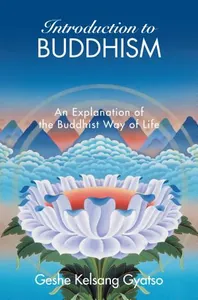
The book frequently employs the symbolism of the lotus flower, representing purity and spiritual unfolding amidst the mud of samsara (the cycle of suffering). It also discusses the concept of the 'jewel' (cintamani), symbolizing the preciousness of the spiritual path and the potential for enlightenment within all beings. The 'good fortune' itself can be seen as symbolic of auspicious conditions and inner peace, the natural outcome of following the Dharma, rather than mere material gain.
Modern Relevance
Contemporary practitioners of Mahayana Buddhism, particularly those within the NKT and similar organizations, continue to draw heavily on Kelsang Gyatso's works for their structured approach to meditation and philosophy. The book's emphasis on practical application of Buddhist principles for improving daily life and cultivating positive states of mind also resonates with broader trends in secular mindfulness and positive psychology, offering a robust spiritual alternative for those seeking deeper meaning beyond superficial self-help.
👥 Who Should Read This Book
• Beginners to Buddhist philosophy seeking a clear, systematic introduction to the causes of happiness and suffering. • Individuals interested in Mahayana Buddhist practices who want to understand how ethical conduct and meditation lead to tangible positive outcomes. • Practitioners looking to deepen their understanding of karma and cultivate compassion as a means of personal transformation and spiritual development.
📜 Historical Context
Published in 1995, "Joyful Path of Good Fortune" emerged as Western engagement with Buddhist philosophy was accelerating. The late 20th century saw a significant increase in the translation and dissemination of Mahayana texts, partly fueled by the diaspora of Tibetan lamas and scholars following the 1959 Tibetan Uprising. Kelsang Gyatso, a prominent teacher within this movement, established the New Kadampa Tradition (NKT) in the UK in 1991, aiming to make these teachings widely accessible. This period also witnessed a burgeoning interest in mindfulness and meditation practices, often separated from their traditional Buddhist philosophical underpinnings. While figures like the Dalai Lama were becoming global icons for peace and compassion, the NKT offered a more structured, doctrinal approach. The book's success reflects a growing demand for practical spiritual guidance rooted in established Buddhist lineages, differentiating itself from more secularized mindfulness movements and offering a comprehensive path for practitioners.
📔 Journal Prompts
The concept of karma as a creator of good fortune.
Reflecting on the Four Noble Truths in relation to personal challenges.
The practice of compassion as a means to overcome self-centeredness.
Identifying actions that contribute to mental clarity and those that obscure it.
The potential for inner peace as the ultimate form of good fortune.
🗂️ Glossary
Karma
The Buddhist principle of cause and effect, where intentional actions (physical, verbal, or mental) lead to future consequences, shaping one's experiences and circumstances.
Samsara
The continuous cycle of birth, death, and rebirth, characterized by suffering (dukkha), from which Buddhists seek liberation.
Four Noble Truths
The foundational teachings of Buddhism: 1. The truth of suffering (dukkha), 2. The truth of the cause of suffering (craving/attachment), 3. The truth of cessation of suffering (nirvana), 4. The truth of the path to the cessation of suffering (the Noble Eightfold Path).
Sila
Ethical conduct or morality, considered a fundamental aspect of Buddhist practice that purifies actions and speech, leading to favorable karma.
Wisdom (Prajna)
Insight into the true nature of reality, particularly the understanding of emptiness (shunyata), which eradicates ignorance and leads to liberation.
Compassion (Karuna)
The sincere wish for all sentient beings to be free from suffering, coupled with the motivation to help them achieve this freedom.
Nirvana
The ultimate state of liberation, peace, and the cessation of suffering, achieved by extinguishing the fires of greed, hatred, and delusion.