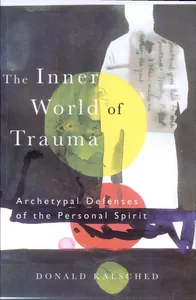
Inner World of Trauma

 82
82

Inner World of Trauma
Donald Kalsched's "Inner World of Trauma" offers a compelling, if sometimes dense, examination of how profound psychic wounds are not merely injuries but can become organizing principles of the soul. Kalsched's strength lies in his ability to bridge the clinical realities of trauma with the symbolic language of Jungian psychology. His discussion of the 'soul' as a distinct psychic reality, capable of being wounded and subsequently reorganized, provides a rich alternative to purely symptom-focused models. While the book excels at presenting complex theoretical frameworks, its highly specialized Jungian lexicon might pose a barrier for readers less familiar with concepts like archetypes and the collective unconscious. A particular passage that stands out is his exploration of how the psyche's response to trauma can involve an activation of numinous, almost divine, imagery, suggesting a spiritual dimension to even the most harrowing experiences. The book provides a deep, archetypally informed perspective on psychological suffering.
📝 Description
82
### What It Is
Donald Kalsched's "Inner World of Trauma" offers a profound exploration of the psyche's response to overwhelming experiences. First published in 2014, this work examines the deep psychological structures that emerge and solidify in the wake of traumatic events. It moves beyond surface-level symptomology to investigate the symbolic language and archetypal patterns that trauma can activate within the individual. The book is written for those who seek a more integrated understanding of psychological suffering and its potential for inner transformation.
### Who It's For
This book is for psychotherapists, depth psychologists, and students of Jungian psychology who are looking to deepen their theoretical and clinical understanding of trauma. It will also appeal to individuals interested in the intersection of mythology, spirituality, and the human psyche, particularly those who are drawn to exploring the symbolic dimensions of personal suffering. Readers should possess a foundational interest in psychological theory and the nature of the unconscious.
### Historical Context
Kalsched's work emerged in a period where trauma studies, particularly in the wake of the DSM's evolving diagnostic criteria and ongoing research into PTSD, were a significant focus in clinical psychology. His approach, however, draws heavily on the archetypal psychology pioneered by Carl Jung and later expanded by figures like James Hillman. This places "Inner World of Trauma" within a broader lineage of depth psychology that seeks meaning and symbolic patterns in psychological distress, differentiating it from purely biomedical or behavioral approaches prevalent in the field.
### Key Concepts
The core of Kalsched's inquiry revolves around the concept of the 'soul' as a realm of psychic reality that is profoundly impacted by trauma. He discusses how the psyche can organize itself around traumatic experiences, creating internal structures that, while protective, can also lead to profound alienation and suffering. The work also investigates the emergence of 'numinous' or divinely-touched experiences that can arise from the depths of trauma, suggesting a potential for spiritual emergence through the ordeal. The book explores the interplay between the personal ego and these deeper, archetypal forces when confronted with overwhelming life events.
💡 Why Read This Book?
• You will learn how trauma can act as an organizing principle for the psyche, moving beyond simple symptom identification, as detailed in Kalsched's concept of the 'soul's' reorganization. • Gain insight into the symbolic language that trauma can activate, connecting personal suffering to universal archetypal patterns explored through Kalsched's Jungian framework. • Understand the potential for spiritual emergence from deep psychic wounds, as Kalsched discusses the 'numinous' experiences that can arise from the depths of trauma.
⭐ Reader Reviews
Honest opinions from readers who have explored this book.
❓ Frequently Asked Questions
What is the primary focus of Donald Kalsched's 'Inner World of Trauma'?
The book focuses on how severe psychic trauma can lead to the formation of new internal structures within the soul, profoundly shaping an individual's psychic reality and potentially leading to spiritual emergence.
What theoretical framework does Kalsched use to discuss trauma?
Kalsched employs an archetypal psychology approach, drawing heavily from Carl Jung's theories on the unconscious, archetypes, and the collective unconscious to understand trauma's impact.
When was 'Inner World of Trauma' first published?
The book was first published in 2014, positioning it within contemporary discussions of trauma but with a distinct depth psychological perspective.
Who would benefit most from reading this book?
Psychotherapists, depth psychologists, Jungian scholars, and individuals interested in the symbolic and spiritual dimensions of psychological suffering will find this book particularly beneficial.
Does Kalsched suggest trauma can lead to positive outcomes?
Yes, Kalsched explores how the intense psychic reorganization prompted by trauma can sometimes lead to 'numinous' or spiritually significant experiences, suggesting a potential for profound inner growth.
What does Kalsched mean by the 'soul' in relation to trauma?
For Kalsched, the 'soul' represents the core of psychic reality, which can be deeply wounded by trauma and subsequently reorganized around these experiences, creating a new internal landscape.
🔮 Key Themes & Symbolism
The Soul's Reorganization
Kalsched posits that severe trauma doesn't just wound the psyche but fundamentally reorganizes it. This involves the creation of new internal structures and patterns that become the bedrock of the individual's psychic reality. This reorganization is not merely a defense mechanism but a profound alteration of the soul's landscape, influencing perception, behavior, and one's sense of self. The work explores how these new structures, while often leading to suffering, also represent a new psychic order forged in the crucible of overwhelming experience.
Archetypal Activation
A central theme is how traumatic events can activate latent archetypal patterns within the collective unconscious. Kalsched suggests that the overwhelming nature of trauma can strip away the ego's usual defenses, allowing deeper, more primal psychic energies to surface. These archetypes, often appearing as powerful symbols or figures, shape the individual's experience of the trauma and their subsequent internal world. Understanding these archetypal dynamics offers a framework for interpreting the often-incomprehensible nature of traumatic suffering.
Numinous Experience and Spiritual Emergence
Paradoxically, Kalsched investigates how the depths of trauma can sometimes lead to 'numinous' experiences – moments of profound awe, dread, or divine encounter. He suggests that the intense psychic pressure and reorganization can open a portal to deeper spiritual realities. These experiences, though born from suffering, can offer a path toward a transformed sense of self and connection to something larger than the ego, indicating a potential for spiritual growth through profound personal ordeal.
The Wounded Psyche
The book extensively details the concept of the wounded psyche as a central feature of the human condition, exacerbated by trauma. Kalsched moves beyond a purely pathological view, framing the wounded psyche as a site of potential transformation. He examines how the wounds themselves become integrated into the personality, shaping its contours and creating a unique inner world. This perspective encourages a compassionate engagement with psychic suffering, seeing it not as an endpoint but as a complex phase in psychic development.
💬 Memorable Quotes
“The soul can be wounded, and then it can be reorganized around the wound.”
— This statement encapsulates Kalsched's core thesis: trauma is not just an injury but a force that reshapes the very structure of our inner being, creating new psychic landscapes.
“Trauma can activate archetypal energies that are both terrifying and numinous.”
— This highlights the dual nature of the psyche's response to overwhelming events, suggesting that profound suffering can unlock encounters with the sacred or divine, albeit often through a lens of terror.
“The ego's defenses can be overwhelmed, allowing deeper psychic realities to emerge.”
— Kalsched points to the vulnerability of our ordinary consciousness when faced with extreme experience, opening a pathway for the unconscious, archetypal, and symbolic dimensions of the psyche to become manifest.
“Suffering can lead to a new psychic order, a reorganization of the inner world.”
— This paraphrased concept suggests that the difficult process of dealing with trauma can result in a fundamental restructuring of one's internal life, creating a different, though often painful, equilibrium.
“The inner world of trauma is a realm of symbolic experience.”
— This emphasizes that the psychological impact of trauma is not just emotional or cognitive but deeply symbolic, requiring interpretation through the language of myths, dreams, and archetypes.
🌙 Esoteric Significance
Tradition
Kalsched's work is deeply embedded within the tradition of Jungian archetypal psychology, which itself draws from Gnosticism, Hermeticism, and various mystical traditions in its exploration of the unconscious. It departs from purely clinical psychology by framing psychic wounds within a larger, symbolic, and potentially spiritual context. The emphasis on the 'soul' as a distinct psychic entity with its own dynamics aligns with older metaphysical conceptions of the human being, viewing trauma not just as a psychological event but as a spiritual ordeal that can lead to profound transformation.
Symbolism
Key symbols in Kalsched's work include the 'wound' itself, representing not just injury but a focal point for psychic reorganization, and 'archetypes,' which manifest as powerful figures or patterns from the collective unconscious that help structure the traumatized psyche. The concept of 'numinous' experiences also functions symbolically, pointing towards encounters with the divine or the sacred that can emerge from the depths of suffering, suggesting that even in darkness, a divine light may be perceived.
Modern Relevance
Contemporary thinkers and practitioners in depth psychology, somatic experiencing, and trauma-informed care often reference Kalsched's insights. His work remains relevant for those seeking to understand the symbolic and spiritual dimensions of trauma, particularly within therapeutic modalities that prioritize the integration of the whole person. Therapists exploring the 'spiritual emergency' concept or the impact of developmental trauma on the soul's formation find his framework invaluable.
👥 Who Should Read This Book
• Psychotherapists and counselors specializing in trauma work will gain a deeper theoretical framework for understanding the symbolic and archetypal dimensions of their clients' suffering. • Students and scholars of Jungian psychology and depth psychology will find a comprehensive exploration of how archetypal dynamics manifest in response to overwhelming life events. • Individuals interested in the intersection of spirituality, mythology, and the human psyche will appreciate Kalsched's perspective on how trauma can lead to profound inner transformation and numinous experiences.
📜 Historical Context
Donald Kalsched's "Inner World of Trauma" was published in 2014, a period marked by extensive research and clinical focus on post-traumatic stress disorder (PTSD). While trauma studies had become increasingly prominent, often within diagnostic frameworks like the DSM, Kalsched’s work stood apart by rooting its analysis in the depth psychology tradition. He drew heavily on the theories of Carl Jung and later figures like James Hillman, emphasizing the symbolic and archetypal dimensions of psychic suffering. This approach contrasted with more biomedical or purely psychodynamic perspectives that were prevalent. His work engaged with the ongoing discourse on trauma but offered a distinctly Jungian interpretation, focusing on the soul's reorganization and the emergence of numinous experiences, rather than solely on symptom reduction or neurobiological changes. The reception within academic circles highlighted its unique contribution to understanding the profound, often spiritual, implications of traumatic experience.
📔 Journal Prompts
Reflect on the 'soul's reorganization' concept as it relates to your own significant life challenges.
Consider the archetypal figures that might have emerged in your personal experience of profound suffering.
Explore the 'numinous' quality of experiences that arose from difficult times in your life.
Analyze how overwhelming experiences might have led to a new internal psychic order.
Examine the symbolic language that trauma may have imprinted upon your inner world.
🗂️ Glossary
Archetype
In Jungian psychology, an inherited, universal pattern or image that derives from the collective unconscious and is thought to influence behavior and experience. Examples include the Mother, the Hero, and the Shadow.
Collective Unconscious
A layer of the unconscious psyche containing the inherited memories and psychic predispositions of the human species, as proposed by Carl Jung.
Numinous
Describing an experience that evokes a sense of awe, dread, and profound mystery, often associated with the divine or sacred.
Psyche
The totality of the human mind, including consciousness, the personal unconscious, and the collective unconscious.
Soul
In Kalsched's context, the deep center of psychic reality, distinct from the ego, which can be wounded by trauma and subsequently reorganized.
Ego
The center of consciousness in the psyche, responsible for identity and continuity of personality; the part of the psyche that engages with the external world.
Symbolic Experience
An experience that carries meaning beyond its literal appearance, often pointing to deeper psychological or spiritual realities, common in dreams and trauma.