Il purgatorio
 71
71

Il purgatorio
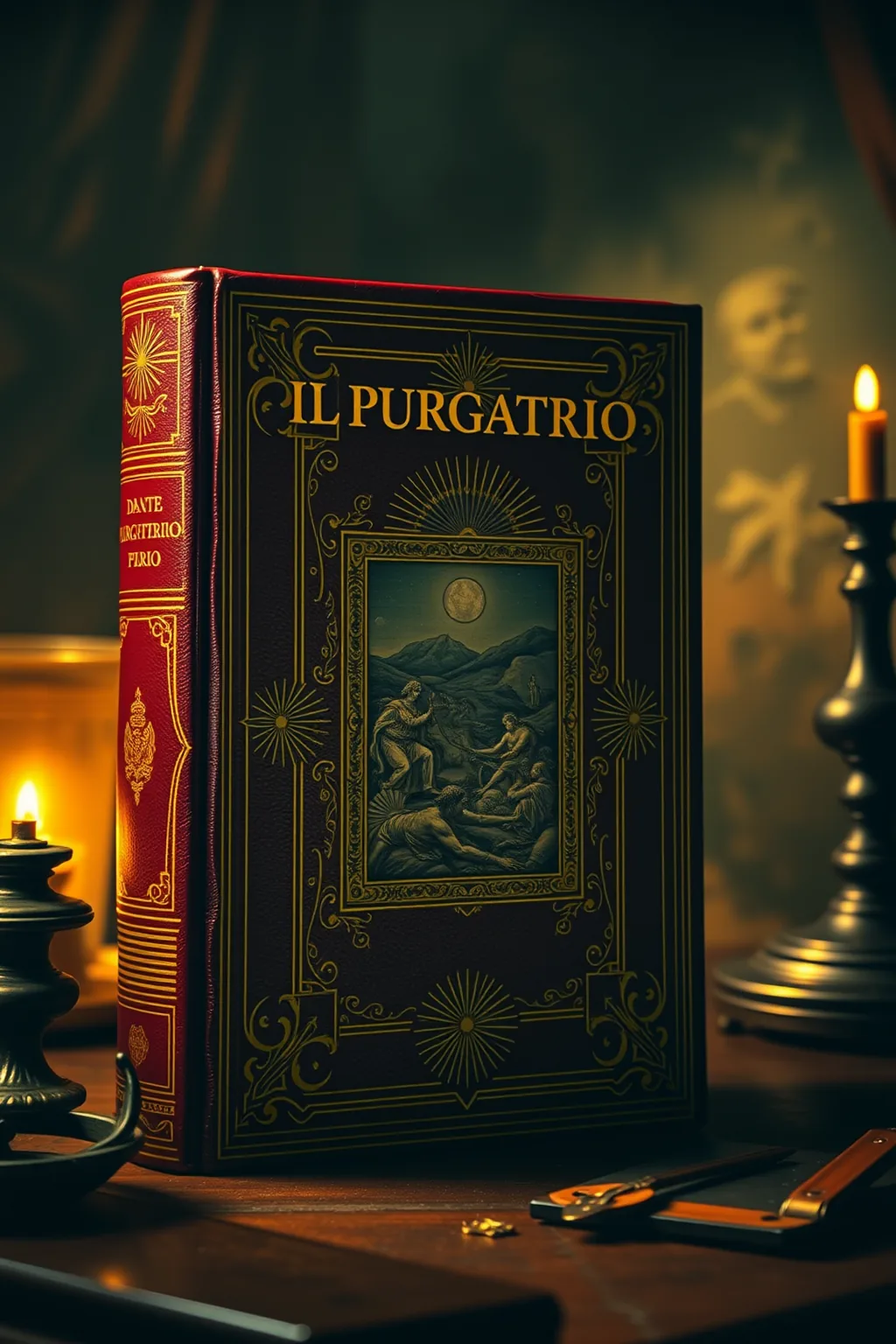
Dante's *Purgatorio* presents a fascinating counterpoint to the grim finality of the *Inferno*. The shift in tone is palpable; here, suffering is purposeful, a temporary measure towards ultimate joy. The ingenuity lies in the corresponding punishments, where a soul burdened by pride might be forced to carry heavy stones, a direct, almost physical manifestation of their vice. One limitation, for modern readers, can be the sheer density of theological and philosophical exposition, which occasionally slows the narrative momentum. The passage describing the earthly paradise at the summit, a stark contrast to the trials below, remains a potent image of restored innocence. Ultimately, *Il Purgatorio* offers a compelling vision of spiritual rehabilitation.
📝 Description
71
### What It Is ### Il Purgatorio: A Cosmic Ascent ### Dante Alighieri's second cantica of the *Divine Comedy* charts a spiritual ascent through the seven terraces of Mount Purgatory. This allegorical journey, beginning after the harrowing descent through Hell, depicts souls actively purging their sins to achieve divine grace. Unlike the static damnation of the *Inferno*, Purgatory is a realm of hope, progress, and communal effort. The text meticulously details the punishments, which are designed to mirror and counteract the sins themselves, offering a profound exploration of penance and redemption. It's a structured, hierarchical cosmos where divine justice is both severe and merciful.
### Who It's For ### For the Seeker of Spiritual Architecture This work is for readers grappling with questions of sin, atonement, and the nature of divine justice. It appeals to those interested in structured spiritual systems and the symbolic representation of moral progression. Scholars of medieval literature, theology, and philosophy will find a rich text for analysis. It is particularly suited for individuals seeking to understand the medieval Catholic worldview concerning the afterlife and the path to salvation. Those who appreciate intricate allegorical frameworks and detailed symbolic landscapes will find immense value here.
### Historical Context ### Mapping the Medieval Soul Published initially in 1921, though its composition dates to the early 14th century, *Il Purgatorio* emerged from a period deeply influenced by scholastic theology and the burgeoning vernacular literature. Dante Alighieri, writing in Florentine Italian, sought to create a vernacular epic that could rival classical Latin works. The poem engaged directly with Aristotelian philosophy, Thomistic theology, and contemporary political events in Italy. Its reception was immediate and widespread, cementing Dante's reputation. The work stood in contrast to more purely allegorical or didactic religious texts, offering a vivid narrative infused with personal experience and visionary scope. Its influence on subsequent European literature and art is immeasurable, shaping conceptions of the afterlife for centuries.
💡 Why Read This Book?
• Understand the medieval Christian concept of purgation and penance, detailed through the seven terraces, offering a structured view of spiritual purification distinct from eternal damnation. • Explore the symbolic landscape of Mount Purgatory, including specific elements like the Angelic Gate and the Tree of Knowledge, to grasp allegorical representations of sin and virtue. • Engage with Dante Alighieri's 14th-century vision of hope and redemption, providing a unique perspective on the afterlife that influenced Western thought and art.
⭐ Reader Reviews
Honest opinions from readers who have explored this book.
❓ Frequently Asked Questions
What is the primary purpose of Mount Purgatory in Dante's work?
Mount Purgatory serves as a realm of hope and active purification. Souls there are actively working to cleanse themselves of sin's stain, with the ultimate goal of ascending to Heaven, unlike the eternal punishment of Hell.
Who guides Dante through Purgatory?
After the initial guidance by Virgil, Dante is met by Beatrice at the summit of Mount Purgatory, in the Earthly Paradise. She then becomes his guide for the ascent through Paradise.
How does the structure of Purgatory reflect the sins being purged?
Purgatory is structured as a mountain with seven terraces, each corresponding to one of the seven deadly sins. Souls ascend, experiencing punishments designed to counteract their specific sin.
What is the significance of the Earthly Paradise at the summit of Purgatory?
The Earthly Paradise represents the state of innocence before the Fall of Man. It is where souls achieve final purification before their ascent to Heaven, signifying a return to primal purity.
Is 'Il Purgatorio' a religious text or a literary one?
It is profoundly both. While deeply rooted in 14th-century Catholic theology and doctrine, *Il Purgatorio* is a masterful work of epic poetry, employing allegory, vivid imagery, and compelling narrative.
What does the concept of 'contrapasso' mean in Purgatory?
Contrapasso refers to the principle where the punishment fits the sin, often in a way that directly contrasts or mirrors the nature of the transgression, serving as a method of spiritual correction.
🔮 Key Themes & Symbolism
Hope and Redemption
Unlike the finality of Hell, Purgatory is characterized by hope. Each soul is on a path toward eventual salvation, actively engaged in purging their sins. This theme is embodied in the ascent itself, the communal prayers of the living that aid the souls, and the presence of angelic guides. The structure of the mountain, with its terraces dedicated to specific sins, illustrates a process of spiritual rehabilitation rather than static punishment. This focus on potential redemption offers a powerful counter-narrative to despair, emphasizing divine mercy and the possibility of eventual reunion with the divine.
The Nature of Sin and Punishment
Dante meticulously details the seven deadly sins and their corresponding punishments on the terraces of Mount Purgatory. The concept of 'contrapasso' is central, where the punishment directly relates to, and often ironically mirrors, the sin committed. For example, the proud are forced to bear heavy stones, a burden symbolizing their arrogance. This is not merely retribution but a form of spiritual therapy, designed to instill understanding and detachment from the vice. The journey through these terraces provides a profound examination of human failing and the arduous process of spiritual correction.
Divine Justice and Mercy
The Purgatorio presents a complex interplay between divine justice and mercy. While sins must be purged through suffering, the ultimate goal is salvation, indicating a benevolent aspect of God's plan. The presence of angels, the intercessory power of prayers from the living, and the eventual reunion with God highlight this mercy. The structure itself, a mountain leading upwards, signifies a divinely ordained path towards grace. It suggests that justice is not merely punitive but restorative, aiming for the soul's ultimate good and return to its creator.
Free Will and Responsibility
Even within a divinely ordered cosmos, the Purgatorio emphasizes the role of free will and individual responsibility. Souls are in Purgatory because they made choices in life that led them astray, but they are also actively choosing to undergo the purification process. Their repentance and willingness to endure the corrective punishments are crucial. The poem explores how choices made in mortal life have eternal consequences, but also how the will, when rightly directed, can lead to spiritual progress and ultimate liberation from sin's bondage.
💬 Memorable Quotes
““Lasciate ogne speranza, voi ch’intrate” (Abandon all hope, ye who enter here)”
— Though famously inscribed over the gates of Hell in the Inferno, its antithesis is Purgatory, where hope is the very foundation of the journey. This quote highlights the stark difference in the nature of the realms.
““And then, from that blessed life, he called you to follow him with the example of your feet.””
— This speaks to the idea of following divine example and the active, embodied nature of spiritual progress. It emphasizes that faith requires action and imitation of the divine path.
““Love, that moves the sun and the other stars.””
— This famous closing line of the entire Divine Comedy encapsulates the ultimate force driving the cosmos and all existence. It suggests a universal, divine love as the fundamental principle of reality.
“The punishments are designed to make souls hate their sins.”
— This paraphrased concept captures the essence of 'contrapasso' in Purgatory – that suffering is didactic, aimed at fostering a genuine aversion to the sin itself, not just fear of punishment.
“Souls actively work towards their purification.”
— This interpretation reflects the active nature of the souls in Purgatory. Unlike the passive suffering in Hell, these souls are engaged in a process of spiritual labor and growth.
🌙 Esoteric Significance
Tradition
While deeply rooted in medieval Catholic theology, *Il Purgatorio* contains elements that resonate with esoteric traditions. Its hierarchical structure of spiritual ascent, the symbolic journey, and the emphasis on inner transformation align with Neoplatonic and Hermetic concepts of purification and return to the divine. The allegorical method itself, imbuing natural and human phenomena with deeper spiritual meaning, is a hallmark of esoteric interpretation. Dante's vision can be seen as a mapping of the soul's journey through inner states, a common theme in mystical and Gnostic traditions.
Symbolism
The mountain itself is a potent symbol of ascent and spiritual striving, a common motif across many traditions representing the path to enlightenment or union with the divine. The seven terraces directly correspond to the seven deadly sins, serving as a symbolic map of the human psyche's challenges. Angels, particularly the angelic guardians at different levels, symbolize divine assistance and the presence of higher spiritual forces guiding the seeker. The River Lethe, which brings forgetfulness of sin, and the River Eunoë, which brings remembrance of good deeds, symbolize the cleansing and renewal necessary for spiritual rebirth.
Modern Relevance
Contemporary esoteric practitioners and thinkers often draw upon *Il Purgatorio* for its profound psychological and spiritual insights. Concepts of shadow work, confronting one's 'sins' (or inner obstacles), and intentional spiritual progression are directly applicable. Modern occultists and mystics may study the poem's symbolism for its archetypal representations of the soul's journey. It continues to inform discussions in comparative religion and spirituality, offering a Western medieval perspective on overcoming inner limitations and striving for a higher state of being.
👥 Who Should Read This Book
• Students of Western Esotericism: To understand a foundational text that, while Christian, maps a spiritual ascent with symbolic depth relevant to broader mystical traditions. • Comparative Religion Scholars: To analyze the medieval Catholic view of the afterlife, sin, and redemption, contrasting it with other religious frameworks. • Aspiring Writers and Poets: To study masterful use of allegory, vivid imagery, and structured narrative in exploring profound philosophical and theological themes.
📜 Historical Context
Dante Alighieri composed *Il Purgatorio* between approximately 1308 and 1320, placing it firmly within the Italian Late Middle Ages. This era was dominated by scholastic philosophy, particularly the synthesis of Aristotelian thought and Christian doctrine achieved by Thomas Aquinas. Dante's work absorbed these intellectual currents, exploring complex theological concepts through vivid allegory. The rise of vernacular literature was another significant movement; Dante's choice to write in Florentine Italian, rather than Latin, was a bold move that greatly influenced the development of the Italian language and elevated the status of vernacular poetry. The poem's reception was remarkably swift and enduring; scholars like Boccaccio championed Dante's work centuries later. While not facing direct censorship in its time, its profound theological and philosophical arguments engaged with established Church teachings, and its political commentary was often controversial, leading to Dante's own exile from Florence in 1302. Contemporaries like Petrarch, though writing later, clearly engaged with Dante's epic vision.
📔 Journal Prompts
The seven terraces of Mount Purgatory and their associated sins.
The concept of 'contrapasso' as a form of spiritual correction.
Beatrice's role as guide and symbol of divine grace.
The significance of the rivers Lethe and Eunoë in the Earthly Paradise.
The prayers of the living aiding souls in Purgatory.
🗂️ Glossary
Contrapasso
The principle in Dante's *Inferno* and *Purgatorio* where the punishment fits the sin, often through direct correlation or ironic mirroring, serving as a means of spiritual correction.
Terrace
One of the seven levels of Mount Purgatory, each dedicated to purging one of the seven deadly sins (pride, envy, wrath, sloth, avarice/prodigality, gluttony, lust).
Angel
Celestial beings who act as guardians, guides, and messengers of God within Purgatory, often overseeing specific terraces or tasks.
Earthly Paradise
The summit of Mount Purgatory, representing the state of innocence before the Fall of Man. It is a place of ultimate purification and preparation for Heaven.
Lethe
A mythical river in the Earthly Paradise whose waters, when drunk, cause forgetfulness of sins, symbolizing spiritual cleansing.
Eunoë
A mythical river in the Earthly Paradise whose waters, when drunk, restore memory of good deeds, symbolizing the renewal of virtue.
Virgil
The Roman poet, author of the *Aeneid*, who guides Dante through Hell and Purgatory, representing human reason and classical wisdom.