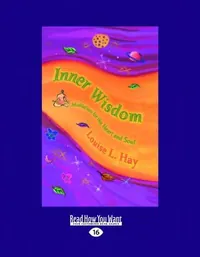
I Can Do It (Louise L. Hay Subliminal Mastery)

 84
84

I Can Do It (Louise L. Hay Subliminal Mastery)
Louise L. Hay’s "I Can Do It (Subliminal Mastery)" offers a direct, no-nonsense approach to harnessing the power of the mind. Its strength lies in its clear articulation of how affirmations and self-love can become practical tools for daily life. The book avoids spiritual jargon, presenting its concepts in an accessible, almost clinical manner, which can be highly effective for those new to these ideas. However, its very directness can sometimes feel repetitive; the core message, while potent, is reiterated with little variation across chapters. A particularly striking passage involves Hay’s insistence on the physical manifestation of emotional states, linking specific ailments to deep-seated resentments, a concept she termed "body wisdom." While compelling, this connection may feel overly deterministic to some readers. Nevertheless, for its pragmatic guidance on mental reprogramming, the book remains a potent resource. It's a work that demands engagement, not passive reading.
📝 Description
84
### What It Is
"I Can Do It (Louise L. Hay Subliminal Mastery)" is a foundational text in self-empowerment, first published in 2004. It explores the power of affirmations and conscious thought in reshaping personal reality. The book presents a systematic approach to internalizing positive beliefs, aiming to unlock the reader's inherent potential for success and well-being. It functions as a practical guide, offering techniques designed to influence the subconscious mind through repeated, targeted suggestions. The core premise is that by mastering one's thoughts, one can master one's life circumstances.
### Who It's For
This work is intended for individuals seeking to overcome self-limiting beliefs and cultivate a more positive outlook. It appeals to those interested in personal development, New Thought philosophies, and the practical application of mind-body connection principles. Readers looking for actionable strategies to improve self-esteem, achieve goals, or manage stress will find this book a valuable resource. It is particularly suited for those who believe in the efficacy of affirmative prayer and mental conditioning as tools for transformation.
### Historical Context
Published in 2004, "I Can Do It" emerged during a period of growing interest in the mind-body connection and self-help literature, building on movements like New Thought that gained prominence in the late 19th and early 20th centuries. Louise L. Hay's work often drew parallels with figures like Florence Scovel Shinn, whose book "The Game of Life and How to Play It" (1925) also championed affirmative prayer and spiritual principles for material success. Hay's approach, however, often emphasized a more direct, psychological framing of these concepts, making them accessible to a broad audience amidst the burgeoning self-help industry.
### Key Concepts
The book centers on the concept of "affirmations," which are positive statements designed to reprogram the subconscious mind. It details the principle of "self-love" as the cornerstone of personal change, arguing that a genuine acceptance of oneself is necessary before external improvements can manifest. Another key concept is "mental images," wherein readers are encouraged to visualize desired outcomes as if they have already occurred. The work also stresses the importance of "releasing the past," understanding that past experiences, particularly negative ones, can be overcome through conscious present-moment focus and belief.
💡 Why Read This Book?
• Gain a practical framework for understanding how your thoughts influence your reality, as detailed in Hay's "Subliminal Mastery" techniques, allowing you to actively reshape your mental landscape. • Learn specific methods for cultivating self-love, a core principle emphasized throughout the book, enabling you to build a stronger foundation for personal growth and resilience. • Discover how to utilize visualizations and affirmations, key components of Hay's 2004 teachings, to manifest desired outcomes and overcome limiting beliefs.
⭐ Reader Reviews
Honest opinions from readers who have explored this book.
❓ Frequently Asked Questions
What is the core principle behind Louise L. Hay's "I Can Do It (Subliminal Mastery)"?
The core principle is that conscious thought, particularly through affirmations and self-love, can reprogram the subconscious mind to overcome limitations and achieve desired life outcomes. This approach, detailed in the 2004 publication, emphasizes mental mastery.
How does "I Can Do It" differ from other self-help books?
It offers a direct, practical methodology focused on subliminal suggestion and the psychological impact of affirmations. Unlike more theoretical works, Hay’s 2004 book provides actionable steps for influencing one's subconscious beliefs.
Can the techniques in "I Can Do It" help with specific problems like anxiety or low self-esteem?
Yes, the book's methodology is designed to address precisely these issues. By consistently applying affirmations and cultivating self-love, as outlined in the 2004 edition, readers can work towards reframing negative thought patterns contributing to anxiety and low self-esteem.
What role does "self-love" play in Hay's philosophy as presented in this book?
Self-love is presented as the fundamental prerequisite for all positive change. Hay argues in the 2004 text that accepting and valuing oneself unconditionally is the essential first step to healing and manifesting external success.
Is "I Can Do It (Subliminal Mastery)" suitable for beginners in self-improvement?
Absolutely. The book's straightforward language and practical exercises make it highly accessible for beginners. The concepts, introduced in 2004, are presented in a way that requires no prior knowledge of esoteric or psychological principles.
How are "affirmations" used in this book?
Affirmations are positive, present-tense statements intended to bypass the conscious mind and speak directly to the subconscious. The book guides readers on crafting and repeatedly using these statements to instill new, empowering beliefs.
🔮 Key Themes & Symbolism
Affirmations and Subconscious Reprogramming
The central theme revolves around the power of affirmations to influence the subconscious mind. The book, first published in 2004, details how carefully crafted positive statements, when repeated consistently, can overwrite negative or limiting beliefs. This process is presented not as mere positive thinking, but as a systematic method of mental conditioning designed to alter deep-seated patterns and perceptions, thereby changing one's experience of reality. The focus is on direct, intentional mental work to achieve tangible life improvements.
The Primacy of Self-Love
Hay posits self-love as the indispensable foundation for personal transformation. This theme underscores the idea that external validation or achievement is secondary to internal acceptance. The work explores how deep-seated self-criticism can manifest as physical or emotional ailments, and conversely, how cultivating genuine self-acceptance can initiate healing. This concept is woven throughout the book, presenting self-love not as narcissism, but as a necessary state of being for unlocking one's true potential.
Visualisation and Manifestation
This theme connects mental imagery with the creation of desired realities. The book encourages readers to vividly imagine their goals as already achieved, engaging all senses in the mental experience. This practice of 'mental rehearsal' is presented as a powerful tool for aligning one's energy with desired outcomes, acting as a magnet for opportunities and experiences. The 2004 text emphasizes that the clarity and emotional conviction behind these visualizations are crucial for their effectiveness in manifesting change.
Releasing the Past and Present Focus
A significant aspect of the book involves liberating oneself from past traumas, regrets, and limiting experiences. Hay teaches that dwelling on the past prevents present-moment growth and future manifestation. The emphasis is on consciously choosing to release old patterns and beliefs that no longer serve, thereby clearing the mental space for new, positive realities to emerge. This focus on the present moment is key to the book's method of immediate personal empowerment.
💬 Memorable Quotes
“The power to change your life lies within your own mind.”
— This statement encapsulates the book's core message: that external circumstances are a reflection of internal thought patterns. It suggests that by mastering one's mental processes, particularly through affirmations and belief systems, individuals gain agency over their life's direction and outcomes.
“Self-love is the key that unlocks the door to all healing.”
— Hay identifies unconditional acceptance of oneself as the fundamental prerequisite for any significant personal transformation or recovery. This concept suggests that until individuals learn to value and love themselves, they may remain blocked from achieving true well-being or overcoming deep-seated issues.
“What we believe about ourselves and our life becomes our reality.”
— This paraphrase highlights the law of attraction principle central to Hay's work. It asserts that our deeply held convictions, whether conscious or subconscious, actively shape our experiences and the world around us, acting as self-fulfilling prophecies.
“Old resentments are like garbage. You must take them out.”
— This vivid metaphor emphasizes the detrimental effect of holding onto anger and grudges. The work suggests that these negative emotions act as toxic baggage, hindering progress and well-being, and must be actively released to make way for positivity.
“Visualize your success as if it has already happened.”
— This instruction points to the power of visualization techniques. By mentally rehearsing desired outcomes with emotional conviction, the book suggests readers can create a strong energetic alignment that attracts those realities into their physical experience.
🌙 Esoteric Significance
Tradition
Hay's work draws heavily from the New Thought movement, a spiritual and philosophical movement that emerged in the United States in the mid-19th century. While not strictly adhering to older esoteric lineages like Hermeticism or Kabbalah, New Thought shares common ground in its emphasis on the power of the mind, the divine nature of humanity, and the principle of like attracts like. Hay's "Subliminal Mastery" applies these principles in a highly practical, accessible manner, departing from more complex theological or philosophical frameworks.
Symbolism
While Hay's work is less reliant on overt symbolism than older esoteric traditions, the concept of the "subconscious mind" itself can be seen as a symbolic representation of the hidden, deeper self or the soul. "Affirmations" function as symbolic keys, unlocking potentials within this inner realm. "Self-love" symbolizes the divine spark within, the recognition of one's inherent worth and connection to a higher power, which is seen as the ultimate source of healing and manifestation.
Modern Relevance
Louise L. Hay's teachings, particularly those in "I Can Do It (Subliminal Mastery)", continue to influence contemporary self-help, positive psychology, and wellness practices. Modern concepts like manifestation coaching, mindfulness-based stress reduction, and cognitive behavioral therapy (CBT) echo Hay's emphasis on thought patterns and belief systems. Her accessible style makes her work relevant to online influencers, life coaches, and individuals seeking practical, non-dogmatic approaches to personal growth and mental well-being in the 21st century.
👥 Who Should Read This Book
• Individuals new to self-help and personal development looking for a straightforward guide to positive thinking and affirmations, as presented in the 2004 "Subliminal Mastery" edition. • Those struggling with low self-esteem or self-limiting beliefs who seek practical, actionable techniques to cultivate self-acceptance and inner strength. • Practitioners of New Thought or metaphysical principles wanting to deepen their understanding and application of affirmation techniques and the role of self-love in manifestation.
📜 Historical Context
Published in 2004, "I Can Do It (Subliminal Mastery)" arrived as the self-help industry was booming, capitalizing on a public appetite for practical psychological tools. Louise L. Hay, already a prominent figure in New Thought and positive affirmation circles since the 1970s, refined her message for a contemporary audience. Her work often stood in contrast to more analytical therapeutic approaches prevalent at the time, offering a spiritual-psychological synthesis. While figures like Marianne Williamson were popularizing spiritual teachings, Hay’s direct, almost prescriptive approach to affirmations and self-love offered a distinct, actionable path. The book built upon decades of Hay's own work, including her earlier seminal "You Can Heal Your Life" (1984), solidifying her place as a leading voice in accessible mind-body wellness literature, resonating with millions seeking personal empowerment.
📔 Journal Prompts
The core principle of subconscious reprogramming as presented in "I Can Do It".
The role of self-love in overcoming specific personal challenges.
How visualization techniques from the book can be applied to a current goal.
Identifying and releasing old resentments as discussed in the text.
The connection between beliefs about oneself and experienced reality.
🗂️ Glossary
Affirmation
A positive, present-tense statement designed to reprogram the subconscious mind and instill new beliefs. Used consistently, affirmations are intended to influence thoughts, feelings, and behaviors.
Subconscious Mind
The part of the mind that is not currently in focal awareness but is accessible. Hay posits it as the seat of deep-seated beliefs and habits, which can be influenced through conscious effort.
Self-Love
The unconditional acceptance and appreciation of oneself. Hay presents this as the foundational element for healing, happiness, and achieving one's potential.
Visualization
The practice of creating vivid mental images of desired outcomes, engaging sensory details to make the imagined experience feel real and potent.
New Thought
A spiritual movement emphasizing the power of thought and belief in shaping reality, and the inherent divinity and potential within each individual.
Manifestation
The process of bringing something into physical reality through thought, belief, and focused intention, often facilitated by affirmations and visualization.
Mental Images
Internal representations of thoughts, ideas, or desired outcomes. The book encourages the conscious creation and use of positive mental images.