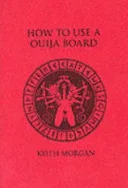
How to Use a Ouija Board
 78
78

How to Use a Ouija Board
Keith Morgan’s How to Use a Ouija Board approaches its subject with a refreshing lack of sensationalism. Unlike many texts that lean into paranormal melodrama, Morgan grounds the practice in accessible psychological principles and practical instruction. He correctly identifies the ideomotor effect as a significant factor in board movement, a point often glossed over in more credulous accounts. The strength of the book lies in its detailed instructions for preparing for a session, emphasizing intention and a calm mental state. However, the work occasionally feels somewhat limited by its 1992 publication date, lacking engagement with later psychological research or contemporary critiques of divination tools. A particularly valuable section details how to manage group energy during a session to prevent chaotic or misleading responses. It’s a solid, if somewhat dated, primer for the cautious inquirer.
📝 Description
78
Keith Morgan's 1992 book demystifies the Ouija board, presenting it as a tool for self discovery.
How to Use a Ouija Board, by Keith Morgan, was first published in 1992. It approaches the spirit board not as a sensational object, but as a method for introspection and communication. Morgan details the practical aspects of using the board, including setup and proper conduct during a session. He explains the psychological and energetic factors involved in its operation.
The book is intended for those curious about divination and spiritual communication who prefer a straightforward method. It will appeal to readers interested in the occult, psychology, and religious studies, particularly those who wish to understand the Ouija board's function beyond simple entertainment. Both newcomers to the practice and those with experience will find useful information within its pages.
Published in 1992, Morgan's work arrives during a period when interest in esoteric subjects was reviving. It follows the broader New Age trends of the previous decade. While spiritualism saw significant attention in the late 19th century, this book speaks to a contemporary audience. It connects the Ouija board to a long history of divinatory tools found across many cultures, positioning it within a lineage of practices aimed at accessing inner knowledge or external forces.
💡 Why Read This Book?
• Gain practical, step-by-step instructions on conducting Ouija board sessions safely and with clear intention, as detailed in the book's operational guides. • Understand the psychological underpinnings of Ouija board phenomena, including the ideomotor effect, moving beyond purely supernatural explanations. • Learn techniques for interpreting board responses and managing group dynamics, ensuring a more focused and potentially insightful communication experience, as outlined in the 1992 edition.
⭐ Reader Reviews
Honest opinions from readers who have explored this book.
❓ Frequently Asked Questions
What is the historical origin of the Ouija board discussed in Keith Morgan's book?
Keith Morgan's 1992 work traces the Ouija board's lineage, noting its popularization in the late 19th century as part of the spiritualist movement, though similar devices existed earlier.
Does How to Use a Ouija Board explain the science behind the planchette's movement?
Yes, the book addresses the ideomotor effect, a key concept explaining unconscious muscle movements that cause the planchette to move, offering a psychological perspective on Ouija board phenomena.
What are the essential steps for preparing for a Ouija board session according to the book?
Morgan emphasizes establishing a clear intention, grounding oneself energetically, and creating a focused, respectful atmosphere before beginning any session with the Ouija board.
Is this book suitable for beginners interested in spirit communication?
Absolutely. The book is structured as a practical guide, making it accessible for novices seeking a structured and psychologically informed introduction to using the Ouija board.
What kind of interpretations does the book offer for Ouija board messages?
The book suggests interpreting responses not just as external messages but also as reflections of the subconscious mind and group psychology, offering a dual perspective.
When was How to Use a Ouija Board first published?
Keith Morgan's guide, How to Use a Ouija Board, was first published in 1992, placing it within a period of resurgence for esoteric studies.
🔮 Key Themes & Symbolism
The Ouija Board as a Tool
Morgan presents the Ouija board not as a passive conduit for external spirits but as an active tool for self-exploration and communication. The book emphasizes that the board's efficacy stems from the user's intention, focus, and psychological state. It explores how the device can be employed to access subconscious thoughts, facilitate problem-solving, and engage in guided introspection, moving beyond the common perception of it as merely a paranormal instrument.
Ideomotor Effect and Psychology
A significant portion of the work is dedicated to explaining the ideomotor effect, a psychological phenomenon where subconscious muscle movements influence the planchette's motion. Morgan uses this concept to clarify the Ouija board experience, framing it as a dialogue with the user's own psyche or the collective unconscious. This approach encourages a more analytical and self-aware engagement with the board's output.
Ethical and Practical Application
The book provides detailed guidelines on the ethical use of the Ouija board, stressing the importance of respect, clear intent, and proper preparation. It outlines practical steps for setting up a session, including creating a conducive environment and managing group dynamics. The emphasis is on responsible practice, ensuring that the tool is used constructively for personal growth rather than for fear or trivial amusement.
Historical and Cultural Context
Morgan situates the Ouija board within a broader historical context of divination and spiritual communication practices. While focusing on its 20th-century popularization, the work acknowledges the long-standing human desire to connect with unseen realms or deeper aspects of consciousness. This historical perspective adds depth to the understanding of the board's enduring appeal and its place in esoteric traditions.
💬 Memorable Quotes
Direct passages from the work, attributed to the author.
“The board itself is neutral; it is the intention and focus of the users that give it power.”
— This highlights the book's central thesis that the Ouija board is a tool whose effectiveness is determined by the operator's mindset and purpose, rather than an inherent magical object.
“Observe the subtle movements before the obvious answer appears.”
— This suggests a need for patience and keen observation during a session, hinting that meaning can be found in the process and subtle cues, not just the final word spelled out.
“A session requires preparation as much as it requires the board itself.”
— This emphasizes the importance of grounding, intention setting, and environmental setup, framing the Ouija board experience as a ritualistic act requiring careful preparation.
“Consider the ideomotor effect as a bridge, not a barrier, to understanding.”
— This encourages readers to view the psychological explanation of the ideomotor effect not as a way to dismiss the Ouija board, but as a means to better comprehend its function and potential.
“Consensus among participants is key to a coherent message.”
— This points to the collaborative nature of Ouija board use and the importance of shared focus and agreement among users to achieve meaningful communication.
🌙 Esoteric Significance
Tradition
This work fits within the broader Hermetic and psychological currents of Western Esotericism. While not explicitly aligning with a single lineage like Kabbalah or Alchemy, it draws upon the Hermetic principle of 'As Above, So Below,' suggesting that the external (spirit communication) reflects the internal (psyche). It departs from purely dogmatic approaches by integrating psychological explanations, positioning the Ouija board as a sophisticated tool for inner exploration rather than solely a channel for external entities.
Symbolism
The Ouija board itself functions as a primary symbol, representing the threshold between the conscious and subconscious mind, or the mundane and the spiritual realms. The planchette symbolizes focused intention and the mechanism of communication. Letters, numbers, and the 'Yes'/'No' points are symbolic representations of language and decision-making, acting as a bridge for abstract thought to manifest in tangible form.
Modern Relevance
Contemporary practitioners of modern witchcraft, neo-shamanism, and introspective psychology often reference or utilize tools like the Ouija board as Morgan describes. His emphasis on intention, ethical use, and psychological interpretation aligns with modern approaches that seek to integrate esoteric practices with personal development and therapeutic goals, making the book relevant to those exploring consciousness and divination today.
👥 Who Should Read This Book
• Individuals new to esoteric practices seeking a structured, psychologically informed introduction to divination tools. • Students of comparative religion and psychology interested in the historical and psychological dimensions of spiritualist phenomena. • Skeptics and practitioners alike who wish to understand the mechanics and potential applications of the Ouija board beyond sensationalist claims.
📜 Historical Context
Keith Morgan's How to Use a Ouija Board, published in 1992, emerged during a significant period for esoteric and occult studies. Following the cultural waves of the New Age movement and the increasing accessibility of previously obscure texts, the 1990s saw a continued interest in practical applications of spiritual and psychological techniques. While the Ouija board itself gained widespread popularity in the late 19th century, attributed to figures like Pearl Curran who claimed spirit communication, Morgan's work addresses a contemporary audience. It implicitly engages with the legacy of spiritualism and the burgeoning field of transpersonal psychology, offering a more grounded perspective than some of its predecessors. Unlike purely supernatural interpretations prevalent in earlier spiritualist circles, Morgan’s approach acknowledges psychological factors like the ideomotor effect, a concept explored by figures such as William James in the late 19th century, though James’s own views on the board were complex and cautious.
📔 Journal Prompts
The Ouija board as a psychological mirror: what unspoken aspects of the self might it reveal?
Reflecting on the 'ideomotor effect' as described by Morgan, how might unconscious bias influence perceived messages?
Consider the 'ethical application' principles: how can intention shape the outcome of a Ouija session?
What historical precedents for symbolic communication tools, beyond the Ouija board, inform its use?
How does the creation of a 'sacred space' for a Ouija session impact the user's mental state?
🗂️ Glossary
Ideomotor Effect
A psychological phenomenon where a subject makes unconscious, slight motor movements resulting from a suggestion or expectation, influencing the movement of an object like a Ouija board planchette.
Planchette
The heart-shaped or pointer device used on a Ouija board that slides across the letters and numbers to spell out messages.
Spiritualism
A religious movement prominent in the 19th century that advocated belief in communication with the spirits of the dead through mediums or devices like the Ouija board.
Divination
The practice of seeking knowledge of the future or the unknown by supernatural means, such as through the use of tools like the Ouija board.
Esotericism
Teachings concerned with or appropriate to an inner circle of dedicated practitioners or initiates; relating to occult or mystical subjects.
Subconscious Mind
The part of the mind of which one is not aware but which influences one's actions and feelings; often considered a source of intuition or hidden knowledge.
Session Etiquette
A set of rules or expected behaviors for conducting a Ouija board session respectfully and effectively, emphasizing focus and intention.