Haunted Hoosier trails
 74
74

Haunted Hoosier trails
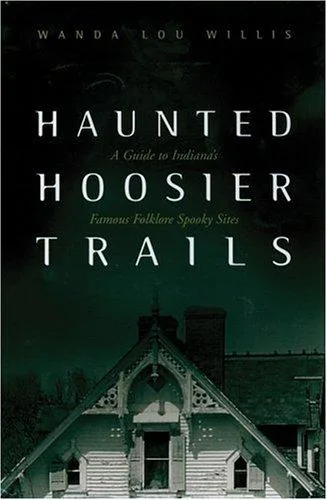
Wanda Lou Willis’s Haunted Hoosier Trails offers a catalog of spectral encounters that firmly grounds itself in the geography of Indiana. Unlike more speculative works, Willis presents a collection of reported phenomena, from the spectral guardian of Indiana Dunes State Park to alleged hauntings in historic homes. The book’s strength lies in its meticulous collection of anecdotes, providing a valuable resource for local history buffs and paranormal researchers alike. However, the sheer volume of accounts, while comprehensive, can sometimes lead to a feeling of repetition, with less emphasis on analytical depth. A particularly compelling section details the spectral activity reported around the Tippecanoe battlefield, blending historical significance with persistent paranormal claims. While not offering definitive proof, the work serves as a diligent record of Indiana’s reputed spectral inhabitants.
📝 Description
74
Wanda Lou Willis published Haunted Hoosier Trails in 2002, collecting Indiana's spectral history.
Published in 2002, Wanda Lou Willis's Haunted Hoosier Trails compiles accounts of paranormal occurrences and folklore specific to Indiana. The book gathers anecdotal evidence, historical records, and local legends to construct a detailed picture of the state's spectral past. It highlights particular locations and the stories attached to them, covering everything from ghostly apparitions to unexplained events. Willis's stated aim was to document these narratives for preservation and for individuals interested in further investigation of the supernatural.
The work is suited for those who enjoy local history, paranormal research, and American folklore. Readers interested in the supernatural, especially as it appears in distinct geographic areas, will find the content relevant. It also serves individuals researching regional myths and legends or curious about the historical roots of ghost stories in the American Midwest. The focus is on reporting alleged events rather than proposing theoretical explanations.
This book fits within the broader tradition of regional ghost lore and local spiritualism. It documents purported supernatural phenomena tied to specific places, aligning with a long-standing human practice of chronicling unusual events believed to have otherworldly causes. While not overtly theological, the collection of hauntings and spectral narratives touches upon beliefs about the afterlife and the persistence of consciousness or energy beyond death, a common thread in many esoteric traditions.
💡 Why Read This Book?
• Gain specific accounts of alleged hauntings in Indiana, such as those documented around the Tippecanoe battlefield, offering unique regional paranormal lore not found in generalized ghost books. • Understand the process of collecting and presenting folklore, as Willis meticulously documents eyewitness testimonies and historical records from various Indiana locales. • Discover specific historical context for reported hauntings, providing a deeper appreciation for the interplay between local history and supernatural narratives in Indiana.
⭐ Reader Reviews
Honest opinions from readers who have explored this book.
❓ Frequently Asked Questions
What is the primary focus of Haunted Hoosier Trails?
The book primarily focuses on documenting alleged paranormal occurrences and folklore specific to various locations throughout the state of Indiana. It compiles eyewitness accounts and historical legends associated with reputed hauntings.
When was Haunted Hoosier Trails first published?
Haunted Hoosier Trails was first published in 2002, aligning with a period of significant public interest in paranormal phenomena and regional folklore.
Does the book offer explanations for the phenomena described?
The book predominantly presents anecdotal evidence and reported events without offering definitive scientific explanations. Its aim is to document the stories and alleged occurrences themselves.
Who is the author of Haunted Hoosier Trails?
The author is Wanda Lou Willis. Her work focuses on regional folklore and paranormal accounts, particularly within the state of Indiana.
What kind of locations are featured in the book?
The book features a wide array of locations across Indiana, including state parks, historic buildings, battlefields, and other sites with reported spectral activity or folklore.
Is this book suitable for paranormal investigators?
Yes, the book serves as a valuable resource for paranormal investigators interested in Indiana, providing a catalog of reported phenomena and locations for potential further study.
🔮 Key Themes & Symbolism
Regional Spectral Geography
The work meticulously maps alleged paranormal activity across Indiana, treating the state as a landscape populated by spectral entities and lingering energies. Each chapter often focuses on a specific county or notable landmark, like the purported hauntings at Indiana Dunes State Park, linking the supernatural to precise geographical coordinates. This approach grounds the ethereal in the tangible, suggesting that certain locales possess unique energetic signatures or historical echoes that manifest as ghost stories and unexplained events. It highlights how local history and geography intertwine to create a specific regional spectral identity.
Folklore and Eyewitness Testimony
A core element is the collection and presentation of eyewitness accounts and local folklore. Willis acts as a chronicler, gathering stories passed down through generations or reported by contemporary witnesses. The book emphasizes the oral tradition, where personal experiences and community narratives shape the understanding of paranormal events. Concepts like the spectral guardian at the Dunes are presented as stories woven from multiple testimonies and historical fragments, underscoring the importance of individual perception and collective memory in the formation of ghost lore.
Historical Echoes and Lingering Presence
The book explores the idea that significant historical events or intense human emotions can leave behind residual energy or spectral imprints. Locations like the Tippecanoe battlefield are presented not just as historical sites but as places where the past actively manifests in the present through reported paranormal phenomena. This concept suggests that the veil between the living and the dead is thin in certain places due to the weight of history, conflict, or tragedy, leading to persistent reports of spectral activity tied to specific events or individuals.
Cultural Preservation of the Paranormal
Haunted Hoosier Trails functions as a form of cultural preservation, documenting stories that might otherwise fade into obscurity. By compiling these accounts, Willis contributes to the understanding of American folklore and the cultural significance of ghost stories. The book treats these narratives as valuable components of regional heritage, offering a glimpse into the beliefs, fears, and imaginations of people connected to Indiana. The act of publication itself serves to legitimize and disseminate these often-overlooked aspects of local culture.
💬 Memorable Quotes
“Accounts of the spectral guardian at Indiana Dunes State Park.”
— This refers to specific narratives within the book describing a reported spectral entity associated with the Indiana Dunes, illustrating the theme of localized paranormal guardians.
“The persistent reports of activity near the Tippecanoe battlefield.”
— This highlights a recurring element in the book concerning alleged supernatural phenomena tied to a significant historical battle site, emphasizing the connection between historical events and reported hauntings.
“Folklore surrounding spectral apparitions in historic Indiana homes.”
— This points to the book's focus on domestic hauntings, showcasing how ghost stories are embedded in the architecture and personal histories of specific residences across Indiana.
“The compilation of eyewitness testimonies regarding unexplained phenomena.”
— This describes the methodology of the book, emphasizing its reliance on personal accounts and reported experiences as primary evidence for alleged paranormal events.
“Legends of lingering energies at various Indiana landmarks.”
— This encapsulates the broader theme that certain places in Indiana are believed to retain echoes of past events or individuals, manifesting as ongoing spectral occurrences.
🌙 Esoteric Significance
Tradition
While not explicitly tied to a single esoteric lineage like Hermeticism or Gnosticism, the work engages with the broader tradition of psychogeography and the study of place-based hauntings, which has roots in spiritualism and folk belief. It aligns with the popular occult interest in residual energy and earthbound spirits. The book's approach of meticulously documenting alleged phenomena in specific locations echoes earlier spiritualist practices of seeking communication with the departed and understanding their connection to earthly realms.
Symbolism
Key symbols include spectral apparitions themselves, representing lingering consciousness or unfinished business. Specific locations, such as the Tippecanoe battlefield or historic homes, function as symbols of historical trauma, memory, and the persistence of the past. The concept of a "spectral guardian" can symbolize protective energies or unresolved conflicts tied to a place, acting as a localized archetype of spiritual presence.
Modern Relevance
Contemporary paranormal investigation groups and enthusiasts of regional folklore continue to draw on works like Haunted Hoosier Trails for case studies and research leads. The book's focus on specific locations and documented accounts is relevant to modern psychogeographical explorations and the growing interest in the intersection of history, memory, and alleged supernatural activity. It informs discussions on how collective belief and local narratives shape perceptions of the uncanny.
👥 Who Should Read This Book
• Researchers of American folklore and regional ghost stories interested in detailed accounts from a specific Midwestern state. • Paranormal enthusiasts seeking potential locations and historical context for hauntings within Indiana for investigative purposes. • Local historians and community members looking to preserve and understand the supernatural narratives associated with their state's heritage.
📜 Historical Context
Published in 2002, Wanda Lou Willis's Haunted Hoosier Trails emerged during a period of widespread fascination with the paranormal, amplified by television programs like "Unsolved Mysteries" and a surge in popular ghost literature. This era saw a growth in amateur paranormal investigation societies and a demand for localized ghost stories that resonated with regional identity. The book tapped into this cultural zeitgeist by focusing specifically on Indiana, offering a niche within the broader genre of American folklore and supernatural narratives. It stands in contrast to more academic folklore studies of the time, which might have focused on comparative analysis or theoretical frameworks, by prioritizing anecdotal evidence and direct reporting of alleged phenomena. The reception was likely within the enthusiast communities of paranormal research and regional history, rather than significant academic circles, reflecting its popular appeal.
📔 Journal Prompts
The spectral guardian at Indiana Dunes State Park: what qualities does this entity embody?
Residual energy at the Tippecanoe battlefield: how might historical events manifest today?
Eyewitness testimony: what factors influence the reliability of a ghost story?
Lingering presence in historic homes: consider the concept of place memory.
Folklore transmission: how do ghost stories persist within communities?
🗂️ Glossary
Hoosier
A nickname for a resident of the state of Indiana. The term's origin is debated, but it is widely adopted as a colloquial identifier for people from Indiana.
Spectral Guardian
A purported supernatural entity believed to protect or inhabit a specific location, often associated with historical events or a strong connection to the site.
Residual Energy
In paranormal studies, this refers to the theory that strong emotions or significant events can imprint themselves onto a location, replaying like a recording without conscious intelligence.
Eyewitness Testimony
First-hand accounts provided by individuals who claim to have directly observed a paranormal event or phenomenon.
Folklore
The traditional beliefs, customs, and stories of a community, passed through the generations by word of mouth, often including legends, myths, and ghost stories.
Tippecanoe Battlefield
A historical site in Indiana where a significant battle took place in 1811 between U.S. forces led by William Henry Harrison and Native American warriors. It is often cited in paranormal literature.
Indiana Dunes
A region along the southern shore of Lake Michigan in Indiana, known for its natural beauty and associated local legends, including reported paranormal activity.