Hans Andersen's Fairy Tales

 73
73

Hans Andersen's Fairy Tales
Andersen's collected tales, particularly the editions following the initial 1846 compilation, reveal a sophisticated understanding of human psychology masked by accessible prose. The enduring power of stories like "The Little Mermaid" or "The Ugly Duckling" lies not in their fantastical elements, but in their stark portrayal of unrequited desire and the painful journey toward self-acceptance. One limitation, however, is the inherent variability in translation and the potential for modern sensibilities to overlook the specific cultural and religious allusions present in the original Danish. The passage describing the Little Mermaid's suffering as she walks on land, feeling as though she is treading on knives, vividly illustrates the cost of ambition and transformation. This collection offers a potent, if sometimes melancholic, reflection on the human condition.
Verdict: Essential reading for understanding the allegorical underpinnings of Western narrative.
📝 Description
73
Hans Christian Andersen's fairy tales, first collected in 1846, are more than children's stories.
Hans Christian Andersen's collection of fairy tales, first published in its entirety in 1846, presents work that transcends simple children's stories. These narratives, while often featuring fantastical elements and moral lessons, touch upon complex psychological and societal undercurrents. They are not mere diversions but potent allegories that have shaped Western cultural consciousness. This collection appeals to readers seeking allegorical depth and symbolic richness beyond conventional fairy tale interpretations. It is for those who appreciate literature that operates on multiple levels, offering philosophical contemplation and psychological insight. Scholars of folklore, literary critics, and students of comparative mythology will find ample material for analysis.
Andersen's tales emerged during a period of Romanticism and the burgeoning Biedermeier era in Denmark. Published in 1846, they coincided with a literary landscape that valued emotion, individualism, and the exploration of the human condition. While authors like the Brothers Grimm focused on collecting traditional folk narratives, Andersen's approach was more authorial, imbuing his stories with personal reflection and a distinct literary voice. His work found an audience that was increasingly interested in introspective and morally nuanced storytelling, contrasting with the more purely empirical scientific pursuits gaining traction.
Andersen's tales, originating in the mid-19th century, engage with Romantic ideals of emotional truth and the individual's inner life. His use of allegory and symbolism aligns with a tradition of exploring deeper meanings beneath surface appearances. The narratives frequently touch upon themes of suffering, sacrifice, and redemption, often through characters of humble origins or those facing societal marginalization. This resonates with a spiritual or philosophical interest in the hidden worth of the seemingly insignificant and the transformative power of inner virtue or divine intervention.
💡 Why Read This Book?
• Gain insight into the allegorical power of "The Ugly Duckling," learning how Andersen uses the narrative to explore the profound social and emotional challenges of alienation and the eventual discovery of one's true identity, a concept relevant to personal growth. • Understand the symbolic representation of sacrifice and unfulfilled longing in "The Little Mermaid," examining the mermaid's painful journey and her ultimate fate as a metaphor for the human pursuit of ideals and the consequences of transformation. • Appreciate the moral and spiritual dimensions in tales like "The Snow Queen," recognizing how Andersen employs archetypal figures and elemental forces to depict the struggle between good and evil and the redemptive power of love and loyalty.
⭐ Reader Reviews
Honest opinions from readers who have explored this book.
❓ Frequently Asked Questions
When were Hans Christian Andersen's Fairy Tales first published?
The first unified collection of Hans Christian Andersen's Fairy Tales was published in 1846, bringing together stories he had been writing and publishing since the early 1830s.
What is the literary significance of Hans Christian Andersen's Fairy Tales?
Andersen's tales are significant for their literary quality, original storytelling, and psychological depth, moving beyond simple folk retellings to explore complex human emotions and societal issues.
Are Hans Christian Andersen's Fairy Tales considered esoteric?
While not explicitly esoteric in the manner of occult texts, the tales are rich with symbolism, archetypes, and allegorical meanings that lend themselves to esoteric interpretation by scholars and readers.
What are some common themes in Andersen's Fairy Tales?
Common themes include the journey of the outcast, the nature of suffering, the pursuit of love and acceptance, social inequality, and the transformative power of sacrifice and kindness.
How do Andersen's tales differ from those of the Brothers Grimm?
Andersen's tales are generally more literary, original, and introspective, often reflecting his personal experiences and philosophical reflections, whereas the Grimms primarily collected and edited existing folk narratives.
Are the original Danish versions of Andersen's tales different from English translations?
Yes, translations can vary in nuance and tone, sometimes altering the original authorial voice and specific cultural connotations present in the Danish text.
🔮 Key Themes & Symbolism
The Outcast's Journey
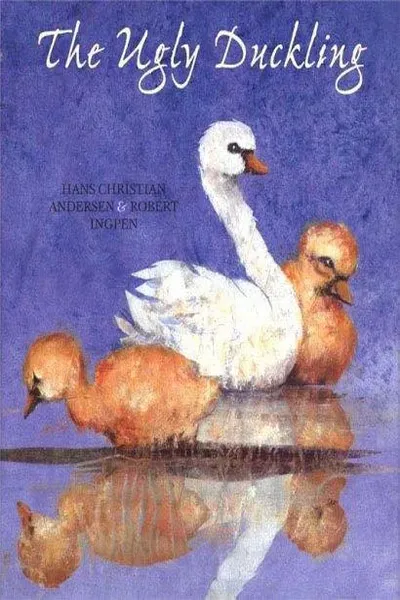
Many of Andersen's protagonists, like "The Ugly Duckling," begin as marginalized figures, misunderstood and ostracized by their communities. This theme explores the pain of not belonging and the often arduous path toward self-discovery and acceptance. Esoterically, this mirrors the soul's journey through illusion and separation, seeking its true divine origin. The narrative suggests that inherent worth is not always recognized by the external world, hinting at a spiritual essence that transcends superficial appearances.
Sacrifice and Transformation
Stories such as "The Little Mermaid" vividly depict characters undergoing profound sacrifices for love, knowledge, or a perceived higher state. The pain and loss endured are often integral to their transformation, whether it leads to spiritual ascension or tragic fulfillment. This aligns with esoteric concepts of purification through suffering and the idea that significant change requires letting go of the old self, mirroring initiatory processes found in various mystical traditions.
The Hidden Divine
Andersen frequently contrasts the mundane, often cruel, realities of the world with glimpses of the extraordinary or divine. The ability to perceive beauty or truth in unexpected places – a poor child, a simple flower, a seemingly insignificant object – suggests a hidden spiritual order. This appeals to Gnostic ideas of a divine spark present even in the most degraded material circumstances, waiting to be recognized and awakened.
Moral and Spiritual Resilience
Despite facing immense hardship, betrayal, and loss, many characters in Andersen's tales exhibit a remarkable inner strength and adherence to moral principles. This resilience, often rooted in faith or an unwavering sense of self, suggests a spiritual fortitude that can withstand external pressures. It reflects the esoteric ideal of maintaining inner equilibrium and purity of intention amidst worldly chaos.
💬 Memorable Quotes
Direct passages from the work, attributed to the author.
“And yet, there was a feeling of love in my heart, and that gave me courage.”
— This sentiment, echoing through various tales, highlights the transformative power of love and inner conviction. It suggests that even in the face of overwhelming odds or despair, the presence of genuine affection or a strong moral compass can provide the necessary fortitude for survival and growth.
“My whole world is sadness.”
— This poignant expression captures the pervasive melancholy present in some of Andersen's most famous works. It speaks to the profound experience of suffering and existential angst that many characters grapple with, a relatable human condition.
“Everything has its time, and even the longest night must end in day.”
— This reflects a belief in cyclical patterns and eventual redemption or resolution. It offers a sense of hope, suggesting that periods of darkness or hardship are temporary and will ultimately give way to brighter times.
💡 Key Ideas
Editorial paraphrase of the work's core concepts — not direct quotes.
The world is full of wonders, but the most wonderful of all is the human heart.
This paraphrase emphasizes Andersen's focus on the inner landscape. It points to the profound complexities, depths, and often paradoxical nature of human emotions and motivations as the ultimate source of marvel and mystery.
To be useful, that is the great thing.
This quote, or the concept it represents, underscores a recurring motif of purpose and contribution. It reflects a value system where fulfilling one's role, however humble, brings inherent worth and meaning, aligning with ideals of service found in many spiritual philosophies.
🌙 Esoteric Significance
Tradition
Andersen's tales, while not adhering to a single esoteric lineage, resonate strongly with Christian Gnosticism and Neoplatonic thought. The emphasis on inner spiritual worth often obscured by material circumstance, the journey of the soul through trials, and the presence of hidden divine sparks echo Gnostic themes of an imprisoned divinity seeking liberation. The archetypal nature of his characters and their symbolic journeys also align with Neoplatonic concepts of emanation and the ascent of the soul towards the One.
Symbolism
Key symbols include water, often representing the unconscious, emotional depths, or the primordial realm (as in "The Little Mermaid"). Animals frequently serve as archetypal figures or guides, with birds (like the swan in "The Ugly Duckling") symbolizing transformation and spiritual ascent, or the stark figure of the Snow Queen representing icy detachment and destructive forces, a powerful allegory for spiritual coldness.
Modern Relevance
Contemporary thinkers and practitioners in fields like depth psychology, Jungian analysis, and literary criticism continue to draw on Andersen's work for its rich archetypal imagery and exploration of the human psyche. His narratives are frequently analyzed for their symbolic representations of individuation, shadow integration, and the search for meaning in a complex world, making them relevant to modern quests for self-understanding and spiritual insight.
👥 Who Should Read This Book
• Aspiring psychologists and therapists: To analyze archetypal characters and narrative structures that illuminate common psychological struggles and developmental pathways. • Students of comparative literature and folklore: To understand the evolution of the fairy tale genre and Andersen's unique contribution, distinct from Grimm's collectionist approach. • Individuals seeking allegorical meaning: For those who appreciate stories that offer deeper symbolic interpretations of life's challenges, transformation, and the search for belonging.
📜 Historical Context
Hans Christian Andersen's fairy tales emerged in the mid-19th century, a period marked by Romanticism's emphasis on emotion, imagination, and the individual. The first major collection appeared in 1846, a time when Danish society was undergoing shifts influenced by broader European intellectual currents. While the Brothers Grimm were meticulously collecting and publishing existing German folklore, Andersen forged a more personal, literary path. His tales, though often inspired by folk motifs, were distinctly his own creations, infused with psychological nuance and moral reflection. This approach contrasted with the increasing scientific rationalism of the era, yet found a receptive audience among those seeking deeper meaning and emotional resonance in literature. Andersen's work was not without its critics; some contemporary reviewers found his tales too somber or complex for children, while others recognized their unique artistic merit. His engagement with themes of social class and the search for belonging tapped into the evolving social consciousness of the time.
📔 Journal Prompts
The Ugly Duckling's initial ostracization and eventual self-realization.
The Little Mermaid's desire for legs and the pain she endures.
The contrast between Gerda's warmth and the Snow Queen's ice.
The concept of 'usefulness' as presented in Andersen's narratives.
Reflecting on the hidden beauty perceived by characters in adverse circumstances.
🗂️ Glossary
Archetype
A recurring symbolic image, character type, or pattern of action found in literature and mythology, representing universal human experiences. Andersen's characters often embody these primal figures.
Allegory
A story, poem, or picture that can be interpreted to reveal a hidden meaning, typically a moral or political one. Andersen's tales frequently function on this deeper symbolic level.
Gnosticism
A religious and philosophical movement emphasizing spiritual knowledge (gnosis) for salvation. Key themes include a flawed creator, divine sparks trapped in matter, and the need for esoteric enlightenment.
Neoplatonism
A philosophical system based on Plato's ideas, emphasizing a transcendent, ultimate reality (the One) from which all existence emanates. It often involves the soul's journey back to its source.
Individuation
In Jungian psychology, the process of integrating the conscious and unconscious aspects of the personality to become a whole, unique self. Andersen's characters' journeys often mirror this psychological development.
Biedermeier
A cultural and artistic movement in German-speaking countries during the 19th century, characterized by domesticity, sentimentality, and bourgeois values. Andersen's era saw influences from this cultural milieu.
Romanticism
An artistic, literary, and intellectual movement emphasizing emotion, individualism, and the glorification of the past and nature. Andersen's work is deeply rooted in this literary and philosophical tradition.
🔮 Readers Also Liked
Browse all →






More by Hans Christian Andersen
All books →




More Free Occult Philosophy Books
View all →