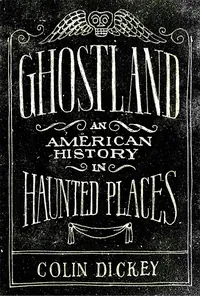
Ghostland

 84
84

Ghostland
Colin Dickey's "Ghostland" offers a refreshingly grounded perspective on the persistent allure of haunted places. Rather than dismissing ghost stories, Dickey scrutinizes their cultural utility, examining how they serve as conduits for processing historical trauma and collective anxieties. His exploration of the "architecture of fear" is particularly sharp, illustrating how physical spaces can become charged with narrative through design and perception. A notable strength lies in his ability to connect disparate historical moments, from colonial anxieties to modern ghost tours. However, the book occasionally feels more descriptive than analytical, sometimes presenting fascinating anecdotes without fully unpacking their deeper theoretical implications. One particularly memorable passage details the "haunted" hotels catering to a morbid curiosity, underscoring the commercialization of spectral narratives. "Ghostland" is a compelling examination of how we build our own ghosts from the raw materials of history and place.
📝 Description
84
### What It Is Ghostland by Colin Dickey (2016) investigates the enduring presence of hauntings, not as spectral visitations, but as cultural and historical phenomena. The book examines how places become imbued with stories of the past, exploring the architecture of fear and memory. Dickey connects contemporary ghost stories to their historical antecedents, revealing a persistent human need to confront and interpret unsettling narratives tied to specific locales.
### Who It's For This work appeals to readers interested in the intersection of folklore, history, and psychology. It is for those who question the literal interpretation of ghosts and instead seek to understand the cultural forces that create and sustain ghost stories. Academics studying American studies, folklore, and cultural history will find its analytical framework particularly valuable, as will amateur investigators and anyone fascinated by the psychology of place.
### Historical Context Dickey situates the modern fascination with haunted places within a longer American tradition. The book traces the evolution of ghost narratives from early colonial anxieties to the Victorian era's spiritualism boom and into the 20th century's burgeoning tourism industry that capitalized on local legends. It highlights how America's often-unsettled history—marked by slavery, displacement, and violence—provides fertile ground for stories of lingering trauma. The work implicitly contrasts with earlier, more religiously-focused interpretations of hauntings.
### Key Concepts Central to Dickey's thesis is the concept of "hauntedness" as a constructed reality. He argues that ghosts are less about the dead and more about the living's anxieties and unresolved historical narratives. Places become "haunted" through storytelling, media representation, and the collective imagination. The book also explores the "architecture of fear," how physical spaces can be designed or perceived to evoke dread, and how these spaces become repositories for collective memory and trauma.
💡 Why Read This Book?
• Understand how places become "haunted" by examining the cultural narratives and anxieties that imbue them with spectral significance, as detailed in the book's analysis of historical sites. • Gain insight into the "architecture of fear" by learning how physical spaces can be designed or perceived to amplify dread and become repositories for collective memory. • Appreciate the role of ghost stories in processing unresolved historical trauma, particularly within the American context, as explored through specific case studies.
⭐ Reader Reviews
Honest opinions from readers who have explored this book.
❓ Frequently Asked Questions
What is Colin Dickey's main argument about ghosts in Ghostland?
Dickey argues that ghosts are not supernatural entities but rather cultural constructs. They represent collective anxieties, unresolved historical traumas, and the way we imbue places with meaning and memory.
What historical periods does Ghostland cover regarding hauntings?
The book spans from colonial America, through the Victorian era's spiritualism movement, to the development of modern ghost tours and the commercialization of haunted sites in the 20th century.
How does Ghostland connect physical spaces to ghost stories?
Dickey explores the concept of the "architecture of fear," examining how the design and perception of buildings and landscapes can contribute to their reputation as haunted locations.
Is Ghostland a book for paranormal investigators?
While it discusses phenomena investigated by paranormal enthusiasts, "Ghostland" focuses on the cultural and historical roots of ghost stories rather than providing methods for spectral detection.
What is the significance of American history to the ghost stories discussed?
Dickey highlights how America's history of slavery, displacement, and violence creates a fertile ground for stories of lingering trauma and unresolved issues, shaping its unique spectral landscape.
🔮 Key Themes & Symbolism
Haunting as Cultural Narrative
Dickey posits that "hauntedness" is not an intrinsic quality of a place but a narrative constructed by the living. These narratives often arise from historical trauma, collective anxieties, or a deep-seated human need to confront the past. The book examines how specific events, whether real or imagined, become woven into the fabric of a location, giving rise to persistent ghost stories that reflect the concerns of the era in which they are told and retold.
Architecture of Fear
This theme explores how physical spaces are designed or perceived to evoke dread and unease, thereby facilitating the creation of ghost stories. Dickey analyzes how elements like isolation, decay, historical significance (especially concerning violence or tragedy), and even architectural style can contribute to a location's reputation. The book demonstrates that the built environment itself can act as a stage for spectral manifestations, both real and imagined, by shaping our psychological responses.
Ghosts and Unresolved History
"Ghostland" argues that ghost stories frequently serve as a mechanism for grappling with unresolved historical issues. In the American context, this often involves confronting legacies of slavery, dispossession, and violence. The lingering presence of the past, embodied by spectral tales, allows communities to engage with difficult histories that might otherwise remain buried or unacknowledged. These narratives act as a form of collective catharsis or a persistent reminder of what has been done.
Commercialization of the Spectral
The book also touches upon how the fascination with haunted places has been commercialized, particularly through tourism. Ghost tours, haunted hotels, and media portrayals capitalize on the public's interest in the macabre and the mysterious. Dickey examines how this commodification shapes the stories we tell and the experiences we seek, often simplifying or sensationalizing complex historical events for entertainment value.
💬 Memorable Quotes
“The ghosts that haunt us are not the ghosts of the dead, but the ghosts of the living.”
— This paraphrased concept encapsulates Dickey's central argument that hauntings are projections of current anxieties and unresolved issues, rather than literal visitations from the deceased.
“Haunted places are often the sites of historical trauma.”
— This interpretation highlights the book's focus on how places marked by significant historical suffering or violence become fertile ground for the development and perpetuation of ghost stories.
“We build our own ghosts from the architecture of fear and the stories we tell.”
— This paraphrased concept emphasizes the active role of human perception, storytelling, and the design of physical spaces in creating the phenomenon of hauntings.
“The past never dies; it just waits to be heard.”
— This interpretation suggests that historical events and their emotional residues remain potent, capable of resurfacing through narratives, especially in places where significant events occurred.
“Ghost stories are a way for us to process the uncomfortable truths of our history.”
— This paraphrased concept frames hauntings as a cultural coping mechanism, a means by which societies engage with and attempt to understand difficult or traumatic aspects of their past.
🌙 Esoteric Significance
Tradition
While not strictly adhering to a single esoteric lineage, "Ghostland" resonates with Gnostic and Hermetic principles concerning the hidden nature of reality and the power of knowledge (gnosis) to illuminate perceived darkness. It shares with these traditions an interest in uncovering underlying truths obscured by surface appearances. The work departs from more mystical traditions by grounding its explorations in material culture and historical documentation, treating "hauntings" as psychological and sociological phenomena rather than purely spiritual ones.
Symbolism
The primary symbols explored are haunted locations themselves, which function as potent archetypes of unresolved pasts and collective anxieties. Architecture, particularly old or decaying structures, symbolizes the physical embodiment of memory and trauma. Additionally, the "ghost" serves as a symbol for repressed history, societal guilt, or the uncanny – that which is familiar yet disturbingly alien, reflecting the unsettling nature of confronting difficult truths about a place or its past.
Modern Relevance
Contemporary thinkers and practitioners in fields like psychogeography, critical geography, and speculative fiction draw from Dickey's work. His analysis of how places acquire meaning and emotional weight informs discussions on urban exploration and the phenomenology of space. Furthermore, his approach provides a framework for understanding the psychological underpinnings of paranormal interest that continues to thrive in the digital age, influencing discussions on collective memory and the cultural persistence of myth.
👥 Who Should Read This Book
• Students of American Studies and Folklore: Those seeking to understand the cultural construction of American identity and history through the lens of its spectral narratives. • Researchers of Psychogeography and Cultural Geography: Individuals interested in how physical environments shape human experience and become imbued with psychological and historical significance. • Readers fascinated by the intersection of history, psychology, and the uncanny: Anyone curious about why certain places capture our imagination as "haunted" and what these stories reveal about ourselves.
📜 Historical Context
Published in 2016, Colin Dickey's "Ghostland" emerged during a period of renewed interest in American folklore and cultural history, often viewed through the lens of trauma studies and critical theory. The book taps into contemporary anxieties about place, memory, and the lingering effects of historical injustices, particularly in the United States. It implicitly engages with scholarship that examines the construction of national identity and the ways in which marginalized histories are often suppressed or sublimated into popular culture. While not directly engaging in polemics with specific contemporary paranormal investigators, Dickey's work offers a critical counterpoint to literal interpretations of hauntings. His approach aligns with cultural historians like Simon Schama, who explored the emotional weight of historical sites, though Dickey focuses specifically on the spectral narratives attached to them.
📔 Journal Prompts
The concept of the "architecture of fear" and its influence on your own perceptions of place.
How specific historical events, like those related to slavery or displacement, manifest in contemporary ghost stories.
The role of media in shaping and perpetuating the idea of "hauntedness" in America.
Reflecting on a personal experience with a place that felt "haunted" and the stories associated with it.
The connection between unresolved personal or collective trauma and the narratives of the supernatural.
🗂️ Glossary
Hauntedness
The quality or state of being haunted, which Dickey interprets not as literal spectral presence but as a culturally constructed narrative of memory, trauma, and anxiety attached to a place.
Architecture of Fear
The idea that the design, condition, and historical context of physical spaces can contribute to their reputation for being haunted or evoking dread and unease.
Psychogeography
The study of the specific effects of a geographical environment on the emotions and behavior of individuals. In "Ghostland," it relates to how places influence our feelings about their past and potential spectral inhabitants.
Spectral Narratives
Stories and tales centered around ghosts and hauntings, which Dickey analyzes as vehicles for exploring cultural anxieties, historical memory, and unresolved societal issues.
Cultural Construct
An idea or concept that exists because society as a whole agrees that it exists. Dickey argues that hauntings are largely cultural constructs rather than objective realities.
Vestiges of Trauma
Lingering traces or remnants of past traumatic events that continue to affect the present, often manifesting in folklore, memory, and the perceived atmosphere of certain locations.
The Uncanny
A concept describing something that is strangely familiar yet alien at the same time, often evoking a sense of unease or dread. Dickey relates this to how ghost stories can tap into deeply felt, yet often unacknowledged, aspects of human experience and history.