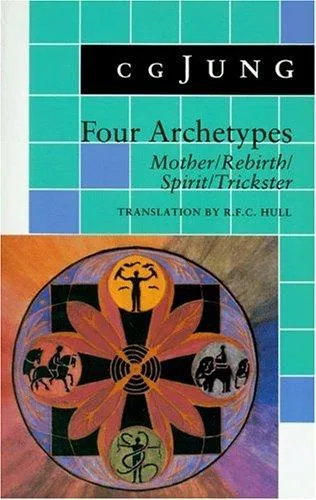
Four archetypes
 80
80

Four archetypes
Jung's "Four Archetypes" offers a stark, analytical lens into the recurring figures that populate the human psyche. The strength of the work lies in its rigorous deconstruction of these primal images, providing concrete examples from mythology and religious texts to illustrate abstract concepts like the Hero's journey. However, the text can feel dense and overly academic for the uninitiated, lacking the narrative flow that might otherwise make these profound ideas more accessible. A particularly illuminating passage is Jung's analysis of the anima and animus, which, while challenging, offers a potent explanation for relational dynamics. Ultimately, "Four Archettes" is an indispensable, albeit demanding, resource for understanding the bedrock of human symbolism.
📝 Description
80
### What It Is Carl Gustav Jung's "Four Archetypes" presents a foundational exploration into the innate, universal patterns of the human psyche. It is not a narrative but an analytical text, dissecting the primal images and fundamental structures that shape our perceptions and behaviors. Jung posits these archetypes as inherited predispositions, influencing everything from myth and fairy tales to individual dreams and conscious thought. The work aims to illuminate the unconscious foundations of the human experience.
### Who It's For This text is essential for anyone seeking a deeper understanding of psychological symbolism and the underpinnings of cultural narratives. It will appeal to students of depth psychology, comparative mythology, religious studies, and those interested in the symbolic language of dreams. Individuals grappling with recurring patterns in their lives or seeking to comprehend collective human behavior will find fertile ground here.
### Historical Context First published in 1973, "Four Archetypes" emerged from Jung's extensive work in analytical psychology, a field he founded. This period saw a significant engagement with mythic structures and their psychological relevance, contrasting with more behaviorist or Freudian psychoanalytic approaches dominant at the time. Jung's ideas were part of a broader intellectual milieu that included scholars like Mircea Eliade, who also explored the universal dimensions of myth and ritual. The book represents a distillation of decades of Jung's research and clinical practice.
### Key Concepts The core of "Four Archetypes" lies in Jung's identification and analysis of fundamental psychic structures. These are not learned but are innate potentials for experience and expression. The book details specific archetypes such as the Mother, the Hero, the Wise Old Man, and the Trickster, illustrating how they manifest across diverse cultures and epochs. Understanding these archetypes provides a framework for interpreting the symbolic content of both individual lives and collective human endeavors.
💡 Why Read This Book?
• Gain insight into the archetype of the Hero, learning how its narrative structure appears in ancient myths and modern stories, offering a framework for understanding personal challenges and growth. • Understand the concept of the Great Mother archetype, as detailed in the book's analysis, to recognize its dualistic manifestations of nurturing and destructive forces in cultural narratives and personal relationships. • Explore the role of the Wise Old Man archetype, as presented by Jung, to grasp its significance as a symbol of wisdom and guidance, and how it functions in spiritual traditions and individual quests for meaning.
⭐ Reader Reviews
Honest opinions from readers who have explored this book.
❓ Frequently Asked Questions
What are the four archetypes discussed in Carl Jung's book?
The book primarily focuses on the archetypes of the Mother, the Hero, the Wise Old Man, and the Trickster, detailing their universal patterns and symbolic manifestations across human cultures.
When was Carl Jung's "Four Archetypes" first published?
The original publication date for "Four Archetypes" was 1973, though its concepts are derived from Jung's extensive work throughout the 20th century.
How do archetypes differ from stereotypes?
Archetypes are innate, universal psychic predispositions, whereas stereotypes are culturally specific, learned generalizations about groups of people.
Can understanding archetypes help with personal development?
Yes, by recognizing these patterns in oneself and in external narratives, individuals can gain self-awareness and a deeper understanding of their motivations and behaviors.
Is "Four Archetypes" a good starting point for learning about Jungian psychology?
While foundational, it is a dense analytical text. Works like "Man and His Symbols" might serve as a more accessible introduction to Jung's broader ideas before tackling "Four Archetypes" directly.
Where does Jung discuss the archetype of the Shadow?
While "Four Archetypes" focuses on specific figures, the concept of the Shadow is a central archetype discussed in other works by Jung, such as "Psychology and Alchemy" and "The Archetypes and the Collective Unconscious."
🔮 Key Themes & Symbolism
The Hero's Journey
This theme examines the universal narrative structure of the Hero, a pattern found across countless myths and stories since antiquity. It details the trials, transformations, and ultimate return that define this archetype. Jung illustrates how this pattern reflects the human struggle for individuation and the overcoming of obstacles, both internal and external. The concept is crucial for understanding how societies project their aspirations and fears onto heroic figures, providing models for courage and self-discovery.
The Great Mother
Jung's analysis of the Great Mother archetype delves into its dualistic nature, encompassing both nurturing, life-giving aspects and devouring, destructive potentials. This theme explores how this primal image is represented in goddesses, nature, and the maternal bond across different cultures. The text highlights its significance in shaping early psychological development and its pervasive influence on our perceptions of security, creativity, and the abyss.
The Wise Old Man
This theme investigates the archetype of the Wise Old Man, embodying knowledge, wisdom, and spiritual guidance. Jung presents this figure as a personification of the collective unconscious's accumulated wisdom, often appearing in dreams or as revered figures in spiritual traditions. The work explores how this archetype represents the search for meaning and the authoritative voice of experience, offering direction and insight to those on a quest.
The Trickster
The Trickster archetype, as explored in the book, represents chaos, disruption, and the subversion of established norms. This theme analyzes how the Trickster figure, often a shapeshifter or a jester, challenges conventional thinking and societal structures, paradoxically paving the way for new possibilities. The work illustrates its presence in folklore and mythology as a force that both deceems and enlightens, highlighting the unpredictable nature of consciousness.
💬 Memorable Quotes
“The archetype is a tendency to form representations of a motif—representations that can vary enormously in detail without losing their basic pattern.”
— This highlights Jung's concept that archetypes are not fixed images but rather inherent potentials or blueprints that manifest in diverse cultural forms, yet retain a recognizable core structure.
“The mother, in her positive aspect, is the source of all life, the fountain of all nourishment.”
— This captures the benevolent side of the Great Mother archetype, emphasizing her role as the origin of creation, sustenance, and unconditional support within the psyche and in external relationships.
“The hero... is often the first to face the danger, and to fight the dragon, and to rescue the princess.”
— This succinctly describes the quintessential actions of the Hero archetype, symbolizing the individual's struggle against formidable challenges and the quest for liberation or achievement.
“The shadow is a living something, a preliminary enactment of which can be observed in the animal which by its cunning outwits its pursuers.”
— This interpretation suggests that even primal instincts of survival and evasion can be seen as early manifestations of the shadow, a less conscious, often darker aspect of the psyche.
“The father archetype is the embodiment of authority and order.”
— This defines the paternal aspect of archetypal figures, representing structure, law, and the guiding principles that establish societal and personal frameworks.
🌙 Esoteric Significance
Tradition
Jung's work, including "Four Archetypes," fits within the broad spectrum of Western Esotericism, particularly its psychological and symbolic interpretations of ancient wisdom traditions. While not strictly Gnostic or Kabbalistic, his concepts of archetypes and the collective unconscious draw parallels to notions of divine patterns and universal consciousness found in these lineages. Jung sought to bridge the gap between empirical science and the symbolic language of mysticism, offering a modern psychological framework for understanding phenomena previously confined to religious or occult studies.
Symbolism
Key symbols explored include the Dragon, representing primal chaos and the formidable challenges of the unconscious that the Hero must confront. The Mandrake, often associated with the Great Mother, symbolizes fertility, hidden power, and the mysterious life force. The Grail, frequently linked to the Hero's quest, represents spiritual fulfillment, unattainable perfection, and the object of profound spiritual longing within esoteric traditions.
Modern Relevance
Contemporary thinkers and practitioners in fields ranging from depth psychology and literary criticism to transpersonal studies and even certain branches of New Age spirituality continue to draw heavily from Jung's archetypal theory. His framework provides a language for discussing universal human experiences and symbolic patterns that resonate with modern seekers of meaning and self-understanding, influencing therapeutic modalities and creative expression.
👥 Who Should Read This Book
• Students of Jungian psychology and analytical psychology seeking a focused examination of core archetypal figures. • Comparative mythology scholars interested in the universal patterns underlying global myths and folk tales. • Individuals exploring personal symbolism, dream analysis, and the deeper structures of their own psyche.
📜 Historical Context
Published in 1973, "Four Archetypes" emerged from the latter half of Carl Gustav Jung's influential career in analytical psychology. This era saw a robust intellectual discourse on the nature of myth and consciousness, with Jung's theories standing in contrast to the more socially-focused psychoanalysis of Freud and the burgeoning humanistic psychology movements. Contemporaries like Joseph Campbell were independently exploring similar universal narrative patterns in myth. Jung's work, particularly his concept of the collective unconscious and its archetypal contents, was a significant departure from purely empirical or behaviorist approaches. The book represents a distillation of his lifelong engagement with comparative mythology, religious studies, and clinical observation, seeking to establish a psychological basis for these universal human expressions.
📔 Journal Prompts
The Hero's quest: identify a personal challenge mirroring the archetype's structure.
The Great Mother's dual nature: reflect on its presence in your life.
The Wise Old Man's guidance: consider a time wisdom was sought or received.
The Trickster's disruption: analyze a moment when norms were challenged.
Archetypal motifs in dreams: record and interpret recurring symbols.
🗂️ Glossary
Archetype
An innate, universal psychic disposition that influences how humans experience and respond to the world, forming the basis of common myths and symbols.
Collective Unconscious
A hypothesized layer of the unconscious mind shared by all humans, containing archetypes and inherited memories common to the species.
Individuation
The lifelong psychological process of differentiation of the self, by which an individual integrates their conscious and unconscious aspects to achieve wholeness.
Psychic Energy
Jung's concept of libido, not limited to sexual energy but understood as a general life force that fuels psychological processes and motivations.
Anima/Animus
The unconscious feminine aspect in the male psyche (anima) and the unconscious masculine aspect in the female psyche (animus), influencing relationships and projections.
Persona
The social mask or role that an individual presents to the world, often concealing their true nature or inner self.
Shadow
The unconscious, often repressed, aspect of the personality that the conscious ego does not identify in itself; it contains both positive and negative traits.