Die Erfindung des Nostradamus
 72
72

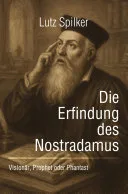
Die Erfindung des Nostradamus
Lutz Spilker's *Die Erfindung des Nostradamus* offers a refreshingly critical perspective on the persistent mystique of Michel de Nostredame. Instead of rehashing debates on predictive accuracy, Spilker compellingly argues that Nostradamus's enduring power lies in his masterful manipulation of language and form. The book excels when dissecting specific quatrains, illustrating how their inherent vagueness allows for continuous re-appropriation across centuries, a point particularly well-made when analyzing the supposed prophecies surrounding major European conflicts. However, the analysis occasionally feels constrained by its singular focus on textual mechanics, at times underplaying the broader socio-historical conditions that fuel the demand for prophecy itself. A limitation lies in the difficulty of definitively proving intentionality behind every ambiguous phrase, a challenge inherent in analyzing texts from the 16th century. Spilker's work is a valuable contribution for its sophisticated examination of textual efficacy. It is a rigorous academic inquiry into the nature of enduring influence.
📝 Description
72
Lutz Spilker's 2026 book argues Nostradamus's fame rests on his writing, not his foresight.
In *Die Erfindung des Nostradamus*, Lutz Spilker examines how Michel de Nostredame achieved lasting renown not as a prophet, but as a skillful writer. Spilker's analysis suggests Nostradamus's influence endures because of his unique compositional methods and the deliberate ambiguity in his language. The book shifts scholarly attention from verifying Nostradamus's predictions to understanding how his writings have remained relevant across centuries.
This work is suited for anyone curious about how texts gain lasting cultural power and affect audiences beyond their original time. It will interest historians, literary critics, and students of prophetic traditions. It also appeals to those who study the psychological and social reasons behind the reverence for figures like Nostradamus, offering a critical view for readers skeptical of standard prophetic interpretations.
Spilker's 2026 publication enters a long discourse on Nostradamus, which began with efforts to interpret his *Centuries* soon after his 1566 death. The book moves beyond the literal interpretations common in the 17th and 18th centuries and the esoteric revivals of the late 19th century. It builds on 20th-century scholarship that questioned alleged predictions, but introduces a new perspective centered on the strategic construction of his verse.
💡 Why Read This Book?
• Understand the specific textual strategies Nostradamus employed, such as his use of astrological symbolism and neologisms, to ensure his work’s continued relevance beyond the 16th century. • Gain a critical framework for analyzing how historical figures achieve lasting cultural impact, moving beyond literal interpretations to examine the construction of their legacy, as explored in Spilker’s concept of "textual invention." • Re-evaluate the phenomenon of prophecy by focusing on the reader's role in interpretation, a perspective highlighted by Spilker’s analysis of the *Centuries* as a dynamic cultural artifact rather than a fixed set of predictions.
⭐ Reader Reviews
Honest opinions from readers who have explored this book.
❓ Frequently Asked Questions
What is Lutz Spilker's main argument about Nostradamus?
Spilker argues that Michel de Nostredame's lasting fame stems not from prophetic accuracy but from his sophisticated textual construction. The book focuses on how his ambiguous verses, first published in 1555, were designed for perpetual reinterpretation.
Does this book claim Nostradamus was not a prophet?
The book reframes the question of prophecy. It suggests Nostradamus's influence is a result of his skillful writing and the way his texts have been interpreted over centuries, rather than divine foresight.
What historical period does the book focus on regarding Nostradamus's reception?
While Spilker analyzes the original text from the 16th century, the book's primary focus is on the enduring reception and reinterpretation of Nostradamus's verses throughout subsequent centuries, up to the present day.
What is 'textual invention' in the context of this book?
'Textual invention' refers to Nostradamus's deliberate use of ambiguous language, astrological references, and poetic devices within his *Centuries* to create verses that could be repeatedly adapted to new historical events.
Who would benefit most from reading 'Die Erfindung des Nostradamus'?
Scholars of history, literature, and esoteric traditions, as well as readers interested in textual analysis, the sociology of belief, and the cultural impact of prophecy, will find this book particularly insightful.
When was 'Die Erfindung des Nostradamus' first published?
Lutz Spilker's work 'Die Erfindung des Nostradamus' was first published on January 20, 2026.
🔮 Key Themes & Symbolism
Textual Ambiguity as Strategy
Spilker posits that Nostradamus's quatrains function not as direct predictions but as deliberately ambiguous statements. This ambiguity, achieved through careful word choice, astrological allusions, and veiled references, allows the text to be continuously reinterpreted and applied to unfolding historical events. The work explores how this textual characteristic is fundamental to the *Centuries*' longevity, transforming it from a historical document into a perpetually relevant oracle for successive generations.
The Construction of Prophetic Authority
This theme centers on how Nostradamus's authority as a prophet was not inherent but actively constructed through the textual strategies employed in his writings. The book examines the reception history, highlighting how interpreters and readers, across different eras, have contributed to solidifying his prophetic status. It critiques the notion of passive reception of prophecy, emphasizing instead the active role of the audience in shaping the prophet's enduring image and influence.
Reception History and Textual Evolution
The work delves into how the *Centuries* have been read and reinterpreted since their initial publication in 1555. Spilker analyzes how specific historical moments, such as periods of war or societal upheaval, have prompted new readings and applications of Nostradamus's verses. This theme underscores the dynamic relationship between the text and its historical context, illustrating how the meaning and perceived accuracy of the prophecies evolve over time through continuous engagement.
Literary Devices in Prophecy
Spilker dissects the specific literary techniques Nostradamus utilized, including the use of neologisms, multilingual puns, and coded astrological language. These devices are presented not as mystical secrets but as rhetorical tools designed to obscure precise meaning, thereby enhancing the text's adaptability. The book argues that understanding these techniques is key to appreciating why Nostradamus's work has maintained such a prominent place in popular and esoteric discourse.
💬 Memorable Quotes
“The enduring power of Nostradamus lies less in the veracity of his visions and more in the masterful construction of his verses.”
— This statement encapsulates the core argument: Nostradamus's lasting fame is attributed to his skill as a writer and his deliberate use of ambiguous language, rather than any genuine prophetic ability.
“Each generation finds in the *Centuries* not a fixed prophecy, but a mirror reflecting its own anxieties and hopes.”
— This interpretation highlights how readers actively project their contemporary concerns onto Nostradamus's text, suggesting that its relevance is a product of reader interpretation and historical context.
“The ambiguity of Nostradamus's language is the engine of his perpetual relevance.”
— This emphasizes the central role of linguistic vagueness. Spilker suggests that the deliberate lack of clarity in Nostradamus's quatrains is the primary reason they continue to be applied to new situations.
“We must shift our focus from deciphering Nostradamus's intent to understanding the mechanisms of his text's reception.”
— This points to a methodological shift proposed by Spilker. Instead of trying to uncover what Nostradamus 'really' meant, the book advocates for analyzing how the text has been understood and utilized by others over time.
“The 'prophet' is as much a product of his interpreters as of his own writings.”
— This suggests a co-creation of the prophetic figure. Spilker argues that the image and influence of Nostradamus are significantly shaped by the individuals and communities who have engaged with and disseminated his work.
🌙 Esoteric Significance
Tradition
While Nostradamus's work is often categorized within esoteric traditions, Spilker's analysis steps away from traditional Hermetic or Kabbalistic interpretations. Instead, it examines the *phenomenon* of his esoteric appeal through a lens of textual efficacy. The book situates Nostradamus not within a specific mystical lineage, but as a figure whose writings have historically been *treated* as esoteric, functioning as a focal point for divination and occult speculation across centuries.
Symbolism
The work specifically addresses Nostradamus's use of veiled symbolism, particularly astrological references and archaic language, as key to his text's adaptability. These elements, while seemingly esoteric, are presented by Spilker as deliberate tools for ambiguity. They function less as keys to specific mystical truths and more as linguistic placeholders that allow each era to inscribe its own meanings and perceived fulfillments onto the text.
Modern Relevance
Spilker's work resonates with contemporary scholars and practitioners interested in the sociology of belief, the psychology of divination, and the enduring power of narrative. Thinkers in fields like media studies and cultural semiotics find value in his analysis of how texts achieve persistent cultural relevance. Furthermore, contemporary esoteric circles, while perhaps not adhering strictly to Spilker's textual focus, continue to engage with Nostradamus's verses, demonstrating the ongoing, albeit varied, impact of his work.
👥 Who Should Read This Book
• Students of historical prophecy and divination seeking to understand the mechanisms behind enduring prophetic figures, moving beyond simple belief/disbelief. • Literary scholars interested in reception history and the analysis of textual ambiguity as a tool for cultural longevity. • Critical thinkers and cultural analysts who wish to examine how certain texts gain and maintain significant influence across different historical periods and societies.
📜 Historical Context
Published in 2026, Lutz Spilker's *Die Erfindung des Nostradamus* arrives in an era where critical engagement with historical prophecy is commonplace. The work implicitly addresses a long lineage of Nostradamus scholarship, dating back to the 17th century, which oscillated between literal interpretation and skeptical dismissal. Spilker's approach builds upon 20th-century critiques that questioned the predictive accuracy of the *Centuries*, first published in 1555. However, Spilker’s innovation lies in focusing on textual strategy rather than historical verification. He positions his work against earlier esoteric interpretations that often sought hidden meanings, instead offering a framework rooted in literary analysis and reception theory. Unlike contemporaries who might focus on the astrological underpinnings, Spilker prioritizes the linguistic architecture that facilitates enduring appeal. The book engages with the ongoing academic debate concerning the construction of cultural myths and the longevity of influential texts.
📔 Journal Prompts
Nostradamus's deliberate ambiguity as a textual strategy.
The role of interpreters in constructing prophetic authority.
How historical context shapes the reading of the *Centuries*.
Analyzing the neologisms and veiled references in Nostradamus's quatrains.
The evolution of Nostradamus's influence from the 16th century to the present.
🗂️ Glossary
Centuries
The primary collection of quatrains attributed to Michel de Nostredame, first published in 1555. It is the foundational text for his reputation as a prophet.
Quatrain
A stanza of four lines, typically rhyming. Nostradamus's prophecies are famously presented in this poetic form.
Textual Invention
Lutz Spilker's concept referring to the deliberate crafting of ambiguous and multi-layered verses by Nostradamus, designed for repeated reinterpretation across different historical periods.
Reception History
The study of how a particular work (in this case, Nostradamus's *Centuries*) has been understood, interpreted, and utilized by audiences throughout different historical eras.
Neologism
A newly coined word or expression. Spilker notes Nostradamus's use of such terms to obscure precise meaning and add layers to his verses.
Astrological Allusion
References to celestial bodies, conjunctions, or astrological phenomena used by Nostradamus within his prophecies, contributing to their enigmatic quality.
Esoteric
Intended for or likely to be understood by only a small number of people with a specialized knowledge or interest; relating to mystical or occult matters.