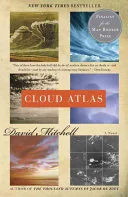
Cloud Atlas
 81
81

Cloud Atlas
Mitchell's *Cloud Atlas* is an audacious structural feat, a set of six nested tales that read like echoes across time. The sheer ambition is its greatest strength, presenting distinct genres and eras—from Adam Ewing's 1850 Pacific journal to Frobisher's 1930s correspondence and Luisa Rey's 1970s investigative report—with remarkable fidelity. Yet, this ambition occasionally strains the narrative's coherence. The transition back up through the nested stories, while clever, can feel less organic than the initial descent. The final section, Sonmi~451's dystopian chronicle, while powerful in its own right, also serves as the conclusive anchor for the entire structure, a weight that at times feels heavy. Still, the exploration of interconnectedness and the persistence of the human spirit across vastly different circumstances offers a compelling, if demanding, literary experience.
Verdict: A structurally daring exploration of human connection across epochs.
📝 Description
81
### What It Is David Mitchell's *Cloud Atlas* is a novel structured as a nested set of six stories, each interrupted midway and then concluded in reverse order. The narrative spans centuries, from the mid-19th century Pacific to a far-future post-apocalyptic Earth. Each story is told in a distinct genre and voice, creating a mosaic of human experience across time and space.
### Who It's For This work appeals to readers who appreciate ambitious literary structures and thematic depth. It is for those interested in the interconnectedness of lives, the cyclical nature of history, and the persistence of certain human struggles and aspirations. Readers drawn to philosophical explorations of consciousness, reincarnation, and the impact of actions across generations will find much to consider.
### Historical Context Published in 2004, *Cloud Atlas* emerged in a literary landscape increasingly interested in fragmented narratives and grand, sweeping historical visions. Mitchell's novel can be seen in conversation with works that explore historical consciousness and interconnected destinies, though its unique nested structure and genre-hopping set it apart. Its critical reception was largely positive, earning it a nomination for the Booker Prize, cementing its place as a significant work of early 21st-century fiction.
### Key Concepts The novel delves into themes of predestination versus free will, the nature of identity across lifetimes, and the struggle against oppression. It uses recurring motifs, such as a comet-shaped birthmark and the Sonmi~451's struggle for freedom, to link its disparate narratives. The concept of the soul's journey and the echoes of past actions in future lives form a central esoteric undercurrent.
💡 Why Read This Book?
• Gain an appreciation for narrative architecture by experiencing the unique nested structure, mirrored in the 2012 film adaptation, and understand how Mitchell links Adam Ewing's 1850 journal to later narratives. • Explore the concept of reincarnation and soul transmigration, as suggested by recurring birthmarks and character parallels across the six distinct stories, particularly the connection between Robert Frobisher and contemporary characters. • Contemplate the enduring struggle against systemic oppression, exemplified by Sonmi~451's fight for liberation in a far-future society, and its parallels to historical resistance movements.
⭐ Reader Reviews
Honest opinions from readers who have explored this book.
❓ Frequently Asked Questions
What is the core structure of David Mitchell's Cloud Atlas?
The novel employs a unique nested structure, presenting six stories within stories. The first half of the first story is told, then the first half of the second, and so on, until the middle of the sixth story. The narrative then reverses, concluding the sixth story, then the fifth, and so on, back to the first.
How does Cloud Atlas explore reincarnation or interconnected lives?
The book suggests interconnectedness through recurring motifs like a comet-shaped birthmark appearing on characters across different eras and stories, and the idea that souls or consciousness might carry over, influencing future lives and actions.
What historical periods are covered in Cloud Atlas?
The novel spans a vast temporal range, beginning with Adam Ewing's 1850 voyage in the Pacific, moving through Robert Frobisher's 1930s composing period, Luisa Rey's 1970s investigative thriller, Timothy Cavendish's 2000s mistaken incarceration, and culminating in a post-apocalyptic future narrative.
Is Cloud Atlas a science fiction novel?
While the final story, Sonmi~451's, is set in a far-future dystopian society and contains science fiction elements, the novel as a whole is not strictly genre-bound. It incorporates elements of historical fiction, thriller, contemporary drama, and speculative fiction.
What is the significance of the comet-shaped birthmark in Cloud Atlas?
The comet-shaped birthmark serves as a recurring symbol across several of the novel's interconnected stories. It acts as a visual cue, hinting at a deeper connection or shared destiny among characters who bear it, suggesting a spiritual or karmic link.
Who are the main characters in Cloud Atlas?
The novel features six protagonists, each central to their respective story: Adam Ewing, a 19th-century American notary; Robert Frobisher, a bisexual English composer in the 1930s; Luisa Rey, a journalist investigating a nuclear power plant in the 1970s; Timothy Cavendish, a publisher in the early 2000s; Sonmi~451, a fabricant in a dystopian Korea; and Zachry, a cave dweller in a post-apocalyptic Hawaii.
🔮 Key Themes & Symbolism
The Echo of Souls
The novel posits a form of transmigration or soul-echo, where individuals appear across different eras, often marked by a shared birthmark (the comet shape) or similar life circumstances. This theme suggests that human consciousness or a fundamental essence persists and reappears, influencing subsequent lives. The structure itself, with stories mirroring and reflecting each other, reinforces this idea of echoes. Characters like Adam Ewing and Robert Frobisher, separated by decades, seem to resonate with each other's struggles against confinement and societal expectations.
Struggle Against Oppression
A persistent thread throughout *Cloud Atlas* is the fight against various forms of tyranny and control. From the exploitation of Pacific islanders in Adam Ewing's time to the corporate malfeasance investigated by Luisa Rey, and most starkly in Sonmi~451's narrative of a genetically engineered slave class rebelling against their creators, the novel critiques systems designed to dehumanize and subjugate. The desire for freedom and autonomy is presented as an enduring human aspiration.
Interconnectedness of Actions
The nested structure is not merely a literary device; it is integral to the theme of consequence. Each story's actions ripple outwards, influencing subsequent narratives in ways both direct and symbolic. A small act of kindness or cruelty in one era can have unforeseen repercussions centuries later. This interconnectedness suggests a cosmic or karmic causality, where lives are bound together not just by shared motifs but by the tangible impact of their choices across the continuum of existence.
The Nature of Identity
As characters seemingly reappear across time, the novel prompts questions about personal identity. Is identity tied to a single life, or is it something more enduring? The recurring birthmark and similar personality traits across different characters suggest that while circumstances change, certain core aspects of a soul or being may persist. This challenges conventional notions of selfhood, proposing a fluid and potentially eternal identity that transcends individual lifetimes and historical contexts.
💬 Memorable Quotes
“Our mistreatment of the weak, the ignorant, the helpless. The prejudice of rulers. The folly of the wise. The arrogance of the strong.”
— This passage, paraphrased from Adam Ewing's journal, encapsulates the recurring patterns of human behavior and societal ills that Mitchell explores. It highlights the enduring nature of power dynamics and the ethical failings that plague humanity across different eras.
“I am I, and I remain I, and you are you, and you remain you, and we are strangers.”
— This line, attributed to a character in the Sonmi~451 narrative, speaks to the profound isolation that can exist even when lives are seemingly connected. It questions whether true understanding or lasting connection is possible across vast divides of experience and existence.
“The future is an ocean, and we are but swimmers.”
— This metaphorical statement suggests the vastness and unpredictability of what is to come, contrasting it with the limited agency of individuals within it. It reflects the novel's exploration of destiny versus free will, and the often-overwhelming scale of historical forces.
“There is no end to the cruelties men will inflict on one another in the name of religion, of nation, of race, of economic necessity.”
— This observation, drawn from the novel's historical and future narratives, points to the persistent human tendency to create divisions and justify violence based on abstract ideologies or perceived group identities.
“Go then, if you must. All that you leave behind will wither, of course, but I shall be content to sit here and count the petals.”
— This statement, reflecting a sense of resignation and detachment, speaks to the theme of loss and the acceptance of impermanence. It suggests a quiet strength found in observing the inevitable decay of things, finding solace in simple presence.
🌙 Esoteric Significance
Tradition
While not explicitly aligned with a single esoteric tradition, *Cloud Atlas* draws heavily on concepts found in Theosophy and certain Eastern philosophies, particularly Hinduism and Buddhism, regarding reincarnation, karma, and the interconnectedness of souls. The recurring birthmark and the sense of 'déjà vu' or past-life resonance between characters align with the Theosophical idea of monadic evolution across vast timescales. It departs from rigid doctrines by presenting these ideas through a secular, literary lens, focusing on their impact on human experience rather than theological dogma.
Symbolism
The comet-shaped birthmark is a primary symbol, signifying a soul's continuity or karmic linkage across lifetimes. It acts as a mystical identifier, connecting seemingly disparate individuals. The recurring motif of confinement—prisons, asylums, societal restrictions—symbolizes the limitations of the physical body and societal structures that bind the spirit. The act of writing or creating art (letters, musical scores, recordings) represents the enduring power of human expression to transcend time and leave a trace of the soul's journey.
Modern Relevance
Contemporary thinkers and practitioners in fields like transpersonal psychology and comparative mythology find resonance in Mitchell's exploration of consciousness and interconnectedness. The novel's themes of karma, soul evolution, and the cyclical nature of history align with modern spiritual discourse that moves beyond traditional religious frameworks. Its influence can be seen in contemporary fiction that experiments with narrative structure to explore these very ideas, and in discussions about how individual actions contribute to a collective human destiny.
👥 Who Should Read This Book
• Students of comparative literature and narrative theory interested in experimental structures and genre fusion, particularly those analyzing how Adam Ewing's 1850 journal sets a precedent for later narratives. • Readers drawn to philosophical explorations of identity, consciousness, and reincarnation, who will appreciate the thematic links between characters across the novel's six distinct time periods. • Aspiring writers and literary critics seeking to understand ambitious novelistic construction and how authors like David Mitchell employ structural devices to convey complex ideas about human connection.
📜 Historical Context
When David Mitchell's *Cloud Atlas* was published in 2004, the literary world was grappling with postmodern fragmentation and a renewed interest in historical narratives. Mitchell's novel, with its intricate six-part nested structure, stood out for its formal audacity. It engaged with themes of historical consciousness and interconnected destiny, echoing concerns present in works by authors like Hilary Mantel or even earlier literary figures who explored cyclical time, though Mitchell's genre-bending approach and unique structure were distinct. The novel was a significant critical success, earning a Booker Prize nomination and positioning Mitchell as a major voice. Its reception demonstrated a public appetite for ambitious, structurally complex fiction that could still deliver compelling human stories across vast temporal and stylistic landscapes.
📔 Journal Prompts
The comet-shaped birthmark as a marker of soul continuity.
Reflect on the parallels between Adam Ewing's confinement and Sonmi~451's servitude.
The ethics of storytelling across different historical periods.
How does the nested structure of *Cloud Atlas* reinforce its themes?
Consider the representation of oppression in the 1970s thriller section versus the future dystopia.
🗂️ Glossary
Fabricant
In *Cloud Atlas*, a 'fabricant' refers to a genetically engineered, artificial human designed for servitude. Sonmi~451 is a fabricant, highlighting themes of exploitation and the definition of sentience.
Voyage of the *Prophetess*
The ship on which Adam Ewing travels in 1850. His journal entries detail the harsh conditions and his observations of exploitation, forming the first nested narrative.
Sonmi~451
The protagonist of the sixth, innermost story. A fabricant who achieves consciousness and leads a rebellion, her narrative is presented as a recorded testimony.
Comet-shaped birthmark
A recurring physical characteristic that appears on various characters across the novel's different timelines, suggesting a spiritual or karmic connection between them.
The Horologium
A fictional device mentioned in the Sonmi~451 narrative, used for 'mind-wiping' and control. It symbolizes the technological means of oppression in that future society.
Luisa Rey
An investigative journalist in the 1970s whose story forms the third narrative layer, uncovering a conspiracy involving a nuclear power plant.
Timothy Cavendish
A London-based publisher whose comedic yet harrowing story of mistaken confinement in a nursing home constitutes the fourth narrative layer.