Celtic mythology
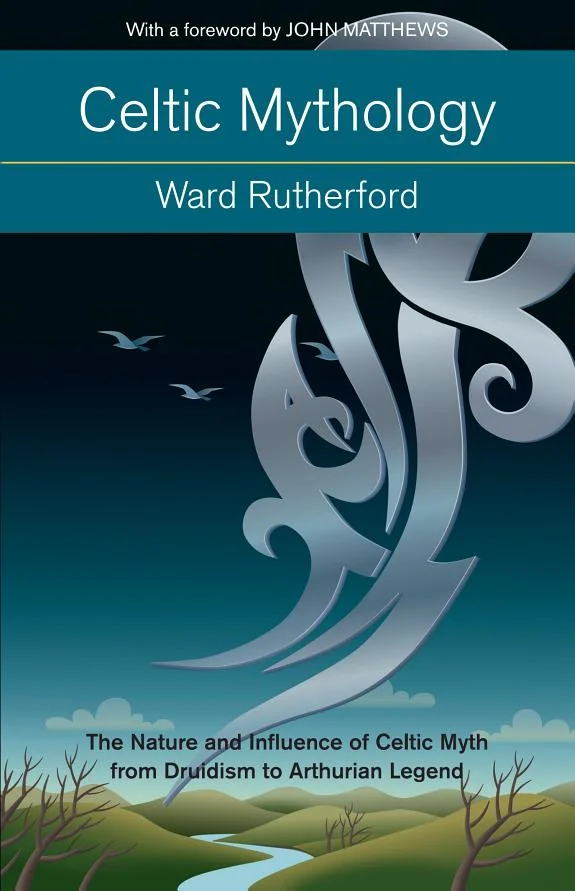
 79
79

Celtic mythology
Rutherford's "Celtic Mythology" attempts to impose a coherent structure onto a diffuse and often contradictory body of lore. The strength lies in its systematic approach, dissecting familiar tales like those of the Ulster Cycle into their constituent mythological elements. However, the book occasionally leans towards speculative interpretations, particularly when attempting to map Celtic beliefs onto broader Indo-European patterns without sufficient textual grounding for every assertion. A notable passage details the transformative powers attributed to figures like the Dagda, illustrating the fluid boundaries between human and divine in Celtic narratives. While valuable for its analytical framework, readers should approach its broader conclusions with a critical eye, recognizing the inherent challenges in reconstructing ancient belief systems from limited sources. It remains a solid academic contribution to the field.
📝 Description
79
Ward Rutherford's 1995 book examines the mythological structures of ancient Celtic cultures.
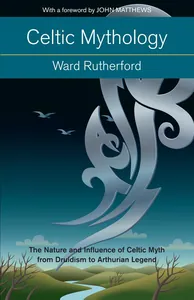
Ward Rutherford's "Celtic Mythology" dissects the mythological structures and narrative patterns underlying ancient Celtic societies. Rather than a general survey, the book offers a structured analysis of the figures, cosmologies, and core myths that shaped the spiritual and cultural identity of European peoples. Rutherford focuses on pre-Christian Celtic beliefs and their lasting impact.
This work is suited for scholars of comparative mythology, students of European folklore, and practitioners interested in the origins of animistic and nature-based spiritual paths. It specifically addresses those curious about the pre-Roman religious beliefs of the Celts and their persistent influence on later traditions. The book engages with fragmented textual evidence and archaeological findings to reconstruct these early belief systems, a pursuit common in the 1990s with scholars like Miranda Green also examining Celtic art and religion.
Published in 1995, Rutherford's "Celtic Mythology" arrived during a resurgence of academic and popular interest in Celtic studies and esoteric traditions. The book contributes to efforts to reconstruct and interpret pre-Roman and early medieval belief systems, often piecing together information from limited historical texts and archaeological discoveries. This period saw engagement with scholars who, like Miranda Green, also investigated Celtic art and religion, aiming to understand the spiritual landscape before widespread Christianization.
💡 Why Read This Book?
• Gain specific insights into the concept of the Otherworld (Tír na nÓg) as presented in Celtic lore, understanding its distinct characteristics compared to other mythological realms. • Learn about the role of sacred geography, such as the significance of wells and trees in Celtic ritual, as detailed within the text's examination of pre-Christian practices. • Understand the archetypal functions of key figures like the Dagda, moving beyond simple character identification to grasp their symbolic weight within the mythological system.
⭐ Reader Reviews
Honest opinions from readers who have explored this book.
❓ Frequently Asked Questions
When was Ward Rutherford's "Celtic Mythology" first published?
Ward Rutherford's "Celtic Mythology" was first published in 1995, contributing to the scholarly discourse on Celtic beliefs during that period.
What is the "Otherworld" in Celtic mythology as discussed by Rutherford?
The Otherworld, often termed Tír na nÓg, is depicted as a supernatural realm coexisting with the human world, inhabited by deities and the dead, and accessible through mystical portals or specific rituals.
Does the book cover pre-Roman Celtic beliefs?
Yes, the work aims to reconstruct and interpret the mythological structures and beliefs of ancient Celtic cultures, including those predating Roman influence, based on available evidence.
What are some key concepts explored in the book?
Key concepts include the tripartite division of society and cosmos, the importance of sacred natural sites like groves and wells, and the cyclical nature of life and death.
Who is the Dagda in Celtic mythology according to this book?
The Dagda is presented as a central figure, often associated with fertility, kingship, and abundance, possessing a magical cauldron and club, symbolizing his multifaceted power.
What makes this book different from general Celtic history books?
This book focuses specifically on the mythological and cosmological frameworks, offering an analytical rather than purely historical account of Celtic beliefs and narratives.
🔮 Key Themes & Symbolism
The Structure of Myth
Rutherford's work systematically breaks down Celtic narratives into their foundational mythological components. It moves beyond simple storytelling to analyze the underlying archetypes and structural patterns present in tales from the Ulster Cycle and beyond. The book illustrates how these myths served not just as entertainment but as frameworks for understanding the world, social order, and the relationship between humanity and the divine or supernatural realms.
Sacred Geography and Nature
A significant theme is the deep connection between Celtic mythology and the natural world. Rutherford highlights the sacredness attributed to specific geographical features—groves, rivers, wells, and mountains—as liminal spaces where the veil between the mundane and the Otherworld thinned. This reverence for nature is presented as integral to Celtic spiritual practice and cosmology, influencing rituals and belief systems.
The Tripartite Principle
The book explores the recurring motif of tripartite division within Celtic thought, manifesting in social structures, divine functions, and cosmological models. This principle suggests a worldview organized around threes, reflecting balance and completeness, seen in deities with multiple roles or in the cyclical patterns of creation, preservation, and destruction inherent in their myths.
The Otherworld and Its Denizens
Central to Celtic mythology is the concept of the Otherworld, a realm of gods, spirits, and the departed. Rutherford examines Tír na nÓg and similar concepts, detailing its characteristics, modes of access for mortals, and the beings who inhabit it, such as the Tuatha Dé Danann. The interplay between the human world and this supernatural domain is a recurring narrative driver.
💬 Memorable Quotes
“The Dagda's club could kill with one end and restore life with the other.”
— This illustrates the dualistic yet ultimately generative power attributed to key figures, representing the cyclical nature of life and death central to Celtic cosmology.
“Sacred groves were the primary temples for the ancient Celts.”
— This emphasizes the animistic and nature-centric foundation of Celtic spirituality, where natural sites held divine significance and served as places of worship.
“The heroes of myth often journeyed to the Otherworld.”
— This highlights the porous boundary between the mortal and supernatural realms in Celtic narratives, and the quest for knowledge or power undertaken by mythological figures.
“Celtic mythology often presents a fluid, shifting reality.”
— This speaks to the dynamic nature of their belief systems, where transformations, illusions, and the merging of human and divine were common narrative elements.
“The Tuatha Dé Danann were often depicted as gods and ancestors.”
— This points to the complex identity of these supernatural beings, blurring the lines between divine entities, legendary founders, and the spirits of the dead within the mythology.
🌙 Esoteric Significance
Tradition
While not explicitly aligning with a single esoteric lineage like Hermeticism or Theosophy, "Celtic Mythology" taps into Western Esotericism's interest in pre-Christian European indigenous traditions. It resonates with Neopagan and nature-based spiritualities that seek to reclaim or reconstruct ancient belief systems, viewing them as embodying a more direct connection to the earth and its cycles, distinct from Abrahamic religions.
Symbolism
Key symbols explored include the Triskele, representing cycles of life, death, and rebirth or the tripartite division of existence. Sacred trees, particularly the oak, symbolize wisdom, connection to the divine (as in druidic practices), and the axis mundi. Sacred wells are depicted as portals to the Otherworld and sources of healing and prophecy, embodying liminality and the feminine divine.
Modern Relevance
Contemporary Druid orders, Neopagan practitioners, and scholars of folklore continue to draw upon Rutherford's analysis. His work provides a structured understanding of core Celtic mythological concepts, aiding modern practitioners in their efforts to understand and potentially revive aspects of ancient Celtic spirituality and cosmology in ways relevant to the 21st century.
👥 Who Should Read This Book
• Students of comparative mythology: Those seeking to understand the distinct characteristics of Celtic myth cycles and their place within broader Indo-European traditions. • Neopagan practitioners and Reconstructionists: Individuals interested in the spiritual and cosmological foundations of ancient Celtic beliefs for contemporary practice or study. • Folklore and cultural historians: Readers aiming to grasp the narrative structures and thematic elements that shaped early European cultural identities and belief systems.
📜 Historical Context
Ward Rutherford's "Celtic Mythology," published in 1995, arrived during a period of significant scholarly and popular engagement with pre-Christian European cultures. The book emerged within an intellectual milieu that sought to reconstruct and interpret the spiritual and mythological landscapes of peoples like the Celts, often relying on fragmented literary sources (like the Irish sagas) and archaeological evidence. This era saw substantial contributions from scholars such as Miranda Green, whose work on Celtic art and religion provided visual and material context. Rutherford's work can be seen as part of a broader trend that included comparative mythology and early forms of neo-Paganism, attempting to synthesize disparate elements into a coherent worldview. While not facing overt censorship, such reconstructions often navigated the challenge of interpreting ambiguous or biased historical records, a common issue in the study of ancient religions.
📔 Journal Prompts
The role of Tír na nÓg in Celtic narratives.
Reflect on the symbolism of sacred groves.
Analyze the Dagda's multifaceted powers.
Consider the significance of the tripartite principle in myth.
Explore the concept of liminality in relation to Celtic sacred sites.
🗂️ Glossary
Tír na nÓg
Literally 'Land of Youth', this is the mythological Otherworld in Irish tradition, a paradise where inhabitants are eternally young and beautiful, often depicted as existing beyond the veil of mortal perception.
The Dagda
A principal deity in Irish mythology, often depicted as a father figure associated with fertility, abundance, kingship, and the earth. He possesses a magical cauldron and a powerful club.
Tuatha Dé Danann
A supernatural race in Irish mythology, often described as gods or ancestral beings who possessed magical powers and inhabited Ireland before the arrival of the Milesians.
Ulster Cycle
One of the major cycles of Irish mythology, focusing on the heroes and events of the Ulaid province, including tales of Cú Chulainn and the champions of Ulster.
Tripartite Division
A conceptual framework or recurring motif found in myth and social structure, dividing elements into three distinct but related parts, often symbolizing completeness or balance.
Otherworld
A supernatural realm in mythology, distinct from the human world, inhabited by deities, spirits, or the dead. Its accessibility and nature vary across different mythologies.
Sacred Grove
A woodland or forest area considered holy or dedicated to a deity or deities in ancient religions, often used for rituals and worship, particularly prominent in Celtic traditions.