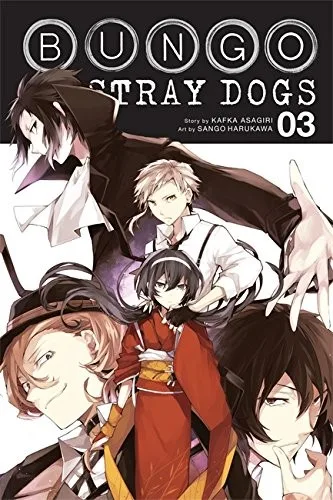
Bungo stray dogs
 74
74

Bungo stray dogs
The core conceit of "Bungo Stray Dogs"—a detective agency staffed by individuals with literary-inspired superpowers—is undeniably inventive. The interplay between character abilities and their origins, often tied to famous literary figures, provides a unique thematic anchor. However, the sheer density of characters and interconnected plotlines, particularly in early arcs, can feel overwhelming. A passage detailing the "Rashomon" ability, for instance, showcases the creative potential but also hints at the narrative complexity that might deter some readers seeking a more straightforward mystery. The work shines brightest when it allows its characters' internal struggles and their unique powers to inform each other, rather than getting lost in convoluted super-powered brawls. It offers a novel approach to the supernatural detective genre, though it demands significant reader investment to fully appreciate its intricacies.
📝 Description
74
First published in 2016, Asagiri Kafka's "Bungo Stray Dogs" centers on Yokohama's detectives with supernatural powers.
This Japanese work follows members of the Armed Detective Agency in Yokohama, individuals gifted with extraordinary abilities who handle cases beyond the scope of ordinary law enforcement. The narrative weaves together supernatural elements with classic detective fiction, showcasing characters whose powers are deeply tied to their personal histories and motivations. The city itself becomes a stage for their unique investigations and conflicts.
The story emphasizes the development of these characters, exploring their complex relationships and internal struggles. Their "special abilities" are central not only to the plot but also to understanding each character's place in the world. The work examines themes of belonging, morality, and the often fine line between good and evil as these gifted individuals confront unusual threats.
While not strictly an esoteric text, "Bungo Stray Dogs" draws on a modern fascination with codified power systems and individual potential often found in supernatural fiction. The "special abilities" function as unique manifestations of inner strength or destiny, a concept echoed in various spiritual traditions that explore latent human capabilities. The narrative's focus on characters grappling with their unique gifts and their place in society reflects broader discussions about self-discovery and societal integration, common in contemporary genre fiction that touches upon extraordinary human capacities.
💡 Why Read This Book?
• Gain insight into the "Special Abilities" system, a unique framework where powers are often named after literary works, offering a fresh perspective on supernatural capabilities. • Understand the thematic exploration of identity and belonging through characters who grapple with their extraordinary gifts and their place in society, mirroring existential concerns. • Experience a narrative that draws direct inspiration from Japanese literary figures, providing a meta-commentary on how art and power can intersect in unexpected ways.
⭐ Reader Reviews
Honest opinions from readers who have explored this book.
❓ Frequently Asked Questions
What is the primary setting for Bungo Stray Dogs?
The primary setting for Bungo Stray Dogs is the city of Yokohama, Japan. This vibrant port city serves as the backdrop for the many supernatural occurrences and detective agency operations.
When was Bungo Stray Dogs first published?
Bungo Stray Dogs was first published in 2016. This places its emergence within the mid-2010s wave of popular Japanese manga and anime.
What kind of powers do the characters have?
Characters possess "Special Abilities," which are supernatural powers often named after literary works or authors. These abilities range widely and are central to the plot's conflicts and resolutions.
Who is the author of Bungo Stray Dogs?
The author of Bungo Stray Dogs is Asagiri Kafka (朝霧カフカ). The series is illustrated by Sango Harukawa.
What is the main premise of the story?
The main premise involves an agency of detectives who use supernatural abilities to solve crimes and undertake missions that normal police cannot handle, often facing off against dangerous criminal organizations.
Is there a connection to real-life literature?
Yes, a significant connection exists. The characters' names, their special abilities, and overarching themes are frequently inspired by real-life literary figures and works from Japan and the West.
🔮 Key Themes & Symbolism
Literary Power Fusion
This work uniquely fuses literary allusions with supernatural power systems. Characters' abilities are directly named after and inspired by famous literary works and authors, such as Osamu Dazai's "No Longer Human" or Ryunosuke Akutagawa's "Rashomon." This creates a meta-narrative where the essence of these literary creations is reinterpreted as a tangible force. The narrative explores how these literary concepts manifest as powers, influencing the characters' identities and their interactions within the Yokohama setting. It’s an esoteric approach to character ability, suggesting that great art holds a potent, almost magical, energy.
Identity and Belonging
A central theme is the struggle for identity and a sense of belonging, particularly for individuals with extraordinary abilities. Many characters in Bungo Stray Dogs are outcasts or grapple with the implications of their powers, questioning their place in society. The Armed Detective Agency serves as a sanctuary for some, while for others, their abilities are a source of torment or isolation. This exploration looks at the psychological impact of possessing unique gifts, touching upon themes of self-acceptance and the search for community, echoing Gnostic ideas of the soul's alienation in the material world.
The Nature of Justice
The narrative frequently examines the concept of justice through the lens of its super-powered protagonists and antagonists. The Armed Detective Agency operates in a gray area, undertaking missions that blur legal and moral lines. The work questions whether conventional justice is sufficient when faced with supernatural threats or societal corruption. Characters often debate the morality of their actions and the true definition of justice, especially when dealing with individuals whose powers are inherently destructive or difficult to control. This philosophical undercurrent invites contemplation on the ethics of power.
Supernatural Manifestation
The core of the series lies in the manifestation of supernatural powers, referred to as "Special Abilities." These are not random but are intrinsically linked to the characters' personas, often drawing from their literary inspirations. The way these abilities are depicted—their limitations, their potential for both creation and destruction, and their impact on the user—offers an esoteric view of inherent potential. The narrative treats these powers as extensions of the characters' inner selves, exploring how they are honed, controlled, or unleashed, thereby acting as a metaphor for harnessing one's own latent capacities.
💬 Memorable Quotes
Direct passages from the work, attributed to the author.
“My ability allows me to turn illusions into reality.”
— This statement, representative of several characters' powers, highlights the theme of manifestation. It suggests that what is imagined or conceptualized can be given form, touching on esoteric principles where focused intent can shape the external world.
“We are all just pawns in a larger game.”
— This sentiment, often expressed by antagonists or characters disillusioned with their circumstances, points to themes of fate and manipulation. It suggests a hidden order or controlling force influencing events, aligning with certain esoteric philosophies about destiny.
“My power is that I can read the minds of anyone who touches my book.”
— This represents the specific, often literary-themed, nature of the "Special Abilities." It demonstrates how the narrative grounds supernatural powers in concrete, albeit fictional, mechanisms tied to literary objects or concepts.
💡 Key Ideas
Editorial paraphrase of the work's core concepts — not direct quotes.
If I were to die, I would want to die by suicide.
This line, attributed to the character Osamu Dazai, directly references his real-life literary work "No Longer Human." It captures the character's internal conflict and fascination with death, setting a melancholic and introspective tone for his narrative arc.
The world is not so simple. It’s a complex place where good and evil are not always clear.
This paraphrased concept reflects the series' exploration of moral ambiguity. It suggests that characters, even those with heroic intentions like the Armed Detective Agency, operate in a world where clear-cut definitions of right and wrong are often challenged by circumstance and the nature of their abilities.
🌙 Esoteric Significance
Tradition
While not explicitly tied to a single esoteric lineage like Hermeticism or Gnosticism, "Bungo Stray Dogs" draws upon a broad interest in hidden potentials and the manifestation of inner worlds. Its approach to "Special Abilities" can be seen as a modern, secularized interpretation of concepts found in Western esotericism, where focused intent or symbolic resonance can influence reality. The work carries the idea that individuals can access latent powers, often through a deep connection to symbolic or archetypal forces, here represented by literary figures.
Symbolism
The most potent symbolism lies in the "Special Abilities" themselves, which are named after and inspired by literary works. For instance, "No Longer Human" by Osamu Dazai is not just a title but a power that reflects the character's existential despair. The "Rashomon" ability, referencing Akutagawa's story, embodies the theme of conflicting perspectives and subjective truth. These literary allusions act as potent symbols, imbuing characters and their actions with layers of meaning drawn from established cultural narratives.
Modern Relevance
Contemporary thinkers and creators exploring the intersection of narrative, psychology, and the supernatural find resonance in "Bungo Stray Dogs." Its unique power system, which derives strength from existing cultural narratives (literature), offers a model for understanding how meaning-making can be a source of power. Modern practitioners of narrative therapy or those interested in archetypal psychology might see parallels in how characters' identities and abilities are shaped by their internal and external stories. The work's popularity also indicates a contemporary audience receptive to complex, character-driven narratives with a mystical or supernatural bent.
👥 Who Should Read This Book
• Fans of supernatural detective fiction seeking a unique twist on established tropes. • Readers interested in narratives that creatively integrate literary figures and concepts into their plot and character development. • Individuals intrigued by explorations of identity, morality, and the nature of power through the lens of extraordinary abilities.
📜 Historical Context
The work's emergence in 2016 places it within a dynamic period for Japanese popular culture, particularly manga and anime, which were experiencing significant global growth. The mid-2010s saw a continued trend of series with complex world-building and unique power systems gaining international followings. While not directly engaging with established esoteric traditions in a scholarly manner, its premise taps into a broader cultural interest in the supernatural and the hidden potential within individuals, a theme explored across various genres. Competitors in the manga space often focused on different power systems, such as shonen battle manga with explicit power levels or isekai narratives transporting protagonists to fantasy worlds. Bungo Stray Dogs distinguished itself through its literary-inspired abilities and its focus on a detective agency, offering a unique blend that resonated with audiences seeking intricate character dynamics and a sophisticated narrative framework.
📔 Journal Prompts
The manifestation of "Special Abilities" within the narrative.
Character identity struggles and their connection to literary inspiration.
The moral complexities faced by the Armed Detective Agency.
The symbolic weight of literary works as sources of power.
Yokohama as a setting for supernatural events.
🗂️ Glossary
Special Ability
The term used in the series to describe the supernatural powers possessed by many of its characters. These abilities are often named after or inspired by famous literary works or authors.
Armed Detective Agency
The primary organization to which many of the protagonists belong. It is a group of individuals with supernatural abilities who solve crimes and undertake missions that the regular police cannot.
Port Mafia
A powerful and dangerous criminal organization operating in Yokohama. They are frequent antagonists to the Armed Detective Agency, often employing their own members with supernatural abilities.
No Longer Human
A specific "Special Ability" named after Osamu Dazai's famous novel. It reflects the character's internal struggles with life, death, and human connection.
Rashomon
An "Special Ability" inspired by Ryunosuke Akutagawa's short story. It is often depicted as a power that creates conflicting perspectives or realities based on the user's input.
Yokohama
The primary setting for the series, a major port city in Japan. Its urban landscape serves as the backdrop for the supernatural conflicts and detective work.
Ability User
A general term for any individual who possesses and can utilize a "Special Ability."
🔮 Readers Also Liked
Browse all →








More by 朝霧カフカ
All books →
More Free Occult Philosophy Books
View all →