Ancient Astronauts
 78
78

Ancient Astronauts
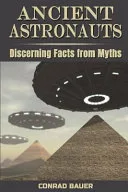
Conrad Bauer’s "Ancient Astronauts" tackles a subject often relegated to sensationalism, yet it does so with a commendable attempt at historical grounding. The work’s strength lies in its broad survey of global myths and archaeological anomalies that have fueled ancient astronaut theories. Bauer effectively highlights recurring themes of celestial visitors across disparate cultures, from the Anunnaki in Mesopotamian lore to the alleged Vimana aircraft in ancient India.
However, the book occasionally falters in its critical analysis. While presenting various theories, it sometimes leans towards accepting speculative interpretations without sufficiently addressing counterarguments or the established scientific consensus. A particular point of contention is the handling of the Nazca Lines; the work presents them as landing strips, a common theory, but doesn't deeply engage with the archaeological evidence supporting their creation by the Nazca people for ritualistic purposes.
Read more ↓
Ultimately, "Ancient Astronauts" serves as a comprehensive primer for those new to the subject, laying out the foundational arguments and evidence with accessible prose.
📝 Description
78
### Ancient Visitors to Earth Conrad Bauer’s "Ancient Astronauts" examines the persistent human inquiry into extraterrestrial visitation throughout history. The work investigates accounts and artifacts that proponents suggest are evidence of advanced beings interacting with early civilizations. It seeks to differentiate between speculative theories and tangible historical records, prompting readers to consider the vastness of cosmic time alongside the expanse of space.
### For the Skeptic and the Seeker This book is suited for individuals intrigued by the intersection of archaeology, mythology, and cosmology. It appeals to those who question conventional historical narratives and are open to exploring alternative explanations for humanity’s origins and ancient technological achievements. Readers interested in the broader field of ancient mysteries and fringe theories will find fertile ground for contemplation.
### Echoes of the Gods The concept of sky-beings visiting Earth predates recorded history, appearing in Sumerian texts, Egyptian hieroglyphs, and Vedic scriptures. Bauer’s work contextualizes these ancient narratives within a modern framework, suggesting that what were once perceived as divine interventions might be reinterpreted through the lens of spacefaring civilizations. This perspective challenges the anthropocentric view of history.
### Unpacking the Evidence Key concepts explored include the interpretation of megalithic structures like those at Baalbek, the analysis of ancient texts such as the Vimanas described in Indian epics, and the re-examination of religious iconography that appears to depict non-human entities or advanced technology. The book encourages critical evaluation of the presented evidence, fostering an informed dialogue on these profound questions.
💡 Why Read This Book?
• Understand the historical roots of ancient astronaut theories, examining how myths from cultures like Sumeria (circa 3500 BCE) have been reinterpreted in light of modern cosmology. • Gain a critical perspective on interpreting archaeological enigmas, such as the megalithic construction at Baalbek, moving beyond simple acceptance to analytical questioning. • Explore specific ancient texts, like the Mahabharata's descriptions of flying machines, to evaluate their potential connections to advanced extraterrestrial technology.
⭐ Reader Reviews
Honest opinions from readers who have explored this book.
❓ Frequently Asked Questions
What is the main argument of Conrad Bauer's "Ancient Astronauts"?
The book argues that ancient myths and artifacts might be interpreted as evidence of extraterrestrial visitors to Earth in the distant past, challenging conventional historical and anthropological views.
Which ancient cultures are discussed in relation to ancient astronauts?
The book references a wide array of cultures, including Sumerian, Egyptian, Vedic (ancient Indian), and Mesoamerican civilizations, highlighting common themes of celestial visitors.
Does the book present definitive proof of alien visitation?
No, "Ancient Astronauts" primarily explores theories and interpretations of historical records and archaeological findings, encouraging critical thinking rather than presenting absolute proof.
What is the significance of the Baalbek structures mentioned?
Bauer discusses the immense stone blocks at Baalbek, Lebanon, as potential evidence of advanced construction techniques possibly employed by ancient astronauts due to their scale and precision.
When was Conrad Bauer's "Ancient Astronauts" first published?
The book was first published on July 8, 2018, making it a contemporary exploration of a long-standing topic.
What is the author's approach to separating fact from myth?
Bauer attempts to discern factual elements within ancient narratives and archaeological anomalies that could support the ancient astronaut hypothesis, while acknowledging the speculative nature of some interpretations.
🔮 Key Themes & Symbolism
Extraterrestrial Intelligence Theory
This theme centers on the hypothesis that advanced beings from other star systems visited Earth in antiquity. Bauer examines how ancient texts, such as the Sumerian King List or the Egyptian Pyramid Texts, and monumental structures like the pyramids of Giza, are interpreted by proponents as evidence of this interaction. The work delves into the possibility that these visitors influenced human civilization, technology, and religious development, offering a paradigm shift from traditional historical accounts.
Mythology as Historical Record
The book posits that many ancient myths and religious narratives, often dismissed as folklore, could contain literal accounts of extraterrestrial encounters. Bauer analyzes stories from various cultures, including the Vedas of India and the epic tales of Greece, looking for recurring motifs of 'gods' descending from the sky, possessing advanced knowledge, or engaging in conflicts that mirror technological warfare. This perspective recontextualizes mythology as potential historical documentation of cosmic events.
Archaeological Anomalies
A significant focus is placed on archaeological sites and artifacts that defy conventional explanations. This includes the precision of ancient stonework at sites like Puma Punku, the enigmatic Nazca Lines in Peru, and the perplexing Antikythera mechanism. Bauer explores how these discoveries challenge established timelines of technological advancement and suggest the intervention of a civilization with capabilities far beyond those typically attributed to early humans.
Cosmic Time and Human Origins
This theme addresses the vast scales of time and space, urging readers to consider humanity's place within a potentially populated universe. Bauer prompts contemplation on whether our current civilization is the first on Earth or the first to achieve space travel, questioning the uniqueness of human existence. The work encourages a broader, more cosmic perspective on origins, evolution, and the possibility of ancient interstellar connections.
💬 Memorable Quotes
“Are we the first to visit Earth? Are we the only ones to ever do so?”
— This rhetorical question frames the central inquiry of the book, challenging the reader's assumptions about humanity's unique place in cosmic history and inviting consideration of ancient extraterrestrial visitation.
“Ancient man often referred to these beings as gods and goddesses.”
— This statement highlights the potential misinterpretation of advanced extraterrestrial visitors by early human societies, suggesting that divine figures in ancient pantheons might have been earthly encounters with non-human intelligences.
“Let's find out and discern the facts from the myths and conspiracies surrounding the Ancient Astronauts.”
— This quote sets the book's objective: to critically examine the evidence and claims related to ancient astronauts, aiming to separate verifiable data from speculative or conspiratorial narratives.
“Space is vast, but rarely do we think that time is vast, too.”
— This observation emphasizes the importance of considering deep time alongside spatial vastness when evaluating the possibility of ancient extraterrestrial visits, suggesting that long epochs allow for possibilities beyond our immediate comprehension.
“With a more modern perspective, many have reconsidered these ancient accounts.”
— This points to the evolution of thought in interpreting ancient records, suggesting that contemporary scientific and technological understanding allows for new ways of analyzing historical accounts of celestial visitors.
🌙 Esoteric Significance
Tradition
While not explicitly tied to a single esoteric lineage, "Ancient Astronauts" draws heavily from traditions that posit non-human or divine influences on human development. It aligns with Gnostic ideas of external spiritual or technological intervention and shares thematic ground with Theosophy's concept of ancient root races and cosmic cycles. The work departs from strict adherence to any one tradition by focusing on a more literal, scientific-adjacent interpretation of ancient accounts.
Symbolism
Key symbols explored include the Winged Disk, prevalent in ancient Near Eastern iconography, often interpreted as a solar deity but re-examined here as a symbol of advanced aerial craft or beings. The serpent motif, found globally and frequently associated with wisdom or sky-beings (like Quetzalcoatl), is also analyzed. Additionally, the book touches upon the symbolism of pyramids and megalithic structures, viewing them not just as tombs or temples, but as potential power sources, landing sites, or observatories.
Modern Relevance
Contemporary thinkers in ufology, fringe archaeology, and speculative history, such as Graham Hancock (though often focusing on ancient civilizations rather than extraterrestrials) and independent researchers in online communities, continue to draw upon the core arguments presented in works like Bauer's. The ongoing exploration of potential extraterrestrial life and the public's fascination with ancient mysteries ensure the continued relevance of these discussions in popular culture and certain esoteric circles.
👥 Who Should Read This Book
• Students of comparative mythology seeking alternative interpretations of global creation myths and divine narratives. • Enthusiasts of ancient mysteries and archaeological enigmas interested in exploring unconventional theories about human origins and ancient technologies. • Skeptical inquirers open to examining evidence for ancient extraterrestrial visitation, who appreciate a structured approach that attempts to differentiate speculation from historical data.
📜 Historical Context
Conrad Bauer's "Ancient Astronauts," published in 2018, entered a field already invigorated by figures like Erich von Däniken, whose "Chariots of the Gods?" (1968) popularized the concept in the late 20th century. The intellectual currents Bauer engages with include pseudohistory, alternative archaeology, and ufology, often standing in contrast to mainstream academic disciplines that largely dismiss such theories. The book emerged during a period of renewed public interest in ancient mysteries, fueled by internet forums and documentaries. While not facing direct censorship, the ancient astronaut theory generally receives skepticism from established archaeologists and historians, who often cite Occam's Razor and evidence of human ingenuity. Bauer’s work can be seen as part of a broader esoteric literature that seeks to reframe humanity’s past outside conventional paradigms.
📔 Journal Prompts
The concept of 'gods' as ancient astronauts, and its implications for early religious development.
Interpreting ancient texts like the Vimanas from the Mahabharata: literal or metaphorical?
Evaluating the construction techniques of megalithic sites such as Baalbek through the lens of external influence.
Reflecting on the vastness of cosmic time and its potential for ancient interstellar presence.
The recurring symbols of celestial visitors across disparate ancient cultures, and their possible shared origin.
🗂️ Glossary
Anunnaki
A group of deities in ancient Mesopotamian cultures, notably Sumerian, Akkadian, and Babylonian. In ancient astronaut theories, they are often reinterpreted as extraterrestrial beings who visited Earth and influenced human civilization.
Vimana
Aerial vehicles described in ancient Indian Sanskrit epics like the Ramayana and Mahabharata. Proponents of ancient astronaut theories suggest these descriptions refer to advanced aircraft or spacecraft.
Megalithic
Relating to or constructed with large stones. Megalithic sites, such as Stonehenge or Baalbek, are often cited in ancient astronaut theories due to the size and precision of the stones, questioning how they were moved and placed.
Nazca Lines
A series of large ancient geoglyphs located in the Nazca Desert in southern Peru. These designs, best viewed from the air, are interpreted by some as landing strips or astronomical markers created by ancient astronauts.
Baalbek
An ancient Phoenician city located in modern-day Lebanon, famous for its remarkably large and precisely cut stone blocks in its Roman temple complex, particularly the Temple of Jupiter.
Sumerian King List
An ancient Mesopotamian text listing kings of Sumer, along with their supposed reigns and the locations of their kingship. Ancient astronaut theorists often interpret the unusually long reigns and the presence of 'gods' in the early parts of the list as evidence of extraterrestrial influence.
Geoglyph
A large design or motif produced on the ground, either by removing earth to expose the soil underneath or by placing stones or other durable materials on the surface. The Nazca Lines are a prime example.