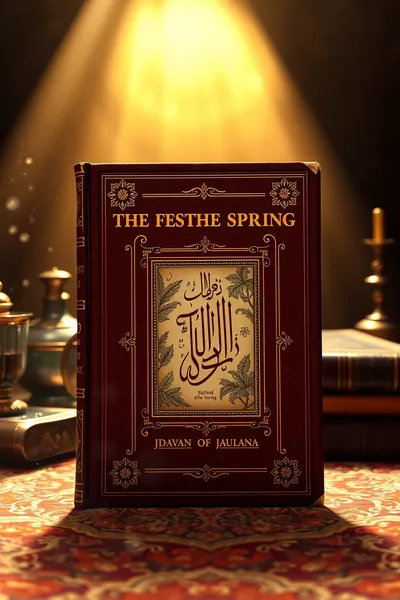
The Sufism of the Rubáiyát; Or, The Secret of the Great Paradox

 76
76

The Sufism of the Rubáiyát; Or, The Secret of the Great Paradox



Alaric Kestrel (Metaphysical Studies Reviewer) — Norton F. W. Hazeldine's 'The Sufism of the Rubáiyát' is an indispensable key for unlocking the veiled spiritual dimensions of Omar Khayyam's celebrated quatrains. Hazeldine's erudition shines as he meticulously traces the intricate Sufi symbolism, revealing the profound mystical dialogues embedded within Khayyam's seemingly hedonistic verses. This work is a treasure trove for serious students of Sufism, comparative mysticism, and esoteric philosophy. Its strength lies in its lucid exposition of complex metaphysical concepts, making the Great Paradox accessible without sacrificing its depth. Essential reading for those seeking to transcend superficial interpretations and grasp the true essence of spiritual liberation.
📝 Description
76
Norton F. W. Hazeldine's 1909 analysis connects the Rubáiyát to Sufi mysticism.
Norton F. W. Hazeldine's 1909 book, 'The Sufism of the Rubáiyát; Or, The Secret of the Great Paradox,' interprets Omar Khayyam's famous quatrains through a Sufi lens. Hazeldine moves beyond simple literary commentary to uncover what he posits are layers of Sufi philosophy within Khayyam's poetry. He examines the symbolic meanings, suggesting they point toward spiritual ascent and the nature of existence.
The author aims to show how Khayyam's verses, often seen as secular or hedonistic, are in fact expressions of a mystical path. Hazeldine deciphers these paradoxes, arguing they represent a spiritual discipline. The book is for those interested in a deeper reading of Khayyam, particularly through the framework of Islamic mysticism.
This work places Omar Khayyam's Rubáiyát within the esoteric tradition of Sufism, an Islamic mystical path. Sufism emphasizes direct experience of God, often through symbolic language, poetry, and music. Hazeldine's analysis suggests that the seemingly worldly themes in Khayyam's verses mask deeper spiritual meanings related to Sufi concepts such as annihilation of the ego (fana) and union with the divine. It aims to reveal a hidden layer of mystical commentary on one of the most widely read Persian poems in the West.
💡 Why Read This Book?
Embark on a profound journey beyond the surface of poetic beauty. 'The Sufism of the Rubáiyát' offers a rare glimpse into the esoteric heart of Persian mysticism, revealing the hidden Sufi philosophy within Omar Khayyam's verses. Ideal for seekers yearning for deeper spiritual understanding, scholars of comparative religion, and practitioners exploring contemplative traditions.
⭐ Reader Reviews
Honest opinions from readers who have explored this book.
❓ Frequently Asked Questions
What is the 'Great Paradox' discussed in the book?
The 'Great Paradox' refers to the Sufi concept of reconciling apparent opposites, such as the material and the spiritual, the finite and the infinite, or the divine detachment and the embrace of worldly experience, as a path to spiritual realization.
Is this book suitable for beginners in Sufism?
While it delves into complex Sufi concepts, Hazeldine's explanations are lucid. It can serve as an accessible introduction for those with a genuine curiosity about Sufism and its philosophical underpinnings, especially when studied alongside Khayyam's original work.
What is the primary focus of the book's interpretation?
The book's primary focus is to interpret the Rubáiyát through the lens of Sufi mysticism, revealing the esoteric meanings and spiritual allegories that lie beneath the surface of Khayyam's poetry.
How does this book connect Omar Khayyam to Sufism?
It posits that Khayyam, often misinterpreted as a mere Epicurean, was deeply influenced by Sufi thought, and his verses can be understood as coded expressions of mystical experiences and philosophical insights common within Sufi traditions.
What kind of reader would benefit most from this book?
Readers who are interested in the intersection of poetry and mysticism, those seeking a deeper understanding of Sufi philosophy, and individuals drawn to the contemplative and symbolic aspects of spiritual traditions will find this book particularly rewarding.
🔮 Key Themes & Symbolism
The Esoteric Interpretation of Poetry
This theme explores how seemingly secular or hedonistic poetry can serve as a vehicle for profound spiritual teachings. It examines the allegorical nature of language, particularly in Sufi traditions, where everyday experiences and earthly pleasures are recontextualized as symbols of divine love and the journey towards God. The book argues that Khayyam's verses are not mere expressions of carpe diem, but rather coded messages designed to guide the initiated seeker towards higher states of consciousness and understanding of the divine.
The Sufi Path to Union
Central to the work is the exposition of the Sufi path, or Tariqa, as the underlying framework for Khayyam's philosophy. It elucidates concepts such as annihilation of the self (fana), the intoxication of divine love, and the ultimate union with the Beloved. The book traces the stages of this mystical ascent, demonstrating how Khayyam's reflections on life, death, and the nature of reality align with the core tenets of Sufi experiential knowledge and the pursuit of direct, unmediated divine experience.
The Great Paradox of Existence
This theme unpacks the 'Great Paradox' as the Sufi understanding of unity within duality. It examines how the material and spiritual realms are not separate but interconnected, and how true wisdom lies in recognizing the divine presence in all things. The book explores how Khayyam's contemplations on the fleeting nature of time and the mysteries of existence reflect this paradoxical reality, where apparent contradictions dissolve in the light of divine unity and the realization that all is ultimately a manifestation of the One.
💬 Memorable Quotes
Direct passages from the work, attributed to the author.
“The cup of life is filled with both wine and tears.”
— This symbolizes the dual nature of existence – the joys and sorrows, the spiritual ecstasies and earthly trials – all part of the divine experience.
“Seek the Beloved in the silence of the heart.”
— A direct instruction to turn inward, to find divine presence not in external pursuits, but within the quiet depths of one's own being.
“The veil of the world hides the face of the Truth.”
— Highlights the illusory nature of the material world and the need to pierce through appearances to perceive the ultimate reality.
“In every atom, the universe resides.”
— A quintessential Sufi concept of the microcosm reflecting the macrocosm, emphasizing the divine immanence in all creation.
“The paradox is the door to understanding.”
— Suggests that embracing apparent contradictions is essential for transcending limited human logic and grasping higher spiritual truths.
🌙 Esoteric Significance
Tradition
This work is deeply rooted in the esoteric tradition of Sufism, the mystical dimension of Islam. It explores Sufi concepts such as Divine Love, the journey of the soul, the annihilation of the ego (fana), and the ecstatic union with the Divine (baqa). Hazeldine interprets Khayyam's poetry through the lens of Sufi masters and their teachings, revealing the allegorical depth that speaks to the seeker's path toward spiritual realization and gnosis.
Symbolism
The book meticulously deciphers the strong symbolism within Khayyam's Rubáiyát, reinterpreting common motifs like the wine cup, the beloved, the rose, and the tavern as potent metaphors for spiritual states and divine realities. The wine represents divine intoxication, the beloved symbolizes God, and the tavern signifies the place of spiritual gathering and transformation. Hazeldine's analysis reveals how these symbols are not literal but represent stages and experiences on the Sufi path.
Modern Relevance
In a world often characterized by superficiality and disconnection, 'The Sufism of the Rubáiyát' offers a timeless guide to inner exploration and the search for profound meaning. Its insights into the paradoxical nature of existence, the power of love, and the importance of contemplative practice resonate deeply with modern seekers. The book provides a framework for understanding spiritual traditions in a unified, universal way, encouraging a more integrated and holistic approach to life and consciousness.
👥 Who Should Read This Book
This book is a profound resource for a diverse readership. **Beginners** to Sufism will find a lucid introduction to its core mystical tenets, presented through a beloved poetic form. **Scholars of comparative religion and literature** will appreciate the detailed hermeneutical approach and the interdisciplinary dialogue between Persian poetry and Islamic mysticism. **Spiritual seekers** yearning for deeper meaning and a connection to the divine will discover profound contemplative insights and a roadmap for inner transformation. **Practitioners of meditation and contemplation** will find themes and symbols that enrich their personal spiritual journey and deepen their understanding of universal truths.
📜 Historical Context
Published in the early 20th century, 'The Sufism of the Rubáiyát' emerges from a period of intense Western fascination with Eastern philosophies and religions. The late Victorian and Edwardian eras saw a surge in occult studies, comparative religion, and the translation and interpretation of ancient texts. Norton F. W. Hazeldine's work is a product of this intellectual milieu, aiming to bridge the perceived gap between Western rationalism and Eastern mystical traditions. It reflects a desire to present the esoteric dimensions of poetry and philosophy to a wider audience, often within the context of burgeoning spiritual movements. The digitized nature of this edition, originating from the New York Public Library, underscores its enduring relevance and its journey from private scholarship to public accessibility.
📔 Journal Prompts
Reflect on a moment in your life that felt paradoxical. How did navigating this paradox lead to growth or understanding?
Consider the symbols of wine, the beloved, and the tavern in your own life. What do they represent on a spiritual level?
How can the concept of 'annihilation of the ego' be applied to everyday challenges or relationships?
If Khayyam's verses are coded messages, what hidden truths do you believe your own life experiences are trying to convey?
Explore the tension between embracing worldly pleasures and pursuing spiritual detachment. Where do you find balance?
🗂️ Glossary
Rubáiyát
A collection of quatrains (four-line poems) traditionally attributed to the Persian poet Omar Khayyam, often exploring themes of life, death, love, and existentialism.
Sufism
The mystical dimension of Islam, focused on the direct experience of God through asceticism, meditation, and devotion; a path of spiritual purification and divine love.
Fana
In Sufism, the 'annihilation' or dissolution of the self in the Divine. It signifies the transcendence of the ego and the merging of the individual consciousness with the Universal Consciousness.
Baqa
Following Fana, Baqa represents 'subsistence' or 'permanence' in the Divine. It is the state of spiritual existence after the ego has been annihilated, characterized by abiding in God.
Tariqa
A Sufi order or path; a specific spiritual discipline or methodology followed by disciples under the guidance of a spiritual master to achieve spiritual realization.
This book appears in 2 collections
🔮 Readers Also Liked
Browse all →





![[Bat i le-gani] =](/img/thumb/bat-i-le-gani-joseph-isaac-schneersohn-604811.webp)
From the “Christian Mysticism” Collection
View all →






More Free Mysticism & Contemplation Books
View all →