The spirit of prayer

 82
82

The spirit of prayer
William Law’s "The Spirit of Prayer" is an unsparing examination of the soul’s posture before the divine. It bypasses the comforting platitudes often associated with prayer, instead demanding a radical inwardness. Law's strength lies in his relentless focus on the internal disposition; he makes it clear that external acts of devotion are hollow without the corresponding inner reality. His insistence that prayer is a continuous state of being, a life lived in God, is particularly potent. However, the book’s unyielding austerity can be daunting. For instance, Law’s extensive critique of self-will and worldly attachments, while essential to his argument, offers little in the way of practical, incremental steps for those struggling with deep-seated egoic patterns. It demands a level of spiritual maturity that might be difficult for beginners to attain. Despite this, the work offers a stark and necessary corrective to superficial piety. "The Spirit of Prayer" is a severe but essential clarion call to authentic spiritual living.
📝 Description
82
### What It Is William Law's "The Spirit of Prayer," first published in 1808, is a seminal work in Christian mysticism, focusing on the internal disposition and spiritual practice required for genuine prayer. It is not a book of devotional exercises or outward rituals, but an exposition of the inner state of the soul in relation to God. Law argues that true prayer is a continuous state of being, a life lived in God, rather than a series of spoken words or thoughts directed towards the divine.
### Who It's For This text is intended for the serious spiritual seeker who is dissatisfied with superficial religiosity and desires a deeper, more authentic connection with the divine. It appeals to those who are wrestling with the nature of faith, the efficacy of prayer, and the true meaning of spiritual discipline. Readers familiar with earlier Christian mystics and reformers, such as Thomas à Kempis or perhaps even the Pietist movement, will find Law's arguments to be a rigorous and profound exploration of the inner life.
### Historical Context Published in the early 19th century, "The Spirit of Prayer" emerged from a tradition of intense spiritual writing that often challenged the prevailing religious norms of its time. William Law (1686-1761) was a prominent figure in English Anglicanism, known for his asceticism and deep piety. His work gained traction during a period of renewed interest in devotional literature and mystical theology, offering a counterpoint to more rationalistic or formalistic approaches to faith. The work's enduring influence suggests it addressed fundamental spiritual questions that transcended its immediate historical moment.
### Key Concepts The core of Law's argument centers on the "spirit of prayer" as an internal disposition of the soul, characterized by humility, self-renunciation, and a constant turning toward God. He distinguishes this inner reality from mere outward forms of worship. Key concepts include the "kingdom of God within," the necessity of divine grace for true spiritual life, and the idea that all of life should be lived as an act of prayer. Law emphasizes that the greatest obstacle to prayer is the ego and the unredeemed self, which must be surrendered for genuine communion with the divine to occur.
✍️ Author
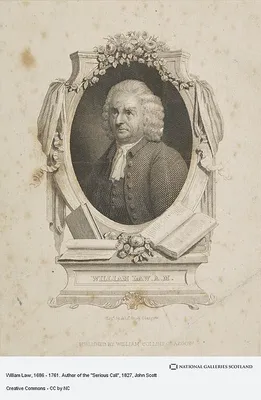
William Law
William Law (1686 – 9 April 1761) was a Church of England priest who lost his position at Emmanuel College, Cambridge, when his conscience would not allow him to take the required oath of allegiance to the first Hanoverian monarch, King George I. Previously…
💡 Why Read This Book?
• Gain insight into William Law's concept of the "kingdom of God within," understanding prayer as a continuous inner state rather than a periodic ritual, a perspective distinct from typical devotional guides. • Grasp the profound difference Law draws between outward religious forms and the internal disposition of the soul, learning to assess the sincerity of your own spiritual practices beyond mere observance. • Explore Law's rigorous critique of the self and ego as primary obstacles to divine connection, a theme central to his 1808 publication that informs later ascetic traditions.
⭐ Reader Reviews
Honest opinions from readers who have explored this book.
❓ Frequently Asked Questions
When was William Law's "The Spirit of Prayer" first published?
William Law's "The Spirit of Prayer" was first published in 1808, though Law himself lived from 1686 to 1761. This means the work was compiled and released posthumously, reflecting his mature spiritual thought.
What is the central message of "The Spirit of Prayer"?
The central message is that true prayer is not merely spoken words or a set ritual, but a continuous state of the soul's orientation towards God, requiring deep inner transformation and self-surrender.
Who was William Law and what was his context?
William Law was an 18th-century English Anglican clergyman and mystic. He was known for his ascetic lifestyle and his profound theological writings, which often challenged conventional religious practices of his era.
How does "The Spirit of Prayer" differ from modern self-help spirituality?
Unlike modern approaches that often focus on manifesting desires or achieving personal comfort, Law's work emphasizes self-renunciation, humility, and the surrender of the ego as prerequisites for spiritual growth and connection with God.
Is "The Spirit of Prayer" a devotional manual with specific prayers?
No, it is not a manual of specific prayers or exercises. Instead, it is a theological and philosophical treatise on the *essence* of prayer as an inner disposition and a way of life, first published in 1808.
What is the "kingdom of God within" as discussed by Law?
The "kingdom of God within" refers to the divine presence and rule established in the human soul when it is purified and surrendered to God's will. Law posits this inner kingdom as the true seat of prayer.
🔮 Key Themes & Symbolism
The Inner Disposition
Law argues vehemently that the efficacy of prayer rests entirely upon the inner disposition of the supplicant. This is not about the eloquence of words or the frequency of recitation, but the soul's fundamental orientation towards God. He describes this disposition as a continuous state of humble receptivity, a life lived in God's presence. This theme challenges readers to move beyond superficial acts of worship and cultivate a profound inner stillness and alignment with the divine will, viewing prayer as an ongoing spiritual condition rather than isolated events.
Self-Renunciation and the Ego
A central tenet of Law's spiritual philosophy, as presented in "The Spirit of Prayer," is the necessity of renouncing the self, particularly the ego. Law posits that the unredeemed self, with its desires, pride, and attachments, forms an insurmountable barrier between the soul and God. True prayer, therefore, requires a radical emptying of the self, a process of spiritual death to one's own will and worldly concerns. This theme underscores the ascetic dimension of Law's thought, emphasizing that spiritual progress is achieved by dying to self to live in God.
The Kingdom of God Within
Law asserts that the true "kingdom of God" is not an external realm or future event, but a present reality that can be established within the purified human soul. This inner kingdom is the locus of genuine prayer and divine communion. When the soul is aligned with God's will, free from the dominion of self and worldly distractions, the divine presence reigns within. This concept elevates the interior life, suggesting that spiritual transformation and the experience of God are accessible here and now through focused spiritual discipline.
Prayer as a Life, Not an Act
Distinguishing his view from common conceptions, Law insists that prayer is not merely an occasional act of supplication but a continuous state of being. It is a life lived in constant awareness of God, a perpetual turning of the heart and mind toward the divine source. Every action, every moment, can become an expression of this prayerful state when the soul is properly oriented. This perspective transforms mundane existence into a potential arena for divine connection, urging a holistic approach to spirituality that infuses all of life.
💬 Memorable Quotes
“Prayer is the constant opening of the heart to God.”
— This concise statement encapsulates Law's core idea that prayer is an ongoing disposition, a perpetual openness of one's inner being to the divine, rather than a periodic, formal act of supplication.
“The kingdom of God is within you.”
— This paraphrase reflects Law's emphasis on the internal nature of spiritual reality. He suggests that the divine presence and authority are not external, but can be realized within the purified human soul.
“All true prayer is the prayer of Christ in us.”
— This concept highlights Law's Christocentric mysticism, suggesting that authentic prayer is not solely human effort but a divine-human collaboration, where Christ's own spirit prays through the believer.
“We must die to ourselves to live unto God.”
— This paraphrased sentiment underscores Law's ascetic teaching on the necessity of self-renunciation. Surrendering the ego and worldly attachments is presented as the path to spiritual life and union with the divine.
“The spirit of prayer is the spirit of love and desire for God.”
— This interpretation points to the affective dimension of Law's theology. True prayer, for him, is rooted in a profound, active love and an unceasing longing for communion with the divine source.
🌙 Esoteric Significance
Tradition
Law's work is deeply rooted in the Christian mystical tradition, particularly drawing from the Neoplatonic and Augustinian streams that emphasize the soul's ascent toward God. It aligns with the Western Esoteric tradition's focus on interior transformation and direct experience of the divine, rather than solely relying on external dogma or ritual. While not Gnostic in the strict sense, his emphasis on inner knowledge and the soul's potential for divine union shares common ground with Gnostic ideals of spiritual awakening.
Symbolism
The primary "symbol" Law employs is not a visual icon but the concept of the "kingdom of God within." This symbolizes the realized divine presence in the purified soul, accessible through self-surrender. Another motif is the idea of "dying to self," which symbolizes the process of ego dissolution and the shedding of worldly attachments necessary for spiritual rebirth. The "spirit of prayer" itself functions symbolically, representing not just an act but the entire orientation of a soul consecrated to God.
Modern Relevance
Contemporary contemplative Christian communities and spiritual directors often reference Law's writings for their rigorous approach to the inner life. His emphasis on the ego as the primary obstacle to spiritual progress finds echoes in modern psychological and spiritual integration practices. Thinkers and practitioners within the broader Western Esoteric spectrum, particularly those seeking a disciplined path to direct spiritual experience, continue to find Law's stark exposition of prayer and self-renunciation profoundly relevant.
👥 Who Should Read This Book
• Serious Christian mystics and contemplatives seeking to deepen their understanding of prayer beyond rote recitation, benefiting from Law's profound emphasis on inner disposition. • Students of Western Esotericism interested in the historical development of Christian mysticism and asceticism, gaining context from Law's 18th-century perspective. • Individuals struggling with the perceived inefficacy of their prayer life, who are ready for a challenging exploration of self-renunciation and the radical transformation of the inner self.
📜 Historical Context
William Law's "The Spirit of Prayer," first published in 1808, emerged from the rich soil of 18th-century English mysticism and devotional theology. Law himself (1686-1761) was a contemporary of figures like John Wesley, though his brand of intense, ascetic spirituality often stood apart from Methodism's more evangelical fervor. His work was deeply influenced by earlier mystics such as Thomas à Kempis and Madame Guyon, and it stood in contrast to the Enlightenment's emphasis on reason, advocating instead for radical inwardness and self-denial. While Law was a prominent figure, his uncompromising stance on spiritual perfection and his critique of worldly compromise meant his influence was often concentrated among serious spiritual aspirants rather than the general populace. His writings gained renewed attention in the 19th century, resonating with a renewed interest in mystical and High Church Anglicanism.
📔 Journal Prompts
The nature of the 'kingdom of God within' as described by Law.
Reflecting on 'dying to self' in the context of daily spiritual practice.
Identifying outward religious acts versus the inner 'spirit of prayer'.
The role of humility in achieving a constant prayerful state.
Evaluating personal attachments that hinder spiritual openness.
🗂️ Glossary
Spirit of Prayer
For Law, this is not a specific devotional act but the continuous internal disposition of the soul oriented towards God, characterized by humility, love, and desire for divine union.
Kingdom of God Within
The divine presence and rule established in the purified human soul. Law argues this inner reality is the true seat of authentic prayer and spiritual life.
Self-Renunciation
The process of surrendering one's own will, desires, and egoic attachments. Law posits this as a crucial, often difficult, step toward spiritual growth and divine communion.
Inner Disposition
The fundamental attitude and state of the soul's heart and mind. Law stresses that this inner condition is the primary determinant of prayer's efficacy, superseding external forms.
Divine Union
The ultimate goal of the spiritual life according to Law: a state of profound communion and oneness with God, achieved through purification and surrender.
Asceticism
A practice of rigorous self-discipline and abstinence from worldly pleasures and attachments, undertaken for spiritual development. Law is a key proponent of this within Christianity.
Ego
In Law's context, the unredeemed self, characterized by pride, self-will, and worldly desires, which acts as the primary barrier to a relationship with God.