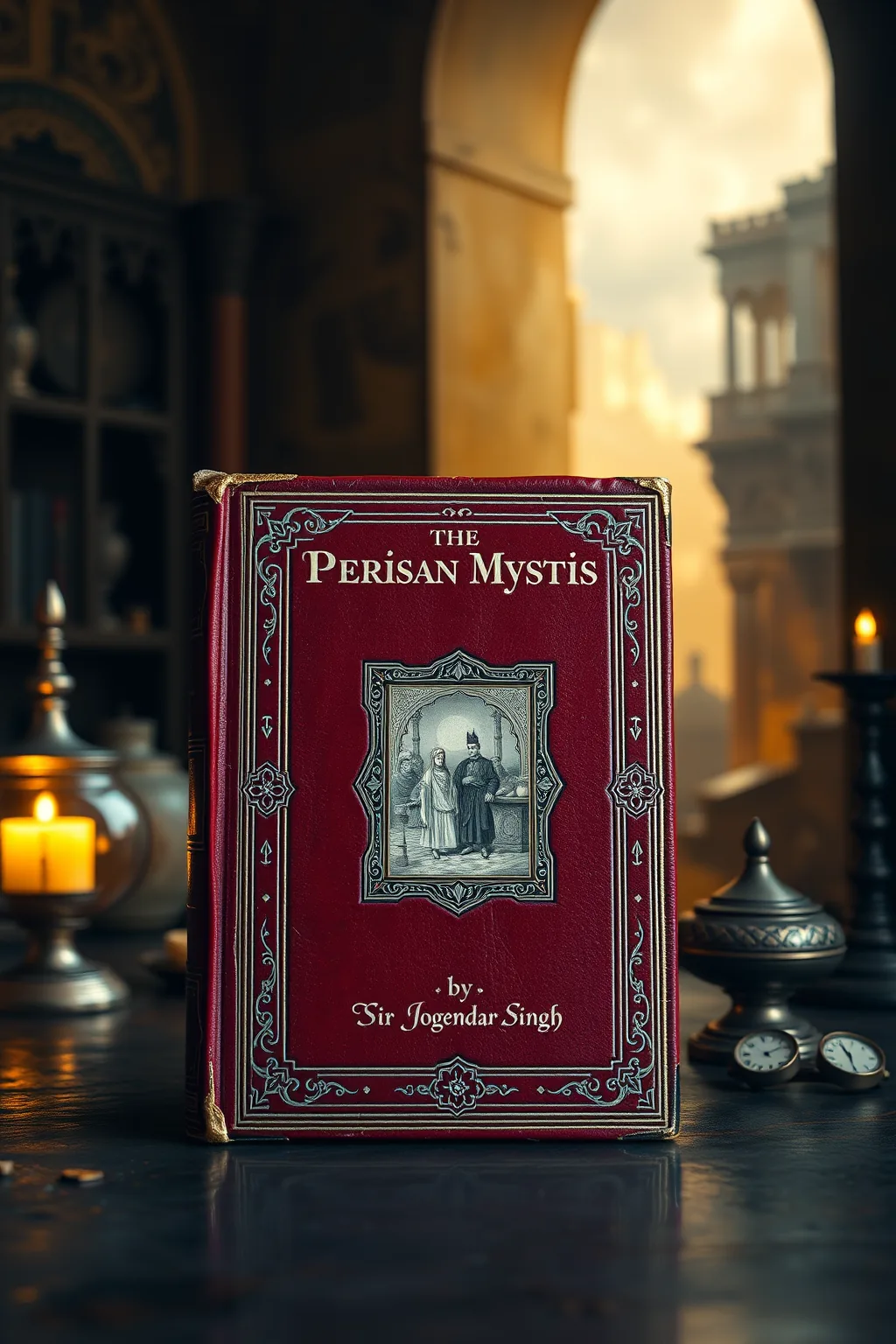
The Perisan Mystics- The Invocations of Sheikh Abdullah Ansari of Herat
 84
84

The Perisan Mystics- The Invocations of Sheikh Abdullah Ansari of Herat



Celeste Moreau (Divination & Symbolism Reviewer) — Sardar Sir Jogendra Singh masterfully presents the ethereal invocations of Sheikh Abdullah Ansari, offering a rare glimpse into the heart of Persian Sufism. This collection is a potent elixir for the soul, rich with symbolic language and profound spiritual insights. Ansari's direct address to the Divine transcends mere recitation, acting as a conduit for contemplative practice and esoteric understanding. The volume excels in illuminating the path of divine love and annihilation of the self, crucial tenets for any serious student of mysticism. Its strength lies in its authenticity and its capacity to inspire deep introspection, making it an indispensable resource for practitioners and scholars of Sufi traditions and those seeking deeper metaphysical connections.
📝 Description
84
Sheikh Abdullah Ansari of Herat's invocations, translated by Sir Jogendar Singh, were published in the early 20th century.
This volume presents the invocations of Sheikh Abdullah Ansari of Herat, an important figure in 11th-century Sufism. Sir Jogendar Singh translated these mystical pronouncements, aiming to make them accessible. The text focuses on Ansari's direct expressions of divine longing and spiritual insight. These are not simple prayers but are described as guides for the soul's progression.
The invocations touch upon themes of surrender to the divine and the revelation of inner truths. Singh's introduction likely situates Ansari within the broader context of Islamic mysticism. The work is intended for readers interested in the less commonly discussed aspects of Sufi practice and devotional literature. It seeks to connect readers with a historical voice that speaks to spiritual seeking across time.
Sheikh Abdullah Ansari of Herat (1006-1088) was a prominent Persian Sufi mystic and poet. His works, particularly his *Munajat* (invocations or private prayers), are known for their intense personal devotion and lyrical expression of the soul's relationship with God. He is associated with the early development of Persian Sufism, predating figures like Rumi. His writings often employ vivid imagery and direct address to the divine, reflecting a path of intimate spiritual experience and the seeking of divine proximity.
💡 Why Read This Book?
Uncover the profound spiritual wisdom of a key Sufi master. Experience the evocative power of devotional invocations that illuminate the path to divine union. This book is essential for seekers of esoteric knowledge, scholars of mysticism, and practitioners of contemplative prayer seeking authentic guidance and inspiration from the rich Persian Sufi tradition.
⭐ Reader Reviews
Honest opinions from readers who have explored this book.
❓ Frequently Asked Questions
Who was Sheikh Abdullah Ansari of Herat?
Sheikh Abdullah Ansari (1006-1088 CE) was a prominent Persian mystic, Sufi saint, and writer from Herat. He is celebrated for his devotional poetry, prose, and profound spiritual teachings, deeply influencing the development of Sufism in Persia and beyond.
What is the nature of the 'Invocations'?
The 'Invocations' are deeply personal and devotional expressions of Ansari's spiritual journey. They are poetic and philosophical meditations on divine love, longing, submission, and the stages of the soul's ascent towards God.
What is Sufism?
Sufism is the mystical dimension of Islam, focused on direct, personal experience of God. It emphasizes inner purification, asceticism, contemplation, and the cultivation of divine love to achieve spiritual enlightenment.
What is the significance of Herat in this context?
Herat, in modern-day Afghanistan, was a vibrant center of Islamic scholarship and Sufi activity during Ansari's life. It served as a crucial hub for the dissemination of mystical thought and practice.
Is this book suitable for beginners in mysticism?
While rich and profound, the 'Invocations' offer a direct, often metaphorical, experience of Sufi thought. Beginners may benefit from accompanying commentary or prior reading on Sufism to fully grasp the depth of Ansari's expressions.
🔮 Key Themes & Symbolism
The Divine Beloved and Human Longing
This theme explores the core Sufi concept of the soul's intense desire for union with the Divine, personified as the Beloved. Ansari's invocations articulate this yearning through metaphors of passionate love, separation, and the ultimate ecstatic embrace. The text explores the spiritual discipline required to purify the heart, making it receptive to the divine presence, and the transformative power of submitting one's ego to the will of the Beloved, a central tenet of Sufi practice.
Stages of the Spiritual Path (Suluk)
Ansari's work implicitly guides the reader through the various stations (maqamat) and states (ahwal) of the Sufi path, known as 'suluk.' These invocations reveal the challenges and triumphs encountered as the mystic progresses from initial repentance and detachment to profound knowledge, contentment, and ultimately, annihilation of the self in God. The text offers insights into the internal battles, moments of grace, and the gradual unveiling of divine realities that characterize this arduous yet rewarding spiritual journey.
Symbolism of the Sacred and the Veil
The invocations are imbued with detailed symbolism, drawing from both Quranic imagery and Persian poetic traditions. Ansari uses metaphors of light, darkness, fire, wine, and the beloved's countenance to represent the Divine and the soul's perception of it. The concept of the 'veil'—that which obscures direct vision of the Divine—is central, and the process of lifting these veils through spiritual purification and contemplation is a recurring motif, inviting the reader to contemplate their own perception of reality.
💬 Memorable Quotes
Direct passages from the work, attributed to the author.
“In the marketplace of love, only the pure of heart can trade.”
— This aphorism highlights the spiritual purity required to engage in divine love. It suggests that worldly distractions and egoistic desires are impediments to experiencing true connection with the Divine.
“I am a servant, and Thou art my Lord; what else should I be?”
— This expresses profound humility and acceptance of one's divinely ordained station. It reflects the Sufi ideal of complete submission and recognition of God's absolute sovereignty.
“My heart is a mirror, reflecting only Thy beauty.”
— This poetic image signifies the Sufi aspiration to achieve a state of spiritual clarity where the heart becomes a pure reflection of Divine attributes, devoid of self-centeredness.
“Where is the end of yearning, if not in the presence of the Loved One?”
— This question points to the ultimate goal of the Sufi path: to find fulfillment and cessation of all spiritual longing in the direct experience and presence of God.
💡 Key Ideas
Editorial paraphrase of the work's core concepts — not direct quotes.
My Lord, I have no refuge from Thee but in Thee.
This quote captures the core Sufi principle of absolute reliance on God. It signifies that true sanctuary and solace are found not by escaping God, but by turning towards and surrendering to the Divine essence.
🌙 Esoteric Significance
Tradition
This work is firmly rooted in the tradition of Persian Sufism, a mystical branch of Islam that emphasizes direct experience of God through love, devotion, and asceticism. It aligns with the teachings of prominent figures like Rumi and Attar, focusing on the inner journey of the soul, the purification of the heart, and the pursuit of divine union.
Symbolism
The invocations are rich with symbolism, employing metaphors drawn from nature, human relationships, and divine attributes. Key symbols include 'light' for divine presence, 'wine' for ecstatic spiritual intoxication, the 'beloved' for God, and the 'veil' for spiritual ignorance. Understanding these symbols is crucial for unlocking the deeper esoteric meanings and the allegorical nature of Ansari's spiritual discourse.
Modern Relevance
In an age often characterized by disconnection and spiritual searching, Ansari's invocations offer a timeless pathway to inner peace and profound connection. The emphasis on mindfulness, surrender, and the power of focused intention appeals to contemporary practices of meditation and self-discovery, providing ancient wisdom for modern seekers of spiritual depth and meaning.
👥 Who Should Read This Book
This volume is a treasure for the dedicated seeker of spiritual truth, particularly those drawn to the contemplative and devotional aspects of Sufism. Scholars of comparative religion and Islamic mysticism will find it an invaluable primary source. Practitioners of meditation and prayer seeking to deepen their connection to the Divine will be inspired by Ansari's profound sincerity. Even those new to esoteric traditions can find a gentle yet powerful entry point into the universal language of the heart's longing for the sacred.
📜 Historical Context
Published in 1939, 'The Persian Mystics: The Invocations of Sheikh Abdullah Ansari of Herat' emerged during a period of renewed Western interest in Eastern philosophies and religions. The early 20th century saw a surge in translations and scholarly works on Sufism, reflecting a broader intellectual curiosity about esoteric traditions and alternative spiritual paths. Sardar Sir Jogendra Singh, a figure of considerable standing, brought this significant work to an English-speaking audience, bridging cultural divides and making the profound wisdom of Persian mysticism accessible. The era was marked by a search for meaning beyond material pursuits, making the introspective and devotional nature of Sufi teachings particularly resonant, offering a counterpoint to the rapidly modernizing and often secularizing world.
📔 Journal Prompts
Reflect on a time you felt a profound longing for something greater than yourself. How did that longing manifest?
Consider the concept of 'surrender.' What does it mean to surrender your will, and what fears or resistances arise?
Identify a personal 'veil' that may be obscuring your perception of truth or beauty. How might you begin to lift it?
If your heart were a mirror, what would it reflect most strongly today? How can you purify it to reflect divine attributes?
Explore the idea of finding refuge in the Divine. What does this concept mean to you, and how can you cultivate this sense of sanctuary?
🗂️ Glossary
Sufi
A follower of Sufism, the mystical dimension of Islam, dedicated to the pursuit of direct experience of God through love, devotion, and asceticism.
Tawhid
The Islamic concept of the absolute oneness of God. In Sufism, it extends to the realization of the unity of all existence in God.
Nafs
The ego or lower self in Islamic and Sufi psychology. Its purification is a primary goal of the spiritual path.
Maqam (plural: Maqamat)
A spiritual station or stage attained by a Sufi on the path to God, often involving a specific virtue or quality, such as repentance, patience, or gratitude.
Wajd
Spiritual ecstasy or rapture experienced by a Sufi, often characterized by intense emotion and a transient loss of self-awareness in the presence of the Divine.
This book appears in 2 collections
🔮 Readers Also Liked
Browse all →







From the “Christian Mysticism” Collection
View all →







More Free Mysticism & Contemplation Books
View all →