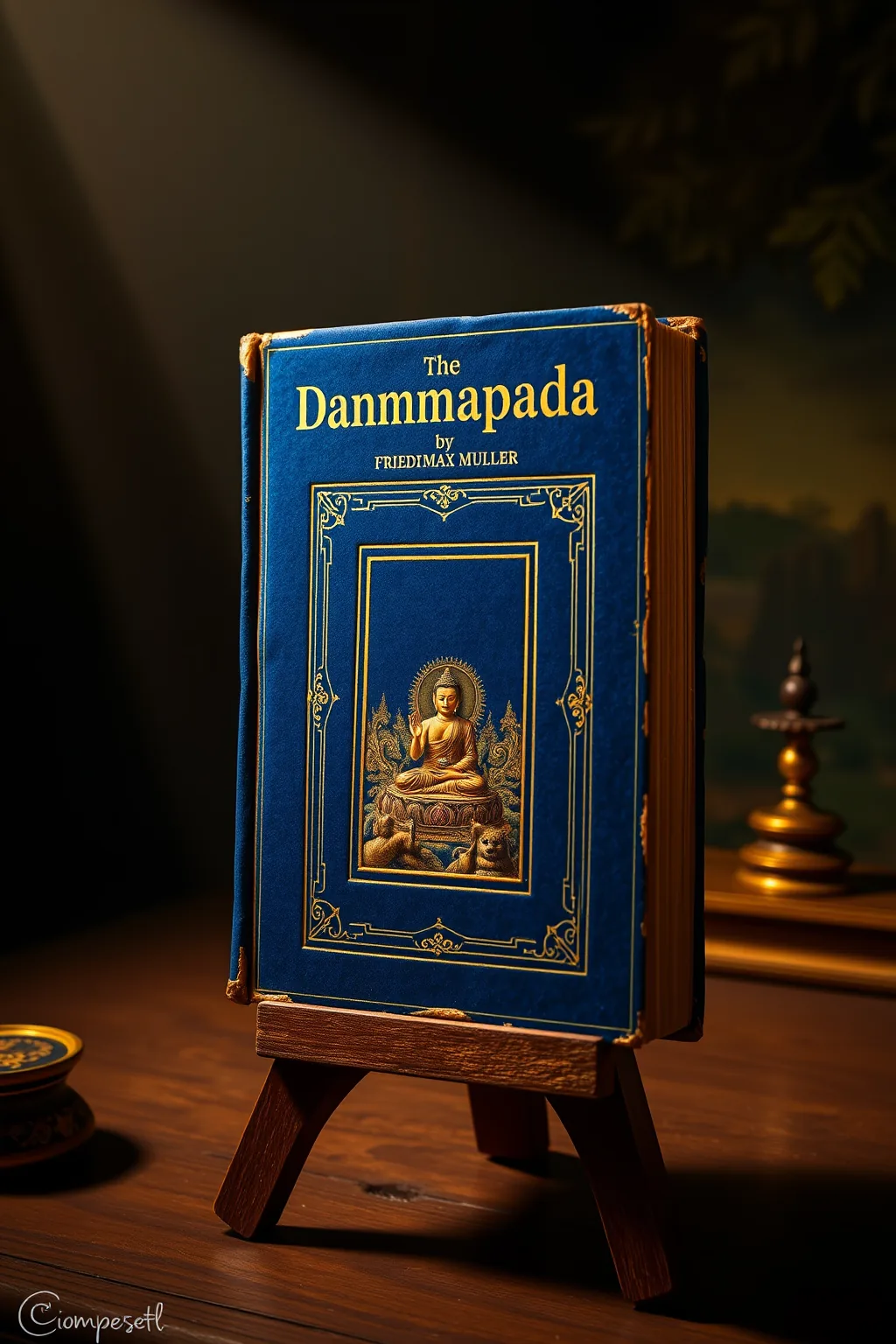
The Dhammapada
 95
95

The Dhammapada



Isolde Whitaker, Sacred Texts Editor: F. Max Müller's 1881 translation of The Dhammapada remains an unparalleled gateway into the distilled essence of Buddhist philosophy. This volume is not merely a collection of verses; it is a potent distillation of ethical guidance and spiritual insight, offering profound contemplations on the nature of reality and the path to enlightenment. Müller's expert hand illuminates the subtle nuances of the Pali Canon, making these ancient truths accessible to contemporary seekers. For those drawn to the contemplative arts and the pursuit of inner peace, this edition is an indispensable treasure, revealing the hidden architecture of a liberated mind.
📝 Description
95
F. Max Müller's 1881 translation brought the Dhammapada, a core Buddhist text, to Western readers.
F. Max Müller's 1881 translation of the Dhammapada makes this central Buddhist scripture accessible. The text comprises verses attributed to the Buddha, focusing on ethical conduct and philosophical reflection. It addresses the transient nature of life and the influence of craving, guiding individuals toward a state of inner peace. Müller's translation aims to clarify these teachings for a Western audience, presenting the verses as keys to understanding suffering and achieving liberation. The collection uses aphorisms to foster deeper insight into the self and the surrounding world. It encourages the development of mindfulness, kindness, and clear discernment.
The Dhammapada's poetic structure and its core messages continue to hold relevance. Its verses offer practical guidance for those interested in personal growth and spiritual understanding. The work presents a framework for cultivating virtues that can lead to a more balanced existence. Müller’s scholarly approach ensures that the text’s original intent and meaning are preserved, making it a valuable resource for students of Buddhism and comparative religion.
As part of the 'Sacred Books of the East' series, Müller's translation placed the Dhammapada within a Western academic framework for studying world religions. This effort aimed to present Buddhist scripture not merely as religious doctrine but as a philosophical system with universal implications. The Dhammapada, with its focus on inner transformation and the nature of reality, was seen as a key text for understanding the contemplative traditions of Asia. Its inclusion in this influential series signaled its importance for scholars interested in the esoteric and philosophical dimensions of Eastern thought.
✍️ Author

Friedrich Max Muller
Friedrich Max Müller was a German philologist and orientalist who studied comparative mythology and religion.
💡 Why Read This Book?
Embark on a journey of profound self-discovery with The Dhammapada. This collection offers timeless wisdom for navigating life's challenges, cultivating inner peace, and understanding the true nature of happiness. Ideal for spiritual seekers, practitioners of mindfulness, and scholars of Eastern philosophy, it provides a concise yet potent guide to ethical living and the pursuit of enlightenment.
⭐ Reader Reviews
Honest opinions from readers who have explored this book.
❓ Frequently Asked Questions
What is the primary purpose of The Dhammapada?
The Dhammapada's primary purpose is to distill the ethical teachings and spiritual insights of the Buddha into practical, memorable verses, guiding readers toward liberation from suffering and the cultivation of virtues.
Who was F. Max Müller and what is his significance to this translation?
Friedrich Max Müller was a renowned philologist and scholar of comparative religion. His meticulous translation brought these crucial Buddhist texts to the Western world, making them accessible and influencing subsequent scholarship.
Is The Dhammapada considered an esoteric text?
Yes, while accessible, The Dhammapada contains profound esoteric insights into the nature of mind, karma, and liberation that require contemplation and practice to fully grasp.
What is the 'Pali Canon'?
The Pali Canon is the standard collection of scriptures in the Theravada Buddhist tradition, considered to be the earliest complete record of the Buddha's teachings.
How does The Dhammapada guide readers towards liberation?
It guides readers by illuminating the impermanence of all things, the dangers of attachment and aversion, and the benefits of cultivating mindfulness, wisdom, and compassion.
🔮 Key Themes & Symbolism
The Nature of Mind and Illusion
This theme studies the Buddhist understanding of the mind as the architect of our reality. The verses explore how our perceptions, thoughts, and emotions create the illusions of permanence and self, leading to suffering. Understanding the mind's malleability and its role in shaping experience is presented as the first step towards genuine freedom. The text encourages keen introspection, revealing how mental discipline and awareness can dismantle these self-imposed limitations.
The Path of Virtue and Non-Attachment
Central to The Dhammapada is the cultivation of ethical conduct and the practice of non-attachment. The verses meticulously outline virtues such as compassion, mindfulness, generosity, and equanimity. They reveal how clinging to desires, possessions, and even opinions creates friction and pain. By embracing these virtues and letting go of what is transient, the reader is guided towards a state of inner peace and freedom from the cycle of dissatisfaction.
Impermanence and the Release from Suffering
The ephemeral nature of all phenomena is a recurring motif, presented not as a source of despair but as a liberation. The Dhammapada teaches that recognizing the impermanence of life, relationships, and circumstances is key to detaching from the pain of loss and change. This profound acceptance leads to a dismantling of ego-driven desires and a surrender to the natural flow of existence, ultimately paving the way for enlightenment and an end to suffering.
💬 Memorable Quotes
Direct passages from the work, attributed to the author.
“All that we are is the result of what we have thought.”
— This foundational verse emphasizes the power of thought in shaping our reality, both internally and externally. It suggests that our present state is a direct consequence of our past mental formations.
“Hatred does not cease by hatred, but only by love.”
— A timeless axiom on conflict resolution and emotional healing. It highlights that responding to animosity with more negativity only perpetuates the cycle, while love offers the only true path to cessation.
“The mind is everything. What you think you become.”
— Reinforces the idea that our internal landscape dictates our external experience. Our beliefs and thoughts are the seeds from which our actions and destiny grow.
“Conquer anger by not yielding to anger.”
— An instruction on mastering one's impulses. It teaches that true victory over negative emotions lies not in suppression but in conscious choice and disciplined response.
“Like a beautiful flower, which soon fades, so are the pleasures of this life.”
— A poignant reminder of the transient nature of worldly joys. It encourages detachment from fleeting pleasures and a focus on more enduring spiritual pursuits.
🌙 Esoteric Significance
Tradition
Rooted in the Theravada Buddhist tradition, The Dhammapada is an accessible yet deeply esoteric text. It serves as a primer for the Buddha's teachings, offering practical guidance on the path to enlightenment. Its esoteric nature lies in its ability to unlock profound self-awareness and reveal the hidden mechanics of karma, consciousness, and liberation through contemplation of its verses.
Symbolism
Key symbols include the mind as a painter, the fleeting nature of flowers representing impermanence, and the path as a journey towards awakening. The verses use simple yet potent metaphors to convey complex truths about suffering, desire, and the cessation of ego, inviting the reader to decipher layers of meaning beyond the literal.
Modern Relevance
In our fast-paced, often superficial world, The Dhammapada's emphasis on mindfulness, ethical conduct, and inner peace is more relevant than ever. Its teachings offer a powerful antidote to consumerism and distraction, providing a timeless framework for cultivating mental resilience, emotional well-being, and a deeper connection to oneself and others.
👥 Who Should Read This Book
This important work is a treasure for a broad spectrum of readers. Beginners to Buddhist philosophy will find its clear, poetic verses an inviting introduction to core concepts. Scholars of religion and comparative mythology will appreciate Müller's meticulous scholarship and the text's historical significance. Spiritual seekers and practitioners of meditation and mindfulness will discover profound guidance for deepening their practice and cultivating inner peace. Anyone yearning for wisdom, ethical clarity, and a pathway to transcend suffering will find The Dhammapada an indispensable companion on their journey.
📜 Historical Context
Published in 1881 as part of the 'Sacred Books of the East' series, F. Max Müller's translation of The Dhammapada emerged during an important era of Orientalist scholarship and burgeoning Western interest in Eastern philosophies. The Victorian period saw a significant intellectual engagement with ancient texts, aiming to understand and categorize the world's diverse spiritual traditions. Müller's work was instrumental in introducing Buddhist thought to a wider European audience, challenging prevailing Western paradigms and fostering a deeper appreciation for non-Western spiritual systems. This translation became a starting point for the academic study of Buddhism and a profound source of inspiration for spiritual seekers grappling with existential questions.
📔 Journal Prompts
Reflect on a time when your thoughts directly influenced your actions and outcomes. How did this experience align with the verse 'All that we are is the result of what we have thought'?
Consider the concept of 'hatred does not cease by hatred'. How can you actively practice love and compassion in a situation where you feel anger or resentment?
Identify one aspect of your life or self that you are clinging to. How does this attachment contribute to your suffering, and what steps can you take towards non-attachment?
Explore the idea of impermanence in your own life. What are you currently experiencing that highlights the transient nature of things, and how can this realization bring you peace?
How can you apply the principle of 'conquer anger by not yielding to anger' in your daily interactions? What specific strategies can you employ when faced with frustrating situations?
🗂️ Glossary
Dukkha
A core Buddhist concept often translated as 'suffering,' 'dissatisfaction,' or 'stress.' It encompasses the inherent unsatisfactoriness of conditioned existence and the pain arising from impermanence and attachment.
Nirvana
The ultimate goal in Buddhism, representing the cessation of suffering, the extinguishment of craving and ignorance, and liberation from the cycle of rebirth (samsara).
Samsara
The cycle of birth, death, and rebirth, driven by karma and ignorance. It is a state of constant flux and suffering from which liberation (Nirvana) is sought.
Karma
The principle of cause and effect, where intentional actions (physical, verbal, or mental) have consequences that shape future experiences and rebirths.
Arhat
An enlightened being who has achieved Nirvana and is freed from the cycle of rebirth. In Theravada Buddhism, it represents the highest spiritual attainment.
This book appears in 2 collections
🔮 Readers Also Liked
Browse all →






More by Friedrich Max Muller
All books →

From the “Meditation” Collection
View all →







More Free Mysticism & Contemplation Books
View all →