Friedrich Max Muller
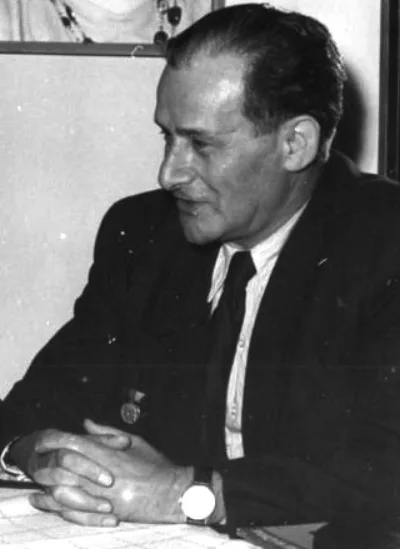
Friedrich Wolf was a German doctor, writer, and political activist with a significant career in East Germany.
Friedrich Wolf, born in 1888, was a German physician and writer deeply involved in political activism throughout his life. He pursued studies in medicine, philosophy, and art history, eventually becoming a doctor in 1913. His experiences as a field doctor during World War I profoundly shaped his anti-war stance. Wolf was a member of various socialist and communist groups and his work often addressed social and political issues, including a notable play about abortion that led to his arrest. He was also involved in founding an agitprop theater group.
Following the rise of the Nazis, Wolf emigrated to Moscow, later serving as a doctor with the International Brigades in Spain before being interned. He gained Soviet citizenship and was instrumental in founding the National Committee for a Free Germany. After World War II, he returned to Germany and played a role in literary and cultural politics. From 1949 to 1951, he served as the first ambassador of East Germany to Poland. Wolf died in East Berlin in 1953 and was honored posthumously with various awards and recognitions.
Early Life and Medical Career
Born in 1888 into a Jewish merchant family, Friedrich Wolf's early academic pursuits spanned medicine, philosophy, and art history. He qualified as a doctor in 1913. His medical career was significantly impacted by his service as a ship's doctor and later a field doctor on the Western Front during World War I. This wartime experience solidified his opposition to war. He began publishing prose pieces in 1917, marking the start of his literary career alongside his medical practice.
Political Activism and Literary Work
Wolf's political engagement intensified after World War I, joining a workers' council and the Independent Social Democratic Party. Practicing medicine in Remscheid and Hechingen, he focused on natural healing methods for common people. He later became a member of the Communist Party of Germany and the Association of Proletarian-Revolutionary Authors. His 1929 play, "Cyankali," tackled the controversial subject of abortion, leading to his and Else Kienle's brief arrest and charge in 1931. He also founded a communist agitprop theater group, "Spieltrupp Südwest," in Stuttgart.
Exile and Post-War Career
With the rise of the Nazi regime, Wolf and his family emigrated to Moscow. He later traveled to Spain to work with the International Brigades as a doctor but was arrested and interned in France. In 1941, he obtained Soviet citizenship and co-founded the National Committee for a Free Germany. After World War II, he returned to Germany, actively participating in literary and cultural affairs. His diplomatic career included serving as the inaugural ambassador of East Germany to Poland from 1949 to 1951. He passed away in East Berlin in 1953.
Books by Friedrich Max Muller
3 free public domain books · Read online or download