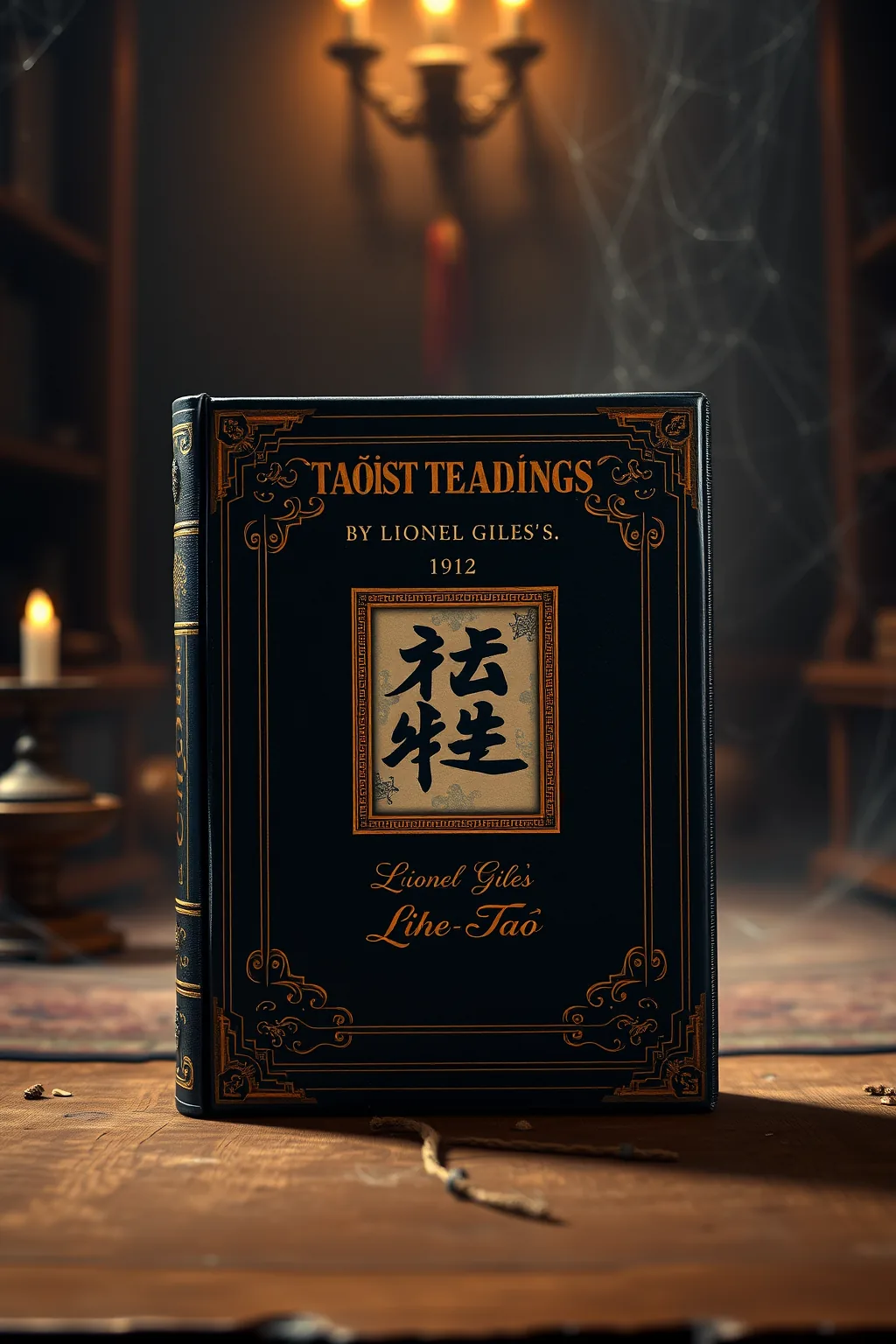
Taoist teachings translated by Lionel Giles (1912)
 78
78

Taoist teachings translated by Lionel Giles (1912)



Lionel Giles' 1912 translation of the Lieh-Tzŭ remains a luminous beacon for those drawn to the esoteric currents of Taoist philosophy. Giles, with his scholarly precision and deep understanding, presents a rendition that is both accessible and profoundly insightful. This work complements the more widely known Tao-Te-Ching and Chuang-Tzŭ by offering a rich collection of narratives that embody Taoist principles through captivating stories and dialogues. Its strength lies in its ability to distill complex metaphysical ideas into digestible, memorable lessons, making it ideal for serious seekers and contemplative practitioners alike who wish to integrate these ancient teachings into their lives. A truly indispensable addition to any occult or philosophical library.
📝 Description
78
Lionel Giles translated the Lieh-Tzŭ, a Taoist text, in 1912.
This book presents Lionel Giles' 1912 translation of the Lieh-Tzŭ, a classic Taoist scripture. The text comprises parables, conversations, and contemplations that describe the Taoist way of living. Giles, who was a sinologist and museum curator, translated these teachings to reveal the simple, spontaneous nature at the heart of Taoist philosophy. Readers will find allegorical stories that touch on the human desire for peace and comprehension.
The book immerses the reader in a worldview that values naturalness and letting go, standing apart from contemporary concerns. It is for individuals looking for greater purpose and a more genuine way of life. This translation aims to help readers approach life's difficulties with composure and clear understanding. It opens the door to a calmer, more aware outlook, valuable for anyone studying mysticism or meditative practices.
The Lieh-Tzŭ belongs to the Taoist canon, a tradition central to Chinese philosophy and spirituality. Alongside the Tao Te Ching and the Chuang-Tzu, it forms a core set of texts. Taoism emphasizes living in harmony with the Tao, the fundamental, ineffable principle of the universe. Its teachings often appear in paradoxical or allegorical forms, challenging conventional thinking and promoting a direct, intuitive understanding of reality. This translation makes these classical ideas accessible to a modern audience interested in contemplative traditions and non-dualistic thought.
✍️ Author

following the Tao
The Tao or Dao (Chinese: 道; pinyin: dào; Jyutping: dou6) is the source and fundamental principle of the universe, primarily as conceived in East Asian philosophy and religions. The concept is represented by the Chinese character 道, which has meanings inclu…
💡 Why Read This Book?
Discover the profound simplicity and effortless spontaneity of the Tao. "Taoist Teachings" offers timeless parables and reflections that illuminate the path to inner harmony and natural living. Ideal for seekers of spiritual wisdom, scholars of Eastern philosophy, and practitioners of contemplative arts looking for guidance on achieving balance and understanding.
⭐ Reader Reviews
Honest opinions from readers who have explored this book.
❓ Frequently Asked Questions
What is the primary focus of the Lieh-Tzŭ?
The Lieh-Tzŭ primarily focuses on illustrating Taoist principles through parables, dialogues, and reflections, emphasizing spontaneity, simplicity, and the natural flow of existence.
Who was Lionel Giles and why is his translation significant?
Lionel Giles was a distinguished sinologist and curator at the British Museum. His 1912 translation is significant for its scholarly accuracy and its role in introducing these vital Taoist texts to the English-speaking world.
How does the Lieh-Tzŭ relate to the Tao-Te-Ching and Chuang-Tzŭ?
It complements these foundational texts by offering a different narrative style, using stories and dialogues to more concretely illustrate the abstract concepts presented in the Tao-Te-Ching and Chuang-Tzŭ.
What kind of reader would benefit most from this translation?
This translation is ideal for individuals interested in Eastern philosophy, mysticism, contemplative practices, and those seeking to understand the core tenets of Taoism in an accessible yet profound manner.
Are there any esoteric or hidden meanings within the teachings?
Yes, while presented simply, the parables and dialogues are rich with symbolic meaning, offering deeper insights into the nature of reality, the self, and the universe for those who engage with them thoughtfully.
🔮 Key Themes & Symbolism
The Way of Spontaneity (Wu Wei)
At the heart of these teachings lies the concept of 'Wu Wei,' often translated as non-action or effortless action. This is not about idleness, but about acting in accordance with the natural flow of the universe, like water finding its course. The Lieh-Tzŭ illustrates how true efficacy arises not from forceful striving, but from aligning oneself with the Tao, allowing events to unfold naturally. It encourages a profound trust in the innate order of things, urging the reader to release the need for control and embrace a state of effortless participation in life's grand design. This theme offers a radical alternative to the constant striving prevalent in Western thought, pointing towards a path of profound peace and effectiveness.
The Illusion of Self and Attachment
The texts delve deeply into the ephemeral nature of the ego and the suffering that arises from attachment to worldly possessions, opinions, and even the concept of a fixed self. Through vivid parables, the Lieh-Tzŭ exposes the folly of clinging to transient forms and the liberation that comes from recognizing the impermanence of all things. It suggests that by loosening our grip on these attachments, we can achieve a state of inner freedom, unburdened by the anxieties of acquisition and loss. This exploration of the illusory self is a core part of many mystical traditions, offering a path to profound self-understanding and spiritual detachment.
Harmony with Nature and the Cosmos
A central tenet of Taoism, powerfully conveyed in the Lieh-Tzŭ, is the imperative to live in harmony with the natural world and the cosmic order, the Tao. The teachings emphasize observing the cycles of nature, understanding its inherent wisdom, and mirroring its balance and simplicity in our own lives. This involves recognizing our interconnectedness with all beings and phenomena, moving beyond anthropocentric views to embrace a holistic perspective. The book serves as a guide to attuning oneself to the subtle energies of the universe, fostering a sense of belonging and peace that arises from being an integral part of the grand cosmic dance.
💬 Memorable Quotes
Direct passages from the work, attributed to the author.
“The Tao is like a boundless treasure, which it is impossible to exhaust.”
— This metaphor highlights the infinite and inexhaustible nature of the Tao, suggesting that its wisdom and power are eternally present and available to all who seek them.
“He who knows that enough is enough will always have enough.”
— This profound statement underscores the Taoist principle of contentment and the understanding that true abundance comes from appreciating what one has, rather than constantly desiring more.
“The sage does not accumulate; For he has more than he needs.”
— This illustrates the concept of non-attachment and selfless giving. True wealth lies not in possession, but in the capacity to share and offer without personal gain.
“The universe is a void, and its use is inexhaustible.”
— This points to the creative potential of emptiness or 'nothingness' in Taoism. From this void, all things arise, and its potential for creation is boundless.
💡 Key Ideas
Editorial paraphrase of the work's core concepts — not direct quotes.
When the pupil is ready the master will appear.
This quote speaks to the readiness of the seeker. It implies that the universe conspires to provide guidance and teaching when one is genuinely open and prepared to receive it.
🌙 Esoteric Significance
Tradition
This work is a foundational text within the Taoist tradition, a major branch of Chinese philosophy and religion that emphasizes living in harmony with the Tao, the fundamental principle of the universe. Esoterically, Taoism offers useful insights into the nature of reality, consciousness, and the path to spiritual enlightenment through practices aimed at cultivating inner stillness, naturalness, and an understanding of the subtle energies that govern existence. It is a tradition deeply concerned with the cultivation of the self and the attainment of longevity and immortality, not just in a physical sense, but as a state of being fully aligned with the cosmic flow.
Symbolism
The Lieh-Tzŭ is rich with symbolism, often conveyed through allegorical narratives and parables. Animals, natural phenomena like water and wind, and everyday objects are imbued with deeper meanings representing the principles of the Tao. For instance, water symbolizes adaptability, yielding strength, and purity, while the void or emptiness represents boundless potential. The characters within the stories often embody different attitudes towards life, from the sage who embodies effortless action to the fool who struggles against the natural order. Understanding these symbolic layers is crucial for unlocking the esoteric wisdom embedded within the text, revealing the underlying truths of existence.
Modern Relevance
In an era often characterized by stress, disconnection, and a relentless pursuit of external validation, the teachings within the Lieh-Tzŭ offer a profound counterpoint. Its emphasis on spontaneity, simplicity, and acceptance resonates deeply with contemporary seekers of balance and inner peace. The principles of 'Wu Wei' can be applied to modern challenges, suggesting more effective and less exhausting ways of navigating personal and professional life. Furthermore, its ecological consciousness and call for harmony with nature provide vital perspectives for addressing contemporary environmental crises. The Lieh-Tzŭ's timeless wisdom offers a path to a more grounded, fulfilling, and spiritually rich existence in the modern world.
👥 Who Should Read This Book
This translation is a valuable collection for a diverse audience. **Beginners** to Eastern philosophy will find its parables an accessible and engaging entry point into the profound concepts of Taoism. **Scholars and practitioners** of mysticism and comparative religion will appreciate Giles' scholarly rigor and the text's foundational importance. **Seekers** yearning for a more balanced and authentic way of living will discover practical wisdom for cultivating inner peace and a deeper connection with the natural world. **Meditators and contemplative individuals** will find the teachings important for deepening their understanding of stillness, effortless awareness, and the subtle workings of the universe.
📜 Historical Context
Published in 1912, Lionel Giles' translation of the Lieh-Tzŭ emerged during a period of burgeoning Western interest in Eastern philosophies and religions. The late Victorian and Edwardian eras saw a significant intellectual and spiritual curiosity towards the mystical traditions of the East, often viewed as offering profound alternatives to the perceived materialism and rationalism of Western society. Sinology, the study of Chinese language, literature, and history, was gaining academic rigor, with scholars like Giles playing an important role in making these complex texts accessible. This translation arrived at a time when concepts like 'mindfulness' and 'harmony with nature' were beginning to resonate, albeit in nascent forms, offering a rich intellectual and spiritual resource for those seeking a deeper understanding of life beyond conventional frameworks. Its publication contributed to the growing body of translated Eastern wisdom available to an English-speaking audience.
📔 Journal Prompts
Reflect on a time you acted with 'Wu Wei' (effortless action). What was the outcome?
Identify an attachment in your life and consider how letting go might bring you closer to the Tao.
How can you bring more simplicity and naturalness into your daily routine?
Describe a moment you felt truly in harmony with nature. What did you learn from that experience?
Consider the concept of 'emptiness' (void) as described in the Lieh-Tzŭ. What potential does it hold for your own life?
🗂️ Glossary
Tao (Dao)
The fundamental, ineffable principle of the universe in Taoism. It is the Way, the natural order, and the source from which all things arise and to which they return. It is often described as nameless and formless.
Wu Wei
A core Taoist concept, often translated as 'non-action' or 'effortless action.' It signifies acting in accordance with the natural flow of the Tao, without forcing or striving, leading to greater efficacy and harmony.
Lieh-Tzŭ
The name of the philosopher and the text attributed to him, a classic work of Taoist philosophy that presents teachings through parables, dialogues, and anecdotes, complementing the Tao-Te-Ching and Chuang-Tzŭ.
Sinologist
An expert in or student of Chinese history, language, and culture. Lionel Giles was a distinguished sinologist.
Metaphysical
Concerning the fundamental nature of reality, existence, and the universe, often exploring concepts beyond the physical or empirical. Taoist teachings are deeply metaphysical.
This book appears in 1 collection
🔮 Readers Also Liked
Browse all →





From the “Christian Mysticism” Collection
View all →





More Free Mysticism & Contemplation Books
View all →