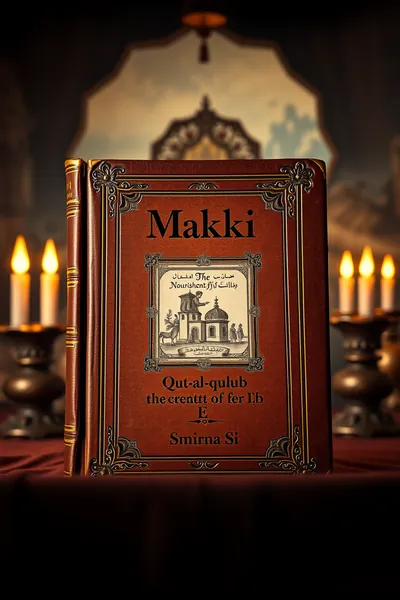
Magic, mysticism, and Hasidism

 72
72

Magic, mysticism, and Hasidism
Gedalyah Nigal's "Magic, Mysticism, and Hasidism" offers a densely packed, scholarly exploration that critically examines the esoteric underpinnings of the Hasidic movement. Its strength lies in its meticulous analysis of primary sources and its clear articulation of complex Kabbalistic ideas as they manifest within Hasidism, particularly in its exploration of the *Tzaddik*'s role. The book, however, can be dense for those without a foundational knowledge of Jewish mysticism, occasionally burying its most compelling insights within academic prose. A particularly illuminating section discusses the concept of *bittul* not as mere ego-death, but as a dynamic process of spiritual realignment. While not a light read, Nigal provides a vital scholarly contribution to understanding the hidden spiritual dimensions of Hasidism. It is an essential reference for serious students of the subject.
📝 Description
72
Gedalyah Nigal's 1994 study examines the esoteric dimensions within Hasidic Judaism.
Magic, Mysticism, and Hasidism by Gedalyah Nigal offers a scholarly look at the inner spiritual life of Hasidic Judaism. The book moves past common understandings to examine the deeper currents of Jewish mysticism that shaped this religious movement. Nigal analyzes key mystical ideas, practices, and theological concepts important for grasping Hasidism as a spiritual tradition with a rich internal dimension.
This work is suited for students and scholars of Jewish mysticism, Hasidism, and comparative religion. It will also interest serious Kabbalah practitioners and those studying the connections between esoteric traditions and monotheistic faiths. Readers who prefer a rigorous, academic approach to spiritual subjects over introductory material will find it valuable. Some familiarity with Jewish thought and terminology is required.
Nigal's study situates Hasidism within the broader history of Jewish spiritual thought, tracing its connections to earlier mystical texts and movements. It considers how the Eastern European socio-historical environment influenced Hasidism's internal mystical expressions. The book highlights the continuity and innovation within Hasidic teachings, placing it within the tradition of Kabbalistic thought while also noting its unique developments.
💡 Why Read This Book?
• Gain a nuanced understanding of *devekut* (clinging to God) as practiced within Hasidic communities, moving beyond simplistic definitions to grasp its experiential depth, as detailed in Nigal's analysis. • Explore the specific role and mystical function of the *Tzaddik* (righteous leader) in Hasidism, learning how this figure is seen as a conduit for divine energy and guidance, a central theme in the book. • Understand the concept of *bittul* (self-nullification) not as an endpoint but as a transformative process integral to Hasidic spiritual development, as examined through Nigal's scholarly lens.
⭐ Reader Reviews
Honest opinions from readers who have explored this book.
❓ Frequently Asked Questions
What is the historical period covered by "Magic, Mysticism, and Hasidism"?
The book primarily focuses on the development and manifestations of Hasidism from its emergence in the 18th century in Eastern Europe through to the 20th century, examining its mystical traditions.
Does the book discuss the practical application of Hasidic mysticism?
Yes, it explores practical applications through concepts like *devekut* and the spiritual significance of daily actions, offering insight into how mystical principles informed Hasidic life and practice.
Is "Magic, Mysticism, and Hasidism" suitable for beginners in Jewish mysticism?
While valuable, the book is written for a scholarly audience. Beginners might benefit from reading introductory texts on Kabbalah and Hasidism before engaging with Nigal's detailed analysis.
What is the significance of the 'Tzaddik' in the context of the book?
The book examines the *Tzaddik* as a central figure in Hasidism, detailing their spiritual authority and role as a mediator between the divine and the community, a concept explored extensively.
What distinguishes Nigal's approach to Hasidism?
Nigal's approach is distinguished by its rigorous academic scholarship and its specific focus on the esoteric and mystical dimensions, differentiating it from sociological or historical accounts.
When was "Magic, Mysticism, and Hasidism" first published?
The book, "Magic, Mysticism, and Hasidism" by Gedalyah Nigal, was first published in 1994.
🔮 Key Themes & Symbolism
The Tzaddik as Mystical Conduit
The work scrutinizes the elevated status of the *Tzaddik* (righteous leader) within Hasidism, portraying them not merely as spiritual guides but as essential conduits for divine influx. Nigal examines how the *Tzaddik*'s spiritual state and connection to God directly impact the community, facilitating *devekut* and imbuing everyday life with mystical significance. This concept is explored through analysis of Hasidic narratives and theological treatises from the 18th century onwards.
Bittul and Self-Nullification
Nigal studies the concept of *bittul*, or self-nullification, as a core part of Hasidic spiritual practice. It's presented not as a passive erasure of self, but an active, dynamic process of aligning one's will with the Divine. The book illustrates how this practice is cultivated through prayer, study, and engagement with the world, aiming to achieve a state of profound spiritual presence and connection, especially evident in early Hasidic writings.
Divine Immanence in Everyday Life
A significant theme is the Hasidic emphasis on God's immanence – the pervasive presence of the Divine in all aspects of existence. The book highlights how Hasidism teaches that even mundane activities can become vehicles for spiritual connection if approached with the correct intention and awareness. This perspective transforms ordinary life into a potential arena for mystical experience, a departure from earlier mystical traditions that often emphasized withdrawal.
Kabbalistic Frameworks
The work meticulously traces the influence of Lurianic Kabbalah and earlier mystical traditions on Hasidic thought. It deciphers how concepts like *tzimtzum* (divine contraction) and *shevirat ha-kelim* (shattering of the vessels) are reinterpreted and integrated into Hasidic cosmology and practice. Nigal clarifies how these complex Kabbalistic ideas provide the theoretical scaffolding for Hasidic spiritual goals and doctrines.
💬 Memorable Quotes
Direct passages from the work, attributed to the author.
“The Tzaddik serves as the channel through which divine bounty flows to the community.”
— This highlights the critical role of the Hasidic leader, not just as a teacher, but as a vital link in the spiritual economy, responsible for bringing divine grace and sustenance to their followers.
“Bittul is not the annihilation of the self, but its purposeful redirection towards the Divine.”
— This interpretation clarifies that Hasidic self-nullification is an active, intentional process of aligning one's ego and desires with God's will, rather than a passive loss of identity.
“Every word of Torah contains infinite mystical meanings.”
— This reflects the Hasidic belief in the profound, multi-layered spiritual depth of sacred texts, suggesting that diligent study can unlock hidden, esoteric wisdom.
“The experience of devekut is a constant awareness of God's presence.”
— This defines *devekut* as an ongoing state of spiritual attentiveness and closeness to God, achieved through dedicated practice and a transformed perception of reality.
“Hasidism integrated mystical concepts into the fabric of common life.”
— This suggests a key innovation of Hasidism: making esoteric spiritual insights and practices accessible and relevant to the daily existence of ordinary Jewish people.
🌙 Esoteric Significance
Tradition
This work is firmly rooted in the Kabbalistic tradition, specifically drawing heavily from Lurianic Kabbalah and its subsequent developments. It examines how these complex mystical doctrines were adapted, reinterpreted, and applied within the specific socio-religious context of the Hasidic movement, which began in 18th-century Eastern Europe. Nigal shows how Hasidism, while innovative in its popularization and experiential emphasis, relied on established Kabbalistic frameworks to articulate its spiritual worldview and practices.
Symbolism
Key symbols explored include the *Tzaddik* (righteous leader), who functions as a divine intermediary and spiritual nexus for the community, embodying the connection between the earthly and celestial realms. The concept of *bittul* (self-nullification) represents the stripping away of ego to achieve union with the Divine, a symbolic death and rebirth. Divine immanence, the pervasive presence of God, is symbolized by the idea that all of existence is infused with divine light, transforming the mundane into the sacred.
Modern Relevance
Contemporary scholars of religion and Jewish studies continue to reference Nigal's work for its detailed exposition of Hasidic mysticism. Thinkers interested in comparative mysticism and the phenomenology of religious experience find value in its analysis of practices like *devekut*. Furthermore, spiritual seekers exploring Jewish contemplative traditions often turn to this book for a deeper, academic understanding of the esoteric underpinnings that inform modern expressions of Jewish spirituality and neo-Hasidic thought.
👥 Who Should Read This Book
• Students of Jewish mysticism and Kabbalah seeking to understand the esoteric foundations of the Hasidic movement, gaining insights into concepts like *devekut* and *bittul*. • Scholars of comparative religion interested in the intersection of esoteric traditions within monotheistic faiths, particularly how mystical ideas are expressed and practiced. • Advanced practitioners of Kabbalah or Jewish spirituality looking for a rigorous, textually-based exploration of Hasidic doctrines beyond introductory material.
📜 Historical Context
Published in 1994, Gedalyah Nigal's "Magic, Mysticism, and Hasidism" emerged during a period of sustained academic interest in Jewish mysticism and the Hasidic movement, building on foundational scholarship by figures like Gershom Scholem. The work entered a discourse that was increasingly sophisticated, moving beyond earlier Orientalist or purely theological interpretations to explore the lived experience and intricate doctrines of Hasidism. Nigal's scholarship engaged with the ongoing debate about the relationship between Kabbalah and Hasidism, particularly concerning the degree to which Hasidism was a novel development or a direct continuation of existing mystical frameworks. While not facing overt censorship, academic works on Jewish mysticism often navigated sensitive theological and historical interpretations, requiring careful scholarly rigor. Nigal's detailed analysis of specific Hasidic texts and leaders implicitly responded to and contributed to the broader academic conversation, offering a focused examination of the movement's esoteric dimensions.
📔 Journal Prompts
The role of the Tzaddik in facilitating divine connection.
Reflecting on the practice of bittul within one's own spiritual path.
Identifying instances of divine immanence in everyday experiences.
Analyzing the Kabbalistic underpinnings of Hasidic teachings on Torah study.
Exploring personal interpretations of devekut beyond the Hasidic context.
🗂️ Glossary
Hasidism
A Jewish religious movement founded in 18th-century Eastern Europe by Rabbi Israel Baal Shem Tov. It emphasizes joy, prayer, and the immanence of God in everyday life, with a strong focus on mystical experience and the role of the Tzaddik.
Tzaddik
Literally 'righteous one,' a spiritual leader in Hasidism. The Tzaddik is seen as a mediator between God and the community, possessing profound spiritual insight and the ability to draw divine blessings.
Devekut
A Hebrew term meaning 'cleaving' or 'clinging' to God. It refers to a state of intense spiritual communion, love, and awareness of God's presence, a central goal in Hasidic practice.
Bittul
Hebrew for 'nullification' or 'annihilation.' In Hasidism, it refers to the process of diminishing the ego and self-will to achieve greater closeness to God, aligning one's being with the Divine will.
Kabbalah
The esoteric system of Jewish mysticism, originating in the medieval period. It explores the nature of God, creation, and the hidden meanings of the Torah, often using complex symbolism and theological frameworks.
Lurianic Kabbalah
The system of Kabbalah developed by Rabbi Isaac Luria in the 16th century. It introduced key concepts such as tzimtzum (divine contraction) and shevirat ha-kelim (shattering of the vessels), significantly influencing subsequent Jewish mysticism, including Hasidism.
Immanence
The philosophical or theological concept that divine presence permeates the material universe and is accessible within the world, as opposed to transcendence, which posits God as wholly separate from creation.
🔮 Readers Also Liked
Browse all →







More by Gedalyah Nigal
All books →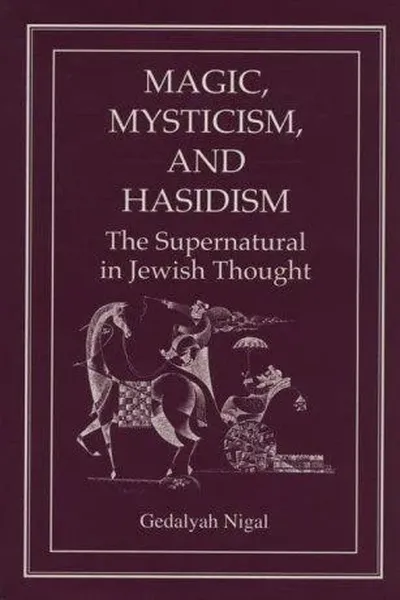
More Free Mysticism & Contemplation Books
View all →