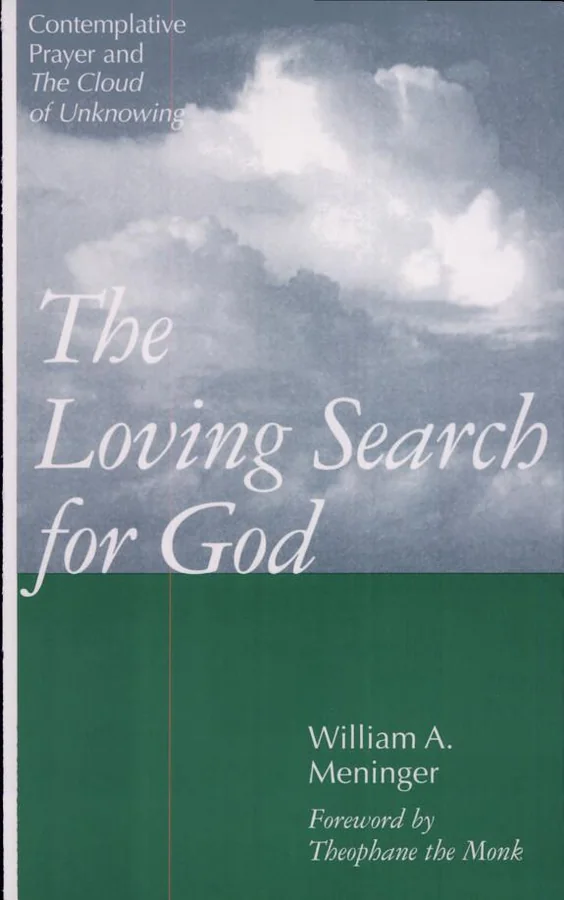
Loving Search for God
 72
72

Loving Search for God
William Meninger's "Loving Search for God" tackles the often-elusive subject of contemplative prayer with a rare blend of directness and gentleness. The book excels in demystifying a practice that can seem arcane, presenting it as an accessible, interior movement available to any sincere Christian. Meninger’s strength lies in his ability to translate the profound experiences of Christian mystics into practical, actionable steps. His explanation of "praying from the will" is particularly illuminating, offering a concrete way to engage with God beyond mere intellectualization. However, the book’s singular focus on Christian contemplative prayer, while its strength, might limit its appeal to those outside that specific tradition, even if the underlying principles of interior silence are universal. A passage describing the "prayer of simple regard" vividly illustrates the book’s capacity to guide the reader toward sustained, loving attention on the divine presence. "Loving Search for God" provides a clear, unadorned pathway for deepening one's spiritual life.
📝 Description
72
### What It Is William Meninger's "Loving Search for God," first published in 1998, offers a profound exploration of contemplative prayer within the Christian tradition. It is not a theological treatise but a practical manual, detailing methods for deepening one's prayer life through direct, personal experience of the divine. The book focuses on the interior journey, guiding readers toward a more intimate connection with God through stillness and inner silence.
### Who It's For This work is primarily for individuals seeking to move beyond rote prayer or intellectual assent towards a lived, felt experience of their faith. It appeals to those dissatisfied with superficial spiritual practices and yearning for authentic communion. Christians exploring contemplative traditions, as well as seekers from other backgrounds interested in the Christian path to inner peace, will find this guide particularly relevant.
### Historical Context Published in the late 20th century, "Loving Search for God" emerged during a period of renewed interest in Christian mysticism and contemplative practices. The late 1990s saw a growing counter-movement against what some perceived as the secularization of Western culture and a desire for more experiential spirituality. Meninger's work tapped into this current, offering accessible guidance for accessing ancient contemplative methods. It arrived in a landscape where authors like Thomas Keating were popularizing Centering Prayer, another method of silent, contemplative prayer.
### Key Concepts The book centers on the practice of "praying from the heart," emphasizing a transition from discursive prayer (thinking about God) to affective prayer (feeling God's presence). Meninger explains how to cultivate a "prayer of the will," where one consciously turns their intention toward God in the midst of daily life. He also discusses the importance of detachment from worldly concerns and the cultivation of inner silence as a gateway to divine encounter. The work is rooted in the teachings of Christian mystics like St. John of the Cross and St. Teresa of Ávila.
💡 Why Read This Book?
• You will learn to cultivate "praying from the will," a concept Meninger details for maintaining conscious connection with God throughout your day, moving beyond mere thought to felt presence. • You will gain practical methods for achieving inner silence, a key to unlocking the contemplative dimension of Christian prayer, as described in his 1998 publication. • You will understand the foundational principles of Christian mysticism, drawing parallels to the teachings of figures like St. John of the Cross, as explored in the book's core teachings.
⭐ Reader Reviews
Honest opinions from readers who have explored this book.
❓ Frequently Asked Questions
What is the primary focus of William Meninger's 'Loving Search for God'?
The book's primary focus is on explaining and guiding readers through contemplative prayer within the Christian tradition. It emphasizes developing an interior, experiential connection with God through stillness and a turning of the will.
When was 'Loving Search for God' first published?
William Meninger's 'Loving Search for God' was first published on April 2, 1998, reflecting a renewed interest in contemplative spirituality during the late 20th century.
Who are some key Christian mystics whose teachings influence this book?
The book draws heavily on the teachings of prominent Christian mystics such as St. John of the Cross and St. Teresa of Ávila, whose insights into prayer and divine union are central to Meninger's approach.
Is 'Loving Search for God' suitable for beginners in prayer?
Yes, the book is an excellent guide for anyone interested in deepening their Christian prayer life, including beginners. Meninger's clear explanations make contemplative practices accessible.
What distinguishes this book from other guides on prayer?
Its distinction lies in its practical, experiential approach to contemplative prayer, focusing on the interior journey and cultivating a direct, felt relationship with God, rather than purely theological discussion.
What is the concept of 'praying from the will' as discussed by Meninger?
Praying from the will, as explained by Meninger, involves a conscious, sustained intention and turning of one's inner being toward God, moving from thinking about God to experiencing God's presence.
🔮 Key Themes & Symbolism
The Interior Journey
Meninger frames prayer not as an external activity but as an inward turning. The book guides readers to look beyond the distractions of the world and cultivate a space of stillness within. This interior journey is presented as the primary means to achieve a genuine encounter with the divine. The emphasis is on cultivating an inner disposition that is receptive to God's presence, moving from discursive thought to a direct experience of love and union.
Praying from the Heart
This theme focuses on shifting prayer from a mental exercise to a visceral, affective engagement. Meninger advocates for a "prayer of the will," a sustained, loving attention directed toward God that permeates daily life. It's about bringing one's entire being—not just the intellect—into communion, fostering a deep, personal relationship rather than a distant theological understanding.
Inner Silence and Stillness
The book stresses the vital role of silence in the contemplative life. Meninger explains how cultivating inner quietude is essential for quieting the ego and the mind's incessant chatter, thereby creating a receptive space for divine communication. This stillness is not emptiness but a full presence, a space where one can truly hear and feel God's voice and touch.
Detachment and Simplicity
Meninger touches upon the necessity of detaching from worldly anxieties and possessions that can hinder spiritual progress. He suggests that a life of greater simplicity and focus on the essential—God—allows for a clearer perception of divine reality. This detachment is not about asceticism for its own sake but about freeing oneself to be more fully present to God.
💬 Memorable Quotes
“The prayer of the will is the prayer that brings us most directly into contact with God.”
— This statement highlights Meninger's core thesis: that the most profound spiritual connection is achieved not through intellectualization but through a direct, volitional turning of one's deepest self toward the divine presence.
“We must learn to pray in the midst of our lives, not merely set aside time for prayer.”
— This emphasizes the integration of spiritual practice into daily existence. It suggests that true prayer isn't confined to specific moments but is a continuous orientation of the heart and mind throughout all activities.
“Inner silence is the language of God.”
— This powerful metaphor suggests that the deepest communication with the divine occurs not through words or thoughts, but in the profound stillness of the inner being, where God's presence can be directly perceived.
“Contemplative prayer is a loving regard of God.”
— This concise definition frames contemplative prayer as an act of sustained, affectionate attention focused on God. It shifts the understanding from a petitionary or discursive act to one of pure presence and love.
“The goal is not to have experiences, but to be transformed.”
— This interpretation underscores that the ultimate aim of contemplative practice is not the accumulation of spiritual 'highs' but a fundamental alteration of one's being and perspective, leading to genuine spiritual growth.
🌙 Esoteric Significance
Tradition
This work fits within the lineage of Christian contemplative mysticism, a tradition that emphasizes direct, unmediated experience of God. While not strictly 'esoteric' in the sense of Hermeticism or Kabbalah, its focus on interiority, inner silence, and the direct apprehension of the divine aligns with perennialist philosophies that seek universal spiritual truths across diverse traditions. It represents an inner path within Christianity, distinct from devotional or dogmatic approaches.
Symbolism
The primary 'symbol' explored is inner silence itself, representing the unmanifest ground of being where God's presence is most keenly felt. The "prayer of the will" acts as a symbolic gesture of turning the totality of one's being towards the divine. The book also implicitly references the symbolism of the desert or wilderness as a place of spiritual encounter, where the soul is stripped bare to meet God without distraction.
Modern Relevance
Meninger's approach continues to be relevant for contemporary practitioners of Centering Prayer and other forms of Christian meditation. It also resonates with secular mindfulness practitioners seeking a deeper spiritual dimension to their practice, offering a framework rooted in a specific, rich tradition. Thinkers and groups focusing on embodied spirituality and the integration of contemplative practice into daily life often draw upon such direct, experiential guides.
👥 Who Should Read This Book
• Christians seeking to move beyond intellectual assent to a lived, felt experience of their faith, desiring a direct encounter with God. • Individuals interested in the historical practice of Christian mysticism, particularly the teachings of St. John of the Cross and St. Teresa of Ávila, seeking practical application. • Seekers of inner peace and spiritual depth who are drawn to contemplative disciplines but require clear, accessible guidance on cultivating stillness and interior prayer.
📜 Historical Context
Published in 1998, "Loving Search for God" emerged during a resurgence of interest in Christian mysticism and contemplative practices, a trend amplified by figures like Thomas Keating and the popularization of Centering Prayer. This period, the late 20th century, saw a cultural counter-current seeking deeper spiritual experience beyond secularism. Meninger's work offered a more traditionally grounded approach, drawing directly from the wellsprings of Christian contemplative tradition. It arrived as an antidote to what some perceived as a superficiality in modern religious expression, providing accessible, practical guidance rooted in the teachings of figures like St. John of the Cross and St. Teresa of Ávila. While not facing overt censorship, such works often navigated a delicate space between traditional church acceptance and the broader spiritual marketplace of the era, emphasizing direct experience which could be viewed with suspicion by more conservative elements.
📔 Journal Prompts
The cultivation of inner silence: How does the practice of quieting the mind affect your perception of the divine?
The prayer of the will: Describe a moment where you consciously directed your intention toward God during an ordinary activity.
Detachment from worldly concerns: Reflect on an instance where letting go of external distractions allowed for a deeper spiritual focus.
Transitioning from discursive to affective prayer: What challenges arise when shifting from thinking about God to feeling God's presence?
The loving regard of God: How can you intentionally practice sustained, affectionate attention on the divine throughout your day?
🗂️ Glossary
Contemplative Prayer
A form of prayer characterized by stillness and direct experience of God's presence, moving beyond discursive thought or petitionary requests towards a loving union.
Prayer of the Will
A concept emphasizing the conscious, sustained orientation of one's entire being—especially the will—toward God, fostering continuous communion beyond specific prayer times.
Inner Silence
The state of quieting the mind's chatter and internal noise to create a receptive space for God's presence and subtle communication.
Discursive Prayer
Prayer that involves reasoning, thinking, and using words or images to engage with God, as opposed to direct, silent experience.
Affective Prayer
Prayer focused on the heart and emotions, emphasizing feeling God's presence and love, often seen as a bridge towards contemplative prayer.
Loving Regard
A sustained, affectionate, and attentive focus on God, characterizing the essence of contemplative prayer as a state of being rather than an action.
Spiritual Dryness
A period in the spiritual life characterized by a perceived absence of God's presence or consolation, often a stage in deepening faith and trust.