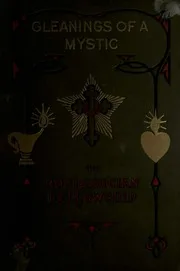
Christian Mysticism

 82
82

Christian Mysticism
Yogi Ramacharaka's *Christian Mysticism* offers a lucid exposition of an often-misunderstood aspect of the Christian tradition. The book's strength lies in its clear articulation of complex theological and experiential concepts, drawing connections between early Christian thought and later mystical developments. The author effectively presents *Lectio Divina* not just as a method of scripture study but as a gateway to direct divine encounter. A notable limitation is the relative brevity of its engagement with the Eastern Orthodox tradition, which possesses a rich mystical theology. While the work touches upon the *theosis* concept, a deeper dive into figures like Gregory of Palamas would have provided a more complete picture. The explanation of the 'Cloud of Unknowing' as a state beyond conceptualization is particularly well-rendered. For those seeking an accessible introduction to the inner life of Christianity, this volume serves as a valuable, if somewhat selective, guide.
📝 Description
82
### What Christian Mysticism Is Christian Mysticism, as presented in this work, is not merely a historical footnote but a living tradition. It refers to the direct, experiential apprehension of the divine within the Christian framework. This encompasses a range of practices, from the contemplative stillness of *Lectio Divina*—the prayerful reading of scripture—to the profound, ecstatic union sought by figures like Pseudo-Dionysius the Areopagite. The book explores how this inner path diverges from purely dogmatic or ritualistic approaches, emphasizing personal encounter with God.
### Who This Exploration Serves This text is intended for individuals seeking to understand the contemplative heart of Christianity. It appeals to seasoned practitioners of Christian prayer who wish to contextualize their experiences, as well as to students of comparative religion and spirituality interested in the mystical dimensions of major world faiths. Scholars of Western esotericism will find it valuable for tracing the lineage of inner seeking that runs parallel to, and often informs, more outwardly expressed religious forms.
### Historical Roots and Development The exploration traces Christian mysticism from its roots in early Christian asceticism and Neoplatonic philosophy. It highlights key figures and movements that shaped its trajectory, including the Desert Fathers, the emergence of monasticism, and the contributions of thinkers like Meister Eckhart and Teresa of Ávila. The work situates Christian mysticism within broader historical currents, showing its development through periods of both flourishing and suppression within established church structures.
### Core Concepts and Practices Central to Christian Mysticism are concepts like the 'Cloud of Unknowing,' the 'Divine Spark' within the soul, and the goal of *theosis* (deification). The book details methods such as contemplative prayer, *Lectio Divina*, and the via negativa (apophatic theology) as pathways to direct spiritual experience. It examines how these practices aim to dissolve the ego's separation from the divine, leading to a state of unity and profound spiritual insight.
💡 Why Read This Book?
• Gain practical understanding of *Lectio Divina* as a method for spiritual communion, moving beyond simple Bible study to direct scriptural encounter. • Explore the concept of *theosis*, or deification, as a central aim of Christian mystical practice, clarifying its meaning within the tradition. • Understand the apophatic approach, or via negativa, as a distinct path in Christian prayer that emphasizes unknowing to reach divine truth, as exemplified by the 'Cloud of Unknowing'.
⭐ Reader Reviews
Honest opinions from readers who have explored this book.
❓ Frequently Asked Questions
What is the primary goal of Christian Mysticism as described in the book?
The primary goal is the direct, experiential apprehension of the divine, often described as a union with God. This involves moving beyond intellectual understanding to a state of spiritual knowing and divine consciousness.
How does 'Lectio Divina' function in Christian Mysticism?
Lectio Divina, or prayerful reading of scripture, is presented as a method to facilitate divine encounter. It's not just study but a contemplative process aimed at allowing the divine presence within the text to speak directly to the soul.
Who were some key historical figures influencing Christian Mysticism mentioned in the text?
The work references early figures like the Desert Fathers and later influential thinkers such as Meister Eckhart and Teresa of Ávila, highlighting their contributions to the mystical path within Christianity.
What is the 'Cloud of Unknowing' in the context of this book?
The 'Cloud of Unknowing' refers to a state of spiritual consciousness where one transcends conceptual thought and intellectual understanding to experience the divine directly, emphasizing unknowing over knowing.
Does the book discuss the concept of deification ('theosis')?
Yes, the book explores *theosis*, the concept of becoming divine or partaking in the divine nature, as a core aspiration within Christian mystical traditions, representing the ultimate goal of union with God.
What distinguishes Christian Mysticism from other forms of Christian practice according to the book?
Christian Mysticism is distinguished by its emphasis on direct, personal experience of the divine, contrasting with approaches that rely solely on dogma, ritual, or external observance. It prioritizes inner transformation and union.
🔮 Key Themes & Symbolism
The Divine Union
This theme centers on the ultimate goal of Christian mysticism: achieving a direct, unitive experience with God. The book explains this as a process of spiritual transformation where the individual soul merges with the divine essence. It draws upon scriptural interpretations and the experiences of saints and mystics who described states of ecstatic union, emphasizing that this is not a loss of self but a realization of true being within the divine presence.
Contemplative Prayer Methods
A significant focus is placed on the practical methods employed by Christian mystics to cultivate divine awareness. This includes detailed explanations of *Lectio Divina*, the prayerful reading and meditation on scripture, and the apophatic approach, often termed the 'via negativa' or the 'Cloud of Unknowing.' These techniques are presented as tools to quiet the mind, dissolve egoic barriers, and open the soul to direct spiritual perception and communion.
The Inner Christ
The book explores the concept of the 'Inner Christ' or the divine spark within the human soul. This perspective suggests that the Christ principle is not solely an external historical figure but an indwelling presence accessible to all believers. Cultivating this inner Christ consciousness is presented as integral to the mystical journey, leading to spiritual rebirth and the realization of one's divine potential.
Scriptural Interpretation
Christian Mysticism often involves a deeper, allegorical, or spiritual interpretation of biblical texts beyond their literal meaning. The work examines how mystics viewed scripture not just as historical accounts or moral lessons, but as a living source of divine revelation. Practices like *Lectio Divina* are shown to unlock these hidden layers of meaning, revealing spiritual truths that guide the seeker toward God.
💬 Memorable Quotes
“Christian mysticism refers to the development of mystical practices and theory within Christianity.”
— This foundational statement defines the scope of the work, establishing that it examines the experiential and theoretical underpinnings of seeking direct divine connection within the Christian tradition.
“It has often been connected to mystical theology, especially in the Catholic and Eastern Orthodox traditions.”
— This highlights the historical and theological context, pointing to specific branches of Christianity where systematic exploration of mystical experience has been most prominent and integrated.
“The attributes and means by which Christian mysticism is studied and practiced are varied...”
— This acknowledges the diverse nature of mystical paths within Christianity, suggesting that the book will cover a range of approaches rather than a single, monolithic method.
“...and range from ecstatic visions of the soul's mystical union with God to simple prayerful contemplation of Holy Scripture (i.e., Lectio Divina).”
— This illustrates the spectrum of mystical experience, from intense, visionary states to the quiet, consistent practice of scripture contemplation, indicating the breadth of the subject matter.
“The Philosophy and Inner Teachings.”
— This subtitle emphasizes that the book goes beyond surface-level religious observance to explore the underlying philosophical principles and the hidden, experiential teachings central to Christian mysticism.
🌙 Esoteric Significance
Tradition
This work sits within the broad lineage of Western Esotericism, specifically drawing from the contemplative and mystical streams within Christianity. While distinct from Hermeticism or Kabbalah, it shares the esoteric emphasis on direct experiential knowledge of the divine, often seeking hidden meanings within sacred texts and practices that are not immediately apparent to the uninitiated. It bridges orthodox Christian theology with an inner path of spiritual realization.
Symbolism
Key symbols explored include the 'Divine Spark' within the soul, representing the inherent connection to God that mystics seek to reawaken. The 'Cloud of Unknowing' functions as a potent symbol for the apophatic path, signifying a state of consciousness beyond conceptualization where direct divine apprehension is possible. The concept of *theosis*, or deification, symbolizes the ultimate transformation and union with the divine nature.
Modern Relevance
Contemporary spiritual seekers, particularly those interested in contemplative Christianity, mindfulness, and interfaith dialogue, find resonance in Ramacharaka's work. Thinkers and practitioners exploring the integration of psychological and spiritual development, as well as those investigating the historical roots of contemplative practice, draw upon this text. It informs modern approaches to spiritual direction and the practice of prayer in an increasingly secularized world.
👥 Who Should Read This Book
• Individuals exploring the contemplative dimensions of Christianity, seeking to understand practices like *Lectio Divina* and the concept of union with God. • Students of comparative religion and Western Esotericism interested in the mystical currents within major world faiths and their historical development. • Practitioners of meditation and prayer seeking to deepen their spiritual experience and understand the philosophical underpinnings of direct divine encounter.
📜 Historical Context
Published in 2012, Yogi Ramacharaka's *Christian Mysticism* engages with a long-standing tradition that flourished particularly during the medieval period, a time when figures like Meister Eckhart (c. 1260 – c. 1328) were developing profound theological insights into the direct experience of God. The work implicitly contrasts with the more scholastic and institutionalized theological approaches that often dominated the era. While this modern exposition benefits from historical distance, it revisits a path that, at various points, faced scrutiny or outright condemnation from mainstream religious authorities. The book's appearance in the early 21st century coincides with a resurgence of interest in contemplative practices across various faiths, a trend that contrasts with the Protestant Reformation's general emphasis on sola scriptura, which often de-emphasized direct mystical experience.
📔 Journal Prompts
The concept of the 'Divine Spark' within the soul and its implications for self-understanding.
Reflecting on the apophatic approach as described in the 'Cloud of Unknowing'.
The role of *Lectio Divina* in fostering a direct connection with the divine through scripture.
Comparing the ecstatic visions mentioned with personal experiences of spiritual presence.
The meaning of *theosis* (deification) for contemporary spiritual life.
🗂️ Glossary
Lectio Divina
A traditional Benedictine practice of scriptural reading, meditation, and prayer, intended to foster communion with God and to encourage the growth of the soul.
Theosis
A central concept in Eastern Orthodox and some Catholic theology, referring to the process of becoming united with God, or 'divine,' through grace, achieving one's highest potential.
Via Negativa
Also known as apophatic theology, this approach to understanding God emphasizes what God is not, rather than what God is, believing that the divine essence is beyond human comprehension.
Cloud of Unknowing
A 14th-century English mystical work describing a form of contemplative prayer that involves setting aside all conceptual knowledge and focusing on a simple intention toward God.
Divine Spark
A concept found in various spiritual traditions, referring to an innate, inner essence of the divine within each individual soul, often seen as the source of intuition and spiritual longing.
Mystical Theology
The study and practice of direct, experiential knowledge of God, often involving altered states of consciousness and a focus on union with the divine.
Asceticism
A spiritual discipline characterized by abstaining from various forms of indulgence, typically for the purpose of pursuing spiritual goals.