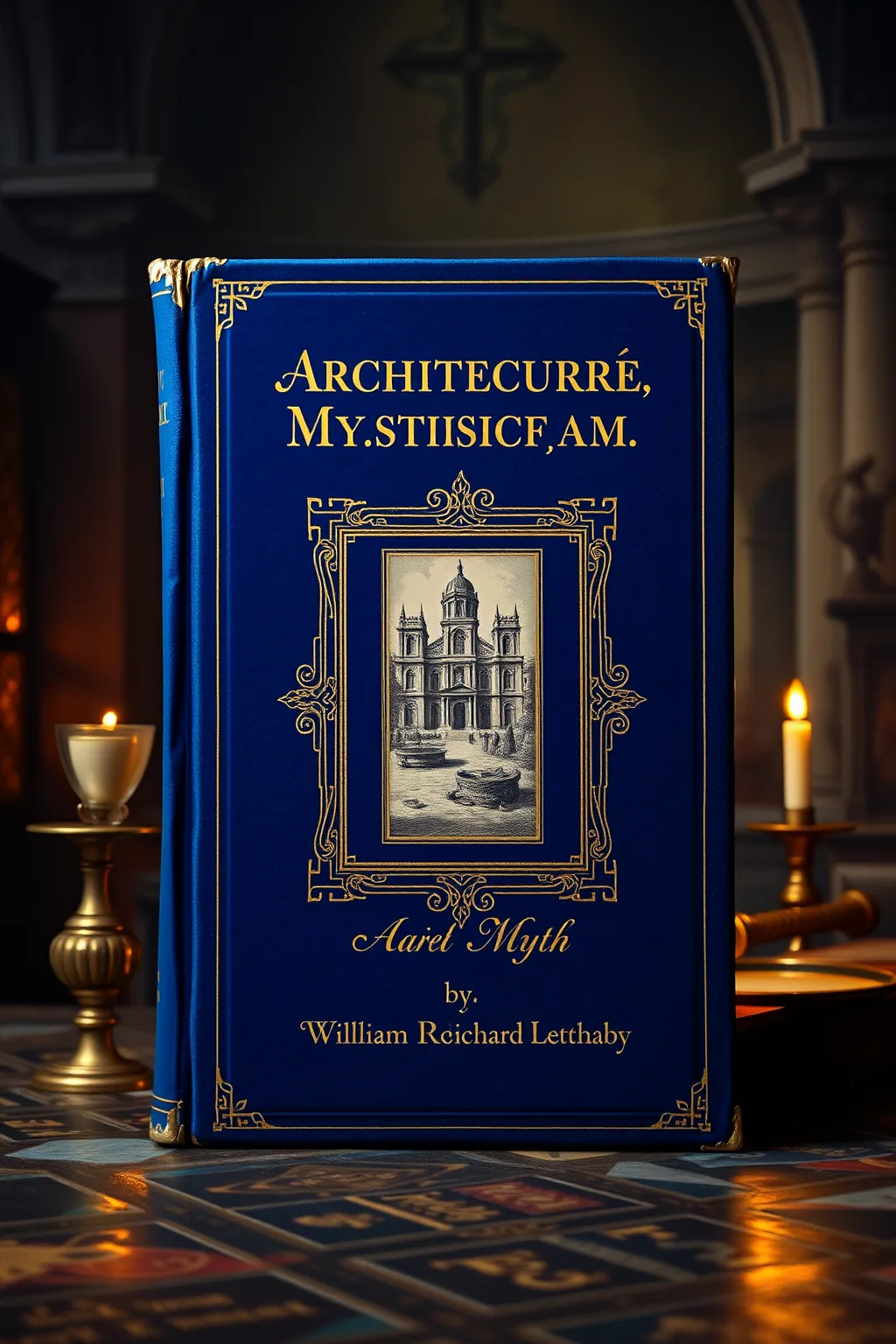
Architectvre, Mysticism and Myth
 72
72

Architectvre, Mysticism and Myth



William Richard Lethaby's Architectvre, Mysticism and Myth is a timeless classic that continues to captivate modern esoteric seekers. Published in 1892, the book's enduring relevance lies in its ability to bridge the gap between the tangible world of architecture and the intangible realm of mysticism. Lethaby's insights into the symbolic and spiritual dimensions of architectural forms provide a fresh perspective on how ancient builders imbued their creations with deeper meanings. For contemporary readers, this book serves as a gateway to understanding the mystical traditions that have shaped our built environment. The text is rich in historical context and mythological references, making it an essential read for anyone interested in the occult and esoteric studies. Lethaby's work is not just a historical document but a living text that invites readers to explore the mystical underpinnings of architecture. It is a must-read for those seeking to deepen their understanding of the spiritual dimensions of design.
📝 Description
72
Published in 1902, William Richard Lethaby's 'Architecture, Mysticism, and Myth' examines symbolic meaning in buildings.
William Richard Lethaby's 1902 book, 'Architecture, Mysticism, and Myth,' connects the physical form of buildings with their spiritual and symbolic dimensions. He moves beyond architectural styles to consider the ideas and beliefs that shaped structures throughout history. Lethaby argues that ancient myths and mystical traditions are deeply embedded in the design and purpose of architecture. He discusses how these elements influence our perception of the built environment and our place within it.
The text invites readers to look at buildings not just as functional spaces but as vessels of cultural memory and spiritual aspiration. Lethaby's approach suggests a continuity between early human cosmology and the architecture that followed. He treats architectural history as a reflection of evolving human consciousness and its attempts to understand the cosmos. This book is for those interested in the hidden layers of meaning within the structures humans create.
This work sits within the broader late Victorian and early Edwardian interest in symbolism and hidden knowledge, a period that saw a resurgence of occult studies and esoteric philosophies. Lethaby's exploration of myth and mysticism in architecture aligns with a tradition that sought spiritual or hidden truths in art, history, and the natural world. It reflects a desire to find deeper meaning beyond the material, connecting human creation to ancient cosmologies and the collective unconscious, a theme explored by figures interested in the esoteric dimensions of culture and history.
💡 Why Read This Book?
Reading Architectvre, Mysticism and Myth today offers a unique opportunity to delve into the mystical and symbolic dimensions of architecture. This book provides valuable insights into how ancient and medieval builders infused their work with spiritual significance, making it an essential read for architects, historians, and esoteric seekers. By understanding the deeper meanings behind architectural forms, readers can gain a new appreciation for the world's most iconic structures and the mystical traditions that have shaped them.
⭐ Reader Reviews
Honest opinions from readers who have explored this book.
❓ Frequently Asked Questions
What is the main focus of Architectvre, Mysticism and Myth?
The book focuses on the mystical and mythical dimensions of architecture, exploring how ancient and medieval builders infused their work with spiritual and symbolic meanings.
Who should read this book?
This book is ideal for architects, historians, esoteric seekers, and anyone interested in the intersection of spirituality and design.
Is this book relevant to modern readers?
Yes, the book's insights into the symbolic and spiritual dimensions of architectural forms provide a fresh perspective on the mystical traditions that have shaped our built environment.
🔮 Key Themes & Symbolism
Symbolism in Architecture
Lethaby explores the symbolism embedded in architectural forms, revealing how ancient mythologies and spiritual traditions shape our built environment. He explores the mystical significance of various architectural elements, offering a profound perspective on human creativity.
Mystical Underpinnings of Human Creativity
The book examines the mystical underpinnings of human creativity, particularly in the context of architecture. Lethaby's work invites readers to contemplate the deeper meanings embedded in our physical structures, bridging the gap between the tangible and the spiritual.
Esoteric Insights and Hidden Knowledge
Lethaby's exploration of architecture through the lens of mysticism and mythological symbolism offers a body of hidden knowledge and esoteric insights. The book is a beacon for seekers of esoteric wisdom, providing a journey into the soul of human creativity.
💬 Memorable Quotes
Direct passages from the work, attributed to the author.
“Every building tells a story.”
— Lethaby suggests that architectural forms are imbued with symbolic significance and mystical underpinnings, revealing the deeper meanings embedded in our built environment.
“Mythology is the language of the soul.”
— Lethaby's work emphasizes the role of mythology in revealing the deeper meanings and spiritual underpinnings of human creativity.
💡 Key Ideas
Editorial paraphrase of the work's core concepts — not direct quotes.
Architecture is the mother of the arts.
This quote underscores the foundational role of architecture in human creativity and its connection to ancient spiritual traditions.
The soul of architecture lies in its symbolism.
This line highlights the importance of understanding the symbolic dimensions of architecture to appreciate its mystical and esoteric significance.
Architecture is a reflection of the divine.
This quote suggests that architectural forms are imbued with divine symbolism, offering a pathway to understanding the mystical dimensions of our built environment.
🌙 Esoteric Significance
Tradition
This book belongs to the Hermetic tradition, which emphasizes the mystical and symbolic dimensions of human creativity. It draws on ancient spiritual traditions and mythologies to reveal the deeper meanings embedded in architectural forms.
Symbolism
Key symbols in the book include architectural elements such as arches, columns, and domes, which are imbued with mystical significance. These symbols are explored in the context of ancient mythologies and spiritual traditions, offering a profound perspective on human creativity.
Modern Relevance
The book remains relevant today for modern practitioners of esoteric studies and spiritual seekers. It offers a pathway to understanding the mystical dimensions of our built environment and the enduring power of symbolic significance in architecture.
👥 Who Should Read This Book
Beginners in esoteric studies will find this book accessible and enlightening, providing a solid foundation for understanding the mystical dimensions of architecture. Scholars of occult studies will appreciate the depth of research and esoteric insights. Spiritual seekers will be inspired by the exploration of ancient mythologies and their connection to human creativity. Practitioners of architecture and design will gain a new perspective on the symbolic significance of their work. In summary, anyone interested in the intersection of mysticism and architecture will find this book invaluable.
📜 Historical Context
Published in the early 20th century, 'Architecture, Mysticism, and Myth' emerged during a time of significant cultural and intellectual shifts. The era saw a renewed interest in esoteric studies, spiritualism, and the exploration of ancient mythologies. Lethaby's work was influential in bridging the gap between the tangible and the spiritual, revealing the hidden knowledge and esoteric insights embedded in architectural forms. The book's exploration of the mystical underpinnings of human creativity resonated with readers seeking a deeper understanding of the symbolic significance of our built environment. Its influence can be seen in modern esoteric studies and the ongoing exploration of the mystical dimensions of architecture.
📔 Journal Prompts
Reflect on the symbolic significance of a building you admire. What mystical insights can you uncover?
How do ancient mythologies influence modern architectural forms?
What role does symbolism play in your understanding of human creativity?
Explore the esoteric dimensions of a familiar architectural element. What hidden knowledge does it reveal?
How can understanding the mystical underpinnings of architecture deepen your spiritual practice?
🗂️ Glossary
Hermetic Tradition
A spiritual and philosophical tradition based on the teachings attributed to Hermes Trismegistus, emphasizing the mystical and symbolic dimensions of human experience.
Symbolism
The use of symbols to represent abstract ideas or qualities, often in a mystical or esoteric context.
Mythology
A collection of myths, especially those of a particular people or culture, often used to explain natural phenomena or spiritual truths.
Esoteric Studies
The study of hidden or secret knowledge, often related to spiritual or mystical traditions.
Occult Studies
The study of occult or hidden knowledge, often involving the exploration of mystical and spiritual traditions.
This book appears in 1 collection
🔮 Readers Also Liked
Browse all →






From the “Christian Mysticism” Collection
View all →







More Free Mysticism & Contemplation Books
View all →