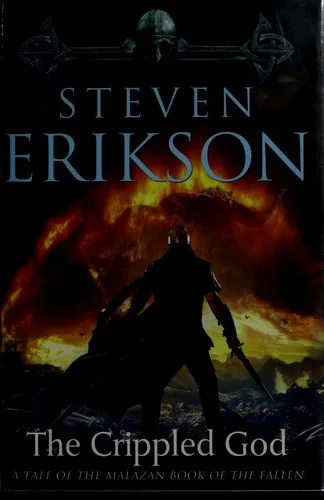
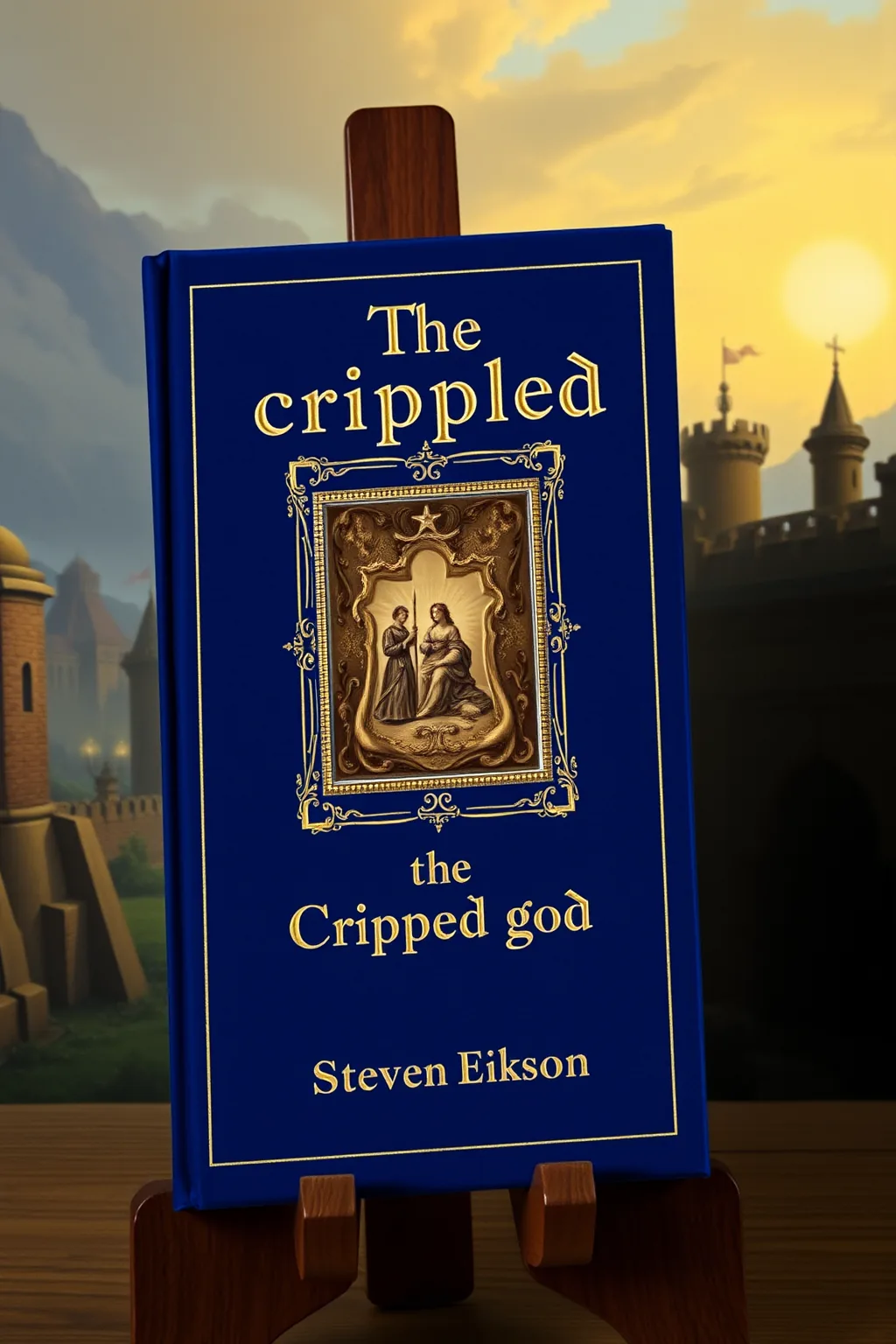
The crippled god
 74
74

The crippled god
Steven Erikson’s The Crippled God concludes the Malazan Book of the Fallen with a thunderclap, not a whimper. The sheer scale of the narrative threads being tied up is staggering, a feat few authors would even attempt, let alone achieve with such visceral impact. Erikson’s strength lies in his unflinching portrayal of war’s brutal reality and the profound personal costs borne by those caught in cosmic struggles. The novel excels in delivering climactic confrontations and character resolutions that feel earned after nearly a decade of storytelling.
However, the density that defines the series can, at times, become a hindrance. With so many plotlines converging, some resolutions feel compressed, and the sheer volume of characters and events can still be overwhelming, even for long-time readers. A passage that particularly stands out is the continued exploration of the Seven Cities uprising, showing how mortal desperation can challenge divine indifference.
Read more ↓
Ultimately, The Crippled God is a monumental, if occasionally unwieldy, conclusion that rewards the dedication of its readership.
📝 Description
74
### What It Is
The Crippled God, published in 2012 by Steven Erikson, is the tenth and final novel in the acclaimed Malazan Book of the Fallen series. This epic fantasy saga is known for its intricate world-building, vast cast of characters, and morally complex narratives. The series, and this concluding volume in particular, often explores themes of war, sacrifice, faith, and the nature of power through the lens of a sprawling empire and its gods.
### Who It's For
This book is specifically for dedicated readers of the Malazan Book of the Fallen. It is not a standalone work and requires a deep familiarity with the preceding nine novels. Those who have followed the intricate plots and character arcs from the beginning will find this the culmination of extensive narrative threads. It appeals to readers who appreciate dense, character-driven epic fantasy with a philosophical undercurrent, and who are invested in seeing a grand, multi-volume story reach its resolution.
### Historical Context
Released in 2012, The Crippled God arrived as the conclusion to a series that began in 1999. Erikson's Malazan series emerged during a period of evolving epic fantasy, moving beyond traditional tropes. While authors like J.R.R. Tolkien established foundational elements, Erikson's work presented a grittier, more cynical, and politically nuanced take on imperial conquest and divine intervention. The series gained a significant cult following and critical discussion, often compared to the works of Iain M. Banks for its scope and complexity, though Erikson's focus remained distinctly on the human cost of grand conflicts and the limitations of even divine power.
### Key Concepts
The narrative delves into concepts of ascendants, gods, and the mortal realm's struggle against their influence. It examines the nature of belief and how it shapes reality, particularly the power wielded by divine entities and those who achieve godhood. The series frequently questions the morality of divine actions, portraying gods as often capricious, self-serving, or bound by ancient pacts. The concept of "crippled gods" themselves, entities weakened or constrained by their own limitations or the actions of others, is central to understanding the power dynamics explored throughout the saga and particularly in this final installment.
💡 Why Read This Book?
• You will witness the culmination of an epic, multi-volume narrative arc, gaining a sense of closure for the complex characters and world introduced in the Malazan Book of the Fallen series, specifically through the resolution of the Ascendant Wars. • You will experience a unique exploration of divinity and power, examining how gods are shaped and constrained by mortal belief and ancient pacts, as seen in the plight of the titular Crippled God. • You will engage with a sophisticated take on the consequences of war and sacrifice, understanding the immense personal cost exacted by grand conflicts, exemplified by the fates of characters like Anomander Rake and the soldiers of the Malazan Empire.
⭐ Reader Reviews
Honest opinions from readers who have explored this book.
❓ Frequently Asked Questions
Is The Crippled God a good starting point for Steven Erikson's Malazan series?
No, The Crippled God is the tenth and final book. It is essential to read the preceding nine novels, starting with Gardens of the Moon, to understand the characters, plotlines, and world-building.
What is the central theme of The Crippled God?
The novel's central theme revolves around the nature of gods, power, and sacrifice, exploring how divine entities are both shaped by and struggle against mortal belief and ancient cosmic forces.
How does The Crippled God resolve the major plotlines of the Malazan series?
It brings numerous long-standing conflicts to a head, including the Ascendant Wars and the fates of various continents and characters, offering resolutions that are often bittersweet and highlight the cost of ultimate victory.
What makes the gods in Erikson's Malazan series different from typical fantasy gods?
Erikson's gods are often portrayed as flawed, capricious, and deeply intertwined with mortal belief and political machinations, far removed from benevolent, omnipotent figures. Their power is frequently shown to be limited or conditional.
Does The Crippled God feature prominent characters from earlier books?
Yes, it features the return and resolution of arcs for many beloved and pivotal characters introduced throughout the series, such as Anomander Rake, Trull Sengar, and members of the Bridgeburners.
What is the significance of the title 'The Crippled God'?
The title refers to a specific divine entity whose power has been severely diminished or constrained, symbolizing the broader theme of limitations and the often-brutal struggle for power, even among gods.
🔮 Key Themes & Symbolism
The Nature of Divinity
The novel scrutinizes the concept of gods, portraying them not as omnipotent beings but as powerful entities often driven by self-interest, ancient pacts, and the very belief of mortals. The "crippled god" himself exemplifies this, a deity weakened and constrained, highlighting that divine power is not absolute and can be diminished by external forces or internal flaws. This challenges traditional fantasy portrayals, grounding divinity in a more complex, often morally ambiguous reality that reflects mortal struggles for power and influence.
Sacrifice and the Cost of War
Central to the Malazan series, and reaching a zenith in this final volume, is the immense and often brutal cost of war and sacrifice. Erikson does not shy away from depicting the physical and psychological toll on soldiers and civilians alike. Characters are repeatedly faced with impossible choices, where the greater good demands profound personal loss. The narrative emphasizes that even victorious outcomes are frequently stained with tragedy, forcing readers to confront the true price of conflict and the nature of heroism in the face of overwhelming odds.
Fate vs. Free Will
The series constantly grapples with the interplay between predetermined destinies and individual agency. Characters often feel themselves to be pawns in a larger cosmic game orchestrated by gods and ancient powers, yet they also exhibit remarkable resilience and the capacity to defy expectations. The Crippled God explores whether true freedom exists when divine forces are in play, or if even rebellion is a part of a larger, inescapable pattern. It questions the extent to which mortals can truly shape their own destinies against such powerful currents.
The Power of Belief
Belief is depicted as a tangible force within the Malazan world, capable of empowering or diminishing even divine beings. The gods' influence and very existence are tied to the faith of mortals, creating a symbiotic, often exploitative, relationship. This theme is crucial in understanding the struggles of the Crippled God and other ascendants. It suggests that collective belief can shape reality, and that the absence or redirection of faith can have devastating consequences for those who rely upon it.
💬 Memorable Quotes
“The Wheel of Time turns, and Ages come and pass, leaving behind footprints on the sands of time.”
— This is a recurring motif throughout the series, symbolizing the cyclical nature of history, the rise and fall of empires, and the passage of divine and mortal lives within the grand tapestry of the Malazan world.
“He was a god, and gods did not beg. They commanded. Or they died.”
— This reflects the harsh reality of power within the Malazan universe. Divinity does not guarantee respect or survival; it imposes a certain bearing and expectation, and failure to uphold it can lead to utter destruction.
“There is no such thing as a selfless act. All actions are motivated by something, whether it be duty, honour, love, or simple survival.”
— This cynical yet pragmatic worldview challenges altruistic notions, suggesting that even the noblest deeds have underlying personal motivations, forcing characters and readers to examine the true impetus behind actions.
“Hope is a dangerous thing. It can make you do things you would not otherwise consider.”
— This quote speaks to the double-edged nature of hope in desperate situations. While it can fuel perseverance, it can also lead to reckless decisions or a denial of harsh realities, making it a perilous companion.
“The path to power is paved with the bodies of the fallen.”
— A stark reminder of the brutal realities of ambition and conquest in the Malazan world. This aphorism underscores that the pursuit of dominance and the attainment of great power often come at an extreme, bloody cost.
🌙 Esoteric Significance
Tradition
While not strictly adhering to a single esoteric tradition, the Malazan series, and The Crippled God in particular, draws heavily from Gnostic and Hermetic concepts concerning the nature of divinity, the flawed creation of the material world, and the struggle against oppressive, often ignorant, divine powers. The idea of 'ascendants' and gods who are not benevolent creators but rather powerful, often capricious beings, echoes Gnostic cosmology. The exploration of hidden knowledge and the limitations of perception aligns with Hermetic principles, suggesting that true understanding requires looking beyond superficial appearances.
Symbolism
The "crippled god" himself is a potent symbol of divine limitation and the consequences of cosmic power struggles, representing a deity weakened by internal conflict or external forces. The concept of "Warrens" – distinct realms of magic often tied to specific elements or concepts – symbolizes compartmentalized aspects of reality and power, suggesting that magic is not a unified force but a collection of distinct, sometimes clashing, energies. The recurring motif of blood, particularly in relation to divine rituals and sacrifice, signifies life, power, and the binding nature of pacts and cosmic law.
Modern Relevance
Contemporary thinkers and practitioners interested in deconstructing traditional religious narratives and exploring more nuanced, humanistic interpretations of divinity find significant resonance in Erikson's work. The series' examination of power structures, the ethics of leadership, and the psychological impact of conflict on individuals and societies continues to be relevant. Its influence can be seen in modern dark fantasy and epic fantasy that seeks to challenge archetypes and explore the grey areas of morality, inspiring writers to create equally complex and thought-provoking worlds.
👥 Who Should Read This Book
• Dedicated fans of the Malazan Book of the Fallen series who have followed the epic narrative since Gardens of the Moon and are seeking the ultimate conclusion to its intricate plotlines. • Readers of epic fantasy who appreciate complex world-building, morally grey characters, and a mature, philosophical exploration of war, power, and divinity. • Aspiring fantasy authors interested in studying large-scale narrative construction, character development across multiple volumes, and the deconstruction of common fantasy tropes.
📜 Historical Context
Published in 2012, The Crippled God marked the culmination of Steven Erikson's Malazan Book of the Fallen, a series that began in 1999. This period saw epic fantasy evolve significantly; while authors like Robert Jordan had established expansive worlds with clear good-versus-evil narratives, Erikson's Malazan offered a grittier, morally ambiguous, and politically complex alternative. The series gained a dedicated following for its intricate plotting and unflinching depiction of war, often drawing comparisons to Iain M. Banks's Culture series for its scope, though Erikson's focus remained on the human and divine cost of conflict. The reception of the series was largely positive among its readership, though its density and complexity sometimes deterred casual readers. The work engaged with philosophical themes of determinism, the nature of gods, and the consequences of empire, positioning itself as a more mature and challenging entry in the genre.
📔 Journal Prompts
The nature of the Crippled God's limitations.
The price of ascendance for characters like Anomander Rake.
The ethical implications of divine intervention in mortal affairs.
The concept of compassion as a force against divine indifference.
The ultimate fate of the Malazan Empire and its gods.
🗂️ Glossary
Ascendant
A mortal who has achieved immense power, often through magical means or by claiming the mantle of a god, thereby becoming a powerful entity in their own right within the Malazan cosmology.
Warren
A specific magical realm or dimension that mages can access to cast spells, often associated with particular elements, concepts, or types of power. Different Warrens have different properties and dangers.
Bonehunters
A pragmatic and often cynical military unit within the Malazan Empire, known for their resilience, unconventional tactics, and deep loyalty to each other, frequently involved in the series' most brutal conflicts.
Tiste Andii
A distinct race in the Malazan world, known for their dark complexions, association with shadow, and long lifespans. They are often depicted as proud, ancient, and tied to powerful sorcery, particularly figures like Anomander Rake.
Jaghut
An ancient and powerful race known for their immense strength and connection to ice and primitive magic. They are often portrayed as solitary, stoic, and possessing a deep, ancient wisdom or rage.
K'Chain Che'Malle
An ancient, insectoid species with a complex society and formidable military prowess, often appearing as antagonists or forces of nature within the Malazan narrative.
Soletaken
Individuals who can shapeshift into a single animal form, often a powerful beast. This transformation is deeply ingrained and part of their identity, granting them enhanced abilities.