Temple magic

 61
61

Temple magic

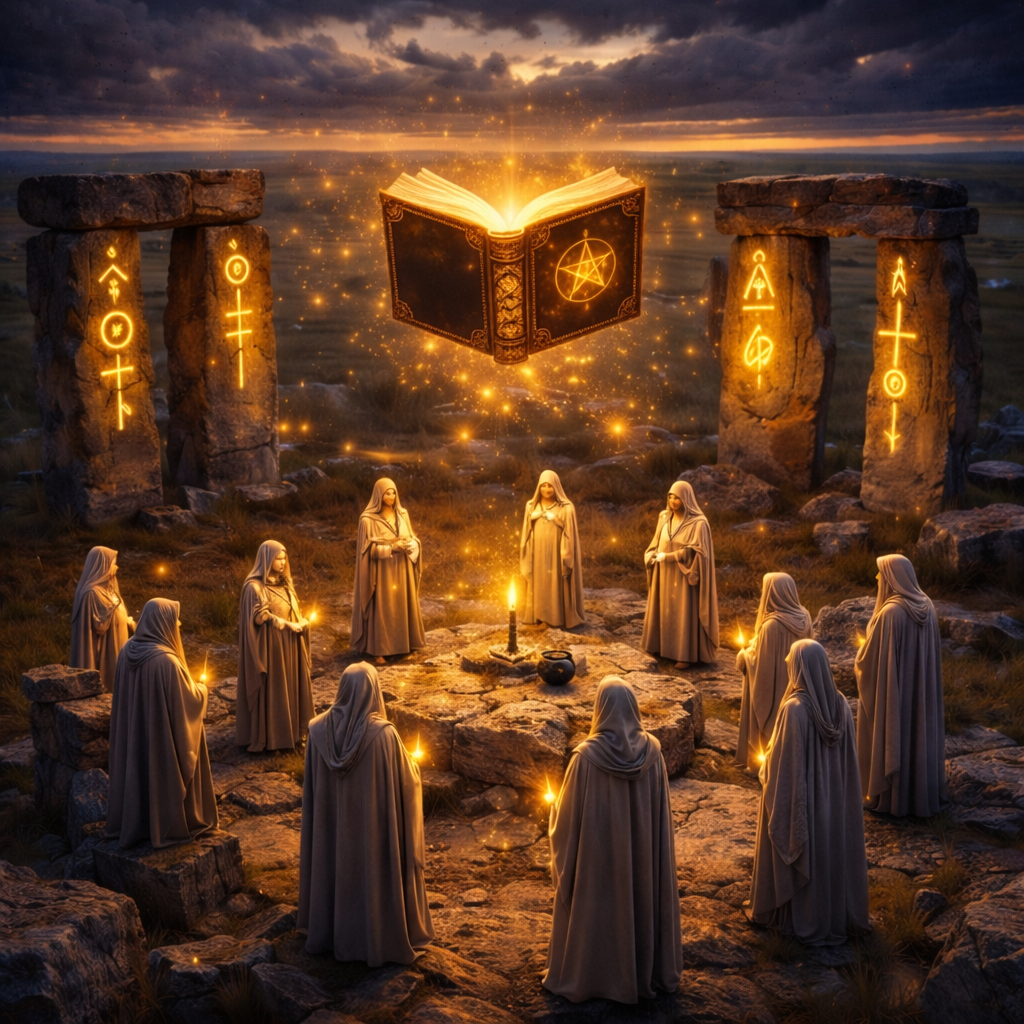

William G. Gray's 'Temple Magic' stands as a towering achievement in the literature of practical occultism. With an authorial voice that is both authoritative and deeply insightful, Gray demystifies complex ritualistic processes, rendering them accessible yet profound. He skillfully navigates the intricate landscape of Cabalistic theory and ceremonial magic, offering a lucid exposition of their interconnectedness. This work is indispensable for serious practitioners seeking to ground their magical endeavors in robust theoretical understanding and potent ritualistic application. Its strength lies in its clarity, its depth, and its unwavering focus on the transformative potential of temple work. An essential acquisition for any dedicated student of the Great Art.
📝 Description
61
William G. Gray's 'Temple Magic' (1974) details practical ceremonial magic for spiritual development.
Published in 1974, William G. Gray's 'Temple Magic' offers a practical guide to ceremonial magic. Gray focuses on the construction and use of both inner and outer temples as focal points for ritual. He breaks down the symbolic language of rites, aiming to guide practitioners toward direct spiritual experience. The book is not simply a collection of magical spells; instead, it emphasizes the cultivation of a personal connection with underlying forces. Gray discusses occult principles and Cabalistic ideas, stressing how focused intention and ritual action can bring about transformation.
This work is written for students of the mysteries who seek to move from theory to active practice. Gray presents magic as a disciplined path for spiritual growth, encouraging a deeper understanding of the self and the universe. It serves as a manual for those who wish to engage with the practical aspects of esoteric traditions, moving beyond mere intellectual study.
This book belongs to the Western esoteric tradition, specifically within ceremonial magic. It draws upon Kabbalistic concepts and occult principles, common in magical orders and writings from the late 19th and 20th centuries. Gray's approach emphasizes the practical application of these systems for personal transformation and spiritual attainment. Unlike purely theoretical grimoires, 'Temple Magic' focuses on the practitioner's inner state and disciplined practice, aligning with traditions that view magic as a path of spiritual evolution.
💡 Why Read This Book?
Uncover the foundational principles of ritualistic magic and its profound connection to the Cabala. 'Temple Magic' offers a rare blend of theoretical depth and practical guidance, ideal for practitioners seeking to elevate their craft. Scholars will find rich historical and philosophical context, while seekers will discover a clear path toward spiritual transformation through sacred ceremony. This book is a gateway to understanding the architecture of the magical universe.
⭐ Reader Reviews
Honest opinions from readers who have explored this book.
❓ Frequently Asked Questions
What is the core philosophy behind Temple Magic as presented by Gray?
The core philosophy centers on the belief that the universe is fundamentally magical and that by understanding and working with its underlying principles through structured ritual, individuals can achieve spiritual growth and manifest desired outcomes. It emphasizes the sacredness of space and intention.
How does this book relate to Cabalistic principles?
Gray intricately weaves Cabalistic concepts into his exploration of temple magic, demonstrating how the Tree of Life and its correspondences serve as a blueprint for ritual construction and understanding the flow of divine energy.
Is this book suitable for beginners in magic?
While comprehensive, the book assumes a foundational interest in esoteric studies. Beginners might find it beneficial to first familiarize themselves with basic occult concepts before diving deep into this text, though its clarity makes it accessible with dedication.
What kind of rituals are discussed in 'Temple Magic'?
The book delves into various forms of ritual, including invocation, evocation, consecration, and purification, all framed within the context of creating a sacred space – the temple – for magical work and spiritual communion.
What is the intended outcome of practicing Temple Magic?
The intended outcome is multi-faceted: spiritual enlightenment, self-mastery, a deeper connection with the divine, and the ability to effect positive change in oneself and one's environment through disciplined and informed magical practice.
🔮 Key Themes & Symbolism
The Sacred Architecture of Ritual
This theme explores the concept of the 'temple' not just as a physical structure, but as a consecrated space created through intention, symbolism, and precise ritualistic action. Gray details how to build and consecrate this inner and outer sanctuary, transforming ordinary space into a powerful nexus for magical work. It explores the principles of sacred geometry, the use of symbolic tools, and the importance of precise timing and invocation to imbue the ritual space with divine energy and facilitate communion with higher forces.
Cabalistic Foundations of Ceremonial Magic
Gray masterfully integrates the profound wisdom of the Cabala into the practice of temple magic. This theme illuminates how the Sephiroth, paths, and archetypes of the Tree of Life serve as a universal map for understanding cosmic forces and their manifestation in the human experience. Readers will learn how to apply Cabalistic principles to structure rituals, invoke specific divine energies, and interpret the symbolic language of the universe, thereby enhancing the efficacy and depth of their magical endeavors.
The Art of Intentional Manifestation
At its heart, 'Temple Magic' is a guide to harnessing focused will and intention for transformative purposes. This theme examines the psychological and energetic underpinnings of manifestation, emphasizing the role of disciplined imagination, clear visualization, and potent decree in bringing about desired changes. Gray guides the practitioner in aligning their personal will with universal currents, fostering a profound sense of agency and responsibility in the creative process of magic, moving beyond mere desire to conscious co-creation.
💬 Memorable Quotes
Direct passages from the work, attributed to the author.
“Ritual is the language of the soul to the universe.”
— This highlights the deeply personal and communicative nature of ritual, suggesting it is a direct means for our inner essence to express itself and interact with the cosmic order.
“The Cabala is the skeleton upon which magic hangs.”
— This metaphor illustrates the foundational and structural importance of Cabalistic principles in providing a coherent framework and essential support for all magical practices.
“In silence, the universe speaks.”
— This profound statement underscores the value of stillness and contemplation in esoteric practice, suggesting that true wisdom and insight are received when the mind is quieted.
“Magic is the art of causing change in conformity with will.”
— This concise definition captures the essence of practical magic, emphasizing the deliberate and directed application of will to manifest specific transformations in the world.
💡 Key Ideas
Editorial paraphrase of the work's core concepts — not direct quotes.
The temple is not a place, but a state of being.
This quote emphasizes that true magical work occurs when the practitioner cultivates an inner sanctum of awareness and intention, transforming their entire being into a sacred space.
🌙 Esoteric Significance
Tradition
This work is deeply rooted in the Western Esoteric Tradition, drawing heavily from Hermeticism, Cabala, and ceremonial magic. It synthesizes elements of practical occultism with a philosophical framework that emphasizes the interconnectedness of the microcosm and macrocosm. Gray's approach aligns with the goal of achieving gnosis and spiritual evolution through disciplined practice and the understanding of divine laws.
Symbolism
The book meticulously unpacks the detailed symbolism inherent in ritual objects, gestures, and invocations. Key symbols from the Cabala, such as the Tree of Life, the Hebrew alphabet, and planetary correspondences, are presented not as abstract concepts but as active forces within ritual. The temple itself becomes a potent symbol of the cosmos and the inner human being, where symbolic actions mirror universal processes.
Modern Relevance
In an age often characterized by distraction and superficiality, 'Temple Magic' offers a vital antidote. Its emphasis on focused intention, disciplined practice, and deep symbolic understanding remains profoundly relevant for modern seekers. The principles of creating sacred space, cultivating inner stillness, and aligning one's will with higher purpose are timeless tools for navigating complexity and fostering personal growth and spiritual connection.
👥 Who Should Read This Book
This book is essential for the serious student of magic, particularly those interested in ceremonial and ritualistic practices. Beginners with a strong foundational interest in the occult and a desire for structured learning will find it invaluable, though some prior exposure to esoteric concepts is recommended. Scholars of religious studies and comparative mysticism will appreciate its detailed exposition of Cabalistic influences. Dedicated practitioners seeking to deepen their understanding of ritual efficacy, symbolic language, and the art of intentional manifestation will find it an indispensable guide.
📜 Historical Context
Published in the mid-20th century, William G. Gray's 'Temple Magic' emerged during a vibrant period of renewed interest in Western Esotericism. Following the influential works of Golden Dawn adepts and figures like Aleister Crowley, Gray offered a more grounded and systematic approach to ritual magic. This era saw a surge in occult societies and private study, with practitioners seeking to synthesize ancient traditions like Cabala with modern psychological understanding. Gray's work resonated with those disillusioned by sensationalism, providing a disciplined, intellectual, and spiritually focused path. It reflected a growing desire to understand the underlying principles of magic as a coherent system for personal and spiritual development, rather than mere superstition.
📔 Journal Prompts
Reflect on your personal definition of a 'temple' and how you can create a sacred space in your daily life.
How does the concept of 'will' manifest in your actions, and how can you align it more consciously with your spiritual goals?
Identify a symbolic element from nature or your surroundings and explore its potential Cabalistic correspondence.
Consider a recent challenge you faced and how you might have approached it through focused intention and symbolic action.
What does the idea of 'silence speaking' mean to you, and how can you cultivate more silence in your life for greater insight?
🗂️ Glossary
Cabala
A mystical tradition within Judaism that explores the divine nature and the creation of the universe through a symbolic system, most notably the Tree of Life.
Invocation
The act of calling upon or inviting a divine presence, spirit, or force into oneself or a sacred space.
Evocation
The act of calling forth or summoning a spirit or entity from a place of concealment or the astral plane into manifestation.
Microcosm
The belief that the human being or the Earth reflects the structure and principles of the larger universe (macrocosm).
Macrocosm
The universe as a whole, seen as a vast, ordered system whose principles are reflected in the smaller world (microcosm).
This book appears in 3 collections
🔮 Readers Also Liked
Browse all →






More by William G. Gray
All books →





From the “Ritual Magic” Collection
View all →







More Free Magic & Ritual Books
View all →