Shroom
 62
62

Shroom

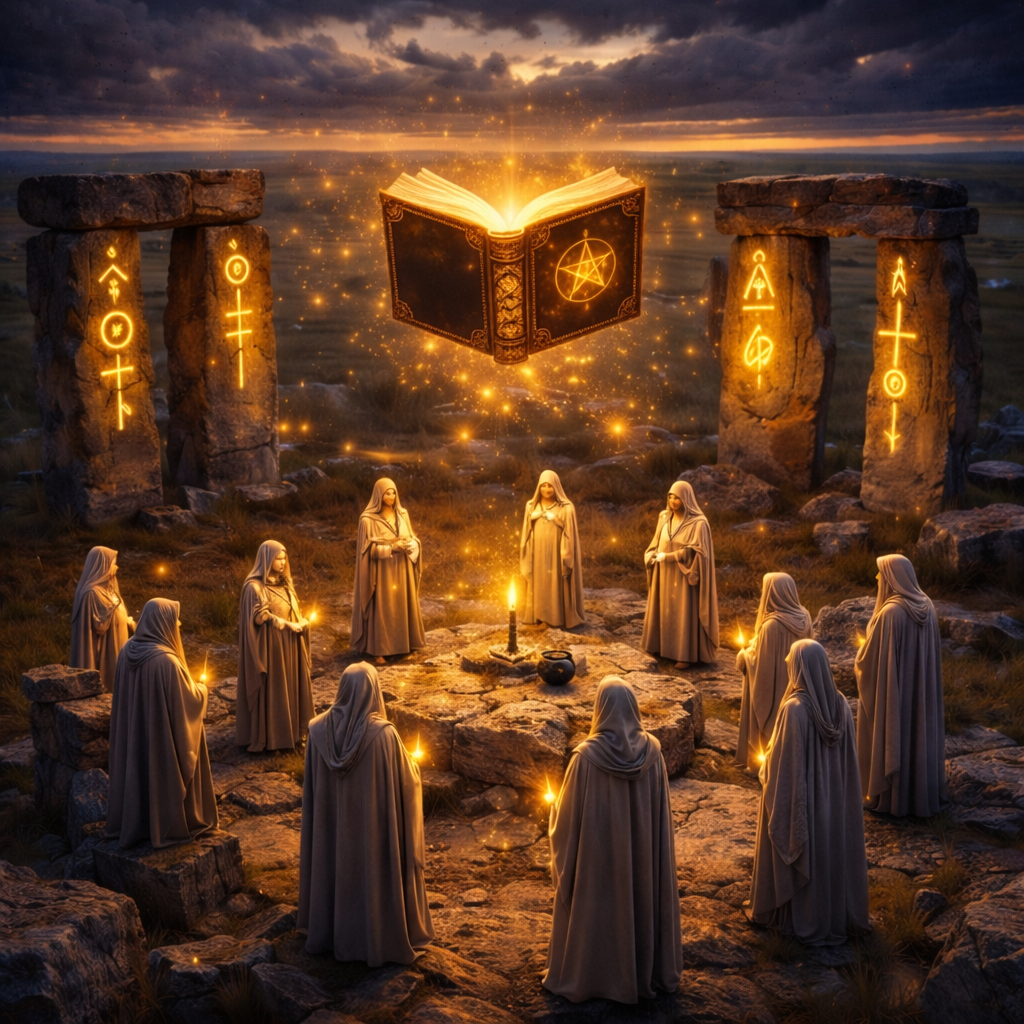

Andy Letcher's 'Shroom' is a seminal work for any serious student of altered states and their historical, cultural, and spiritual dimensions. Letcher masterfully navigates the complex currents of Amanita muscaria's journey, from its revered status in ancient Siberian and Mesoamerican traditions to its controversial resurgence. He offers rare insights into the ceremonial uses and the profound symbolism embedded within these potent fungi, revealing them not as mere intoxicants, but as keys to unlocking hidden realms of consciousness. This book is essential for practitioners seeking historical context and scholars unraveling the esoteric threads woven through human history.
📝 Description
Delve into the profound, often veiled history of psychoactive fungi with Andy Letcher's 'Shroom.' This meticulously researched exploration transcends mere ethnobotany, unfurling a tapestry of ancient shamanism, sacred rituals, and the very genesis of altered consciousness as experienced by humanity. From the crimson-capped Amanita muscaria gracing Siberian taiga and Aztec codices to its reawakening within contemporary Western countercultures, 'Shroom' illuminates the potent symbiosis between humankind and these potent botanical agents. It’s an invitation to explore the liminal spaces where myth, magic, and the human psyche converge, offering a potent lens through which to understand spiritual quests, visionary experiences, and the enduring allure of transcendent knowledge. This work is for the dedicated seeker, the curious scholar, and the practitioner yearning to understand the deep roots of mushroom-induced altered states and their transformative potential.
✍️ Author
Andy Letcher
Thursbitch is a novel by English writer Alan Garner, named after the valley in the Pennines of England where the action occurs (also listed in the 1841 OS map as "Thursbatch"). It was published in 2003.
💡 Why Read This Book?
Uncover the ancient mystical lineages of psychoactive fungi, tracing their sacred use from Siberian shamans to Aztec priests. 'Shroom' offers a profound understanding of mushroom ceremony, altered states, and their role in human spiritual evolution. Essential for seekers of hidden knowledge, cultural historians, and those exploring the esoteric dimensions of consciousness.
⭐ Reader Reviews
Honest opinions from readers who have explored this book.
❓ Frequently Asked Questions
What is the primary focus of 'Shroom' by Andy Letcher?
'Shroom' primarily focuses on the historical, cultural, and spiritual significance of psychoactive mushrooms, particularly Amanita muscaria, exploring their ceremonial use across ancient civilizations and their impact on human consciousness.
Which historical periods and cultures are explored in the book?
The book delves into the earliest recorded uses by the Aztecs of Central America and Siberian tribes, tracing their influence through various historical periods up to their reemergence in contemporary Western culture.
Is 'Shroom' a guide to mushroom cultivation or consumption?
No, 'Shroom' is an academic and esoteric investigation into the cultural and historical significance of these fungi, not a practical guide for cultivation or consumption.
Who is the intended audience for this book?
The intended audience includes scholars, historians, ethnobotanists, spiritual seekers, practitioners of esoteric traditions, and anyone interested in the cultural and mystical aspects of psychoactive substances.
What makes 'Shroom' unique among books on psychedelic substances?
Its unique strength lies in its deep dive into the historical esoteric context, particularly focusing on Amanita muscaria's role in ancient rituals and its rich symbolic meaning, offering a nuanced perspective beyond modern recreational use.
🔮 Key Themes & Symbolism
Ancient Shamanism and Psychedelic Fungi
This theme delves into the deep-seated connections between early human societies and their use of potent fungi for shamanic journeys, divination, and spiritual communion. It explores how these substances served as catalysts for altered states of consciousness, enabling shamans to connect with the spirit world, access hidden knowledge, and facilitate healing within their communities. The focus is on the sacred, ritualistic context, highlighting the profound respect and understanding these cultures held for the natural world and its psychotropic gifts.
The Symbolism of Amanita Muscaria
Amanita muscaria, the iconic 'fly agaric,' is examined not just as a psychoactive agent but as a potent symbol rich with layered meanings across diverse cultures. This theme unravels its representation in ancient art, mythology, and folklore, exploring its association with fertility, transformation, the underworld, and divine intoxication. The crimson cap and white spots are analyzed for their esoteric significance, often linked to cosmic journeys, the Tree of Life, and the very essence of consciousness expansion, offering a unique window into pre-Christian spiritual beliefs.
Resurgence of Psychedelic Consciousness
This theme traces the modern rediscovery and reinterpretation of psychedelic fungi, moving beyond their historical roots to their impact on contemporary culture and spiritual practices. It examines the social and philosophical dialogues surrounding these substances, their role in the counterculture movement, and their potential for therapeutic and spiritual exploration. The focus is on how these ancient keys to consciousness are being re-engaged with, debated, and integrated into modern quests for meaning and transcendence, often echoing age-old traditions.
💬 Memorable Quotes
“The mushroom, a silent herald of altered realities.”
— This quote encapsulates the book's view of fungi as potent portals, not just biological entities, but ancient messengers bridging the mundane and the mystical.
“From Siberian frost to Aztec sun, a shared journey of the mind.”
— Highlights the cross-cultural universality of the human experience with psychoactive fungi, emphasizing their enduring role across diverse geographies and eras.
“Ritual unlocks what perception alone conceals.”
— Underscores the importance of ceremonial context in accessing the profound insights and hidden knowledge offered by psychedelic states, suggesting intention is paramount.
“The cap, a universe; the stem, a ladder to the divine.”
— This evocative metaphor illustrates the symbolic power attributed to the mushroom, presenting it as a cosmic map and a vehicle for spiritual ascent.
“Echoes of the ancient psyche bloom anew.”
— Suggests the enduring relevance of ancient wisdom accessed through fungi, implying that these experiences connect us to a timeless human consciousness.
🌙 Esoteric Significance
Tradition
The esoteric significance of 'Shroom' is deeply intertwined with shamanistic traditions and ancient mystery cults that sought direct communion with the divine and access to hidden knowledge. It aligns with animistic beliefs that perceive consciousness and spirit within the natural world, particularly in fungi. The book explores how these substances acted as sacraments, facilitating visionary experiences that were interpreted through a lens of profound symbolic meaning, often revealing archetypal truths and cosmic patterns. It speaks to the perennial quest for transcendence and the belief that altered states can unlock deeper layers of reality and self-awareness, a core tenet in many esoteric paths.
Symbolism
The symbolism explored in 'Shroom' is multifaceted and profound. Amanita muscaria, with its striking red cap and white spots, is presented as a potent glyph for transformation, rebirth, and cosmic connection. Its association with the Tree of Life, the underworld, and ecstatic states imbues it with a sacred power. The act of mushroom ceremony itself becomes symbolic, representing the intentional journey into the psyche, the dissolution of ego, and the potential for spiritual rebirth. The book deciphers these symbols not as mere decorations but as vital keys to understanding ancient cosmologies and the human drive to explore the boundaries of perception and consciousness.
Modern Relevance
In the contemporary era, 'Shroom' offers a vital recontextualization of psychoactive fungi, moving beyond the often sensationalized or recreational discourse. It provides a crucial historical and cultural grounding for modern explorations into psychedelics, highlighting their potential for therapeutic, spiritual, and creative growth. The book's emphasis on ancient ritual and mindful engagement serves as a potent antidote to superficial use, encouraging a deeper, more respectful approach to these powerful allies. It speaks to a modern yearning for connection, meaning, and altered perspectives in a rapidly changing world, suggesting that ancient wisdom holds relevant keys to navigating present-day challenges.
👥 Who Should Read This Book
This book is a profound resource for a diverse readership. **Beginners** seeking a foundational understanding of the historical and cultural role of psychoactive fungi will find a clear yet captivating narrative. **Scholars** and **historians** will appreciate the meticulous research and detailed exploration of ethnobotanical use across continents and eras. **Spiritual seekers** and **practitioners** of esoteric traditions will discover rich insights into shamanic practices, symbolic meanings, and the potential for consciousness expansion. Those interested in the social and philosophical implications of altered states will find 'Shroom' an indispensable guide, offering a nuanced perspective that bridges ancient wisdom with contemporary inquiry.
📜 Historical Context
Andy Letcher's 'Shroom' emerges from a rich lineage of scholarship exploring the intersection of altered states and human civilization. Its historical context is deeply rooted in the study of shamanism, where psychoactive plants and fungi were integral tools for spiritual leaders to mediate between the earthly and the spirit realms. The book revisits the pre-Columbian societies of Mesoamerica, particularly the Aztecs, who revered psilocybin-containing mushrooms as 'teonanacatl' – flesh of the gods – using them in sacred rituals and divination. Simultaneously, it highlights the profound significance of Amanita muscaria among Siberian indigenous groups, where it played a central role in their cosmology, initiation rites, and shamanic practices, often associated with the ecstatic trance and the journey of the soul. The narrative then bridges these ancient traditions with the 20th and 21st centuries, charting the re-emergence of these potent fungi into Western consciousness, influencing art, philosophy, and spiritual exploration.
📔 Journal Prompts
Reflect on the concept of 'sacred' in relation to natural substances throughout history. How does this differ from modern perceptions?
Consider the symbolic imagery of Amanita muscaria. What personal associations or archetypal resonances does it evoke for you?
Imagine yourself as a shaman or priest in an ancient culture that uses mushrooms ritually. Describe your experience and its perceived significance.
How has the historical journey of psychoactive fungi influenced your understanding of human consciousness and spirituality?
What parallels can you draw between ancient mushroom ceremonies and contemporary practices aimed at self-discovery or healing?
🗂️ Glossary
Amanita muscaria
A distinctive basidiomycete fungus, characterized by its bright red or yellow cap with white flecks. It is one of the most widely recognized and historically significant psychoactive mushrooms, central to the book's exploration of ancient rituals and symbolism.
Psychoactive
Describes substances that affect mental processes, such as perception, mood, consciousness, cognition, and behavior. In the context of the book, it refers to fungi that induce altered states of consciousness.
Shamanism
A religious practice characterized by the belief in and the ability to communicate with the spirit world, often through altered states of consciousness induced by ritual, chanting, or the use of entheogenic substances.
Entheogen
A psychoactive substance used in a religious or spiritual context. The term emphasizes the potential of the substance to facilitate experiences of the divine or spiritual insight, rather than mere intoxication.
Ethnomycology
The study of the historical use of fungi by human cultures, encompassing their role in medicine, religion, folklore, and daily life. It is a key discipline informing the research presented in 'Shroom'.