Magical ritual methods
 71
71

Magical ritual methods
William G. Gray's 'Magical Ritual Methods' presents a pragmatic, almost engineering-like approach to the art of ritual. Unlike many contemporaries who focused on historical exegesis or esoteric philosophy, Gray offers a direct manual for constructing and performing magical rites. His strength lies in demystifying the process, breaking down complex magical operations into understandable, repeatable steps. The emphasis on clear intent and precise execution is commendable. However, the book's straightforwardness can sometimes border on austerity; the lyrical or ecstatic dimensions of magic are largely absent, making it feel more like a technical guide than an exploration of spiritual communion. A particularly effective section details the construction of a 'symbolic triangle' as a locus for manifestation, illustrating Gray's focus on practical application. While it may lack poetic flourish, its utility for the serious practitioner is undeniable. It serves as a solid blueprint for those who wish to build their own magical architecture.
📝 Description
71
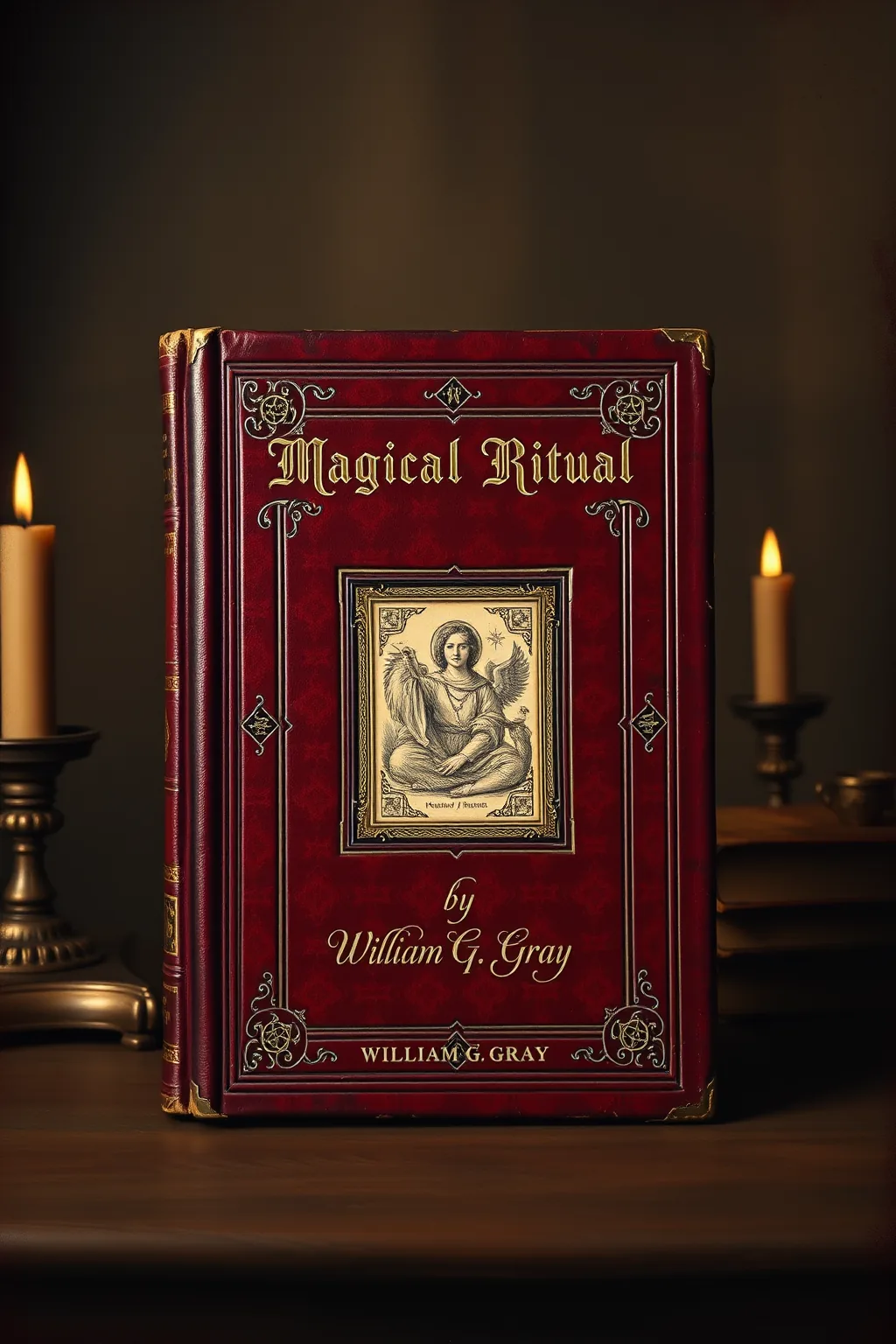
### What It Is Magical Ritual Methods is a foundational text by William G. Gray, first published in 1984. It offers a systematic approach to the practice of ritual magic, moving beyond theoretical discussions to provide practical, actionable techniques. The book is structured to guide the practitioner through the construction and execution of rituals, emphasizing clarity, intent, and the precise manipulation of symbolic forces. It serves as a practical manual for those seeking to engage directly with magical energies and processes.
### Who It's For This work is intended for serious students of the occult and practitioners of ceremonial magic who possess a foundational understanding of magical principles. It is particularly suited for individuals who have moved past introductory texts and are seeking a detailed, no-nonsense guide to ritual construction. Those interested in developing their own magical systems or refining existing practices will find its methodical approach invaluable. It is not a casual read but a working tool for dedicated practitioners.
### Historical Context Published in 1984, Magical Ritual Methods emerged during a period of resurgent interest in Western Esotericism, following the counter-cultural explorations of the 1960s and 70s. While authors like Israel Regardie had already codified aspects of Golden Dawn practices, Gray's work offered a distinctively direct and less dogmatic approach. It provided a counterbalance to more academic or philosophical explorations of magic, focusing squarely on the operative aspects. Its publication contributed to a growing body of literature aimed at empowering individual magical practice outside established orders.
### Key Concepts The book meticulously details the components of effective ritual. Central to Gray's method is the concept of 'symbolic machinery,' where carefully chosen symbols, tools, and gestures are arranged to create a specific energetic effect. He stresses the importance of precise visualization and the directed will of the magician to activate this machinery. The work also explores the psychological underpinnings of ritual, suggesting that the effectiveness of a rite is tied to the practitioner's mental state and belief. The book emphasizes the need for a personal magical tradition, encouraging practitioners to adapt and develop methods to suit their individual temperaments and goals.
💡 Why Read This Book?
• Gain a systematic framework for designing and executing magical rituals, moving beyond abstract theory to concrete practice, as detailed in Gray's methodical explanations of ritual construction. • Develop a disciplined approach to magical work by understanding the importance of precise intent and symbolic activation, a core principle emphasized throughout the text's practical guidance. • Cultivate personal magical authority by learning to adapt and create rituals suited to your own temperament and goals, a key takeaway from Gray's encouragement of personalized magical systems.
⭐ Reader Reviews
Honest opinions from readers who have explored this book.
❓ Frequently Asked Questions
What is the primary focus of William G. Gray's 'Magical Ritual Methods'?
The book's primary focus is providing practical, step-by-step methods for constructing and performing magical rituals. Gray emphasizes precision, intent, and the use of symbolic machinery to achieve desired magical effects.
Is 'Magical Ritual Methods' suitable for beginners in magic?
While it offers clear instruction, Gray's work is best suited for those with some foundational knowledge of magical principles. Beginners might benefit from supplementary reading before diving into its detailed operational techniques.
When was 'Magical Ritual Methods' first published?
William G. Gray's 'Magical Ritual Methods' was first published in 1984, a period seeing renewed interest in practical occultism.
What does Gray mean by 'symbolic machinery'?
Gray uses 'symbolic machinery' to describe the organized arrangement of symbols, tools, and gestures within a ritual. This structure is intended to channel and direct magical energies effectively, much like a machine directs physical forces.
Does the book discuss specific deities or spirits?
While the book focuses on the mechanics of ritual, it does so in a way that can be adapted to various magical traditions. It emphasizes the practitioner's intent and the symbolic framework rather than mandating the invocation of specific entities.
What is the overall tone of 'Magical Ritual Methods'?
The tone is pragmatic, direct, and instructional. Gray avoids excessive philosophical discourse, concentrating instead on the operational aspects of ritual practice, making it feel like a technical manual for magic.
🔮 Key Themes & Symbolism
Ritual Construction
Gray meticulously breaks down the architecture of ritual, treating it as a functional process. He details the selection and arrangement of symbolic elements, emphasizing that each component serves a specific purpose in the overall magical operation. This includes the careful consideration of timing, space, tools, and the magician's own internal state. The focus is on creating an efficient 'symbolic machinery' designed to focus will and energy towards a defined outcome.
The Directed Will
A central tenet is the conscious and directed application of the practitioner's will. Gray posits that magic is not a passive reception of forces but an active, intentional engagement. He stresses the importance of clarity in intent and the sustained focus required to imbue a ritual with the necessary energetic charge. This involves rigorous mental discipline and the ability to maintain concentration throughout the entire process.
Symbolic Language
The book underscores the power of symbols as a language that bypasses the rational mind and speaks directly to the subconscious and energetic realms. Gray guides the reader in understanding how to select and employ symbols effectively within a ritual context. This involves not just their conventional meanings but their potential to act as focal points for magical energy and intent, creating specific resonance patterns.
Personalized Practice
While providing a solid framework, Gray encourages practitioners to adapt his methods to their unique needs and temperaments. He advocates for developing a personal magical system rather than rigidly adhering to external dogma. This approach empowers the individual to become an active creator of their magical path, fostering a more authentic and effective practice rooted in personal experience.
💬 Memorable Quotes
“The power of a ritual lies not in the mumbo-jumbo, but in the precise ordering of symbolic forces.”
— This highlights Gray's pragmatic approach, suggesting that the effectiveness of magic stems from methodical design and the intelligent application of symbolism, rather than mere incantation or superstition.
“Your will is the engine; the ritual is the vehicle.”
— This metaphor emphasizes the primacy of the practitioner's directed intention. The ritual structure is seen as a tool or mechanism that channels and directs the fundamental power generated by the magician's focused will.
“Clarity of intent is paramount; ambiguity breeds chaotic results.”
— Gray stresses the need for precise definition of the desired outcome in any magical working. Vague goals lead to unfocused energy, resulting in unpredictable and often undesirable manifestations.
“The magician is the architect of their own energetic reality.”
— This quote frames the practitioner as an active creator, responsible for shaping their experiences through the deliberate use of magical techniques and symbolic manipulation.
“Every symbol chosen must serve a distinct function within the ritual machinery.”
— This points to Gray's methodical philosophy where symbols are not decorative but functional components, each contributing to the overall energetic and psychological impact of the rite.
🌙 Esoteric Significance
Tradition
Gray's work is situated within the broad current of Western Ceremonial Magic, drawing implicitly on traditions like the Golden Dawn but synthesizing them into a more streamlined, operative system. It emphasizes the practical application of magical principles, aligning with the Hermetic ideal of 'as above, so below' by focusing on the tangible construction of ritual as a means to influence subtle realities. It departs from more dogmatic or lineage-bound traditions by prioritizing individual efficacy and methodological clarity.
Symbolism
Key symbols in Gray's work often function as energetic anchors or focal points. The 'symbolic triangle,' for instance, is presented not just as a geometric shape but as a defined space for manifestation and concentration of will. Tools, when ritually consecrated and employed with specific intent, become imbued with energetic significance, acting as conduits or amplifiers. The act of precise visualization itself is a potent symbolic act, shaping the etheric landscape according to the magician's design.
Modern Relevance
Contemporary practitioners of eclectic witchcraft, chaos magic, and various forms of modern ceremonial magic often cite Gray's emphasis on practical methodology. His clear, functional approach to ritual construction resonates with those seeking to build effective magical systems independent of rigid traditional structures. Thinkers and practitioners focused on the psychology of magic and the power of focused intention find his work particularly valuable as a blueprint for disciplined practice.
👥 Who Should Read This Book
• Aspiring ceremonial magicians seeking a structured guide to ritual creation, offering concrete steps and principles for effective rite construction. • Practicing occultists looking to refine their existing magical techniques by adopting Gray's methodical and precise approach to symbolic work. • Students of esoteric philosophy interested in the practical application of magical theory, providing a bridge between abstract concepts and tangible results.
📜 Historical Context
William G. Gray's 'Magical Ritual Methods', published in 1984, emerged within a fertile period for Western Esotericism. Following the exploratory spirit of the 1960s and 70s, and building upon the legacy of occult revival figures like Aleister Crowley and the Hermetic Order of the Golden Dawn (whose practices were extensively documented by Israel Regardie), Gray's work offered a distinctively practical and systematic approach. It stood apart from more philosophical or historically-focused texts, providing a direct operational manual. Unlike some ceremonial magic traditions that emphasized complex initiatory structures or specific pantheons, Gray's methods were designed for individual application and adaptation. His work contributed to a growing movement towards personal occultism, empowering practitioners to construct their own magical frameworks with clarity and precision, reflecting a shift towards self-directed spiritual and magical development.
📔 Journal Prompts
The concept of 'symbolic machinery' in ritual: how might you construct a simple piece of machinery for a personal goal?
Analyze the role of 'directed will' in a past ritual attempt; where was it clear, and where did it falter?
Reflect on the selection of symbols: what makes a symbol potent for you, beyond its dictionary definition?
Consider Gray's emphasis on precision: how can this principle be applied to non-magical aspects of your life?
Develop a personal ritual outline using Gray's principles of intent and symbolic ordering.
🗂️ Glossary
Symbolic Machinery
A term used by Gray to describe the carefully arranged components of a ritual—symbols, tools, gestures, and mental focus—designed to function together to direct magical energy and effect.
Directed Will
The conscious, focused application of the practitioner's intention and mental energy towards a specific goal within a magical operation. It is the driving force behind the ritual's efficacy.
Ritual Construction
The process of designing and building a magical ritual, involving the selection and arrangement of symbolic elements, timing, and the practitioner's mental and energetic preparation.
Symbolic Triangle
A specific ritualistic formation often used as a defined space for manifestation or the summoning/banishing of energies. Gray discusses its construction and function within ritual.
Magical Operation
Any act performed with the intention of producing a supernatural or magical effect, encompassing rituals, spellcasting, and other forms of occult practice.
Etheric Landscape
The subtle, non-physical plane of existence that practitioners aim to influence or navigate through magical means. It is shaped by thought, emotion, and focused will.
Esoteric Practice
The study and application of hidden or secret knowledge, typically related to spiritual, mystical, or magical disciplines, often involving personal transformation.