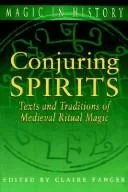
Conjuring Spirits
 61
61

Conjuring Spirits

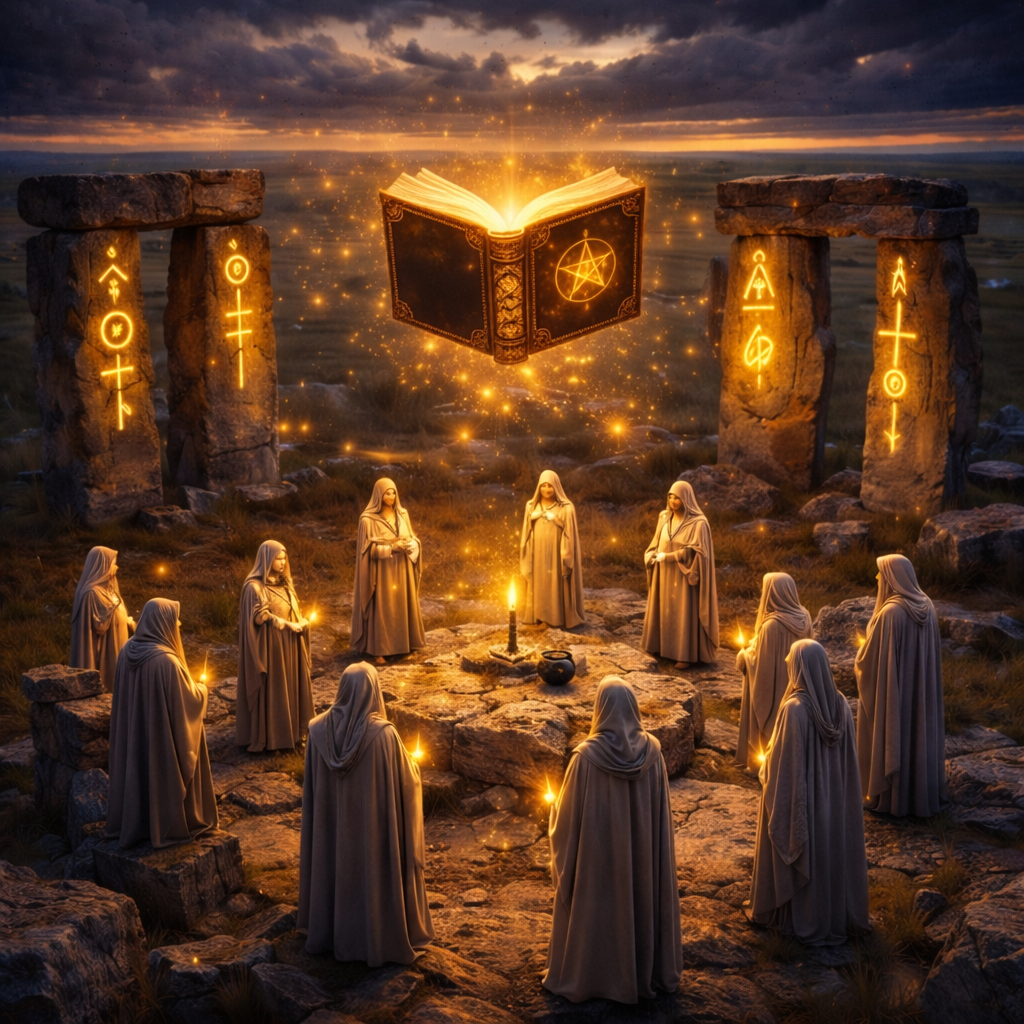

Sophia Crane (Associate Editor) — Clarie Fanger's 'Conjuring Spirits' stands as a beacon of clarity and depth in the often-murky waters of spirit evocation. Fanger masterfully navigates historical texts and esoteric traditions, presenting a rigorously researched yet accessible guide to the complex art of summoning. The book excels in its nuanced exploration of the ethical considerations and psychological preparedness required for such endeavors. It offers practical insights without succumbing to sensationalism, appealing to serious students of magic and occult philosophy alike. This is an essential resource for anyone seeking to understand the philosophical underpinnings and practical applications of engaging with non-corporeal beings.
📝 Description
61
Delve into the veiled realms of spiritual communion with Clarie Fanger's 'Conjuring Spirits,' a profound exploration of the ancient art of summoning and interacting with entities beyond our ordinary perception. This meticulously researched tome unfurls a tapestry of forgotten lore, revealing the intricate rituals, potent incantations, and symbolic keys that unlock pathways to the ethereal plane. Fanger guides the intrepid reader through a landscape rich with esoteric symbolism, where the boundary between the material and the spiritual dissolves. It is a sanctuary for the dedicated seeker, the arcane scholar, and the devoted practitioner yearning to understand the hidden architecture of existence and the myriad intelligences that populate it. This work is not merely a manual; it is a philosophical voyage, illuminating the interconnectedness of all things and the potential for humanity to engage with the cosmic dance of existence. Prepare to confront the profound and awaken dormant faculties as you journey into the heart of mystical evocation.
✍️ Author
Clarie Fanger
Beverly Gray is a series of mystery stories comprising 26 novels, and published between 1934 and 1955, by Clair Blank, the pen name of Clarissa Mabel Blank Moyer. The novels began as a series of school stories, following the progress of Beverly, its main character, through college, various romances, and a career as a reporter, before evolving strictly into a mystery series.
💡 Why Read This Book?
Embark on a transformative journey into the heart of spiritual communication. 'Conjuring Spirits' offers a rare glimpse into ancient practices, revealing the intricate pathways to connecting with unseen forces. Ideal for seekers of hidden knowledge, scholars of esoteric traditions, and practitioners looking to deepen their understanding of ritual and evocation. Uncover forgotten wisdom and expand your perception of reality.
⭐ Reader Reviews
Honest opinions from readers who have explored this book.
❓ Frequently Asked Questions
What historical periods does 'Conjuring Spirits' cover?
The book draws from a wide spectrum of historical periods, including ancient Mesopotamian, Egyptian, Greek, Roman, and medieval European magical traditions, offering a comprehensive overview of spirit conjuration across millennia.
Is this book suitable for beginners in magic?
While comprehensive, the book's depth and scholarly approach make it best suited for those with some foundational understanding of occult principles or a strong academic interest in the subject.
What are the primary ethical considerations discussed?
Fanger emphasizes the vital importance of intention, respect, consent, and the potential repercussions of engaging with spirits, urging practitioners towards responsible and ethical practice.
Does the book provide step-by-step instructions for rituals?
Yes, the book offers detailed explanations of ritualistic components, including preparatory rites, invocation techniques, and post-ritual practices, grounded in historical sources.
Can the knowledge in this book be applied to modern spiritual practices?
Absolutely. The underlying principles of intention, focused will, and symbolic representation are timeless and can be adapted and integrated into contemporary spiritual and magical frameworks.
🔮 Key Themes & Symbolism
The Art of Invocation
This theme delves into the nuanced methodologies of calling forth spiritual entities. It explores the development of the magician's inner landscape, the construction of sacred space, and the precise use of language, gesture, and symbolic artifacts to establish a connection. The focus is on the practitioner's cultivated will and the energetic resonance required to bridge the veil between worlds, highlighting the psychological and spiritual discipline inherent in effective evocation.
Symbolism and Correspondences
Unravel the intricate web of symbolic language that underpins spirit conjuration. This theme examines the rich tapestry of correspondences—celestial, elemental, and planetary—used to represent and interact with diverse spiritual intelligences. It explores how specific sigils, colors, herbs, and incantations act as keys, unlocking particular energetic frequencies and facilitating targeted communication and manifestation, revealing the deep interconnectedness between the macrocosm and the microcosm.
Ethics and Responsibility in Spirit Work
A crucial examination of the moral and ethical dimensions of interacting with non-corporeal beings. This theme addresses the profound responsibility that comes with wielding the power of evocation, emphasizing the importance of pure intention, respect for spiritual autonomy, and the potential consequences of misguided or harmful practices. It advocates for a balanced approach that prioritizes personal growth, spiritual integrity, and the well-being of both the practitioner and the invoked entities.
💬 Memorable Quotes
“The veil thins when the will is pure and the intent is clear.”
— This quote highlights the essential requirement of focused intention and a purified inner state for successful spiritual interaction, suggesting that mental clarity is paramount.
“Each sigil is a whispered secret of the cosmos.”
— This emphasizes the profound symbolic power inherent in magical diagrams, portraying them as encoded messages from the universe waiting to be deciphered.
“Respect is the bridge that spans the void.”
— This underscores the ethical imperative of approaching spiritual entities with reverence and acknowledgment of their inherent nature and power.
“The true conjuration begins within.”
— This points to the internal work—self-awareness, discipline, and spiritual development—as the foundational element for any external magical operation.
“To command is to understand; to understand is to serve.”
— This profound statement suggests that true authority in spiritual work comes not from brute force, but from deep comprehension and a willingness to align with higher principles.
🌙 Esoteric Significance
Tradition
This work deeply engages with the Western Esoteric Tradition, particularly drawing from ceremonial magic and the lineage of grimoire magic prevalent from the late medieval to the Renaissance periods. It explores the practical application of Kabbalistic principles, angelic hierarchies, and demonology as understood within these historical magical systems. The emphasis is on the structured, ritualistic approach to interacting with various classes of spirits, aiming for specific outcomes, knowledge acquisition, or spiritual advancement.
Symbolism
The book is steeped in a rich lexicon of esoteric symbolism. Key symbols include planetary correspondences, angelic and demonic names and seals, divine names, geometric figures (like the magic circle and triangle), and the symbolic meanings of colors, herbs, and metals. These elements are not merely decorative but are understood as potent energetic keys and conduits, designed to resonate with specific spiritual forces and facilitate communication and manifestation within the conjuration process.
Modern Relevance
In contemporary occultism and spiritual seeking, 'Conjuring Spirits' offers invaluable insights into the foundational principles of magical work. The emphasis on disciplined intention, symbolic understanding, and ethical engagement remains highly relevant for modern practitioners. It provides a historical grounding for contemporary magical practices, allowing individuals to understand the evolution of these arts and to refine their own methods by learning from the successes and cautionary tales of the past.
👥 Who Should Read This Book
This comprehensive work is a treasure for a diverse audience. **Beginners** with a serious interest in the history and practice of magic will find a meticulously researched introduction to the principles of spirit evocation. **Scholars** of religious studies, folklore, and occult history will appreciate the deep dives into primary sources and historical context. **Seekers** yearning for a deeper understanding of the spiritual dimensions of reality and humanity's place within it will find profound philosophical insights. **Practitioners** of various magical paths will benefit from the nuanced exploration of ritual technique, ethical considerations, and the symbolic language of conjuration, enhancing their own craft.
📜 Historical Context
Clarie Fanger's 'Conjuring Spirits' emerges from a rich tapestry of historical magical practices, primarily focusing on the late medieval and Renaissance periods in Europe, a time rife with intellectual ferment and clandestine magical traditions. This era saw a complex interplay between burgeoning scientific inquiry and deeply ingrained mystical beliefs. Grimoires, such as the 'Lemegeton' and the 'Thesaurus Arcanus,' provided frameworks for understanding and interacting with the spirit world, often drawing upon earlier Hellenistic, Jewish Kabbalistic, and Arabic occult sciences. The desire to understand and control supernatural forces was intertwined with theological debates, philosophical explorations of the soul, and the desire for hidden knowledge and personal empowerment. This book illuminates how these historical currents shaped the practices of spirit conjuration, offering a window into the medieval and Renaissance mind's engagement with the unseen.
📔 Journal Prompts
Reflect on the concept of 'will' in spiritual practice. How might your own will be cultivated and purified for effective interaction with unseen forces?
Analyze a personal experience where you felt a connection to something beyond the ordinary. What symbolic elements were present, and how did they manifest?
Consider the ethical implications of invoking a spirit without full understanding of its nature or intentions. What safeguards would you implement in your own practice?
Explore the idea that 'the true conjuration begins within.' How does inner transformation prepare one for external magical work?
What personal symbols or correspondences resonate most strongly with you, and how could they be integrated into a ritualistic framework?
🗂️ Glossary
Evocation
The practice of calling forth spiritual entities from their own realm into a visible or perceptible manifestation within the magician's space, typically involving the use of specific rituals and incantations.
Grimoire
A textbook of magic, typically containing instructions on how to create magical tools, perform rituals, and summon spirits, often dating from the late medieval period onwards.
Sigil
A symbol or emblem created to represent a specific intention, entity, or concept, often used in magical rituals for focusing energy and creating a link.
Correspondence
In esoteric traditions, the relationship or connection between different elements, such as planets, colors, herbs, or deities, which share a common energetic signature or symbolism.
Sacred Circle
A consecrated space, typically drawn or inscribed on the ground, used in ritual magic to protect the practitioner and contain the energies of the invoked spirits.