Conjuring Spirits

 62
62

Conjuring Spirits

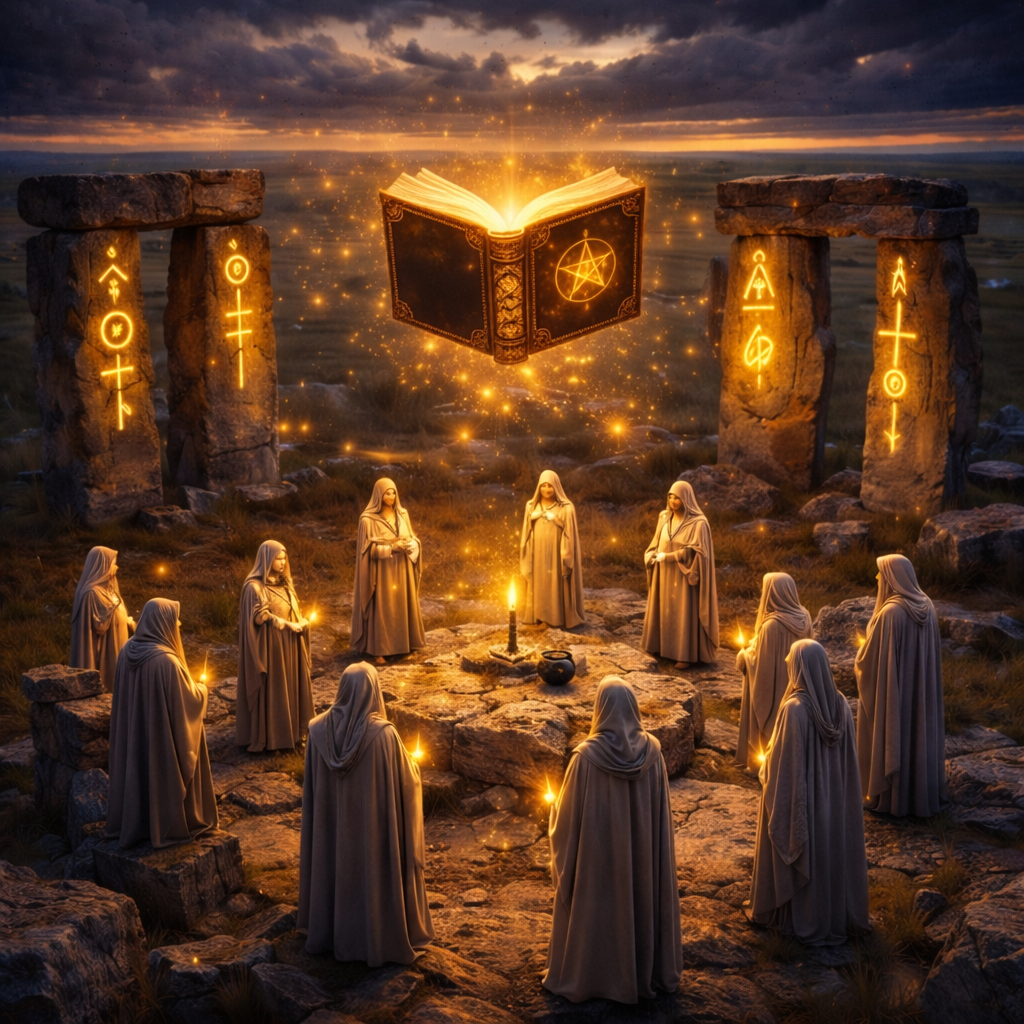

Claire Fanger's 'Conjuring Spirits' is a monumental achievement, offering a lucid and deeply informed journey into the esoteric practices of spirit conjuration. Fanger's scholarship is impeccable, drawing directly from rare and often obscure manuscripts to illuminate the historical context and practical application of these ancient arts. She navigates the complex theological and philosophical currents that shaped these rituals with remarkable clarity, revealing the intricate symbolic language that underpinned them. This work is essential for anyone serious about understanding the historical trajectory of Western occultism, particularly those interested in medieval and Renaissance magical traditions. It is a definitive resource for scholars and practitioners alike, bridging the gap between academic rigor and genuine esoteric insight.
📝 Description
62
Unveil the veiled arts with Claire Fanger's 'Conjuring Spirits,' a profound exploration into the historical tapestry of spirit invocation. This meticulously researched tome plunges into the heart of medieval and Renaissance magic, dissecting ancient manuscripts that whisper secrets of communion with the unseen. Fanger masterfully guides the reader through the labyrinthine symbolism and intricate rituals employed by practitioners seeking direct dialogue with celestial, elemental, and infernal intelligences. The atmosphere is one of hushed reverence, of ancient libraries filled with the scent of parchment and forgotten incantations. This book is for the dedicated seeker, the curious scholar, and the earnest practitioner who yearns to understand the philosophical underpinnings of magical philosophy and its historical evolution. It is a journey into a world where the boundaries between the material and the spiritual were fluid, and where the human soul sought to transcend its earthly confines through divine or infernal pacts. 'Conjuring Spirits' doesn't just present history; it reanimates it, offering a potent glimpse into humanity's enduring fascination with the spectral realm.
✍️ Author
Claire Fanger
Dion Fortune (born Violet Mary Firth, 6 December 1890 – 6 or 8 January 1946) was a British occultist, ceremonial magician, and writer. She was a co-founder of the Fraternity of the Inner Light, an occult organisation that promoted philosophies which she claimed had been taught to her by spiritual entities known as the Ascended Masters.
💡 Why Read This Book?
Dive into the arcane depths of historical spirit conjuration. 'Conjuring Spirits' offers unparalleled access to forgotten rituals and the philosophical frameworks that guided them. Ideal for scholars seeking primary source insights, practitioners aiming to understand the roots of their craft, and anyone fascinated by the persistent human quest to commune with the unseen realms. Discover the hidden knowledge that shaped Western magical traditions.
⭐ Reader Reviews
Honest opinions from readers who have explored this book.
❓ Frequently Asked Questions
What historical periods does 'Conjuring Spirits' primarily focus on?
The book primarily delves into the medieval and Renaissance periods, exploring the evolution of spirit conjuration practices and their associated manuscript traditions during these influential eras.
Is this book suitable for absolute beginners in magic?
While accessible, 'Conjuring Spirits' is geared towards readers with some interest in esoteric history or magic. Beginners might find it a rich, albeit dense, introduction to historical occult practices.
Does the book provide practical instructions for conjuring spirits?
The book focuses on historical analysis and understanding the theoretical and ritualistic frameworks of past conjuration practices, rather than offering direct, modern-day instructions.
What kind of manuscripts are discussed in the book?
It examines a range of historical magical manuscripts, including grimoires, treatises on demonology, and texts detailing angelic and elemental evocations, offering insights into their content and context.
What is the philosophical significance of spirit conjuration discussed?
The book explores the philosophical underpinnings, such as the Neoplatonic concept of intermediaries, the desire for divine knowledge, and the ethical considerations within these magical systems.
🔮 Key Themes & Symbolism
The Manuscript Tradition of Spirit Conjuration
This theme delves into the physical and textual evolution of magical manuscripts, focusing on how grimoires and treatises served as repositories of occult knowledge. It examines the scribal transmission of rituals, the unique linguistic styles, and the inherent symbolism embedded within these rare documents. The focus is on understanding how these texts were not merely instructional but were themselves imbued with power and acted as conduits for the practitioner's will and spiritual aspirations, shaping the very practice of conjuration.
The Cosmology of Spirit Hierarchy
Claire Fanger meticulously unpacks the intricate celestial and infernal hierarchies that formed the backbone of spirit conjuration. This theme explores the categorization of spirits—angels, demons, elementals, and planetary intelligences—and the specific correspondences and protocols associated with each. Understanding this layered cosmology was crucial for practitioners, as it dictated the appropriate invocations, offerings, and protective measures required for successful and safe communion with the desired entities.
Ritual Efficacy and Symbolic Language
This theme investigates the potent blend of practical ritual and profound symbolism that characterized spirit conjuration. It analyzes the significance of talismans, sigils, incantations, divine names, and planetary alignments as integral components of the magical act. The book highlights how these elements were not arbitrary but were believed to hold inherent power, acting as keys to unlock spiritual realms and compel the obedience of spirits, demonstrating a sophisticated understanding of sympathetic magic and the power of focused intention.
💬 Memorable Quotes
“The veil between worlds is thin for those who know where to look.”
— This quote emphasizes the accessibility of the spiritual realm, suggesting that knowledge and specific practices are the keys to perceiving and interacting with unseen dimensions.
“Manuscripts are not mere paper and ink, but dormant vessels of power.”
— It highlights the belief that ancient magical texts are imbued with inherent energy, acting as active agents in the conjuration process, not just passive records.
“To command the spirits is to understand their language and their place.”
— This underscores the necessity of deep knowledge—of spiritual hierarchies, correspondences, and symbolic communication—for effective and controlled spirit evocation.
“The circle is a fortress, the words are the keys, and the will is the force.”
— This encapsulates the fundamental elements of ritual magic: protective boundaries, precise verbal formulae, and the practitioner's unwavering intent as the driving power.
“History whispers secrets to those who listen with an open mind.”
— It encourages a receptive and scholarly approach to historical texts, suggesting that profound esoteric truths can be uncovered through careful study and contemplation.
🌙 Esoteric Significance
Tradition
The esoteric significance of 'Conjuring Spirits' lies primarily within the Western Esoteric Tradition, encompassing late medieval and Renaissance grimoire magic, Neoplatonic angelology, and early forms of ceremonial magic. It connects to traditions that sought to understand and interact with the divine and spiritual realms through structured ritual and symbolic language. The book illuminates a period where the boundaries between theology, philosophy, and magic were fluid, and where practitioners believed in a hierarchical cosmos accessible through specific keys of knowledge and intention.
Symbolism
The symbolism explored is vast, encompassing angelic and demonic names, planetary correspondences, geometric figures (like the magic circle and pentagram), divine names, elemental signs, and specific astrological timings. These symbols were not merely decorative but were considered potent tools, believed to possess inherent spiritual power and to act as conduits or keys for invoking specific entities or forces. The precise arrangement and use of these symbols within rituals were crucial for establishing divine favor or compelling spiritual obedience.
Modern Relevance
In the modern era, 'Conjuring Spirits' offers a vital historical anchor for contemporary practitioners and scholars of esoteric traditions. It provides a deep understanding of the origins and evolution of magical concepts and practices that continue to influence modern occultism. By demystifying historical rituals and their symbolic languages, the book allows for a more informed engagement with these ancient arts, fostering critical thinking about the efficacy, ethics, and philosophical underpinnings of spiritual work in the 21st century.
👥 Who Should Read This Book
This seminal work is indispensable for several distinct groups. For the **academic scholar**, it provides rigorous analysis and access to primary source material, offering profound insights into medieval and Renaissance intellectual history and the history of religion. **Esoteric practitioners** will find a rich, historically grounded understanding of ritual magic, the origins of many contemporary practices, and the symbolic systems that underpin them. **Seekers of hidden knowledge** will be captivated by the exploration of humanity's enduring quest to commune with the unseen, offering a glimpse into a world where the spiritual was actively engaged. **Students of occultism** will gain a foundational understanding of the lineage and development of Western magical traditions, essential for a comprehensive grasp of the subject.
📜 Historical Context
Claire Fanger's 'Conjuring Spirits' emerges from a rich historical milieu, predominantly the late medieval and Renaissance periods in Europe. This era was marked by a complex interplay of burgeoning humanism, enduring scholasticism, and a pervasive fascination with the occult. The invention of the printing press began to democratize knowledge, yet many esoteric texts remained in manuscript form, carefully guarded and circulated within select circles. This was a time when the Church's authority was being challenged, creating intellectual space for the exploration of non-Christian cosmologies and magical practices. Figures like Agrippa and Dee were active, blurring the lines between natural philosophy, theology, and magic. The intellectual climate was ripe for seeking hidden knowledge, believing that the universe was governed by intricate, often hidden, divine laws that could be accessed through various means, including the careful and knowledgeable invocation of spiritual entities.
📔 Journal Prompts
Reflect on the historical motivations behind spirit conjuration. What core human desires or beliefs drove these practices?
Analyze the role of symbolism in the rituals described. How might abstract symbols translate into perceived spiritual power?
Consider the ethical implications of commanding spiritual entities. What responsibilities did practitioners believe they held?
Imagine you are a scribe transcribing a magical manuscript. What challenges and considerations would you face in preserving this knowledge?
How has the modern understanding of consciousness and psychology influenced our perception of historical spirit conjuration?
🗂️ Glossary
Grimoire
A textbook of magic, typically containing instructions on how to create magical tools, perform rituals, and invoke spirits, often dating from the medieval or Renaissance periods.
Sigil
A magical symbol or diagram, often created with intent and charged with energy, believed to represent a specific desire, intention, or spiritual entity.
Neoplatonism
A philosophical system influenced by Plato, emphasizing a hierarchical cosmos with a supreme, transcendent 'One,' and the emanation of all existence from it.
Angelology
The study or doctrine of angels, often including their nature, hierarchy, and role within a religious or magical cosmology.
Ceremonial Magic
A broad category of magical practices that involve elaborate rituals, specific incantations, and the use of symbolic tools and attire to achieve spiritual or material goals.