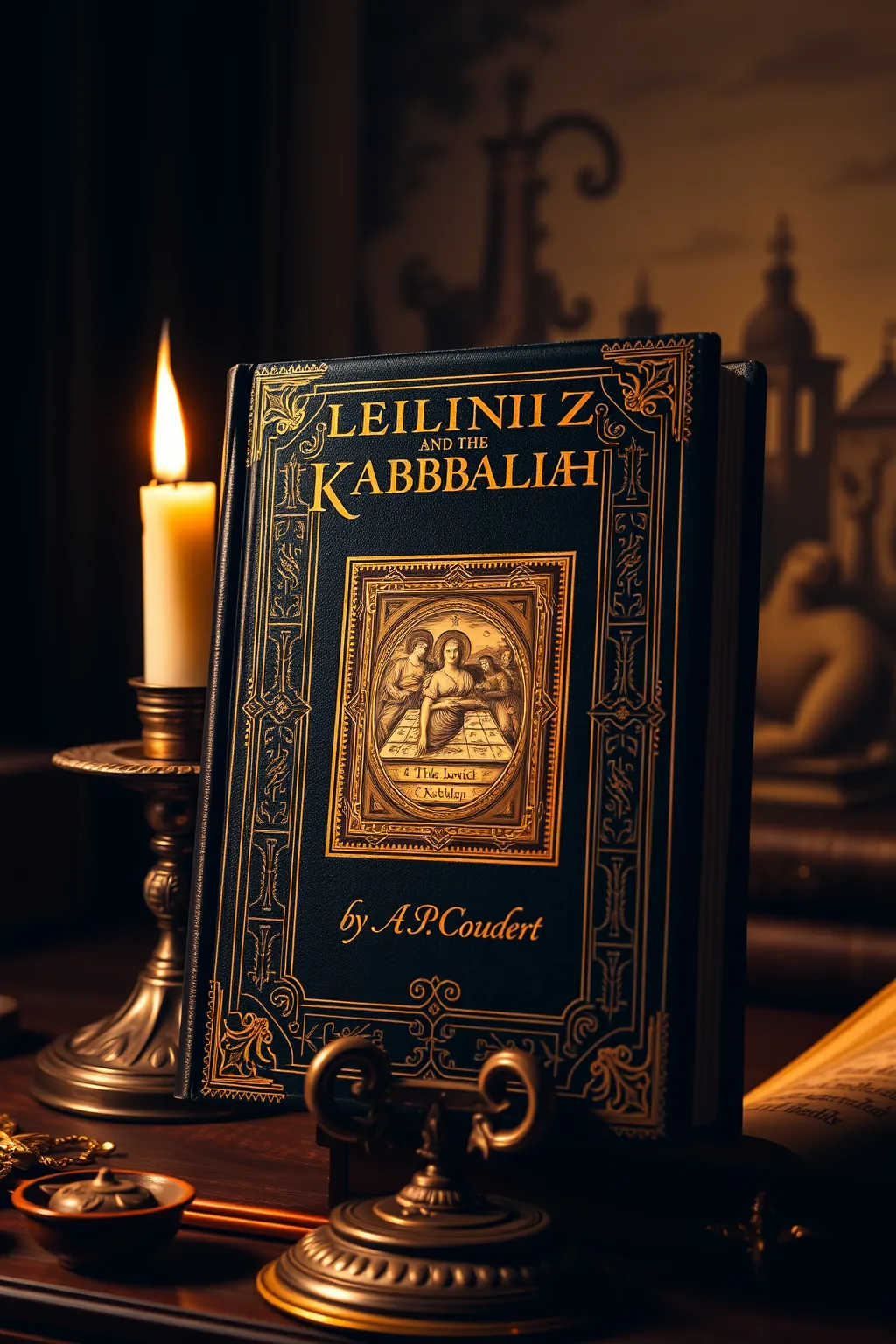
Leibniz and the Kabbalah
 61
61

Leibniz and the Kabbalah



A. P. Coudert’s "Leibniz and the Kabbalah" is a seminal work for anyone interested in the cross-pollination of philosophical and esoteric traditions. Coudert masterfully navigates the intricate intellectual landscape, demonstrating a remarkable ability to connect Leibniz’s sophisticated rationalism with the profound symbolic language of Kabbalah. The book offers compelling insights into how these seemingly disparate systems could inform one another, particularly concerning divine order, language, and the nature of reality. It is an essential read for scholars of philosophy, Jewish mysticism, and the history of ideas, providing a nuanced and authoritative perspective on a fascinating intellectual encounter. The depth of research and clarity of exposition are exceptional.
📝 Description
61
A. P. Coudert's 1995 book examines Gottfried Wilhelm Leibniz's engagement with Kabbalah.
This study investigates the surprising intellectual connection between the 17th-century philosopher Gottfried Wilhelm Leibniz and Jewish Kabbalah. Coudert details how Leibniz, a figure primarily known for his work in mathematics and philosophy, seriously considered Kabbalistic ideas. The book shows Leibniz's interest in divine principles, symbolic language, and the structure of the cosmos as understood through Kabbalistic thought.
It places Leibniz's engagement within the context of 17th-century philosophical and spiritual thought. The work aims to show how esoteric traditions influenced Western intellectual history. This book is for readers interested in the intersection of rational philosophy and mystical thought, particularly how seemingly disparate traditions can inform one another.
This work sits within the study of how Kabbalistic thought, particularly its Neoplatonic and symbolic dimensions, influenced later European intellectual currents. It examines the reception and interpretation of Kabbalistic concepts by figures outside traditional Jewish scholarship, placing it in dialogue with studies on Christian Kabbalah and the broader history of Western esotericism. The book highlights how philosophical systems can absorb and transform mystical ideas, demonstrating a cross-pollination of intellectual traditions.
💡 Why Read This Book?
Uncover the surprising synthesis between Enlightenment rationality and ancient Kabbalistic wisdom. Explore how Leibniz, a titan of philosophy, found resonance in the mystical traditions of Jewish thought, revealing hidden connections between logic, language, and the divine. This book is essential for seekers of esoteric knowledge, academic scholars, and practitioners interested in the philosophical underpinnings of mysticism, offering a unique pathway to understanding the interconnectedness of diverse wisdom systems.
⭐ Reader Reviews
Honest opinions from readers who have explored this book.
❓ Frequently Asked Questions
Did Leibniz actively practice Kabbalah?
While Leibniz was deeply interested in Kabbalistic texts and concepts, the evidence suggests his engagement was primarily intellectual and philosophical, rather than a direct mystical practice.
What specific Kabbalistic ideas influenced Leibniz?
Leibniz was particularly drawn to Kabbalistic notions of divine emanation, the symbolic power of Hebrew letters and names, and the intricate structure of the Sephirot as models for universal order.
How does this book connect Leibniz's rationalism with mysticism?
The book meticulously demonstrates how Leibniz sought to find rational frameworks and symbolic correspondences within Kabbalistic thought, seeing in its structures potential echoes of his own philosophical system.
Is prior knowledge of Kabbalah or Leibniz required?
While beneficial, extensive prior knowledge is not strictly required. Coudert provides sufficient context to make the complex ideas accessible to a motivated reader.
What is the main takeaway for the reader?
The primary takeaway is the realization that profound philosophical systems can engage with and be enriched by esoteric traditions, blurring the lines between reason and mysticism.
🔮 Key Themes & Symbolism
The Universal Harmony of Monads and Sefirot
This theme explores the fascinating parallels Leibniz perceived between his metaphysical concept of monads – fundamental, indivisible substances – and the Kabbalistic Sefirot, the divine emanations that structure reality. Coudert illuminates how Leibniz might have viewed the ordered hierarchy of the Sefirot as a symbolic representation of the interconnectedness and pre-established harmony he posited in his own philosophy. The exploration examines how both systems, despite their vastly different origins, sought to articulate a coherent and divinely ordained cosmic architecture, suggesting a shared human impulse to understand the underlying order of existence through symbolic and metaphysical frameworks.
The Divine Language of Letters and Symbols
This section examines Leibniz's engagement with the Kabbalistic belief in the intrinsic power and symbolic meaning of Hebrew letters and divine names. Coudert highlights how Leibniz, a pioneer in formal logic and symbolic notation, may have found in the Kabbalah a profound, albeit mystical, system of language that mirrored his own search for a universal symbolic tongue. The exploration examines the philosophical implications of viewing letters not merely as linguistic units but as carriers of divine essence and cosmic blueprints, a concept that resonated deeply with Leibniz's interest in cryptography and the potential for a characteristica universalis.
Christian Kabbalah and Philosophical Syncretism
This critical theme examines the broader context of Christian Kabbalah in the 17th century and how Leibniz's interest fits within this syncretic intellectual milieu. Coudert positions Leibniz's inquiries not as an isolated curiosity but as part of a wider European intellectual movement seeking to synthesize ancient Hebraic wisdom with Christian theology and nascent philosophical rationalism. The discussion explores how figures like Leibniz, while maintaining their distinct philosophical systems, were open to extracting and reinterpreting esoteric traditions to enrich their understanding of God, nature, and the human soul, revealing a complex set of intellectual cross-pollination.
💬 Memorable Quotes
Direct passages from the work, attributed to the author.
“Leibniz found in the Hebrew letters a calculus of the divine.”
— This implies that Leibniz, a master of calculus, saw in the symbolic nature of Hebrew letters a system that could be analyzed and understood through a form of divine logic or structure.
“Reason and revelation, in Leibniz's mind, were not adversaries but complementary paths to truth.”
— This highlights Leibniz's belief that philosophical inquiry and mystical or revealed knowledge could converge, offering different but equally valid ways to apprehend ultimate reality.
“The Sephirot, like monads, form a divinely orchestrated symphony of being.”
— This draws a direct parallel between the Kabbalistic emanations and Leibniz's monads, suggesting both systems describe a universe composed of interconnected, harmonious elements governed by a higher intelligence.
“Hidden correspondences combine the fabric of reality, a truth recognized by both the philosopher and the mystic.”
— This emphasizes the underlying theme of interconnectedness and symbolic relationships that the book explores, bridging the gap between seemingly distinct modes of understanding the world.
💡 Key Ideas
Editorial paraphrase of the work's core concepts — not direct quotes.
The universe is a divine book, and the Kabbalah holds its most profound footnotes.
This quote suggests that the Kabbalah offers essential, often hidden, clarifications and deeper meanings to the grand order of existence, akin to crucial annotations in a sacred text.
🌙 Esoteric Significance
Tradition
This work examines the profound esoteric tradition of Kabbalah, specifically focusing on its intellectual and symbolic dimensions as interpreted through the philosophical lens of Gottfried Wilhelm Leibniz. It explores the Kabbalah not merely as a religious or mystical practice, but as a sophisticated metaphysical system concerned with divine emanation, the structure of the cosmos, and the hidden language of creation. The book highlights how Leibniz engaged with these Kabbalistic concepts, viewing them as potential keys to understanding universal principles and divine order.
Symbolism
Central to the esoteric significance is the Kabbalistic symbolism of the Hebrew alphabet, divine names, and the ten Sefirot. Coudert examines how Leibniz, with his penchant for symbolic logic and universal language, found resonance in this rich symbolic range. The Sefirot, representing divine attributes and stages of creation, are presented as a potential model for Leibniz's own monadology and his ideas on pre-established harmony. The book elucidates how these symbols were not just decorative but were understood as potent carriers of cosmic knowledge and divine intention.
Modern Relevance
The modern relevance of "Leibniz and the Kabbalah" lies in its demonstration of intellectual cross-pollination and the enduring quest for unifying principles across diverse knowledge systems. In an age often characterized by specialization, this book reminds us of the potential for useful insights when rational inquiry engages with esoteric wisdom. It offers a model for contemporary scholars and seekers to explore the deep connections between science, philosophy, and mysticism, suggesting that the pursuit of understanding the divine and the cosmos can benefit from a many-sided, interdisciplinary approach.
👥 Who Should Read This Book
This book is a treasure for a diverse audience. Scholars of philosophy, particularly those interested in Gottfried Wilhelm Leibniz, will find invaluable new perspectives on his intellectual development and influences. Students and practitioners of Kabbalah will discover a unique philosophical interpretation of their tradition, revealing unexpected connections to Western thought. Seekers of esoteric knowledge and those fascinated by the history of ideas will be captivated by the intricate dialogue between reason and mysticism. Even readers new to either Leibniz or Kabbalah will find Coudert's lucid prose and meticulous research an engaging gateway into this fascinating intellectual synthesis.
📜 Historical Context
The late 17th and early 18th centuries, the era of Gottfried Wilhelm Leibniz, were a period of immense intellectual ferment. The Scientific Revolution had profoundly reshaped understandings of the cosmos, while the Enlightenment was beginning to champion reason and empirical observation. Yet, alongside this burgeoning rationalism, a vibrant interest in esoteric traditions, including Hermeticism, Neoplatonism, and the Kabbalah, persisted. This was the age of Christian Kabbalah, where scholars and thinkers sought to integrate Jewish mystical wisdom into Christian theological frameworks, often viewing it as a lost or corrupted form of primeval revelation. Leibniz, a polymath of exceptional genius, embodied this complex intellectual landscape, engaging critically and creatively with both cutting-edge scientific theories and ancient mystical doctrines, seeking to find unifying principles that could bridge the material and the spiritual, the rational and the divine.
📔 Journal Prompts
How might Leibniz's concept of 'best of all possible worlds' be reflected in the ordered emanations of the Kabbalistic Sefirot?
Reflect on a time when you found unexpected connections between seemingly disparate fields of knowledge or belief systems.
Consider the power of symbols. How can abstract symbols, like letters or geometric shapes, convey profound meaning beyond their literal representation?
If Leibniz saw a 'calculus of the divine' in Hebrew letters, what 'calculus' might you apply to understanding the mysteries of your own chosen spiritual or philosophical path?
Explore the idea of universal language. What elements of language, both literal and symbolic, do you believe are universally understood across cultures and disciplines?
🗂️ Glossary
Monads
In Leibniz's philosophy, fundamental, indivisible, and unique substances that constitute reality. Each monad reflects the entire universe from its own perspective.
Sefirot
The ten divine emanations or attributes in Kabbalistic cosmology, through which God reveals himself and creates the universe. They form a hierarchical structure.
Christian Kabbalah
A syncretic movement that emerged in Renaissance Europe, attempting to interpret Jewish Kabbalistic texts and concepts within a Christian theological framework.
Characteristica Universalis
Leibniz's ambitious project for a universal symbolic language and logical system that could express all thought and knowledge, allowing for the resolution of disputes through calculation.
Pre-established Harmony
Leibniz's metaphysical theory explaining how the independent monads of the universe are perfectly synchronized and appear to interact, without direct causal influence, through a divine decree.
This book appears in 1 collection
🔮 Readers Also Liked
Browse all →








From the “Kabbalah” Collection
View all →







More Free Kabbalah & Jewish Mysticism Books
View all →