Kabbalah
 81
81

Kabbalah
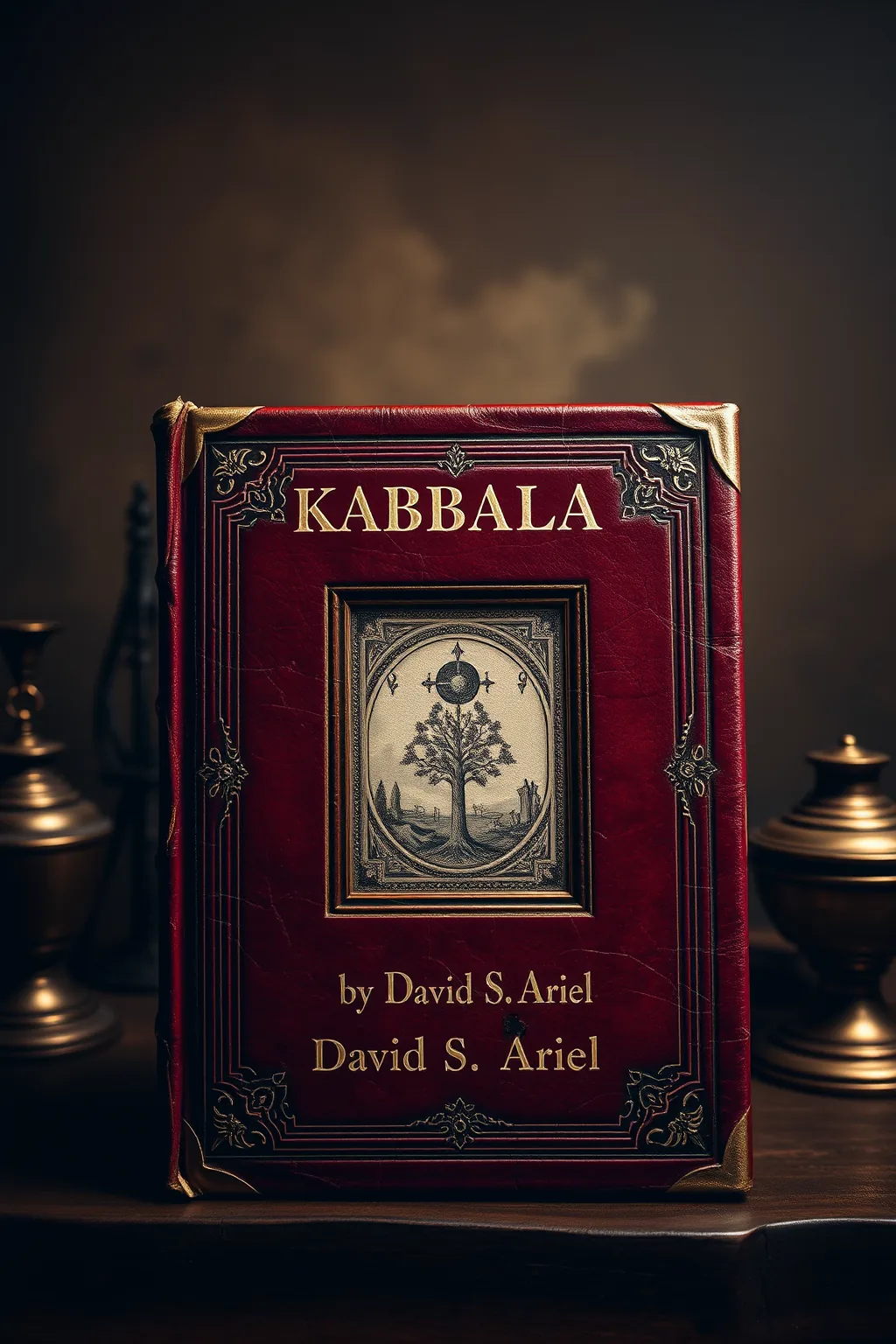
David S. Ariel’s "Kabbalah" attempts to bridge the gap between the esoteric depths of Jewish mysticism and the modern spiritual seeker. The author’s revision, aimed at making key ideas less abstract, succeeds in large part, particularly with the introduction of the "10 Main Conceptual Principles." This section offers a valuable anchor for newcomers. However, while the effort to simplify is commendable, some of the inherent complexity of Kabbalistic thought, especially concerning the Sefirot and their interrelationships, remains challenging to convey without extensive prior knowledge or more detailed exposition. The work's strength lies in its structured presentation of foundational concepts, making it a functional primer. A limitation is that it occasionally feels more like a systematic overview than an exploration of the lived mystical experience. Nonetheless, for those seeking an accessible introduction to the architecture of Kabbalistic cosmology, Ariel’s text provides a clear, if sometimes generalized, starting point.
📝 Description
81
### What It Is David S. Ariel's "Kabbalah" offers a structured approach to understanding a mystical tradition that has captivated seekers for centuries. Originally published in 2005, this revised edition aims to demystify complex theological and philosophical concepts. It serves as an entry point for those curious about Jewish mysticism, presenting its core ideas with an emphasis on clarity and accessibility.
### Who It's For This work is designed for individuals drawn to spiritual exploration, regardless of their faith background. It specifically caters to readers encountering Kabbalistic thought for the first time, as well as those who have found other texts too abstract. The revised introduction and updated chapters make it suitable for students of comparative religion, philosophy, and esoteric studies seeking a foundational understanding.
### Historical Context The book situates Kabbalah within its historical development, tracing its roots and evolution through medieval Jewish mysticism. It acknowledges the tradition's shift from esoteric circles to broader spiritual interest. The 2005 publication date places it within a period of increased public engagement with mystical traditions, following figures like Gershom Scholem who brought academic rigor to its study.
### Key Concepts Ariel focuses on distilling the "10 Main Conceptual Principles" of Kabbalah, making abstract notions more tangible. The work explores concepts such as the Ein Sof (the Infinite), the Sefirot (divine emanations), and the Tree of Life as a cosmological map. It aims to present these not just as historical doctrines but as relevant frameworks for spiritual understanding.
💡 Why Read This Book?
• Gain a structured understanding of the "10 Main Conceptual Principles" of Kabbalah, moving beyond abstract philosophical discourse to grasp their practical implications as presented in Ariel's revised edition. • Explore the concept of the Sefirot as divine emanations and their representation on the Tree of Life, a central motif in Kabbalistic cosmology, as detailed within the book's core explanations. • Appreciate the historical journey of Kabbalah from medieval esoteric teachings to contemporary spiritual interest, contextualized by the book's 2005 publication date and its aim to demystify the subject for a wider audience.
⭐ Reader Reviews
Honest opinions from readers who have explored this book.
❓ Frequently Asked Questions
What is the primary goal of David S. Ariel's book on Kabbalah?
The primary goal is to demystify Kabbalah for a modern audience, making its complex theological and philosophical concepts more accessible. The 2005 edition specifically revises sections to clarify key ideas and introduces the '10 Main Conceptual Principles'.
Who is the intended audience for this Kabbalah book?
The book targets individuals from all faiths interested in spiritual exploration, particularly those new to Kabbalistic thought or finding other resources too abstract. It also serves students of comparative religion and esoteric studies.
When was David S. Ariel's 'Kabbalah' first published?
David S. Ariel's 'Kabbalah' was first published on November 30, 2005. This edition features a revised introduction and substantially revised chapters to enhance reader comprehension.
What are some key concepts explained in the book?
The book explains fundamental Kabbalistic concepts such as Ein Sof (the Infinite), the Sefirot (divine emanations), and the Tree of Life as a cosmological map. It distills these into '10 Main Conceptual Principles'.
Does the book discuss the historical origins of Kabbalah?
Yes, the book provides historical context, tracing Kabbalah's development from its roots in medieval Jewish mysticism and acknowledging its evolution into a subject of broader spiritual interest.
What makes this edition of 'Kabbalah' different from earlier ones?
This edition features a completely revised introduction and several substantially revised chapters. It aims to make key ideas less abstract and includes a dedicated section on the '10 Main Conceptual Principles' for greater clarity.
🔮 Key Themes & Symbolism
The Sefirot and Divine Emanation
A central focus is the concept of the Sefirot, the ten divine emanations through which the Infinite (Ein Sof) interacts with creation. Ariel's work aims to map these emanations, often visualized on the Kabbalistic Tree of Life. The book explores their hierarchical structure and symbolic meaning, presenting them as fundamental building blocks of both the divine realm and human consciousness. This theme is crucial for understanding the Kabbalistic cosmology and its intricate divine mechanics.
Kabbalah's Historical Trajectory
The book situates Kabbalistic teachings within their historical development, highlighting their origins in medieval Jewish mysticism. It addresses the tradition's transition from a highly esoteric subject, often confined to select circles, to a more widely explored spiritual practice. This theme acknowledges the evolution of Kabbalah and its increasing presence in contemporary spiritual discourse, as noted in the original blurb concerning its emergence as a spiritual trend.
The Tree of Life as a Cosmogram
Ariel presents the Kabbalistic Tree of Life not merely as a diagram but as a dynamic model of the universe and the divine. The book explains how the ten Sefirot are interconnected through 22 paths, forming a symbolic map that represents the flow of divine energy and the structure of reality. Understanding this cosmogram is presented as key to unlocking deeper spiritual insights and comprehending the Kabbalistic worldview.
Demystifying Esoteric Concepts
A significant theme is the effort to render complex Kabbalistic ideas comprehensible to a general audience. Through revised introductions and chapters, the author tackles concepts like Ein Sof and the nature of divine revelation, aiming to reduce abstraction. The inclusion of the '10 Main Conceptual Principles' serves as a practical tool for readers to grasp the core tenets without necessarily possessing deep prior knowledge of Jewish mysticism.
💬 Memorable Quotes
“The Kabbalah, once controversial and esoteric, is now a spiritual trend.”
— This observation highlights the book's intent to capture a contemporary audience by presenting ancient mystical ideas in a way that resonates with modern spiritual seekers, acknowledging its transition from niche to mainstream interest.
“Key ideas made less abstract and more comprehensible.”
— This reflects the author's specific revision goals for the 2005 edition, emphasizing clarity and accessibility for readers new to the complexities of Kabbalistic philosophy and theology.
“The '10 Main Conceptual Principles' serve as a guide.”
— This points to a structured pedagogical approach within the book, offering readers a distilled set of core tenets to anchor their understanding of the broader Kabbalistic system.
“Exploring the Kabbalah transcends faith boundaries.”
— This suggests the book's inclusive approach, framing Kabbalah not as exclusively Jewish doctrine but as a spiritual framework open for study and personal exploration by individuals of diverse backgrounds.
“Medieval Jewish mystics' teachings are now widely explored.”
— This emphasizes the historical depth and the enduring relevance of Kabbalistic thought, underscoring the book's role in making these ancient teachings accessible to contemporary readers.
🌙 Esoteric Significance
Tradition
This work fits within the broad spectrum of Western Esotericism, specifically focusing on the Kabbalistic tradition within Jewish mysticism. While Kabbalah has a distinct historical and theological lineage, Ariel's approach seeks to present its core tenets in a manner accessible to those outside Orthodox Jewish practice, aligning with a modern trend of exploring esoteric systems irrespective of strict traditional adherence. It draws upon the foundational concepts developed by medieval Kabbalists.
Symbolism
Central to Kabbalistic symbolism, and discussed in the book, is the Tree of Life, a diagrammatic representation of the ten Sefirot. These Sefirot—divine attributes like Keter (Crown) and Malkhut (Kingdom)—are seen as emanations from the Infinite (Ein Sof). The book likely explores their arrangement and the paths connecting them, symbolizing the structure of the cosmos and the process of divine revelation and creation.
Modern Relevance
Ariel's work speaks to contemporary spiritual seekers interested in frameworks for understanding consciousness, cosmology, and the divine. Its accessible presentation caters to individuals drawn to systems like Hermeticism or Gnosticism, who may find Kabbalah offers a complementary or foundational perspective. The book's aim to demystify concepts makes it relevant for modern comparative mysticism studies and personal spiritual development practices.
👥 Who Should Read This Book
• Beginning students of comparative mysticism seeking a clear overview of Jewish mystical thought without overwhelming academic jargon. • Individuals interested in spiritual frameworks for understanding cosmology and the divine, who appreciate structured explanations of complex concepts like the Sefirot. • Readers exploring various esoteric traditions who want to understand Kabbalah's place and foundational principles as a distinct, yet interconnected, path.
📜 Historical Context
David S. Ariel’s "Kabbalah," first published in 2005, emerged during a period of burgeoning interest in esoteric and mystical traditions within Western popular culture. The book engages with Kabbalah, a complex system of Jewish mysticism with roots stretching back to medieval Spain, notably the Zohar from the 13th century. While academic study of Kabbalah had been significantly advanced by scholars like Gershom Scholem in the mid-20th century, Ariel’s work aims for a more accessible, introductory approach for a general audience. The book's publication date places it after the rise of New Age spirituality and the popularization of various mystical paths, attempting to offer a structured understanding of Kabbalistic principles. It addresses the tradition's historical journey from its esoteric origins to its contemporary reception as a spiritual trend, acknowledging the ongoing dialogue and diverse interpretations that surround its study.
📔 Journal Prompts
The structure of the Tree of Life as presented in the book.
The concept of Ein Sof and its implications for understanding divinity.
The role of the '10 Main Conceptual Principles' in synthesizing Kabbalistic thought.
Personal interpretation of a specific Sefirah and its energetic quality.
Kabbalah's historical shift from esoteric circles to broader interest.
🗂️ Glossary
Kabbalah
A body of mystical teachings and contemplative practices within Judaism that seek to explain the relationship between the unknowable divine (Ein Sof) and the created universe.
Ein Sof
The Kabbalistic term for the 'Infinite' or 'Endless,' representing God in His absolute aspect, beyond human comprehension or description.
Sefirot
The ten divine emanations or attributes through which the Infinite (Ein Sof) manifests and interacts with the created world. They form the structure of the Kabbalistic Tree of Life.
Tree of Life
A central diagram in Kabbalah, consisting of ten interconnected Sefirot and 22 paths, representing the structure of the cosmos, the divine emanations, and the path of spiritual ascent.
Malkhut
The tenth Sefirah on the Tree of Life, often translated as 'Kingdom' or 'Presence,' representing the divine manifestation in the physical world and the culmination of the emanatory process.
Keter
The first Sefirah on the Tree of Life, translated as 'Crown,' representing the highest, most transcendent aspect of the divine, the divine will, and the ultimate source of all existence.
Gershom Scholem
A highly influential scholar of Jewish mysticism who significantly advanced the academic study of Kabbalah in the 20th century.