Kabbalah and Exodus
 65
65

Kabbalah and Exodus

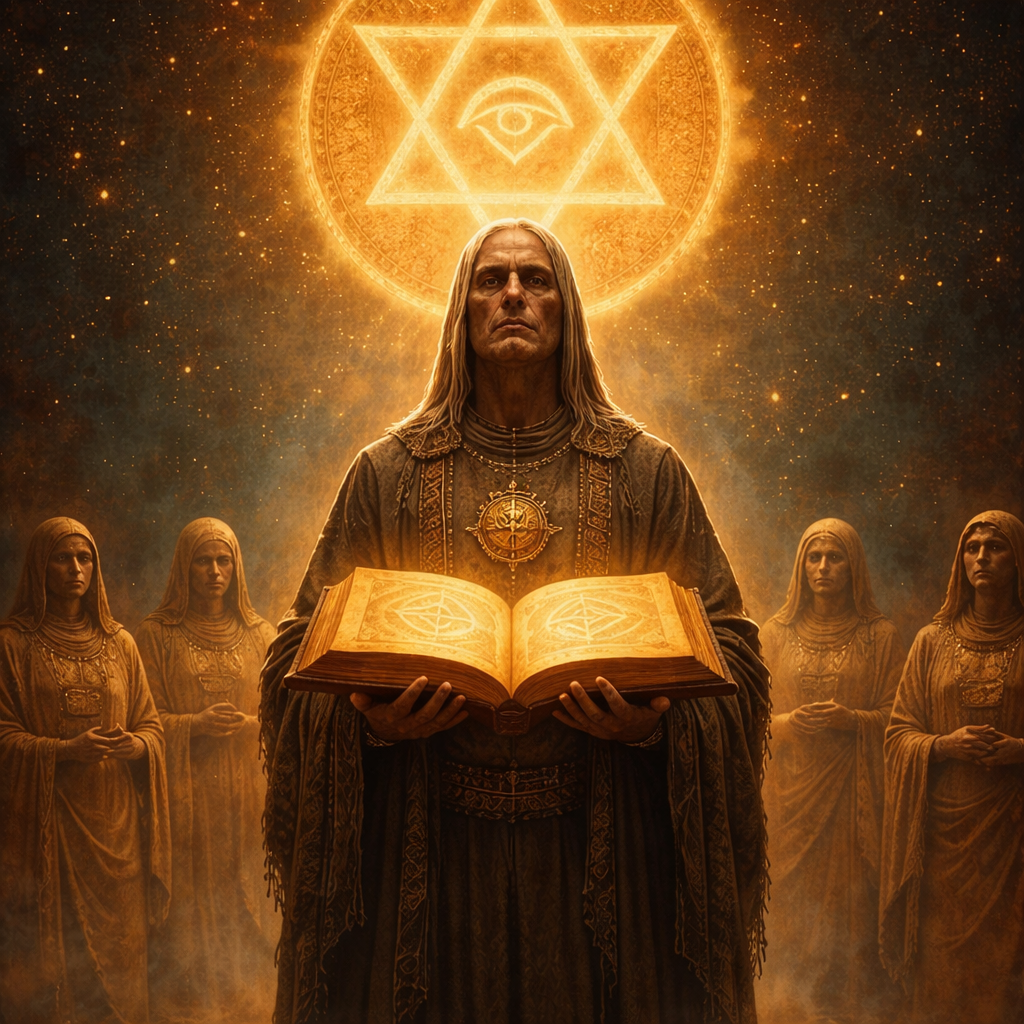

Warren Kenton's "Kabbalah and Exodus" is a luminous exposition, illuminating the Exodus from Egypt through the profound lens of Kabbalistic thought. Kenton's erudition shines, transforming a familiar biblical epic into a rich tapestry of mystical allegory. He skillfully navigates the complex symbolism of the Sephiroth and divine emanations, offering profound insights into the soul's journey toward liberation. This work is a treasure for serious students of Kabbalah and Jewish mysticism, providing a deeply spiritual and intellectually stimulating exploration of creation, divine presence, and the path to gnosis. A truly transformative read for those seeking esoteric wisdom.
📝 Description
65
Embark on a profound journey into the heart of Kabbalistic wisdom with Warren Kenton's "Kabbalah and Exodus." This seminal work unveils the esoteric dimensions of the biblical Exodus narrative, revealing it not merely as a historical account but as a potent allegory for the soul's ascent from material bondage to spiritual liberation. Kenton masterfully deciphers the hidden meanings embedded within the sacred text, drawing parallels between the Israelites' liberation from Egypt and the mystic's quest for divine union. Explore the intricate symbolism of the Sefirot, the Tree of Life, and the divine emanations as they illuminate the path from primal unity to manifest existence. This book is an essential guide for sincere seekers yearning to understand the deepest currents of Jewish mysticism and its universal relevance. It offers a contemplative space to ponder the cosmic dance of creation and the hidden architecture of reality, inviting readers to awaken to their own inner divine spark.
✍️ Author
Warren Kenton
Z'ev ben Shimon Halevi (born Warren Kenton; 8 January 1933 – 21 September 2020) was a British writer and teacher of Kabbalah, and a founding member of the Kabbalah Society. Halevi largely published under his Hebrew name, Z'ev ben Shimon Halevi, a contracti…
💡 Why Read This Book?
Dive into the mystical underpinnings of the Exodus narrative, transforming a historical event into a profound allegory for spiritual liberation. "Kabbalah and Exodus" offers a unique gateway to understanding Jewish mysticism, revealing hidden knowledge about creation, divine consciousness, and the soul's journey. Ideal for seekers, scholars, and practitioners of esoteric traditions looking for deeper meaning and practical application of ancient wisdom.
⭐ Reader Reviews
Honest opinions from readers who have explored this book.
❓ Frequently Asked Questions
What is the primary focus of "Kabbalah and Exodus"?
The book's primary focus is to interpret the biblical Exodus narrative through the esoteric principles of Kabbalah, revealing it as a profound allegory for spiritual liberation and the soul's journey from limitation to divine consciousness.
Is prior knowledge of Kabbalah required to read this book?
While a basic familiarity with mystical concepts can enhance the experience, Warren Kenton’s clear exposition makes "Kabbalah and Exodus" accessible to dedicated beginners eager to explore the depths of Jewish mysticism.
What key Kabbalistic concepts are explored in the book?
The book delves into core Kabbalistic concepts such as the Sefirot, the Tree of Life, divine emanations, the concept of Ein Sof (The Infinite), and the soul's descent and ascent.
How does the book connect Exodus to personal spiritual growth?
It connects the Israelites' liberation from physical bondage to the individual's struggle against inner limitations, offering the Kabbalistic framework as a guide for achieving spiritual freedom and self-realization.
What makes this book a valuable addition to esoteric literature?
Its unique synthesis of biblical narrative and profound Kabbalistic interpretation offers a fresh perspective on ancient wisdom, making it a vital resource for anyone seeking to understand the hidden dimensions of existence.
🔮 Key Themes & Symbolism
The Exodus as an Allegory for Spiritual Liberation
This theme posits the biblical Exodus not as a mere historical event, but as a profound metaphorical journey representing the soul's arduous passage from the 'Egypt' of material illusion and egoic bondage to the 'Promised Land' of spiritual enlightenment and divine consciousness. Warren Kenton meticulously dissects the narrative's symbolic layers, demonstrating how the struggle against Pharaoh, the crossing of the Red Sea, and the wandering in the desert mirror the internal battles and transformative stages faced by the mystic on their path to self-realization. It's a roadmap for escaping the limitations of the lower self and achieving union with the Higher Divine.
Kabbalistic Cosmology and Divine Emanation
Central to the book is the exploration of Kabbalistic cosmology, particularly the concept of Ein Sof (The Infinite) and its subsequent emanation into the manifest universe through the ten Sefirot. Kenton illustrates how this divine architecture, often represented by the Tree of Life, provides the underlying structure for all existence. The Exodus narrative becomes a lens through which these abstract cosmological principles are made tangible, showing how the divine presence orchestrates creation and influences the unfolding of history, revealing the intricate web connecting the macrocosm and the microcosm.
The Symbolic Language of Scripture
Warren Kenton emphasizes that sacred texts like the Torah are imbued with layers of esoteric meaning, accessible through the interpretive framework of Kabbalah. This theme focuses on deciphering the hidden symbolism within the Exodus story, moving beyond literal interpretations to uncover profound spiritual truths. From the significance of plagues to the parting of the Red Sea, each element is revealed to be a coded message about the nature of reality, the divine will, and the mechanics of spiritual transformation, inviting readers to engage with scripture as a living source of mystical knowledge.
💬 Memorable Quotes
“From the void, all being arises.”
— This quote encapsulates the fundamental Kabbalistic principle of creation ex nihilo, the emergence of the manifest world from the undifferentiated, infinite divine essence.
“Egypt is the land of the shadowed self.”
— This highlights the allegorical interpretation of Egypt as representing the state of spiritual ignorance, egoic attachment, and enslavement to material desires.
“The Sea parted not for mere escape, but for transformation.”
— This suggests the Red Sea crossing symbolizes a radical metamorphosis, a baptism into a new state of spiritual awareness and freedom from past limitations.
“The desert is the crucible of the soul.”
“To know the Exodus is to know the Self.”
— This emphasizes the deeply personal and introspective nature of the Exodus allegory, asserting that understanding this divine liberation is intrinsically linked to understanding one's own true spiritual nature.
🌙 Esoteric Significance
Tradition
This work is deeply rooted in the Western Esoteric tradition, specifically within the rich and complex lineage of Kabbalah and Jewish Mysticism. It engages with ancient Hebrew texts and their mystical interpretations, seeking to uncover hidden layers of meaning that transcend literal understanding. The tradition emphasizes divine emanations, the structure of the cosmos, and the path of the soul's return to its divine source.
Symbolism
The book meticulously deciphers the potent symbolism embedded within the Exodus narrative. Key symbols include the Nile as the river of material existence, Pharaoh as the egoic ruler, the plagues as divine judgments or spiritual awakenings, the Red Sea as the threshold of transformation, and the desert as the testing ground for the soul. The Sefirot and the Tree of Life also serve as foundational symbolic maps for understanding creation and spiritual ascent.
Modern Relevance
In an age often characterized by material pursuits and spiritual disconnection, "Kabbalah and Exodus" offers a profound reinterpretation of ancient wisdom for contemporary seekers. It provides a powerful framework for understanding personal liberation from limiting beliefs and societal conditioning, mirroring the Israelites' journey to freedom. The book's exploration of divine consciousness and cosmic order offers solace and guidance for those navigating the complexities of modern life, encouraging a deeper connection to the sacred within and without.
👥 Who Should Read This Book
This illuminating work is a treasure for a diverse range of readers. **Beginners** seeking an accessible yet profound introduction to Kabbalistic thought will find a clear and engaging guide. **Scholars** of religious studies and comparative mysticism will appreciate its rigorous exegetical approach and its contribution to understanding Jewish esoteric traditions. **Spiritual seekers** yearning for deeper meaning and a tangible path to inner transformation will discover a rich allegorical landscape. **Practitioners** of meditation, contemplative prayer, and other spiritual disciplines will find invaluable insights into the nature of divine connection and the soul's journey.
📜 Historical Context
Warren Kenton's "Kabbalah and Exodus" emerges from a rich tradition of Jewish mysticism that flourished for centuries, particularly gaining significant momentum with the publication of the Zohar in the 13th century. This period, and the subsequent centuries, saw Kabbalah evolve from a relatively esoteric discipline to a more widely studied and influential spiritual system within Judaism and beyond. The work draws upon medieval and early modern Kabbalistic commentaries, which sought to find deeper, often allegorical, meanings within the Torah and other biblical texts. The influence of Lurianic Kabbalah, with its complex cosmology of tzimtzum (contraction) and tikkun (rectification), often underpins such interpretations. Kenton's contribution situates the universal themes of liberation and spiritual awakening inherent in the Exodus story within this profound mystical framework, resonating with a desire for spiritual understanding that persisted through eras of persecution and intellectual inquiry.
📔 Journal Prompts
Reflect on a personal experience of 'bondage' (internal or external) and how the concept of 'Exodus' might apply to your journey towards liberation.
Meditate on the symbolism of the Red Sea. What 'waters' must you 'part' in your life to enter a new phase of spiritual growth?
How does the idea of divine emanation, as described in Kabbalistic cosmology, resonate with your understanding of the universe and your place within it?
Consider the 'desert' as a place of spiritual testing. What challenges have you faced that ultimately led to spiritual growth?
Explore the connection between external liberation (Exodus) and internal liberation (spiritual awakening). How do these two concepts intertwine in your own life?
🗂️ Glossary
Ein Sof
The Kabbalistic term for the absolute, infinite, and unknowable divine essence that exists beyond all creation and conception, the ultimate source of all existence.
Sefirot
The ten divine emanations or attributes through which the infinite God (Ein Sof) reveals itself and creates the universe, often visualized as the Tree of Life.
Tikkun
A central Kabbalistic concept referring to 'rectification' or 'repair,' often interpreted as the cosmic process of restoring divine harmony and wholeness to creation.
Gnosis
A state of spiritual knowledge or insight, often understood as direct intuitive or mystical apprehension of divine truths, distinct from rational or empirical knowledge.
Allegory
A story, poem, or picture that can be interpreted to reveal a hidden meaning, typically a moral or political one, often used in esoteric traditions to convey spiritual truths.