Jewish Mysticism
 61
61

Jewish Mysticism


Evander Ashcroft (Alchemy & Hermeticism Editor) — Yamin Lwevy's 'Jewish Mysticism' is a veritable treasure trove for the discerning esotericist. Lwevy navigates the labyrinthine corridors of Kabbalistic thought with an expert hand, illuminating the intricate symbolism and profound philosophical underpinnings of this ancient tradition. The book excels in demystifying complex concepts, offering clear yet evocative explanations of the Sefirot, gematria, and the mystical journey of the soul. Its strength lies in its ability to bridge the gap between academic rigor and spiritual insight, making it an indispensable resource for serious students and practitioners alike who wish to explore the divine architecture of existence.
📝 Description
61
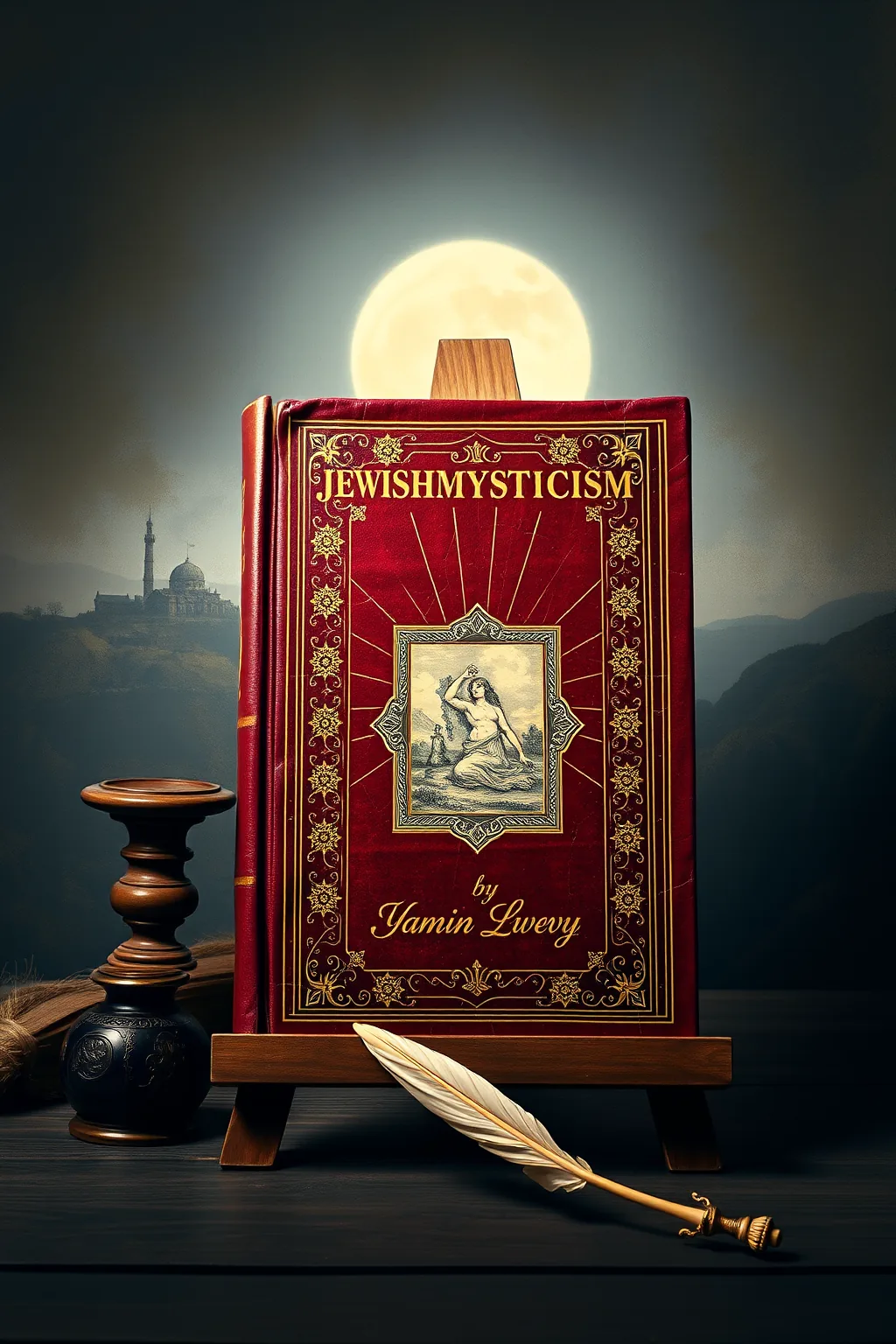
Delve into the profound depths of Jewish Mysticism with Yamin Lwevy's seminal work, a gateway to the hidden chambers of Kabbalistic wisdom. This meticulously crafted volume unfurls the intricate tapestry of esoteric Jewish thought, revealing ancient pathways to divine communion and cosmic understanding. Lwevy guides the reader through a landscape rich with symbolism, numerology, and the mystical emanations of God, illuminating concepts such as the Sefirot, the divine names, and the soul's ascent. The atmosphere is one of reverent exploration, inviting those who seek a deeper connection to the sacred, a profound philosophical engagement with existence, or the uncovering of veiled truths. This book is an essential companion for the earnest seeker, the dedicated scholar, and anyone yearning to grasp the ethereal architecture of reality as understood through one of humanity's most enduring mystical traditions. It promises not just knowledge, but a transformative encounter with the ineffable.
✍️ Author
💡 Why Read This Book?
Embark on a journey into the heart of divine revelation. 'Jewish Mysticism' offers unparalleled access to the esoteric teachings that have shaped spiritual inquiry for centuries. Ideal for seekers of hidden knowledge, scholars of comparative religion, and practitioners of contemplative arts, this book provides the keys to understanding the universe's spiritual architecture and one's place within it.
⭐ Reader Reviews
Honest opinions from readers who have explored this book.
❓ Frequently Asked Questions
What is Kabbalah?
Kabbalah is the esoteric tradition of Jewish mysticism, concerned with the nature of God and the creation of the universe. It explores hidden meanings within the Torah and seeks to understand divine emanation and the soul's connection to the divine.
Is this book suitable for beginners?
Yes, while rich in detail, Lwevy's accessible prose and structured approach make it an excellent starting point for those new to Jewish mysticism, gradually introducing complex concepts.
What are the Sefirot?
The Sefirot are the ten divine attributes or emanations of God in Kabbalistic cosmology. They represent a divine blueprint for creation and a pathway for human spiritual ascent, often depicted as a tree.
Does the book discuss practical Kabbalah?
The book primarily focuses on the theoretical and contemplative aspects of Kabbalah, exploring its philosophical and spiritual dimensions rather than its more practical applications.
What is gematria?
Gematria is a Kabbalistic method of interpreting scripture by calculating the numerical value of words and phrases and finding connections between them based on these values.
🔮 Key Themes & Symbolism
The Tree of Life (Etz Chaim)
The central diagram of Kabbalistic cosmology, the Tree of Life, is meticulously explored, detailing the ten Sefirot (divine emanations) and the pathways connecting them. This sacred geometry serves as a map of creation, divine consciousness, and the soul's journey, offering profound insights into the nature of existence and the divine presence within all things. Understanding the Tree of Life is key to unlocking the deeper layers of Jewish mystical thought and its intricate symbolism.
Divine Emanation and Creation
This theme delves into the Kabbalistic understanding of how the Infinite (Ein Sof) manifests into the finite world. It explores the process of divine emanation through the Sefirot, detailing the stages of creation and the principles that govern the cosmos. The book illuminates the concept of God's immanence and transcendence, revealing how the divine light permeates and sustains all of reality, offering a profound theological framework for understanding existence.
The Soul's Ascent and Union
Lwevy guides the reader through the Kabbalistic view of the soul's journey, from its divine origin to its potential for spiritual perfection and union with the Creator. This involves understanding the soul's different levels, the challenges of spiritual purification, and the meditative practices that facilitate ascent. The ultimate goal is a mystical experience of divine unity, a return to the source, and the realization of one's true spiritual potential within the cosmic order.
💬 Memorable Quotes
“The veil of the mundane conceals the divine symphony.”
— This quote suggests that the ordinary world we perceive is not the ultimate reality, but rather a layer that hides a deeper, more profound spiritual order.
“Each letter, a vessel of divine light.”
— Highlighting the Kabbalistic reverence for the Hebrew alphabet, this suggests that each letter holds immense mystical power and sacred meaning.
“The Sefirot, a bridge between the Infinite and the finite.”
— This concisely explains the function of the Sefirot as intermediaries, facilitating the connection between the boundless divine and the manifest world.
“To know the self is to glimpse the divine.”
— Emphasizing introspection, this quote points to the Kabbalistic idea that self-knowledge is a path to understanding the divine nature within.
“The universe whispers its secrets to the attentive heart.”
— This poetic statement encourages a receptive and intuitive approach to spiritual understanding, suggesting that wisdom is revealed through inner awareness.
🌙 Esoteric Significance
Tradition
This work is deeply rooted in the Kabbalistic tradition, a mystical branch of Judaism that seeks to understand the divine nature, the creation of the universe, and the relationship between God and humanity. It draws upon a rich lineage of texts and oral teachings, offering a profound and intricate system of spiritual philosophy and practice aimed at achieving direct experience of the divine.
Symbolism
Central to Jewish Mysticism is its rich tapestry of symbolism. The Hebrew alphabet, numbers (gematria), sacred names, and cosmological diagrams like the Tree of Life are not mere representations but active conduits of divine energy and meaning. These symbols are understood to hold keys to unlocking hidden truths about existence, God, and the human soul, serving as a language through which the ineffable can be approached and contemplated.
Modern Relevance
In contemporary times, Jewish Mysticism offers enduring wisdom for navigating the complexities of modern life. Its emphasis on interconnectedness, the search for meaning, and the cultivation of inner spiritual awareness resonates deeply. The concepts of divine immanence and the potential for personal transformation provide a framework for ethical living, psychological well-being, and a deeper connection to the sacred in an often secularized world.
👥 Who Should Read This Book
This book is a profound resource for a diverse audience. **Beginners** will find an accessible introduction to the foundational concepts of Kabbalah, presented with clarity and depth. **Scholars of religion and philosophy** will appreciate its rigorous exploration of theological and cosmological ideas. **Spiritual seekers** looking for a deeper connection to the divine and a richer understanding of existence will find guidance on their path. **Practitioners of contemplative arts** may discover new dimensions for meditation and introspection, enhancing their spiritual disciplines through these ancient esoteric teachings.
📜 Historical Context
Jewish Mysticism, particularly Kabbalah, flourished in various historical periods, with significant developments occurring in medieval Spain (12th-13th centuries) and Safed (16th century). The era of medieval Spain saw the emergence of foundational texts like the Zohar, which synthesized earlier mystical traditions and established a comprehensive cosmological framework. The intellectual and spiritual ferment of this period, influenced by Neoplatonism and Gnosticism, provided fertile ground for the development of complex symbolic systems. Later, in Safed, Kabbalah became a vibrant, living tradition, with mystics like Isaac Luria developing profound theories of Tikkun (rectification) and cosmic redemption. These periods were characterized by intense scholarly pursuit, contemplative practices, and a fervent desire to understand the divine mysteries and humanity's role in the cosmic drama.
📔 Journal Prompts
Reflect on a time you felt a sense of profound connection to something larger than yourself. How might this relate to the concept of divine emanation?
Consider the Hebrew alphabet: If each letter is a vessel of divine light, what 'light' does a letter you find significant carry for you?
Map your own 'Tree of Life' in terms of your aspirations, challenges, and spiritual growth. Where do you see the Sefirot manifesting in your life?
How can the concept of the soul's ascent inform your daily choices and spiritual practices?
Explore a personal symbol or image that holds deep meaning for you. What hidden truths might it represent?
🗂️ Glossary
Ein Sof
The Kabbalistic term for God in God's absolute, unknowable essence, meaning 'without end' or 'infinite'. It represents the primordial, unmanifest divine reality before any creation.
Sefirot
The ten divine attributes or emanations of God in Kabbalistic cosmology. They are often depicted as a series of vessels or attributes through which divine energy flows into creation.
Tzimtzum
The Kabbalistic concept of divine 'contraction' or withdrawal, which created a void or 'space' for the universe to exist. It is the initial act of divine self-limitation.
Gematria
A system of Jewish numerology where Hebrew letters are assigned numerical values. It is used to find hidden meanings and connections between words and phrases in sacred texts.
Tikkun Olam
A Hebrew phrase meaning 'repair of the world.' In Kabbalah, it refers to the cosmic process of rectifying spiritual imbalances and restoring divine harmony to creation.