The Principles Of Masonic Law by Albert Mackey - 1856

 79
79

The Principles Of Masonic Law by Albert Mackey - 1856

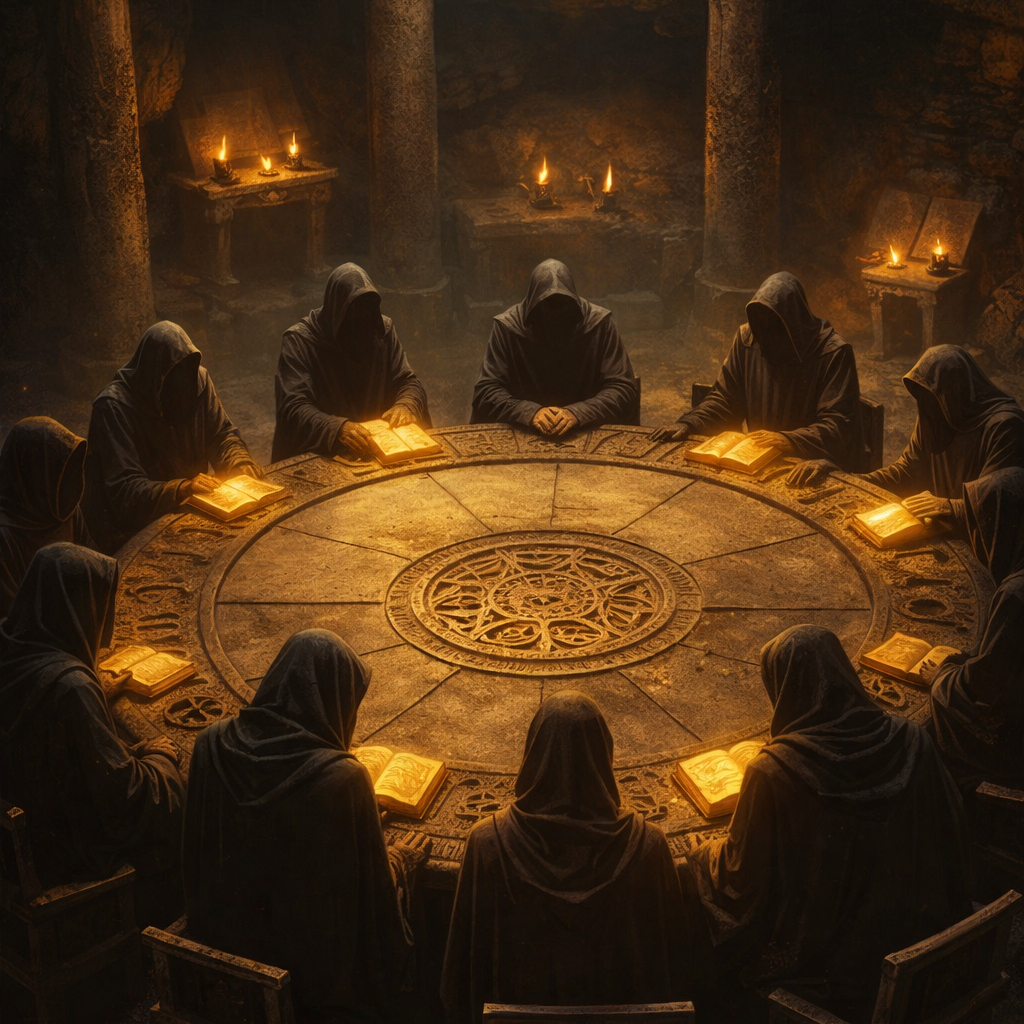

Albert Mackey's 'The Principles of Masonic Law' remains an indispensable cornerstone for serious Masonic students. Far from a mere procedural manual, Mackey masterfully elucidates the esoteric underpinnings of Masonic governance, revealing the symbolic resonance of each law and precept. His profound understanding of ancient wisdom traditions imbues the text with a spiritual gravitas, making it a compelling read for those seeking the deeper currents of Freemasonry. This work is particularly valuable for its ability to connect the practical aspects of Lodge operation with the overarching philosophical and spiritual aims of the Craft. An authoritative and insightful exploration.
📝 Description
79
Albert Mackey published 'The Principles of Masonic Law' in 1856, detailing the fraternity's internal statutes.
Albert Mackey's 1856 work, 'The Principles of Masonic Law,' examines the legal and symbolic structure of Freemasonry. Mackey, a significant figure in Masonic writing, interprets the Order's statutes not just as rules but as vehicles for moral and spiritual instruction. He connects these legal pronouncements to a deeper philosophical framework, revealing how Masonic law supports personal development.
The book aims to show how the fraternity's organizational principles reflect a larger system of ethics and spirituality. It is written for Masons who wish to understand the underlying meaning of their ritual and governance. Mackey's approach uses the formal structure of Masonic law to illustrate esoteric concepts, making it a guide for those interested in the philosophical dimensions of the Craft.
Published in 1856, Albert Mackey's 'The Principles of Masonic Law' sits within the tradition of Masonic scholarship that sought to interpret the fraternity's practices and symbolism through philosophical and esoteric lenses. This period saw many writers attempt to codify and explain the deeper meanings behind Masonic degrees and rituals, often drawing parallels with ancient mystery traditions and Hermetic philosophy. Mackey's work contributes to this by framing Masonic legal structures as a manifestation of spiritual truths, aligning the practical governance of the lodge with a quest for self-improvement and enlightenment.
💡 Why Read This Book?
Uncover the hidden symbolic language within Masonic law. Gain a profound understanding of the ethical and philosophical framework that governs Freemasonry. This book is essential for initiates seeking deeper knowledge, scholars of secret societies, and practitioners dedicated to the esoteric dimensions of the Craft. Unlock timeless wisdom and spiritual insights.
⭐ Reader Reviews
Honest opinions from readers who have explored this book.
❓ Frequently Asked Questions
What is the primary focus of 'The Principles of Masonic Law'?
The book meticulously examines the fundamental laws and principles that govern Masonic lodges, but with a distinct focus on their symbolic and esoteric significance, rather than purely procedural aspects.
Who is Albert Mackey?
Dr. Albert Gallatin Mackey (1807–1881) was a highly influential American Freemason, physician, and author, renowned for his extensive writings on Masonic history, symbolism, and philosophy, considered a primary authority on the subject.
Is this book suitable for non-Masons?
While deeply rooted in Masonic tradition, the book's exploration of universal moral principles, symbolism, and philosophical inquiry can resonate with anyone interested in esoteric thought and ancient wisdom.
What makes this edition from 1856 significant?
The 1856 edition represents an early and authoritative exposition of Masonic legal principles, offering a glimpse into the established understanding and interpretation of these laws during a pivotal era of Masonic literature.
How does this book differ from modern Masonic legal texts?
Unlike purely procedural guides, Mackey's work emphasizes the philosophical and symbolic underpinnings of Masonic law, connecting its tenets to broader spiritual and ethical traditions, offering a richer, more esoteric perspective.
🔮 Key Themes & Symbolism
The Esoteric Architecture of Masonic Law
This theme studies how Mackey interprets Masonic statutes not as mere rules, but as symbolic constructs designed to guide the initiate's spiritual journey. It explores the hidden meanings embedded within the legal framework of the fraternity, revealing a sophisticated system of moral and ethical instruction that transcends the literal, inviting contemplation on the interconnectedness of law, order, and spiritual attainment. The text illuminates how these principles serve as a blueprint for self-improvement and the cultivation of virtue, acting as a sacred geometry for the soul's ascent.
Symbolism as the Language of the Craft
Mackey masterfully demonstrates that Masonic law is intrinsically interwoven with symbolism. This theme examines how specific legal enactments and procedural elements are imbued with deeper, allegorical meanings, serving as vehicles for transmitting profound truths about life, death, and the pursuit of enlightenment. It highlights how the symbols within the law act as keys to unlocking a richer understanding of Masonic teachings, revealing a hidden lexicon that speaks to the initiated mind and guides them toward greater wisdom and self-awareness.
The Philosophical Underpinnings of Masonic Governance
Beyond the practicalities of lodge administration, this theme explores the profound philosophical and ethical foundations upon which Masonic law is built. Mackey reveals how the fraternity's jurisprudence is rooted in ancient wisdom traditions, universal moral precepts, and a quest for higher knowledge. It examines the inherent connection between Masonic law and the pursuit of brotherhood, truth, and light, illustrating how adherence to these principles fosters not only order within the Craft but also personal growth and the betterment of society as a whole.
💬 Memorable Quotes
Direct passages from the work, attributed to the author.
“The immutability of the ancient landmarks.”
— This refers to the core, unchangeable principles of Freemasonry, suggesting that its laws are rooted in eternal truths that transcend temporal changes and fashions.
“The moral obligations of a Mason.”
— This highlights that Masonic law is inextricably linked to personal ethics, emphasizing the profound duty of a Mason to uphold moral standards both within and outside the Lodge.
“The symbolism of the working tools.”
— This points to how the instruments of Freemasonry's craft are employed as allegories for moral and spiritual lessons, demonstrating that even practical aspects of the fraternity carry deeper meaning.
“The harmony of the Craft.”
— This emphasizes that Masonic law aims to foster unity, order, and peaceful coexistence among its members, reflecting a broader societal ideal of harmonious relations.
💡 Key Ideas
Editorial paraphrase of the work's core concepts — not direct quotes.
Law is the embodiment of reason.
This quote underscores Mackey's view that Masonic law is not arbitrary, but a logical and ordered expression of wisdom, guiding individuals towards rational and ethical conduct.
🌙 Esoteric Significance
Tradition
This work is deeply rooted in the Western Esoteric Tradition, particularly within the hermetic, alchemical, and Kabbalistic streams that have influenced Freemasonry. Mackey's interpretation reveals how Masonic law functions as a symbolic language, mirroring the ordered cosmos and the path of spiritual transformation, akin to alchemical processes of purification and refinement.
Symbolism
Key symbols include the square and compasses, representing morality and spiritual aspiration; the plumb line, signifying uprightness; and the level, indicating equality. Mackey elucidates how these and other operative symbols are transmuted into allegorical tools for moral governance and spiritual development, forming a collection of hidden meanings within Masonic legal structures.
Modern Relevance
In an age often characterized by fragmentation and a loss of deeper meaning, Mackey's work offers a timeless framework for ethical conduct and spiritual seeking. Its emphasis on symbolism and philosophical inquiry provides a valuable lens for understanding the enduring quest for wisdom, brotherhood, and self-improvement, resonating with contemporary seekers of ancient knowledge and moral guidance.
👥 Who Should Read This Book
This profound work is essential for Freemasons seeking to deepen their understanding of the Craft's foundational principles beyond ritualistic performance. Scholars of secret societies and esoteric traditions will find invaluable insights into the historical and philosophical underpinnings of Masonic governance. Seekers of ancient wisdom and ethical frameworks will appreciate Mackey's meticulous exploration of universal moral laws. Practitioners dedicated to personal growth and the pursuit of light will discover a rich source of contemplative material and spiritual guidance.
📜 Historical Context
Published in 1856, 'The Principles of Masonic Law' emerges from a period of significant growth and consolidation for Freemasonry in the United States. The mid-19th century was a time when Masonic scholars like Mackey sought to codify, interpret, and elevate the understanding of the fraternity's long history, rituals, and philosophical underpinnings. This era saw a particular emphasis on the symbolic and esoteric dimensions of Masonry, moving beyond mere social organization to explore its deeper spiritual and moral teachings. Mackey's work reflects this scholarly drive to illuminate the ancient wisdom embedded within Masonic traditions, providing a foundational text for understanding its legal and philosophical framework during a time when its influence was expanding globally.
📔 Journal Prompts
Reflect on the 'embodiment of reason' in a Masonic law that appeals to you. How does it guide your actions?
Consider a Masonic symbol discussed in the text. How does its symbolic meaning translate into a practical moral obligation?
How do the principles of Masonic law, as presented by Mackey, contribute to the ideal of universal brotherhood?
Explore the connection between 'ancient landmarks' and contemporary ethical challenges. Where do these immutable principles find expression today?
In what ways can the study of Masonic law serve as a 'blueprint for self-improvement' in your personal journey?
🗂️ Glossary
Jurisprudence
The theory and philosophy of law, encompassing the principles and rules governing a particular legal system. In Masonry, it refers to the body of laws and customs that guide the fraternity.
Esoteric
Intended for or likely to be understood by only a small number of people with a specialized knowledge or interest. In this context, it refers to the inner, hidden meanings and spiritual teachings.
Allegory
A story, poem, or picture that can be interpreted to reveal a hidden meaning, typically a moral or political one. Masonic rituals and laws are often presented allegorically.
Initiate
A person who has undergone a formal process of introduction into a group or society, typically one with secret or mystical traditions. In Masonry, the individual undergoing the degrees.
Latent
Existing but not yet developed or manifest; hidden or concealed. Refers to knowledge or potential that is present but not yet realized.
This book appears in 2 collections
🔮 Readers Also Liked
Browse all →






From the “Secret Societies” Collection
View all →







More Free Freemasonry & Secret Societies Books
View all →