The Masonic Manual: Or, Lectures on Freemasonry, Containing the Instructions, Documents, and ...
 74
74

The Masonic Manual: Or, Lectures on Freemasonry, Containing the Instructions, Documents, and ...


Sophia Crane (Associate Editor) — Jonathan Ashe's "The Masonic Manual" is an indispensable resource for anyone serious about understanding the esoteric dimensions of Freemasonry. It transcends the common perception of the Craft, delving into the rich symbolism and philosophical depth that underpins its rituals and teachings. Ashe masterfully elucidates complex concepts, presenting them in a structured and accessible manner for the dedicated student. This volume is particularly valuable for its comprehensive nature, offering a robust foundation for both neophytes seeking clarity and seasoned practitioners desiring a deeper connection to the tradition. Its enduring strength lies in its ability to illuminate the path towards moral and spiritual enlightenment through the ancient lens of Masonic allegory.
📝 Description
74
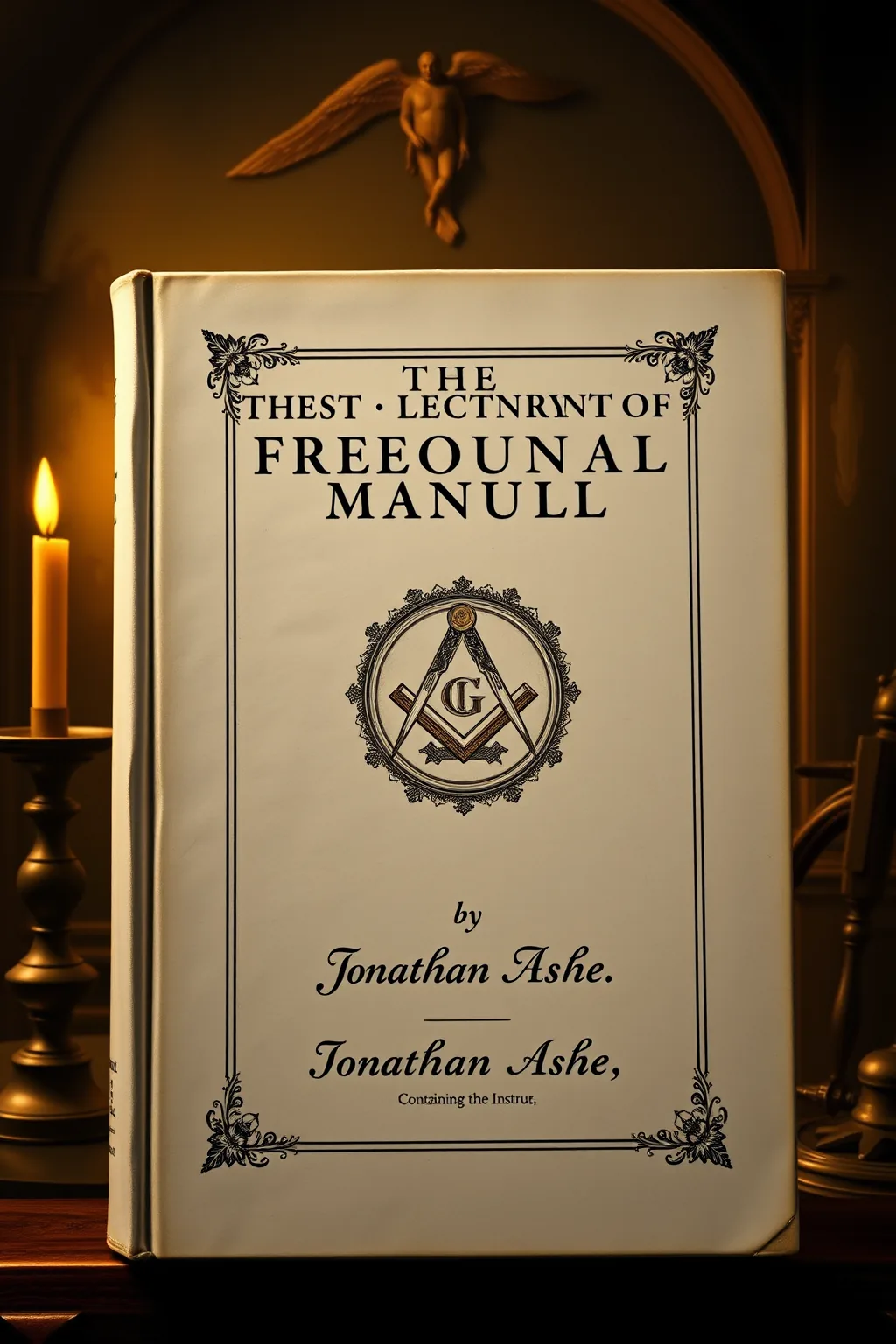
Jonathan Ashe's 1865 "The Masonic Manual" details the instructions and documents of Freemasonry.
Jonathan Ashe's "The Masonic Manual," first published in 1865, presents a detailed look at Freemasonry's esoteric dimensions. This work goes beyond simple procedural explanations to discuss the symbolism, allegories, and the search for hidden knowledge within the fraternity. Ashe guides the reader through ancient rites, explaining their moral and ethical significance and how they support Masonic practice.
The book aims to be a resource for those who see Freemasonry as more than a social organization, but as a path for spiritual growth and self-improvement. It connects Masonic teachings to broader philosophical traditions that have influenced Western esotericism. The manual encourages an inward focus, using its lectures and documents as tools for understanding personal development and community.
Ashe's approach treats each element of Masonic ritual and teaching as a step in a larger process of understanding oneself and one's place in the world. The text is structured to facilitate a methodical study of these concepts.
Published in the mid-19th century, "The Masonic Manual" emerged during a period of significant interest in esoteric traditions within Western culture. It reflects a continuation of the Hermetic, Neoplatonic, and alchemical streams of thought that had long informed secret societies and philosophical groups. Ashe's work engages with the symbolic language and ritualistic practices that Freemasonry employs, framing them as vehicles for moral instruction and spiritual insight. It situates Masonic teachings within a lineage of Western esotericism concerned with personal transformation and the uncovering of hidden truths about the cosmos and the self.
💡 Why Read This Book?
Uncover the veiled wisdom of Freemasonry. This manual offers a profound exploration of its esoteric symbolism, philosophical underpinnings, and spiritual quest. Ideal for seekers of hidden knowledge, scholars of secret societies, and practitioners aiming to deepen their understanding of the Craft's mystical dimensions. Embark on a journey of self-illumination and discover the universal truths encoded within Masonic tradition.
⭐ Reader Reviews
Honest opinions from readers who have explored this book.
❓ Frequently Asked Questions
What is the primary purpose of "The Masonic Manual"?
The primary purpose is to provide a comprehensive and esoteric understanding of Freemasonry, delving into its lectures, instructions, and the underlying philosophical and symbolic meanings behind its practices and traditions.
Is this book suitable for beginners in Freemasonry?
Yes, while it delves into deeper esoteric concepts, it also serves as an excellent foundational text for beginners seeking to grasp the core principles and symbolic language of Freemasonry from an enlightened perspective.
What kind of 'hidden knowledge' does the book reveal?
It reveals insights into the spiritual, moral, and philosophical allegories embedded within Masonic rituals and teachings, aiming to guide the reader towards self-improvement and a deeper understanding of universal truths.
How does this manual connect to broader esoteric traditions?
The manual illuminates how Masonic symbolism and philosophy align with perennial wisdom found in ancient mystery schools and other esoteric traditions, showcasing Freemasonry as a path to spiritual enlightenment.
Where can I access this digitized version of the book?
This digitized version, originating from Harvard University's library, is available for free online access through platforms like the Internet Archive, thanks to the efforts of dedicated users.
🔮 Key Themes & Symbolism
The Architecture of the Soul
This theme explores how Masonic teachings serve as a symbolic blueprint for building a virtuous and enlightened inner life. The 'temple' is not merely a physical structure, but a metaphor for the self, meticulously constructed through moral discipline, intellectual pursuit, and spiritual aspiration. The lectures and documents within the manual act as the architectural plans and tools, guiding the aspirant in shaping their character and aligning their spirit with universal principles. It emphasizes the transformative power of self-cultivation, akin to a stonemason shaping rough stone into a perfect edifice, revealing the profound connection between external ritual and internal spiritual architecture.
Veiled Symbolism and Perennial Wisdom
The manual acts as a cipher, unlocking the profound symbolic language that Freemasonry employs to convey timeless truths. Each symbol, from the Square and Compasses to the various architectural elements, is presented not as mere decoration, but as a potent key to understanding universal laws and esoteric doctrines. Ashe connects these symbols to a broader stream of perennial wisdom, suggesting that Freemasonry is a modern vessel for ancient spiritual knowledge. This theme underscores the idea that true understanding comes not from literal interpretation, but from deciphering the deeper, allegorical meanings that resonate with the soul's innate quest for truth.
The Ascent of the Initiate
This central theme traces the journey of the Masonic initiate from a state of ignorance to one of enlightened understanding and moral perfection. The progression through the degrees is depicted as a deliberate path of spiritual ascent, with each stage revealing new layers of knowledge and demanding greater personal responsibility. The manual details the ethical teachings, philosophical insights, and symbolic lessons that facilitate this growth, portraying Freemasonry as a structured path for self-discovery and the realization of one's divine potential. It emphasizes the transformative nature of the Masonic experience, guiding the individual towards becoming a 'perfect ashlar' – a refined and enlightened being.
💬 Memorable Quotes
Direct passages from the work, attributed to the author.
“The light of truth is found not in darkness, but in diligent study.”
— This speaks to the pursuit of knowledge within Freemasonry, suggesting that enlightenment requires active engagement and intellectual effort, rather than passive reception.
“Each symbol is a gateway to deeper understanding.”
— This emphasizes the allegorical nature of Masonic teachings, positing that symbols are not mere images but profound keys that unlock esoteric truths and philosophical insights.
“Brotherhood is the a core part of our shared journey.”
— This highlights the importance of fraternal bonds and mutual support within Freemasonry, portraying it as a collective endeavor towards moral and spiritual betterment.
“The true temple resides within the heart.”
— This profound statement directs the focus inward, suggesting that spiritual realization and the ultimate Masonic 'temple' are found through self-awareness and inner transformation.
💡 Key Ideas
Editorial paraphrase of the work's core concepts — not direct quotes.
Let us build our moral edifice with diligence and care.
This quote highlights the Masonic emphasis on character development, likening the creation of a virtuous life to the meticulous construction of a grand building, guided by ethical principles.
🌙 Esoteric Significance
Tradition
This manual is deeply rooted in the Western Esoteric Tradition, particularly drawing from Hermeticism, Neoplatonism, and Kabbalistic thought. It interprets Masonic rituals and symbolism through the lens of spiritual alchemy and the quest for Gnosis, presenting Freemasonry as a modern embodiment of ancient mystery school teachings. The emphasis is on a progressive path of self-transformation, mirroring the alchemical major work, where the initiate refines their spiritual nature to achieve union with the divine.
Symbolism
The core of its esoteric significance lies in its detailed exploration of Masonic symbolism. Ashe unpacks the meaning behind the geometric tools (Square, Compasses, Level, Plumb Rule), architectural elements (columns, tessellated pavement), and celestial bodies (Sun, Moon, Stars). These are not presented as mere decorative motifs but as potent allegorical representations of moral virtues, cosmic principles, and stages in the spiritual journey, designed to guide the initiate towards understanding universal laws and their own inner nature.
Modern Relevance
In an age often characterized by materialism and fragmentation, "The Masonic Manual" offers a compelling reminder of the enduring power of symbolic language and structured spiritual discipline. Its teachings on moral rectitude, self-awareness, and the pursuit of wisdom remain profoundly relevant for individuals seeking meaning and purpose beyond superficial concerns. The manual provides a framework for personal growth and ethical living, demonstrating that ancient esoteric traditions can offer timeless guidance for working through the complexities of contemporary life.
👥 Who Should Read This Book
This manual is essential for Freemasons seeking a deeper, more esoteric understanding of their Craft, moving beyond ritualistic performance to profound philosophical insight. It is useful for scholars of secret societies, comparative religion, and Western esotericism, providing primary source material for academic study. Aspiring practitioners of spiritual disciplines will find its allegorical approach to self-improvement clear. Seekers of hidden knowledge and perennial wisdom, regardless of their affiliation, will discover a wide range of symbolic meaning and moral guidance that appeals to the universal human quest for truth and enlightenment.
📜 Historical Context
Published during a period of intense intellectual and spiritual ferment, "The Masonic Manual" emerges from an era when Freemasonry was widely seen not just as a social fraternity, but as a potent force for moral and philosophical enlightenment. The 18th and 19th centuries witnessed a resurgence of interest in ancient mysteries, Hermeticism, and Rosicrucianism, with Freemasonry serving as a prominent conduit for these esoteric currents. Jonathan Ashe's work reflects this milieu, offering a structured exposition of Masonic teachings that sought to clarify its practices for the earnest seeker while simultaneously preserving its profound symbolic and allegorical depth. The manual's existence and its preservation by institutions like Harvard University underscore its perceived importance as a key text in understanding the intellectual and spiritual range of its time, and its enduring influence on the study of Western esotericism.
📔 Journal Prompts
Reflect on a personal 'temple' you are currently building within yourself. What are its foundations, and what 'tools' are you using?
Consider a symbol from the manual that resonates most deeply with you. How does its esoteric meaning apply to your current life challenges?
How can the Masonic principle of 'brotherhood' be extended beyond the lodge to foster greater connection and understanding in your daily interactions?
Identify a moral or philosophical lesson from the manual that you wish to integrate more fully into your character. What concrete steps can you take?
Imagine approaching a Masonic ritual as a journey of inner discovery. What 'veiled knowledge' do you hope to uncover within yourself through such a process?
🗂️ Glossary
Ashlar
In Masonic terminology, an 'ashlar' refers to a stone. The 'rough ashlar' represents the unrefined individual, while the 'perfect ashlar' symbolizes the individual who has been morally and spiritually perfected through Masonic teachings and self-discipline.
Gnosis
From the Greek word for 'knowledge,' gnosis refers to a form of spiritual or mystical knowledge, often intuitive and experiential, leading to enlightenment and salvation. It is a central concept in many esoteric traditions.
Perennial Philosophy
The concept that there is a single, universal spiritual truth or wisdom that underlies all religions and esoteric traditions, often obscured by exoteric doctrines. Freemasonry is often seen as a vehicle for this philosophy.
Allegory
A story, poem, or picture that can be interpreted to reveal a hidden meaning, typically a moral or political one. Masonic lectures and rituals are rich in allegorical content.
Initiation
A ritual or ceremony that marks a person's entry into a new stage of life, society, or a particular group, often involving symbolic acts, teachings, and the imparting of sacred knowledge.
This book appears in 2 collections
🔮 Readers Also Liked
Browse all →






More by Jonathan Ashe
All books →

From the “Secret Societies” Collection
View all →



More Free Freemasonry & Secret Societies Books
View all →