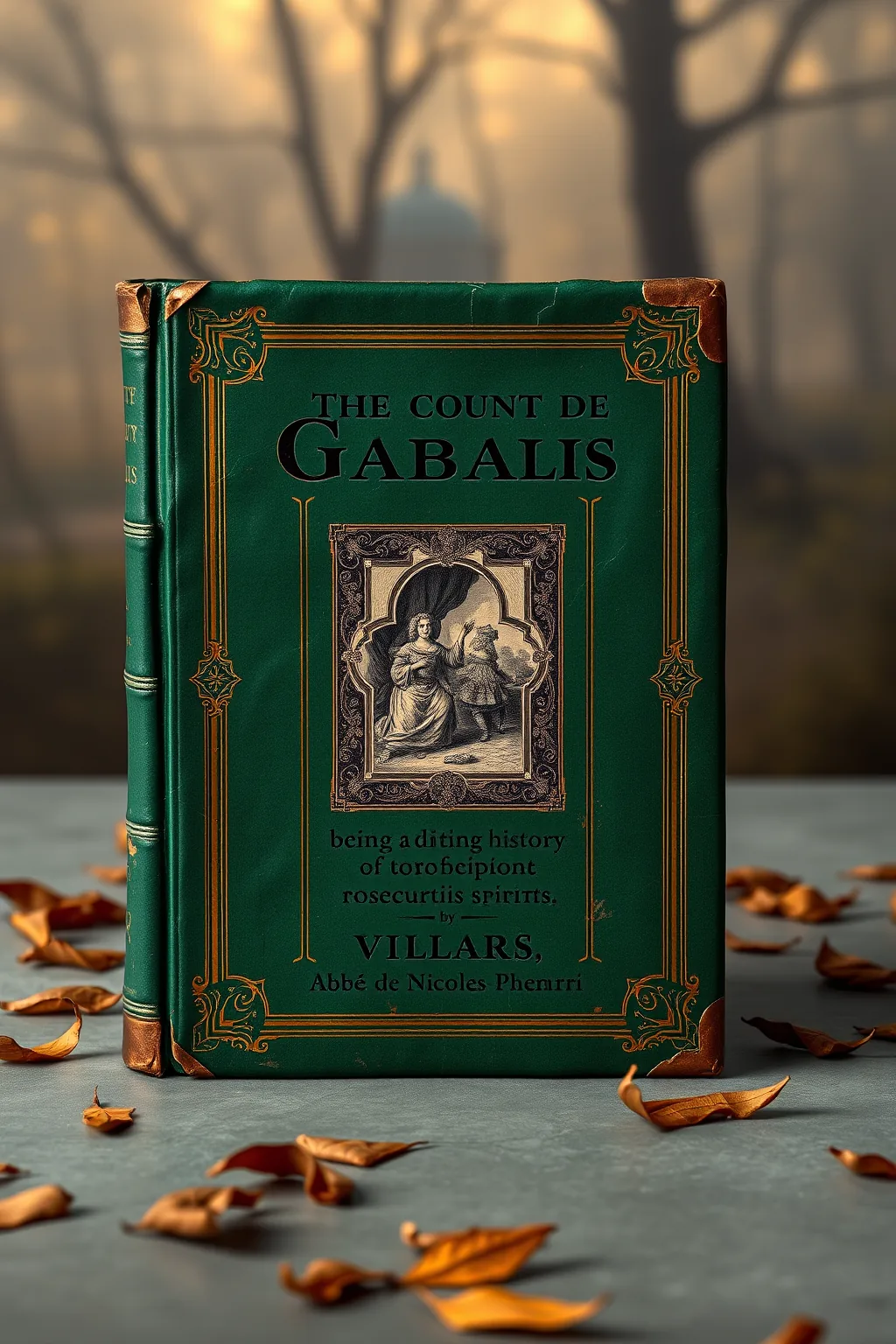
The Count de Gabalis: being a diverting history of the Rosicrucian doctrine of spirits, viz. sylphs, salamanders, gnomes, and dæmons: ... To which is prefix'd, Monsieur Bayle's account of this work: ... 1714
 76
76

The Count de Gabalis: being a diverting history of the Rosicrucian doctrine of spirits, viz. sylphs, salamanders, gnomes, and dæmons: ... To which is prefix'd, Monsieur Bayle's account of this work: ... 1714


Ophelia Vance (Mystical Literature Reviewer) — 'The Count de Gabalis' remains a cornerstone for understanding early modern esoteric thought. Villars masterfully weaves a narrative that, while presented as diverting, is rich with symbolic meaning and philosophical depth, particularly concerning the Rosicrucian doctrine of elemental spirits. Its influence on subsequent occult traditions, Freemasonry, and Romantic literature is undeniable. The inclusion of Bayle's account adds a crucial layer of historical and intellectual context. This edition is essential for scholars of secret societies and practitioners seeking to understand the lineage of Western esotericism. A truly illuminating and provocative read.
📝 Description
76
The 1714 edition of 'The Count de Gabalis' relates the Rosicrucian doctrine of spirits.
Attributed to the Abbé de Villars, this 1714 edition of 'The Count de Gabalis' presents a history of invisible intelligences. It details the Rosicrucian beliefs concerning sylphs, salamanders, gnomes, and dæmons. The book describes a hidden cosmology where elemental spirits interact with humanity, influencing later esoteric thought. Monsieur Bayle contributes an introductory account of this work.
'The Count de Gabalis' functions as a key text for comprehending the philosophical basis of secret societies and Hermetic philosophy. Its allegorical stories and philosophical questions aim to stimulate critical thought about the material world and unseen forces. This work invites readers to consider the hidden aspects of existence.
Published in the late 17th century, 'The Count de Gabalis' emerged during a period of renewed interest in occultism and secret societies. It engages with the Kabbalistic and Hermetic traditions that sought to understand the hidden order of the universe through symbolic and spiritual means. The book's focus on elemental spirits connects it to earlier Renaissance magical theories and alchemical symbolism, contributing to the development of Western esotericism.
💡 Why Read This Book?
Uncover the foundational secrets of Rosicrucianism and elemental magic. 'The Count de Gabalis' offers a rare glimpse into pre-Enlightenment mystical thought, revealing how ancient philosophies shaped perceptions of the spiritual world. Ideal for seekers of hidden knowledge, occult history enthusiasts, and those fascinated by the lore of Sylphs, Salamanders, Gnomes, and Dæmons. This text is a gateway to understanding the symbolic language of the universe.
⭐ Reader Reviews
Honest opinions from readers who have explored this book.
❓ Frequently Asked Questions
What is the primary doctrine discussed in 'The Count de Gabalis'?
The book primarily discusses the Rosicrucian doctrine of elemental spirits, specifically Sylphs, Salamanders, Gnomes, and Dæmons, and their purported interaction with the human realm.
Who is the Count de Gabalis?
The Count de Gabalis is a fictional character, a wise and enigmatic figure who serves as the narrator and teacher of the Rosicrucian doctrines within the book.
What is the significance of Monsieur Bayle's account?
Monsieur Bayle's preface provides a critical and historical context for the work, offering insights into its reception and philosophical implications during its time.
Is this book a historical account or fiction?
While framed as a 'history,' the book is largely allegorical and philosophical, exploring esoteric doctrines through narrative and dialogue rather than strict historical reporting.
What kind of reader would appreciate this book?
This book is ideal for readers interested in occult history, Rosicrucianism, secret societies, Hermetic philosophy, and early modern esoteric literature.
🔮 Key Themes & Symbolism
The Doctrine of Elemental Spirits
This theme explores the core of the book: the detailed exposition of the Rosicrucian belief in elemental beings. Villars systematically introduces Sylphs, the airy spirits; Salamanders, the fiery entities; Gnomes, the inhabitants of the earth; and Dæmons, often interpreted as spiritual or even fallen beings. The text explores their nature, their potential interactions with humanity, and the philosophical implications of their existence within a larger cosmic order. It’s a foundational text for understanding how these archetypes became integrated into Western esoteric traditions, influencing later magical and philosophical systems.
Hidden Knowledge and Hermeticism
The Count de Gabalis is steeped in the tradition of hidden knowledge, a hallmark of Hermetic philosophy and Rosicrucianism. The book presents its teachings not as public dogma, but as secret wisdom passed down through a select few. It encourages the reader to look beyond the surface of the material world, suggesting that true understanding lies in deciphering symbolic language and grasping esoteric principles. This theme speaks to the perpetual human quest for deeper truths, positioning the book as a guide for those seeking to unlock the universe's veiled secrets and connect with a higher form of consciousness.
The Influence on Secret Societies
This important work played a significant role in shaping the lore and doctrines of various secret societies, particularly Freemasonry and other Hermetic orders that emerged or flourished in the centuries following its publication. The book's exploration of spiritual hierarchies, elemental forces, and the potential for human interaction with these realms provided a rich symbolic vocabulary and conceptual framework. Its ideas were absorbed and reinterpreted, contributing to the complex range of ritual, allegory, and philosophical inquiry that defines these fraternal organizations. Understanding 'The Count de Gabalis' is crucial for tracing the intellectual lineage of these influential groups.
💬 Memorable Quotes
Direct passages from the work, attributed to the author.
“There are but four sorts of Spirits, the Sylphs, the Salamanders, the Gnomes, and the Dæmons.”
— This concise statement lays the groundwork for the book's central thesis, introducing the four primary categories of elemental and spiritual beings that form the core of the Rosicrucian cosmology explored herein.
“They are not properly Evil Spirits, but they are not good.”
— This nuanced description challenges simplistic notions of good and evil, portraying the Dæmons as entities existing in a liminal spiritual space, neither wholly benevolent nor malevolent.
“The Wise Men have always look'd upon these Spirits as the Instruments of Providence.”
— This interpretation elevates the role of spirits, positioning them not as random forces, but as integral components of a divine plan, acting as agents of a higher power.
“To know the World is to know God.”
— This profound statement expresses a key tenet of mystical philosophy, suggesting that the study of creation and its hidden forces is a direct path to understanding the divine creator.
💡 Key Ideas
Editorial paraphrase of the work's core concepts — not direct quotes.
The Bodies of these Spirits are not of the same Nature with ours.
This quote highlights the fundamental distinction between the physical and spiritual realms, suggesting that the entities discussed possess a different form of existence, beyond material comprehension.
🌙 Esoteric Significance
Tradition
This work is deeply rooted in the Hermetic and Rosicrucian traditions, drawing heavily on alchemical symbolism, Kabbalistic concepts of spiritual hierarchies, and Renaissance Neoplatonism. It represents an attempt to systematize and present the esoteric understanding of the cosmos, particularly the existence and role of elemental spirits, within a framework that was both accessible and intriguing to the learned seeker of the time. It bridges the gap between ancient magical philosophies and their later manifestations in Western esotericism.
Symbolism
The book's symbolism is rich and many-sided, with the four elemental spirits—Sylphs (air), Salamanders (fire), Gnomes (earth), and Dæmons (often associated with water or spirit)—serving as primary archetypes. These elements represent not only natural forces but also distinct planes of existence and psychological states. The interactions described between humans and these spirits symbolize the potential for spiritual awakening, the mastery of hidden forces, and the quest for esoteric knowledge, often through symbolic rituals and practices hinted at within the text.
Modern Relevance
Despite its 18th-century origins, 'The Count de Gabalis' continues to resonate with modern seekers of esoteric wisdom. Its exploration of elemental forces and spiritual intelligences offers a framework for understanding consciousness and the subtle energies of the universe, relevant to contemporary practices in magic, psychology, and spiritual development. The book's emphasis on hidden knowledge and the pursuit of deeper truths remains a potent draw for those seeking to transcend conventional understanding and connect with a more profound reality.
👥 Who Should Read This Book
This esoteric gem is essential for students of Western esotericism, particularly those interested in the history of Rosicrucianism and the lore of elemental spirits. Scholars of secret societies and comparative religion will find it important for understanding the intellectual currents of the 18th century. For the dedicated seeker, it offers a foundational text for exploring the nature of invisible realms and the symbolic language of the cosmos. Practitioners of magical arts may find inspiration in its discussions of spiritual entities and their potential interactions, while general readers with a curiosity for the mystical and the hidden will be captivated by its diverting and thought-provoking narrative.
📜 Historical Context
Published in 1714, 'The Count de Gabalis' emerged during a period of intense intellectual and spiritual ferment in Europe. The late 17th and early 18th centuries witnessed the tail end of the Renaissance's mystical inquiries and the dawn of the Enlightenment, a time when traditional beliefs were being questioned, yet the fascination with the occult and secret knowledge remained potent. This era saw a surge in Rosicrucian literature, often cloaked in allegory and mystery, aiming to reveal hidden truths about nature, the cosmos, and humanity's place within it. The work's circulation coincided with the growing influence of Freemasonry and other esoteric societies, which actively sought out and integrated such texts into their teachings. The inclusion of Monsieur Bayle's critical account also reflects the ongoing intellectual debates surrounding philosophy, religion, and the nature of reality during this dynamic period.
📔 Journal Prompts
Reflect on your personal understanding of the four classical elements and their symbolic representation in your life.
Consider the concept of 'hidden knowledge' and how it relates to your own journey of discovery.
Imagine an encounter with one of the elemental spirits described. What would be its nature and what message might it convey?
How does the idea of 'spirits' as 'instruments of Providence' challenge or affirm your own spiritual beliefs?
Explore the potential 'diversions' or distractions that prevent individuals from seeking deeper esoteric truths.
🗂️ Glossary
Rosicrucian
A member of a secret society, the Rosicrucians, purportedly founded in the early 17th century, known for its mystical and esoteric teachings concerning alchemy, magic, and spiritual enlightenment.
Sylphs
In this context, aerial spirits or elemental beings associated with the element of air, often depicted as graceful and ethereal.
Salamanders
Fiery spirits or elemental beings associated with the element of fire, often imagined as dwelling within flames and possessing immense heat or energy.
Gnomes
Earthy spirits or elemental beings associated with the element of earth, typically depicted as inhabitants of the underground, guardians of treasures, and possessing practical wisdom.
Dæmons
Spiritual beings, not necessarily evil, but often existing in a liminal or intermediate state between the material and divine realms; in this text, they are complex entities interacting with humanity.
This book appears in 2 collections
🔮 Readers Also Liked
Browse all →





![The Empire Of '' The City Of London'' [ World Superstate] Citi Bank nwo illuminati freemasons british-israel](/img/thumb/the-empire-of-the-city-of-london-world-superstate-citi-bank-nwo-illuminati-freemasons-british-israel.webp)
From the “Secret Societies” Collection
View all →


More Free Freemasonry & Secret Societies Books
View all →