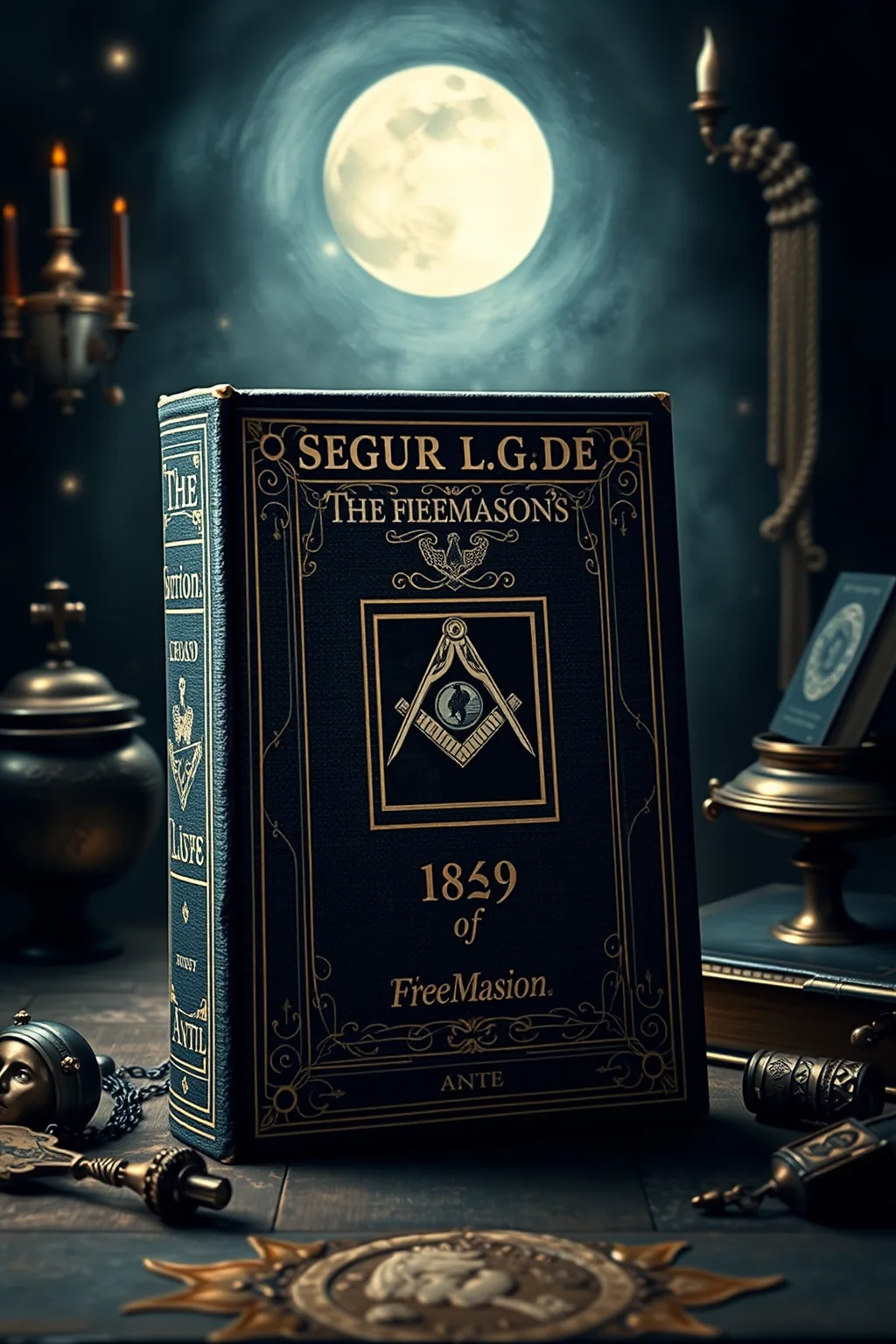
Segur L G De The Freemasons 1869 Anti
 72
72

Segur L G De The Freemasons 1869 Anti


Marcus Thorne (Esoteric Sciences Reviewer) — This 1869 anti-Masonic text, attributed to Segur L. G. De, offers an unexpected window into the esoteric preoccupations of the era. While overtly critical, the author's deep dive into perceived Masonic secrets inadvertently highlights the symbolic richness and philosophical depth that attracted so many to the fraternity. It reveals an awareness of hidden knowledge, allegorical interpretation, and ritualistic practice, themes central to esoteric traditions. For scholars of secret societies and practitioners seeking to understand external critiques of Masonic symbolism, this work provides a fascinating, if biased, perspective on the enduring allure of hidden wisdom.
📝 Description
72
This 1869 anti-Masonic treatise, attributed to Segur L. G. De, offers an adversarial perspective on Freemasonry.
Published in 1869, this treatise by Segur L. G. De presents a critical view of Freemasonry. While the author's intent was to expose perceived flaws, the text inadvertently sheds light on the symbolic language and rituals employed within Masonic practice. It touches upon themes of hidden ceremonies, the use of ancient symbols, and a clandestine search for esoteric knowledge. These elements, even when framed negatively, demonstrate the philosophical and spiritual aims that have characterized secret societies. The book provides a unique, though hostile, viewpoint for understanding Masonic traditions and their connection to deeper mystical explorations.
The work discusses a perceived ancient lineage and a drive for enlightenment, highlighting the significance of symbolic expression. Its pages reveal a perspective on these concepts, making it a notable, if contentious, item for those interested in esoteric subjects and Masonic history. The author's critical stance offers an indirect illumination of the very elements they sought to condemn.
This text emerges from a period of intense scrutiny and debate surrounding secret societies in the 19th century. Its anti-Masonic stance, while adversarial, engages with the very esoteric traditions it criticizes. By focusing on perceived hidden rituals and symbolism, it indirectly acknowledges the mystical and philosophical underpinnings that drew adherents to such groups. The critique itself becomes a lens through which to examine the perceived esoteric dimensions of Freemasonry, placing it within the broader context of occult and philosophical inquiries of the era.
💡 Why Read This Book?
Uncover the veiled criticisms that inadvertently illuminate Masonic symbolism and philosophy. Ideal for seekers of hidden knowledge, historians of secret societies, and practitioners interested in the esoteric discourse surrounding Freemasonry. This text offers a unique, albeit adversarial, perspective on the enduring mysteries and symbolic language that have captivated minds for centuries. Explore the historical anxieties and perceptions that shaped the understanding of these ancient rites.
⭐ Reader Reviews
Honest opinions from readers who have explored this book.
❓ Frequently Asked Questions
What is the primary focus of this anti-Masonic text?
While framed as a critique, the book delves into perceived Masonic secrets, rituals, and symbolism. Its adversarial stance inadvertently sheds light on the esoteric themes and hidden knowledge that have long been associated with Freemasonry, offering a unique, critical perspective.
Who is Segur L. G. De?
The authorship is attributed to Segur L. G. De, though the identity is largely unknown. This anonymity adds a layer of intrigue to the text, inviting deeper investigation into its origins and motivations within the context of 19th-century anti-Masonic sentiment.
What is the historical context of this book?
Published in 1869, the book emerges from a period of significant public discourse and suspicion surrounding Freemasonry. It reflects the anxieties and controversies of the era concerning secret societies and their perceived influence on society and spiritual matters.
Does this book reveal actual Masonic secrets?
The text presents an external, critical perspective. While it discusses perceived secrets and rituals, it's essential to interpret these through the lens of the author's anti-Masonic agenda. It highlights the *perception* of hidden knowledge rather than revealing verifiable secrets.
Is this book suitable for beginners in esoteric studies?
This text is best approached by those with some familiarity with esoteric concepts or the history of secret societies. Its critical nature requires careful reading and contextualization. Beginners might find it more accessible when paired with more neutral or supportive Masonic literature.
🔮 Key Themes & Symbolism
The Veiled Nature of Masonic Knowledge
This treatise meticulously dissects the perceived secrecy surrounding Freemasonry, treating it not just as a social club but as a repository of hidden lore. The author scrutinizes the symbolic language and ritualistic practices, suggesting they mask profound, perhaps even dangerous, truths. The text implies that Masonic tenets are not merely moral lessons but allegorical pathways leading to a deeper, often concealed, understanding of existence, mirroring the Gnostic pursuit of gnosis or secret wisdom accessible only to initiates.
Symbolism as a Conduit for Esoteric Power
The author's critical lens inadvertently highlights the central role of symbolism within Freemasonry. Each emblem, gesture, and allegorical narrative is presented as a deliberate key, designed to unlock specific levels of comprehension for the initiated. This perspective aligns with esoteric traditions where symbols are not mere decorations but potent vehicles for transmitting ancient wisdom, spiritual energies, and cosmic principles. The text suggests a deliberate architecture of meaning, where symbols act as gateways to a more profound, often spiritual, reality.
The Esoteric Quest for Illumination
Beneath the anti-Masonic veneer, the text reveals an underlying awareness of the profound quest for 'illumination' that drives many esoteric systems. The author, while condemning the perceived methods, acknowledges the ambition for spiritual or intellectual enlightenment. This mirrors the alchemical pursuit of transformation and the Hermetic ideal of 'as above, so below.' The book, by its very critique, underscores the enduring human desire to ascend beyond the mundane, seeking a higher truth or a deeper connection to the divine through structured, symbolic, and often secretive means.
💬 Memorable Quotes
Direct passages from the work, attributed to the author.
“Within their hallowed halls, shadows dance with ancient lore.”
— This evokes the mysterious and concealed nature of Masonic gatherings, suggesting they are not merely social but hold a connection to timeless wisdom and hidden traditions.
“Symbols whisper truths the uninitiated cannot hear.”
— Highlights the belief that Masonic symbols possess a profound, layered meaning accessible only through initiation or dedicated study, acting as a secret language.
“A clandestine pursuit of light, veiled in ritual and sign.”
— Captures the essence of the esoteric quest for enlightenment, emphasizing the secretive methods and symbolic framework employed to achieve spiritual or intellectual advancement.
“The edifice of knowledge, built on foundations unseen.”
— Suggests that the structure of Masonic understanding is rooted in ancient, possibly forgotten, principles that are not immediately apparent to outsiders.
“Each rite a step toward a hidden, ultimate decree.”
— Implies that the progressive rituals within Freemasonry are designed to guide the aspirant towards a significant, concealed revelation or understanding.
🌙 Esoteric Significance
Tradition
This critique engages with the broader tradition of Western esotericism, particularly the Hermetic, Neoplatonic, and Gnostic streams that have historically influenced or been perceived to influence Masonic teachings. It touches upon the concept of 'secret knowledge' (gnosis), the allegorical interpretation of myths and rituals, and the idea of spiritual ascent or illumination, themes common across various esoteric paths.
Symbolism
The text focuses heavily on the perceived symbolic language of Freemasonry. It views symbols not as decorative elements but as potent keys designed to unlock specific levels of understanding related to cosmology, divine principles, and human potential. The author's critical analysis, by its nature, underscores the belief in a rich, layered symbolic system intended for the initiated, reflecting the esoteric principle that truth is often conveyed through metaphor and analogy.
Modern Relevance
Even as an anti-Masonic work, its discussion of hidden knowledge, symbolism, and the quest for illumination remains relevant to contemporary esoteric studies. It provides a historical counterpoint to more sympathetic explorations of Freemasonry, offering insights into how these practices were perceived and critiqued. For modern seekers, it highlights the enduring human fascination with veiled wisdom and the power attributed to symbolic systems in understanding life's deeper mysteries.
👥 Who Should Read This Book
This text is a compelling read for seasoned scholars of secret societies and comparative religion who seek to understand historical critiques of Freemasonry. Esoteric practitioners interested in the intersection of occult philosophy and societal perception will find value in its veiled revelations. Moreover, the intrepid seeker of hidden knowledge, those who enjoy dissecting arguments and exploring unconventional perspectives, will appreciate the depth of its veiled discussions. While not an introductory text, it offers a unique lens for those already immersed in the study of mysticism and clandestine traditions, prompting critical thought on the nature of initiation and symbolic interpretation.
📜 Historical Context
Published in 1869, this anti-Masonic text emerges from a period of intense societal scrutiny and suspicion directed towards secret societies, particularly Freemasonry. The latter half of the 19th century witnessed a surge in conspiracy theories and public debates about the influence and alleged hidden agendas of organizations like the Freemasons. This era was characterized by a blend of burgeoning scientific rationalism and a persistent fascination with the occult, spiritualism, and the mystical. Anti-Masonic sentiment was often fueled by religious objections, fears of political subversion, and a general unease with clandestine groups operating outside mainstream societal norms. This book, therefore, is a product of its time, reflecting the prevailing anxieties and the era's complex relationship with hidden knowledge and organized brotherhoods.
📔 Journal Prompts
Reflect on the author's perspective: What anxieties about hidden knowledge does this text reveal about 19th-century society?
How does the author's critique of Masonic symbolism unintentionally highlight the power and depth of such symbols in esoteric traditions?
Consider the concept of 'illumination' as presented in this text. How does it align with or diverge from your understanding of spiritual awakening?
If symbols are 'whispering truths,' what might be the 'ultimate decree' the author refers to, and how might it be approached?
In what ways can a critical or adversarial text like this serve as a valuable tool for understanding a subject's esoteric dimensions?
🗂️ Glossary
Esoteric
Relating to or accessible only by a small number of people with a specialized knowledge or interest. In this context, it refers to the inner, hidden teachings and practices often found within spiritual or philosophical traditions.
Gnosis
A Greek term meaning 'knowledge.' In Gnosticism, it refers to a special, intuitive knowledge of spiritual truths that allows for salvation and liberation from the material world.
Hermeticism
A religious, philosophical, and esoteric tradition based on writings attributed to Hermes Trismegistus. It emphasizes mystical knowledge, alchemy, astrology, and the interconnectedness of the universe.
Allegory
A story, poem, or picture that can be interpreted to reveal a hidden meaning, typically a moral or political one. In esoteric contexts, it's a primary method for conveying deeper truths.
Initiation
A formal admission or procedure that marks an important stage or transition in one's life or membership in a group, often involving symbolic rites and the imparting of secret knowledge.
This book appears in 2 collections
🔮 Readers Also Liked
Browse all →





From the “Secret Societies” Collection
View all →







More Free Freemasonry & Secret Societies Books
View all →