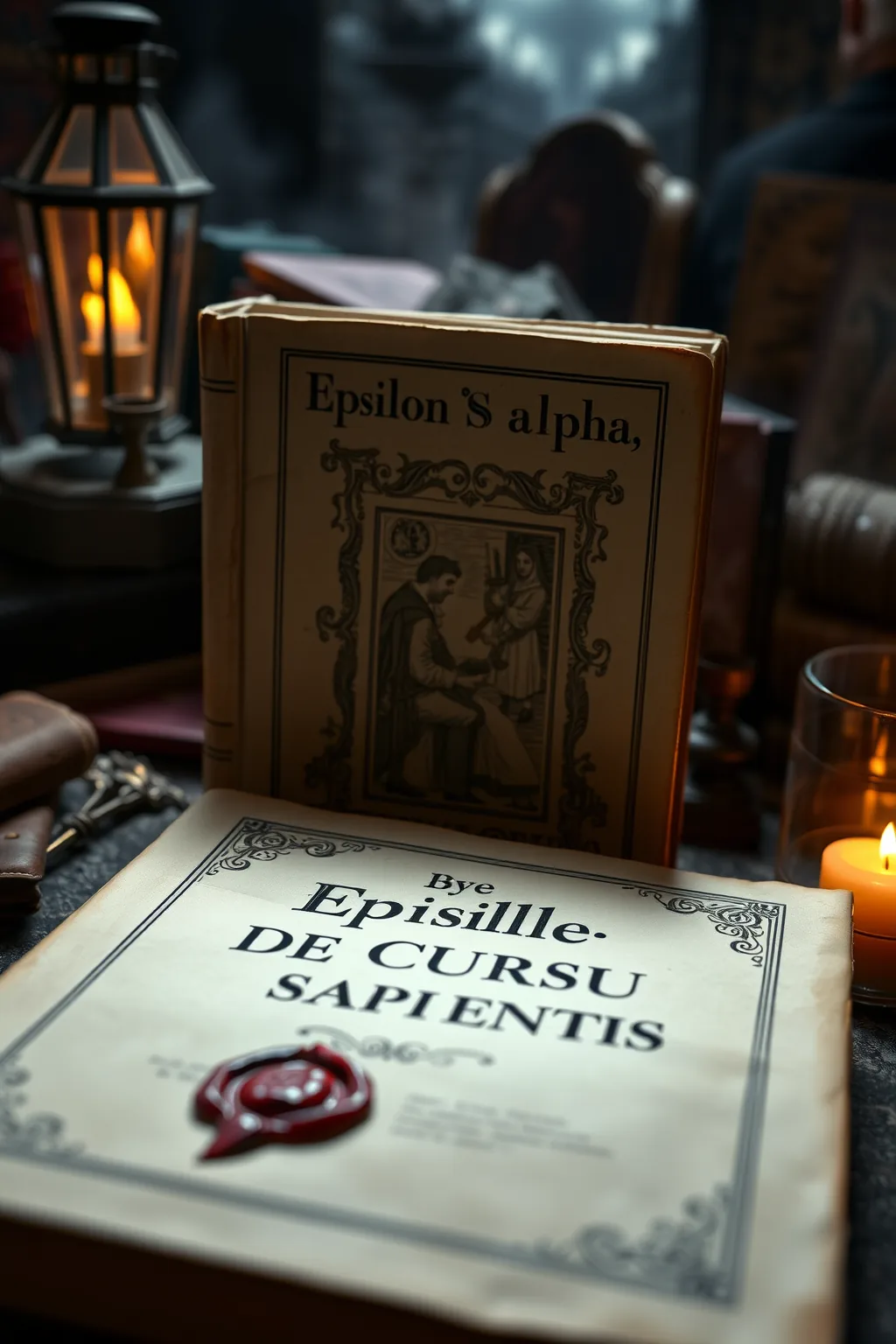
{Epsilon }{alpha } DE CURSU SAPIENTIS.
 81
81

{Epsilon }{alpha } DE CURSU SAPIENTIS.

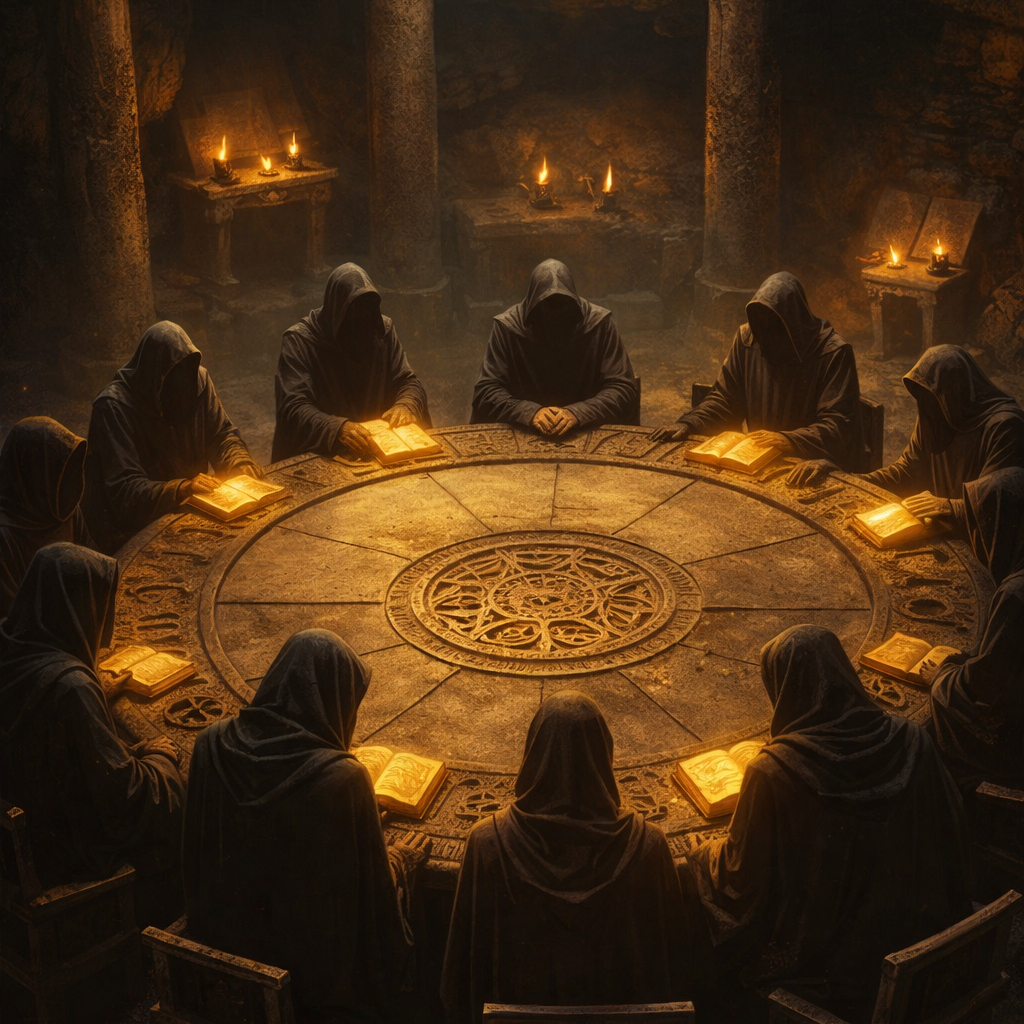

Isolde Whitaker, Sacred Texts Editor, writes: {Epsilon }{alpha } DE CURSU SAPIENTIS is a jewel unearthed from the silent chambers of esoteric knowledge. Its allegorical depth, particularly the striking metaphor of the mind as a marshal under the command of a divine King, offers potent insights into self-mastery and purposeful action. The anonymous author masterfully weaves a narrative that speaks directly to the core principles of disciplined spiritual growth, resonating with practitioners of Freemasonry and seekers of hidden wisdom. This text is not merely academic; it is a practical guide for the soul, illuminating the necessity of obedience to higher truths for true victory over the 'Opposite'. A must-read for serious students of the occult.
📝 Description
81
This 18th-century Masonic text, {Epsilon }{alpha } DE CURSU SAPIENTIS, equates military command with spiritual initiation.
Written by an unknown author, {Epsilon }{alpha } DE CURSU SAPIENTIS presents a unique perspective on Masonic philosophy. The text draws parallels between the disciplined leadership required to marshal an army and the self-mastery expected of a spiritual initiate. It uses allegorical narratives to illustrate the pursuit of wisdom, suggesting that intellect is best employed in service to a higher principle, represented by an unseen sovereign figure embodying truth and necessity.
The work discusses cosmic order and the qualities of enlightened leadership. It encourages readers to view the universe as a structured system that demands careful observation and deliberate action. The author posits that an individual's place within this grand design should be understood through a deep comprehension of universal laws and existence itself, rather than through personal impulse. For those engaged in the study of inner knowledge, this book provides insight into the practical application of spiritual principles.
This treatise emerges from the milieu of 18th-century esoteric thought, particularly within Freemasonry. It engages with themes common to Hermeticism and Kabbalah, focusing on the internal governance of the self as a reflection of cosmic principles. The text's allegorical approach and emphasis on a structured, divinely ordered universe align with the symbolic language and cosmological frameworks prevalent in esoteric traditions seeking to understand humanity's relationship with the divine and the underlying order of reality.
💡 Why Read This Book?
Unravel the profound allegory of the mind as a disciplined force, guided by supreme wisdom. Discover the esoteric principles of leadership and obedience within a cosmic framework. Ideal for Freemasons, occult scholars, and seekers of self-mastery who wish to understand the hidden mechanics of spiritual warfare and the executive nature of truth.
⭐ Reader Reviews
Honest opinions from readers who have explored this book.
❓ Frequently Asked Questions
Who is the author of {Epsilon }{alpha } DE CURSU SAPIENTIS?
The author is listed as 'Unknown'. This anonymity is common in ancient esoteric texts, often serving to emphasize the timeless nature of the wisdom conveyed rather than the individual scribe.
What is the primary category of this book?
This work falls under the category of Freemasonry & Secret Societies, offering insights into their philosophical underpinnings and symbolic language.
What are the main subjects discussed?
The book explores themes of the mind's discipline, allegorical warfare, wise leadership, cosmic necessity, and the executive nature of truth as revealed through symbolic interpretation.
Is this text suitable for beginners in esoteric studies?
While profound, the allegorical nature may require a foundational understanding of esoteric symbolism. However, dedicated beginners will find it a rich source for contemplation and growth.
Where can I find more information about this book?
As a curated collection, Esoteric Library provides comprehensive details, context, and potential interpretations of {Epsilon }{alpha } DE CURSU SAPIENTIS on its dedicated page.
🔮 Key Themes & Symbolism
The Mind as a Disciplined Marshal
This central theme posits the human mind not as an autonomous entity, but as a strategic marshal tasked with observing external forces and ordering internal faculties. It speaks to the necessity of mental discipline, strategic thinking, and the paramount importance of aligning one's cognitive processes with a higher, guiding principle. The 'enemy' represents internal or external obstacles to wisdom, and the 'forces' are the mind's capacity for analysis, reason, and action, all orchestrated for a greater objective.
The Wise King and Divine Necessity
The 'King' symbolizes the ultimate source of wisdom, truth, or divine will, to which the mind (marshal) owes obedience. This King does not rule by caprice but by the 'necessity of his country,' representing the fundamental laws of the universe or the spiritual imperative. This underscores the idea that true leadership, both internal and external, is not self-serving but an executive function, interpreting and enacting higher principles for the well-being and progression of the whole.
Allegory of Spiritual Warfare
The text employs the battlefield as a powerful metaphor for the inner and outer struggles faced by the seeker of wisdom. It suggests that the pursuit of truth is a form of warfare, requiring vigilance, strategic deployment of mental and spiritual resources, and unwavering obedience to the 'King's' command. The objective is not mere conquest, but the overcoming of ignorance and illusion, achieved through informed action and the correct ordering of one's being in alignment with universal truths.
💬 Memorable Quotes
Direct passages from the work, attributed to the author.
“Thy mind is as the marshal of an army.”
— This highlights the mind's role as a strategic planner and executor, not a mere passive observer. It requires discipline and order to achieve its objectives.
“To observe the dispositions of the enemy, and to order his own forces rightly.”
— Emphasizes the need for keen awareness of external challenges and the internal capacity to marshal one's resources effectively in response.
“But he hath no will, only obedience to the word of his king.”
— Suggests that the highest function of the mind is to serve a higher purpose or truth, transcending personal desires for ultimate wisdom.
“Nor doth that king make war by his own whim, if he be wise and true.”
— Underscores that true leadership, even at the highest level, is governed by necessity and wisdom, not arbitrary power or ego.
“Solely because of the necessity of his country, and its nature, whereof he is but executive officer and interpreter.”
— Illustrates that purpose-driven action stems from understanding fundamental needs and acting as a conduit for higher principles.
🌙 Esoteric Significance
Tradition
This text is deeply rooted in the Western Esoteric Tradition, specifically within the philosophical framework of Freemasonry and related secret societies. It draws upon Hermetic principles of correspondence (as above, so below), Neoplatonic ideas of emanation and divine order, and Gnostic concepts of spiritual warfare against ignorance. The allegorical language is typical of initiatory systems designed to convey profound metaphysical truths through symbolic narratives.
Symbolism
The core symbolism revolves around the 'mind as marshal' and the 'King' as divine will or cosmic law. The 'army' represents the faculties of the individual. The 'enemy' symbolizes ignorance, illusion, or lower nature. The 'war' signifies the spiritual struggle for self-mastery and illumination. The 'necessity of the country' points to the inherent order and purpose within the universe that wise leadership must uphold and interpret.
Modern Relevance
In an age often characterized by distraction and superficial engagement, the principles of disciplined thought and purposeful action are more relevant than ever. {Epsilon }{alpha } DE CURSU SAPIENTIS offers a timeless model for developing mental fortitude, ethical leadership, and a profound understanding of one's role within a larger, interconnected reality. It provides a framework for working through the complexities of modern life with clarity, intention, and alignment with fundamental truths.
👥 Who Should Read This Book
This profound text is essential for Freemasons seeking a deeper understanding of their symbolic teachings and the philosophical underpinnings of their craft. Scholars of Western Esotericism and comparative religion will find valuable insights into the intellectual currents of secret societies. For dedicated seekers of personal growth and spiritual enlightenment, the book offers a rigorous yet rewarding path towards self-mastery and the cultivation of purposeful action. Practitioners of occult disciplines will appreciate its sophisticated allegorical framework for understanding the dynamics of inner and outer transformation.
📜 Historical Context
Emerging from the rich soil of 18th or 19th-century esoteric thought, a period characterized by the flourishing of Freemasonry, Rosicrucianism, and other secret societies, {Epsilon }{alpha } DE CURSU SAPIENTIS reflects a deep engagement with Hermetic philosophy, Neoplatonism, and mystical interpretations of ancient texts. This era saw a fervent quest for hidden knowledge and the establishment of complex symbolic systems designed to guide initiates through spiritual and philosophical degrees of understanding. The text's emphasis on disciplined thought, allegorical warfare, and the executive nature of truth aligns with the pedagogical methods of these societies, which sought to cultivate enlightened individuals capable of perceiving and enacting cosmic order. Its anonymous nature further situates it within a tradition where authorship was often secondary to the transmission of timeless wisdom.
📔 Journal Prompts
How can I apply the 'mind as marshal' analogy to my daily decision-making and problem-solving?
In what areas of my life am I currently acting according to 'whim' versus 'necessity' or higher principle?
What 'dispositions of the enemy' (internal or external challenges) do I need to observe more closely?
How can I better align my 'forces' (thoughts, actions, emotions) with the 'word of my King' (my highest values or spiritual direction)?
Reflect on a time when you acted as an 'executive officer and interpreter' of a truth or principle. What was the outcome?
🗂️ Glossary
Marshal
In this context, a high-ranking military officer responsible for strategic planning, troop deployment, and battlefield command, analogous to the disciplined and organized function of the mind.
King
Represents the ultimate authority, wisdom, or divine principle that guides action. It embodies truth, necessity, and the executive function of higher law.
Opposite
Refers to the adversarial forces, whether internal (ignorance, ego, base desires) or external (obstacles, illusions), that stand in opposition to wisdom and truth.
Necessity of his country
The inherent order, nature, and fundamental requirements of the universe or the spiritual realm, dictating the purpose and direction of action.
Executive Officer
One who implements, executes, or enacts the will or commands of a higher authority, acting as an interpreter and agent of that authority's purpose.
This book appears in 2 collections
🔮 Readers Also Liked
Browse all →








From the “Secret Societies” Collection
View all →






More Free Freemasonry & Secret Societies Books
View all →