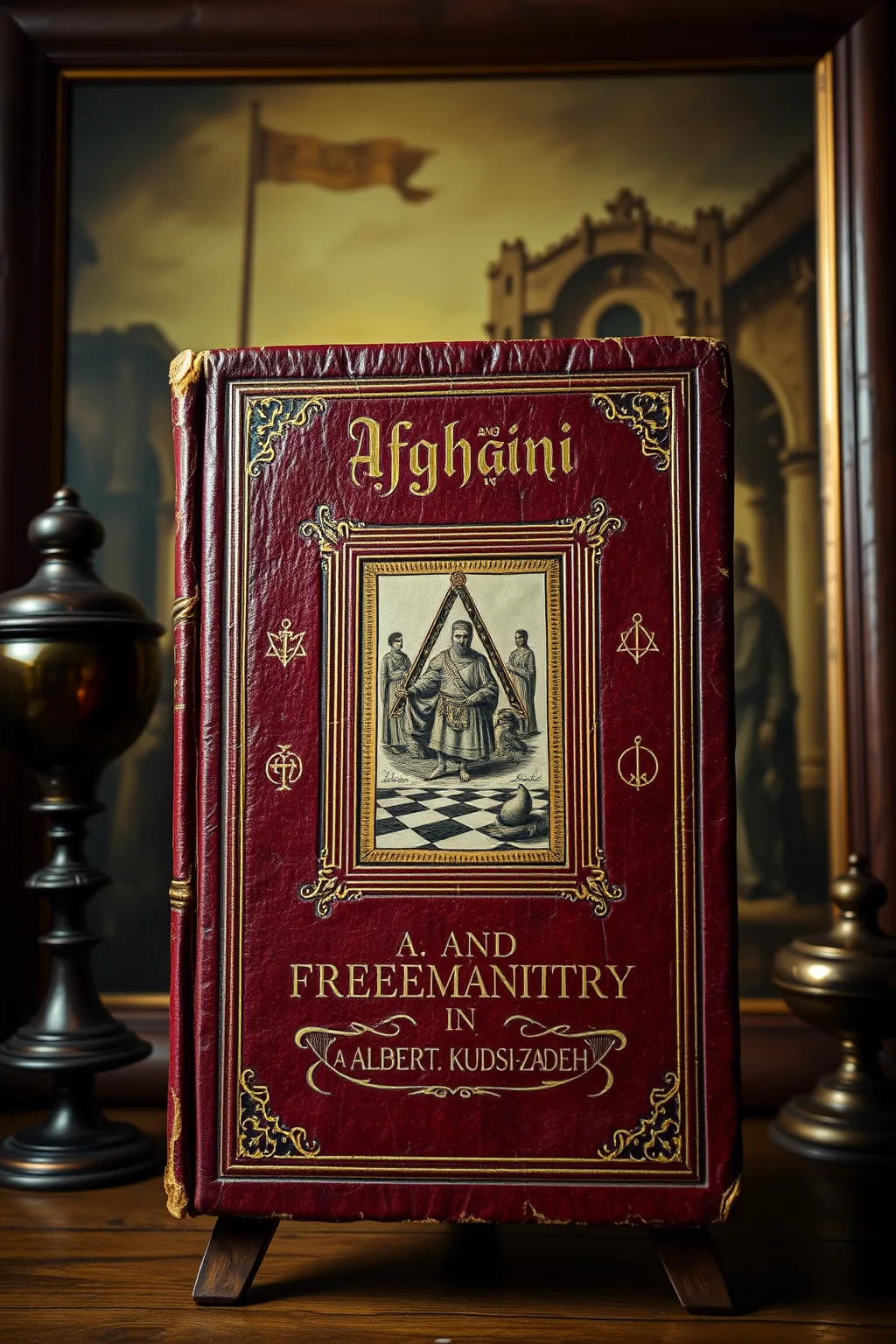
Afghānī And Freemasonry In Egypt
 78
78

Afghānī And Freemasonry In Egypt


Silas Hawthorne, Hermetic Studies Editor, writes: Kudsi-Zadeh's "Afghānī And Freemasonry In Egypt" is a revelation for those who seek the deeper currents beneath historical events. This work masterfully disentangles the enigmatic figure of Afghānī, demonstrating his strategic engagement with Freemasonry not merely as a social club, but as a potent, pre-existing network ripe for esoteric and political leverage. The author's reliance on primary sources lends an undeniable authority, revealing the symbolic and organizational resonance of these secret societies. It's essential reading for scholars of occultism, secret societies, and Islamic reform movements, offering profound insights into the interplay of hidden knowledge and worldly power.
📝 Description
78
A. Albert Kudsi-Zadeh's study investigates Jamal al-Din al-Afghānī's connections to Freemasonry in 19th-century Egypt.
This book examines Jamal al-Din al-Afghānī's involvement with Freemasonry in Egypt during the 19th century. Kudsi-Zadeh draws on newly found primary documents to trace Afghānī's complex relationship with Masonic lodges. The research goes beyond simple political interactions, looking into the symbolic meanings and organizational methods of secret societies.
It suggests that these groups acted as channels for radical ideas and efforts to change society. The book touches on secret agreements and the pursuit of hidden wisdom. It will appeal to readers interested in how secret brotherhoods, political drive, and the direction of history connect. The work prompts thought on the lasting strength of hidden societies and their part in human events, showing the hidden aspects of revolutionary energy.
The book engages with the study of secret societies and their influence on historical movements, a common area within esoteric studies. It considers how organizational structures and symbolic language within groups like Freemasonry might have been used to advance specific intellectual or political agendas. This approach aligns with traditions that examine hidden knowledge and power structures that operate outside mainstream discourse, looking for deeper currents beneath overt political events.
💡 Why Read This Book?
Uncover the hidden history of political mobilization through secret societies. This book offers a unique lens into the esoteric dimensions of 19th-century Egyptian power struggles. Ideal for seekers of forbidden knowledge, scholars of occultism, and practitioners interested in the historical use of clandestine networks for societal change.
⭐ Reader Reviews
Honest opinions from readers who have explored this book.
❓ Frequently Asked Questions
What is the primary focus of this study?
The study meticulously examines the connections between Jamal al-Din al-Afghānī and Freemasonry in Egypt, detailing Afghānī's attempts to utilize the brotherhood for political agitation against the Khedive and European intervention.
What kind of sources does the author rely on?
The research is primarily based on recently discovered documents and other crucial primary sources, providing a fresh and authoritative perspective.
Who was Jamal al-Din al-Afghānī?
Afghānī was a prominent Islamic reformer and political activist of the late 19th century, known for his pan-Islamic ideas and his efforts to resist European colonial influence.
What is the connection between Freemasonry and politics in this context?
The book suggests that Freemasonry, with its established networks and symbolic language, was seen by Afghānī as a ready-made agency for mobilizing support and disseminating his political agenda.
Is this book suitable for beginners in esoteric studies?
While it offers deep historical and esoteric insights, it is best suited for readers with some foundational knowledge of secret societies and 19th-century Middle Eastern history. It rewards dedicated study.
🔮 Key Themes & Symbolism
The Esoteric Architecture of Power
This theme looks at how secret societies, like Freemasonry, provided not only organizational frameworks but also symbolic languages and ritualistic practices that could be co-opted for political ends. It explores the 'hidden hand' guiding movements, where initiation rites and degrees might have served as metaphors for political awakening and commitment, and how the brethren's established connections offered a clandestine infrastructure for disseminating ideas and orchestrating action beyond the public gaze.
Afghani's Strategic Alchemy
Here, the focus is on Afghānī's masterful ability to harness existing structures for his revolutionary aims. It examines his 'alchemy' of transforming a fraternal order into a vehicle for pan-Islamic reform and anti-colonial resistance. The narrative probes the intellectual currents that allowed him to perceive the latent potential within Freemasonry, viewing its hierarchical nature and global reach not as a threat, but as a powerful, albeit secret, tool for societal upheaval and the reassertion of local sovereignty against burgeoning European dominance.
Egypt's Veiled Political Landscape
This theme reconstructs the intricate geopolitical and societal milieu of 19th-century Egypt, a nexus of Ottoman decline, European imperial ambitions, and burgeoning nationalist sentiments. It highlights the pervasive influence of secret societies and their entanglement with both indigenous elites and foreign powers. The exploration reveals a world where public pronouncements masked private agendas, and where the whispered affiliations within lodges held as much sway as decrees issued from the palace, casting a shadow over the visible political stage.
💬 Memorable Quotes
Direct passages from the work, attributed to the author.
“The lodge became a crucible for veiled ambitions.”
— This suggests that Freemasonry's secretive environment served as a testing ground and forge for hidden political aspirations and revolutionary plans.
“He saw in the brotherhood a ready-made liturgy of dissent.”
— Afghānī perceived the structure and rituals of Freemasonry as an existing, adaptable framework for expressing and organizing opposition.
“European intervention cast long, shadowy tendrils.”
— This evokes the insidious and pervasive nature of European colonial influence in Egypt, extending into clandestine realms.
“Symbols whispered where pronouncements dared not.”
— This highlights the power of esoteric symbolism to convey messages and ideas that were too dangerous or sensitive to be spoken openly.
“The Khedive's authority waned under fraternal pressure.”
— This implies that the collective influence and clandestine actions of Freemason members subtly undermined the political power of the ruling authority.
🌙 Esoteric Significance
Tradition
This work touches upon the esoteric traditions associated with Western Freemasonry, particularly its symbolic language, hierarchical structure, and the concept of hidden knowledge transmitted through degrees and rituals. It also intersects with the broader tradition of political esotericism, where secret societies are viewed not just as fraternal orders but as potential engines of societal change and ideological dissemination, influencing the historical narrative from behind the veil.
Symbolism
Key symbols likely explored include those inherent to Masonic ritual, such as the square, compass, and the all-seeing eye, interpreted here through a political lens. The 'brotherhood' itself becomes a potent symbol of solidarity and collective action. The text may also allude to archetypal symbols of liberation and resistance, drawing parallels between esoteric initiation and political awakening, and the hidden meanings embedded within the organizational structures of clandestine groups.
Modern Relevance
The study's relevance extends to contemporary discussions on the influence of non-state actors, the power of networked organizations, and the enduring appeal of secretive movements in shaping public discourse and political outcomes. It prompts reflection on how ideology, power, and hidden knowledge continue to intertwine in the modern world, and how seemingly benign organizations can be strategically employed for profound societal shifts, echoing Afghānī's tactics in a new millennium.
👥 Who Should Read This Book
Scholars of Islamic reform, Middle Eastern history, and secret societies will find this a foundational text. Seekers of esoteric knowledge and those fascinated by the intersection of occultism and political strategy will be captivated. Practitioners of esoteric disciplines may gain insight into the historical application of ritual and symbolism in real-world power dynamics. Beginners interested in the hidden mechanisms of history and the influence of clandestine groups will find a compelling, if challenging, introduction.
📜 Historical Context
The late 19th century in Egypt was a period of profound upheaval, marked by the waning influence of the Ottoman Empire, the escalating economic and political encroachment of European powers (particularly Britain and France), and the rise of nascent nationalist sentiments. The Khedivate, under rulers like Isma'il Pasha, grappled with modernization efforts often financed by foreign loans, leading to increased external control and resentment among Egyptians. This era was also characterized by a vibrant intellectual and political milieu, where figures like Jamal al-Din al-Afghānī sought to galvanize resistance. Secret societies, including Freemason lodges, played a complex role, often serving as meeting grounds for elites, conduits for foreign ideas, and, as Kudsi-Zadeh argues, potential instruments for indigenous political mobilization and agitation against perceived foreign domination and internal corruption.
📔 Journal Prompts
How might the symbolic language of esoteric orders be reinterpreted for modern political movements?
In what ways do established networks, both visible and hidden, shape the course of history?
Consider the ethical implications of using secret societies for political mobilization.
Reflect on the enduring human fascination with hidden knowledge and clandestine influence.
Analyze a contemporary event through the lens of potential hidden societal influences.
🗂️ Glossary
Khedive
A title of high rank in Egypt, equivalent to viceroy, used during the period of Ottoman suzerainty and later under British influence.
Freemasonry
A fraternal organization that traces its origins to the guilds of stonemasons, characterized by its use of symbolic ritual, hierarchical degrees, and a commitment to moral and spiritual development.
Pan-Islamism
A political ideology that advocates for the unity and solidarity of all Muslim peoples, often in opposition to foreign influence or colonial powers.
Agitation
The act of arousing public concern or action, often through public speaking, writing, or organizing, typically to promote a political cause.
Primary Sources
Original materials such as documents, letters, diaries, or artifacts that provide direct evidence about a historical event or period.
This book appears in 2 collections
🔮 Readers Also Liked
Browse all →







From the “Secret Societies” Collection
View all →






More Free Freemasonry & Secret Societies Books
View all →