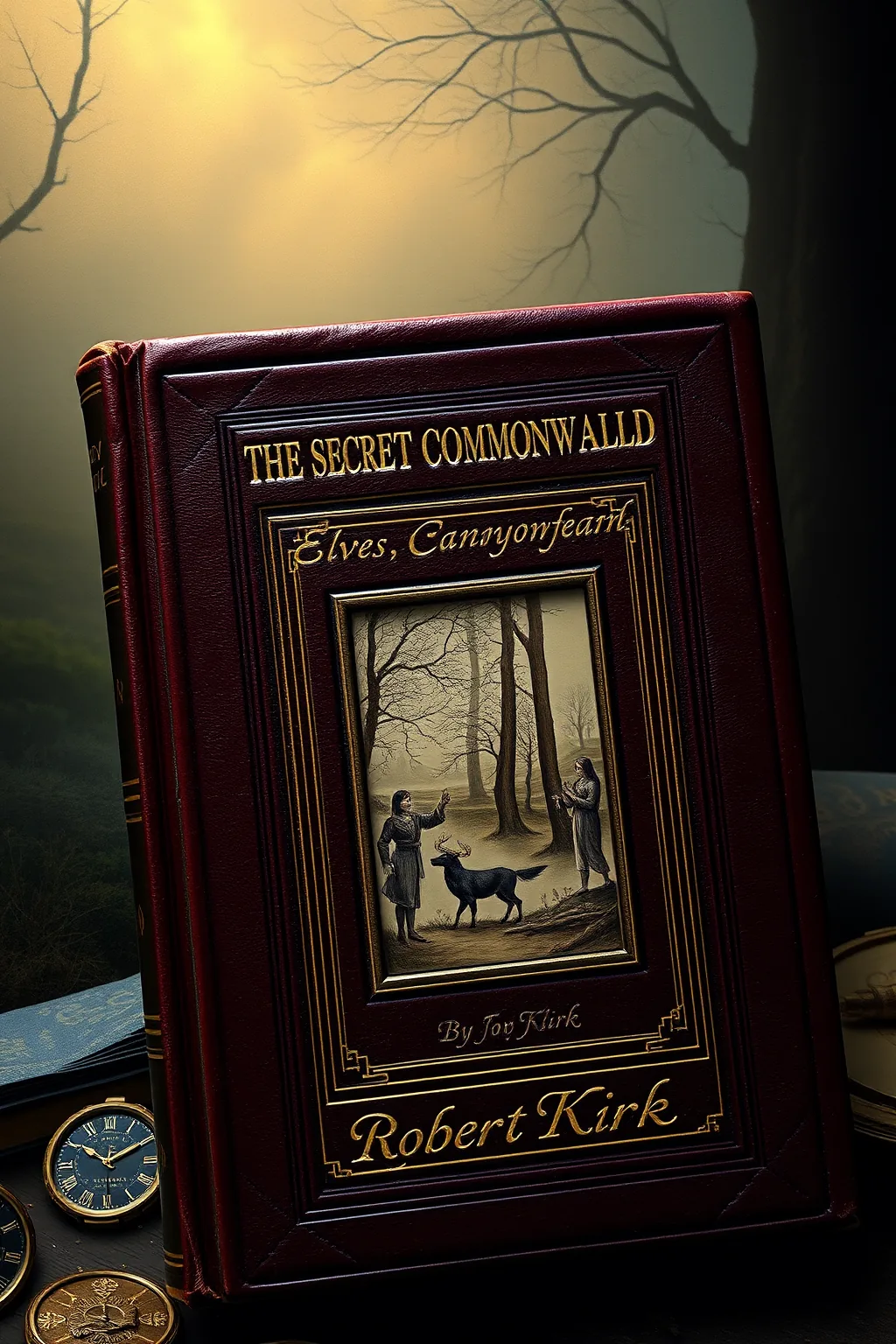
The Secret Commonwealth of Elves, Fauns and Fairies
 74
74

The Secret Commonwealth of Elves, Fauns and Fairies

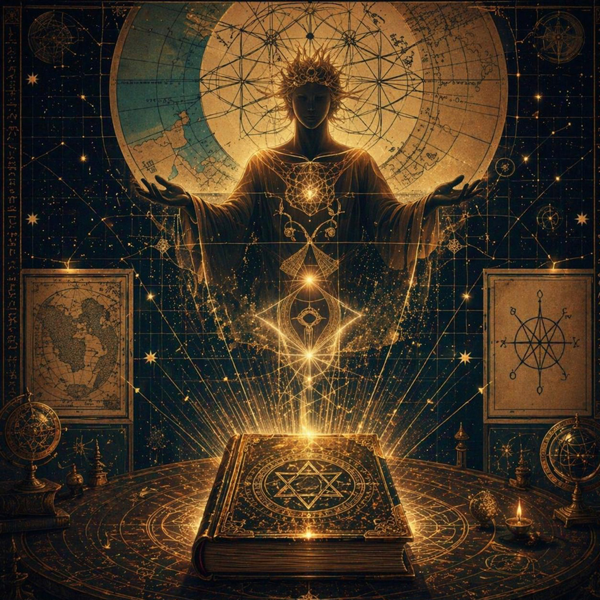

Robert Kirk's 'The Secret Commonwealth' stands as a monumental achievement in early esoteric literature. As a minister deeply immersed in the folklore of the Scottish Highlands, Kirk offers an unparalleled, empirically grounded yet theologically astute perspective on the Sidhe. His meticulous cataloging of fairy customs, laws, and encounters provides invaluable insights into pre-modern animistic beliefs and the perceived spiritual landscape. This work transcends simple ethnography, acting as a vital bridge between folk tradition and profound metaphysical inquiry. A must-read for anyone delving into Celtic mysticism, fae studies, or the history of consciousness.
📝 Description
74
Robert Kirk wrote 'The Secret Commonwealth of Elves, Fauns and Fairies' in 1691, detailing Scottish fairy lore.
Robert Kirk, a minister and Gaelic scholar, wrote this account in 1691. He documented local beliefs about the 'Good People,' which he understood as fairies and other unseen beings. Kirk treated these accounts seriously, viewing them as a theological and philosophical inquiry into their nature and their relationship with humans.
This book is not a collection of fairy tales. Instead, it is a considered study of the boundaries between the material and spiritual worlds. Kirk sought to reveal aspects of existence that are not apparent to ordinary perception, examining the unseen structures that shape reality. The work offers insight into beliefs held in the Scottish Highlands.
Kirk's work belongs to a tradition of Western esotericism that sought to reconcile Christian theology with folk beliefs about supernatural entities. It reflects an interest in the hidden aspects of reality that existed alongside more mainstream religious thought. The text engages with concepts of the spirit world and its presence within the natural order, a common concern in occult and mystical studies of the period.
✍️ Author
Robert Kirk
Robert Kirk (9 December 1644 – 14 May 1692) was a minister, Gaelic scholar and folklorist, best known for The Secret Commonwealth, a treatise on fairy folklore, witchcraft, ghosts, and second sight, a type of extrasensory perception described as a phenomeno…
💡 Why Read This Book?
Uncover the lost lore of Scotland's 'Good People.' Explore the intersection of faith, folklore, and the unseen world through the eyes of a 17th-century scholar. 'The Secret Commonwealth' offers a unique, serious examination of fairy traditions, vital for occult practitioners, folklore enthusiasts, and anyone seeking deeper understanding of ancient spiritual realities.
⭐ Reader Reviews
Honest opinions from readers who have explored this book.
❓ Frequently Asked Questions
When was 'The Secret Commonwealth of Elves, Fauns and Fairies' first published?
While Robert Kirk completed his manuscript in 1691, 'The Secret Commonwealth of Elves, Fauns and Fairies' was first published posthumously in 1815. This edition brought his profound observations to a wider audience centuries later.
What is the main focus of Robert Kirk's work?
The book meticulously records and analyzes local accounts of fairies, elves, and other supernatural beings, treating them with a unique blend of pastoral seriousness, empirical curiosity, and theological contemplation, exploring their perceived existence, laws, and interactions with humans.
Who were the 'Good People' according to Kirk?
Kirk used the term 'Good People' as a respectful, traditional designation for the various ethereal beings—fairies, elves, spirits—that inhabited the Scottish landscape and folklore. It reflects a belief that directly naming them could invite unwanted attention.
What makes this book different from typical fairy tales?
Unlike fanciful tales, Kirk approaches the subject with scholarly rigor and theological depth. He treats the 'Good People' as real entities within a spiritual framework, examining their society and impact with an empirical, almost anthropological, lens.
Is this book suitable for beginners interested in the occult?
Yes, it serves as an excellent foundational text. While scholarly, Kirk's direct engagement with folklore and his serious treatment of the subject make it accessible and illuminating for those new to esoteric studies, particularly concerning elemental and fae traditions.
🔮 Key Themes & Symbolism
The Nature of the Unseen Realm
Kirk's work studies the perceived existence and characteristics of beings that inhabit a realm parallel to our own. He meticulously documents their supposed appearance, habits, and societal structures, moving beyond simplistic folklore to present a serious, theological consideration of these entities as integral parts of creation, albeit beyond ordinary human perception. This exploration challenges the reader to consider the limits of empirical observation and the possibility of coexisting spiritual realities.
Folklore as Spiritual Revelation
This text posits that local tales and legends are not mere superstitions but carry profound spiritual and theological weight. Kirk, as a minister, sought to understand the divine through the narratives of his community, viewing the 'Good People' as manifestations of a complex spiritual ecosystem. He bridges the gap between popular belief and ecclesiastical doctrine, suggesting that the divine whispers through the very fabric of the land and its ancient stories, offering a unique perspective on faith and the supernatural.
Empirical Curiosity and Theological Concern
Kirk's unique approach combines an almost anthropological curiosity about the details of fairy life with deep theological reflection. He doesn't just report; he questions, analyzes, and contextualizes these accounts within a Christian framework, grappling with the implications of these beings for salvation and divine order. This dual focus creates a body of thought, appealing to both the scholar seeking historical accuracy and the mystic yearning for deeper understanding of the cosmos and humanity's place within it.
💬 Memorable Quotes
Direct passages from the work, attributed to the author.
“The Fairies are spirits, that are either good or bad.”
— This fundamental statement frames Kirk's approach, acknowledging the duality of the fae realm and setting the stage for a nuanced exploration of their nature and influence on human affairs.
“They are not to be seen by all, but by some few.”
— This speaks to the veil that separates the mundane from the fae, suggesting that the ability to perceive these beings is a gift or a state of heightened awareness, common in mystical and occult lore.
“They have their Laws, their Government, and their own Kingdom.”
— This emphasizes the organized, societal aspect of the fae, portraying them not as chaotic spirits but as a structured civilization with their own rules and dominion, mirroring human societal structures.
“They can make themselves invisible, and appear as they please.”
— This addresses the magical capabilities of the fae, including shapeshifting and illusion, core elements in folklore and occult studies that explore the manipulation of perception and form.
💡 Key Ideas
Editorial paraphrase of the work's core concepts — not direct quotes.
They are of a middle nature, between angels and men.
This quote highlights the liminal status attributed to fairies, positioning them as intermediaries or beings existing in a state distinct from both the celestial and the terrestrial, a key concept in many esoteric traditions.
🌙 Esoteric Significance
Tradition
This work is foundational to the study of Celtic esoteric traditions, specifically concerning the Sidhe (fairies) and their perceived place within the spiritual cosmos. It bridges animistic beliefs, folk magic, and a form of Christian mysticism, offering a unique perspective on elemental beings and the veil between worlds. Kirk's serious treatment elevates these spirits from folklore to entities worthy of theological and philosophical consideration, aligning with traditions that explore the hierarchies of non-human intelligence.
Symbolism
The 'Good People' themselves are potent symbols of the liminal, the unseen, and the forces of nature. Their supposed ability to manipulate perception and their existence in a parallel realm symbolize the hidden potentials within consciousness and the universe. Their laws and customs represent the often-unseen order governing spiritual and elemental forces. The Scottish landscape, with its mists and glens, acts as a symbolic gateway, representing the boundaries between the known and the unknown, the material and the ethereal.
Modern Relevance
In an age increasingly dominated by materialism, Kirk's text serves as a powerful reminder of the enduring human fascination with the unseen. It offers a historical lens through which to examine contemporary interest in fae, elemental magic, and expanded consciousness. For practitioners, it provides a historical framework for understanding the 'otherworld' and a serious approach to engaging with non-human intelligences. For scholars, it remains an invaluable primary source on folklore and the history of belief, encouraging a reconsideration of spiritual realities beyond empirical validation.
👥 Who Should Read This Book
This text is essential for seekers of ancient lore and practitioners of Western esotericism, particularly those interested in Celtic traditions, elemental spirits, and the history of fae studies. Scholars of folklore, comparative religion, and cultural history will find Kirk's empirical yet theological approach invaluable. Beginners exploring the occult will discover a serious, foundational text that treats supernatural beings with respect and intellectual rigor. Experienced practitioners may find new insights into the nature of the 'otherworld' and the spiritual field of the British Isles, enriching their understanding of the hidden dimensions of reality.
📜 Historical Context
Written in 1691, 'The Secret Commonwealth' emerges from the body of late 17th-century Scotland, a period marked by deep religious conviction, lingering pagan traditions, and a burgeoning intellectual curiosity. The Enlightenment was on the horizon, but folk beliefs and supernatural encounters remained a significant aspect of daily life and theological discourse. Robert Kirk, a minister and scholar, navigated this landscape with a mix of faith and empirical observation. The witch trials had recently cast a shadow, yet belief in other forms of supernatural beings, particularly the 'Good People' of Celtic lore, persisted vibrantly. Kirk’s work is a proof of the era's complex relationship with the unseen, where theological frameworks often sought to reconcile or explain phenomena that defied easy categorization, reflecting a world where the spiritual and material were inextricably intertwined.
📔 Journal Prompts
Reflect on a personal encounter, however subtle, with something that felt 'otherworldly' or beyond ordinary perception. How does Kirk's description resonate with your experience?
Consider the concept of 'middle nature' between angels and men. What does this suggest about the spectrum of consciousness and existence as perceived by Kirk?
Kirk describes the 'Good People' as having their own laws and government. How might these unseen laws influence our own world, and how can we better discern them?
If you were to document encounters with the unseen today, what methods would you employ, and what theological or philosophical framework would you use to interpret them?
Explore the idea of a 'veil' between worlds. What metaphorical or literal veils exist in your life, and what lies beyond them?
🗂️ Glossary
Sidhe
An Irish and Scottish Gaelic term referring to fairies or a fairy mound. In a broader sense, it encompasses the supernatural beings and their realm, often considered to be a parallel dimension or the 'otherworld'.
Good People
A common euphemism used in folklore, particularly in Scotland and Ireland, to refer to fairies and other supernatural beings. It was believed that directly naming them could attract their attention, often with negative consequences.
Gaelic Scholar
An individual with deep knowledge and expertise in the Gaelic languages (such as Scottish Gaelic or Irish Gaelic) and their associated literature, culture, and history. Robert Kirk was renowned for his linguistic and scholarly abilities in this area.
Pastoral Seriousness
A tone that combines the gentle, observant, and often contemplative nature associated with rural life and clergy (pastors) with a profound and earnest approach to the subject matter, treating it with sincere gravity.
Empirical Curiosity
A keen interest in understanding the world through direct observation, experience, and evidence, rather than solely through theoretical speculation or received dogma. It involves a desire to gather facts and investigate phenomena directly.
This book appears in 2 collections
🔮 Readers Also Liked
Browse all →








From the “Transcendental Meditation” Collection
View all →





More Free Esoteric History & Biography Books
View all →