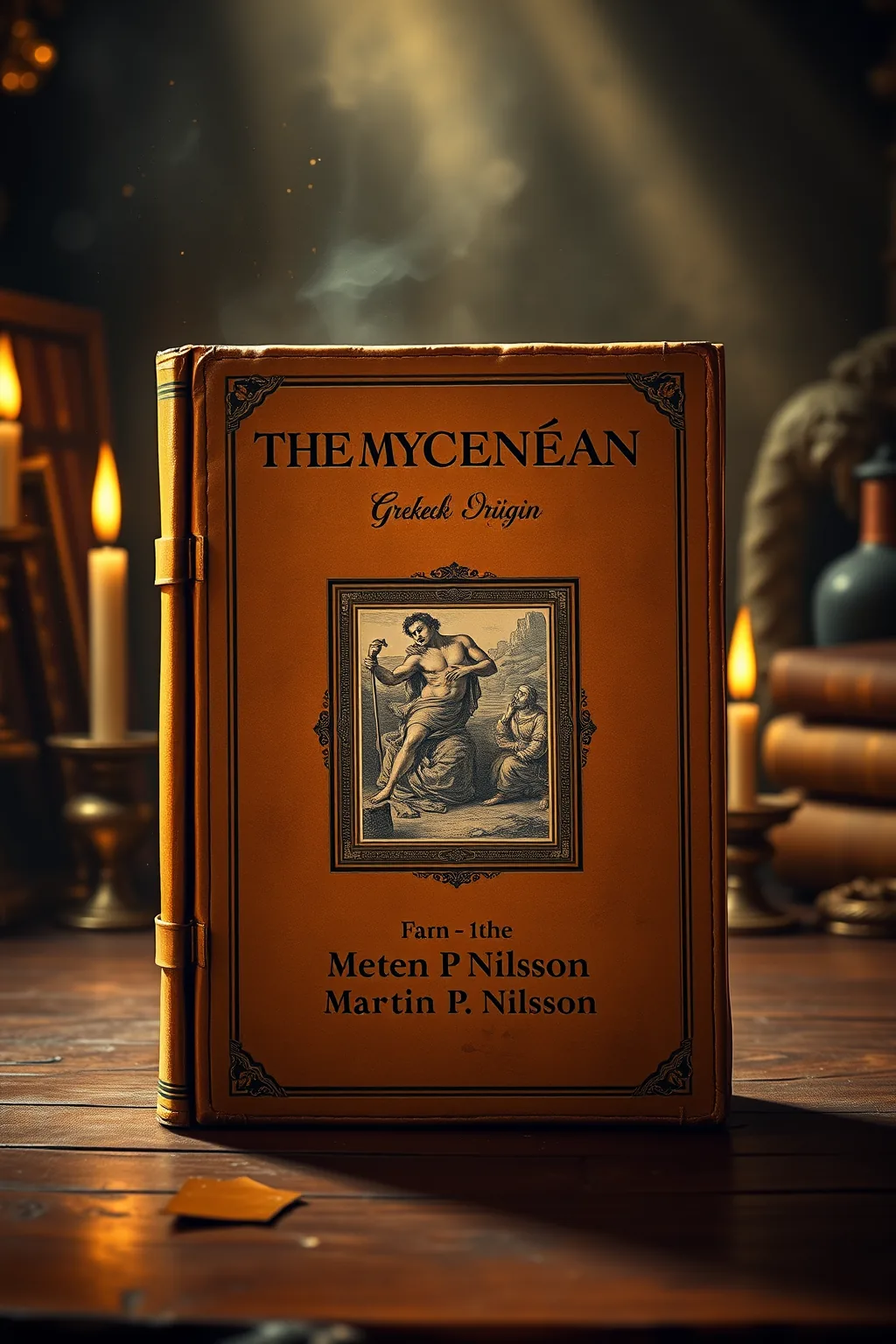
The Mycenaean Origin of Greek Mythology
 76
76

The Mycenaean Origin of Greek Mythology


Evander Ashcroft (Alchemy & Hermeticism Editor) — Martin P. Nilsson's "The Mycenaean Origin of Greek Mythology" is an indispensable cornerstone for any serious student of esoteric history. Nilsson's meticulous synthesis of archaeological evidence and comparative mythology provides irrefutable proof that the grand narratives of classical Greece are deeply entwined with the material and spiritual landscape of the Mycenaean era. He unearths the forgotten roots of potent archetypes, offering a profound understanding of how ancient sacred geography and foundational belief systems coalesced into the myths we recognize today. This work is essential for scholars, mythographers, and practitioners seeking to grasp the primal forces that underpin Western esoteric traditions.
📝 Description
76
Martin P. Nilsson argued in 1932 that Greek myths originated in Mycenaean civilization.
Martin P. Nilsson's 1932 book, "The Mycenaean Origin of Greek Mythology," proposes that the familiar stories of Greek gods and heroes stem from the Late Bronze Age civilization of Mycenae. Nilsson connects the myths of figures like Heracles and the Olympian gods to the historical and cultural realities of the period between roughly 1600 and 1100 BC. He draws on archaeological evidence from sites such as Mycenae and Pylos, alongside linguistic analysis and comparisons with other mythic traditions. The central argument is that these legends are not simply poetic inventions but are deeply tied to the geography, customs, and beliefs of this ancient world. The book seeks to bridge the gap between the physical remnants of Mycenaean culture and the enduring narratives that have shaped Western thought.
This book is a significant work within the academic study of comparative mythology and ancient history. It approaches mythological origins through material evidence and textual analysis, seeking to ground legendary narratives in historical periods rather than purely symbolic or spiritual realms. While not strictly an esoteric text itself, its focus on uncovering primal layers of belief and its connection to the 'collective unconscious' has resonated with readers interested in the deeper psychological and cultural roots of myth, bridging classical scholarship with broader inquiries into human symbolism.
✍️ Author

Martin P Nilsson
Harry Edward Nilsson III (June 15, 1941 – January 15, 1994), sometimes credited and often referred to as Nilsson, was an American singer-songwriter who reached the peak of his success in the early 1970s. His work is characterized by pioneering vocal overdu…
💡 Why Read This Book?
Uncover the buried roots of Western mythology. This book offers a profound connection to the primordial energies that shaped Greek legend, revealing the archetypal significance of ancient sites and beliefs. Ideal for seekers of hidden wisdom, scholars of comparative religion, and practitioners interested in the esoteric foundations of human consciousness.
⭐ Reader Reviews
Honest opinions from readers who have explored this book.
❓ Frequently Asked Questions
What is the main argument of the book?
The book argues that the great myths of classical Greece have their origins in the Mycenaean civilization of the Late Bronze Age, drawing connections between archaeological findings and ancient narratives.
What specific myths does Nilsson examine?
Nilsson delves into the origins of myths concerning figures like Heracles and Theseus, as well as the Theban cycle and the pantheon of Olympus, tracing their roots back to Mycenaean times.
What evidence does Nilsson use?
He combines archaeological discoveries from Bronze Age sites, linguistic analysis, and comparative mythological studies to support his thesis.
What is the time period of the Mycenaean civilization?
The Mycenaean civilization flourished during the Late Bronze Age, roughly from 1600 to 1100 BC.
What is the significance of this research for understanding Greek mythology?
It reveals that Greek myths are not purely imaginative constructs but are deeply grounded in the historical, geographical, and cultural realities of a much earlier civilization.
🔮 Key Themes & Symbolism
The Archetypal Resonance of Bronze Age Sites
This theme explores how ancient geographical locations, particularly the fortified centers of Mycenae, Pylos, and Thebes, served as potent cradles for mythic narratives. Nilsson suggests that the very stones and landscapes of these Bronze Age strongholds imprinted themselves onto the collective psyche, becoming the physical loci for heroic deeds and divine encounters. The enduring power of these myths is seen as a direct consequence of their deep roots in a civilization that actively shaped its environment and its spiritual understanding of existence. The book invites contemplation on how sacred geography influences the unfolding of human story and the perpetuation of foundational beliefs through generations.
Linguistic Traces of a Lost Civilization
Nilsson masterfully navigates the labyrinth of ancient Greek dialects and proto-Indo-European roots to uncover linguistic fossils embedded within the myths. This theme highlights how the very names of heroes, gods, and places, when traced back to their earliest discernible forms, reveal connections to the Mycenaean linguistic stratum. These linguistic echoes are not mere etymological curiosities but serve as vital threads, combining disparate mythic elements and pointing towards a shared cultural heritage. The exploration of language becomes a key to unlocking the hidden semantic layers of the myths, offering insights into the worldview and conceptual frameworks of the Bronze Age.
Comparative Mythology as a Key to Primal Truths
The book employs comparative mythology not just as a scholarly tool, but as a means to access universal human experiences and archetypal patterns that transcend specific cultures. By juxtaposing Mycenaean motifs with those found in other ancient traditions, Nilsson argues for a common wellspring of human myth-making. This theme emphasizes the idea that the great myths of Greece, in their Mycenaean genesis, tap into fundamental truths about the human condition, the cosmos, and the divine. It suggests that understanding these primal patterns can offer profound metaphysical insights and a deeper comprehension of humanity's enduring quest for meaning and connection.
💬 Memorable Quotes
Direct passages from the work, attributed to the author.
“The splendor of Mycenae was not forgotten.”
— This highlights the enduring legacy of the Mycenaean civilization, suggesting its cultural and spiritual influence persisted, consciously or unconsciously, into later Greek periods.
“Geography itself is a myth-maker.”
— Nilsson emphasizes the profound influence of landscape and place on the formation of mythic narratives, suggesting that the physical environment shapes human stories.
“Language is a vessel of ancient thought.”
— This points to the importance of linguistic analysis in uncovering the underlying concepts and beliefs of past civilizations embedded within their language.
“We find the same forms again and again.”
— This refers to the recurring archetypal patterns in mythology, suggesting universal human experiences and symbols that manifest across different cultures and epochs.
💡 Key Ideas
Editorial paraphrase of the work's core concepts — not direct quotes.
The myths are not creations out of nothing.
This quote underscores Nilsson's central thesis: that Greek mythology possesses tangible, historical roots, rather than being purely spontaneous imaginative works.
🌙 Esoteric Significance
Tradition
This work is foundational to the esoteric tradition of Comparative Mythology and Archetypal Psychology. It aligns with the Hermetic principle of 'As Above, So Below,' suggesting that the terrestrial structures and spiritual impulses of the Mycenaean world mirrored and directly informed the celestial narratives of Greek gods and heroes. It appeals to Jungian depth psychology, which posits the existence of universal archetypes embedded in the human psyche, and Nilsson's work provides historical and cultural grounding for these deep structures within a specific, ancient context.
Symbolism
The book studies the symbolic field of Mycenaean civilization, interpreting the fortified palaces, tholos tombs, and Linear B inscriptions as material manifestations of profound spiritual and cosmological beliefs. Symbols such as the bull, the serpent, and the double axe, prominent in Mycenaean art, are explored for their potential mythic and ritualistic significance. Nilsson suggests these symbols were not merely decorative but represented potent forces, deities, or concepts that were later integrated into the Olympian pantheon and heroic sagas, offering a wide range of hidden meanings for the discerning reader.
Modern Relevance
In an age often characterized by disconnection from our ancient roots, Nilsson's work offers a powerful reminder of the enduring legacy of primal human experiences and beliefs. It provides a framework for understanding how the archetypes and narratives that shaped early Western consciousness continue to resonate within our modern myths, art, and psychology. For practitioners and seekers, it offers a deeper appreciation of the layers of meaning within familiar stories, encouraging a re-engagement with the symbolic language of the past to enrich present-day spiritual and intellectual exploration.
👥 Who Should Read This Book
This book is a treasure for a diverse audience. **Beginners** seeking to understand the fundamental origins of Western mythology will find a clear and compelling narrative. **Scholars** of classics, archaeology, and comparative religion will appreciate Nilsson's rigorous methodology and groundbreaking synthesis. **Esoteric seekers** will discover useful insights into the hidden currents of ancient belief systems and the archetypal forces that shape human consciousness. **Practitioners** of various spiritual paths will find a deeper understanding of the symbolic language and foundational myths that underpin many Western esoteric traditions, offering a richer context for their own work.
📜 Historical Context
Published in 1932, Martin P. Nilsson's "The Mycenaean Origin of Greek Mythology" emerged during an important era of archaeological discovery and burgeoning interest in the deep roots of Western civilization. The excavations at Mycenae, Tiryns, and Pylos in the late 19th and early 20th centuries had dramatically reshaped understanding of the Aegean Bronze Age, revealing a sophisticated and powerful civilization predating the Classical Greeks. Nilsson, a leading figure in the study of Greek religion and mythology, leveraged these groundbreaking finds to challenge prevailing views that saw Greek myths as solely originating from the so-called 'Dark Ages' or later periods. His work was instrumental in bridging the gap between the tangible remnants of Mycenaean culture and the intangible, yet potent, world of Greek myth, laying the groundwork for a more historically grounded understanding of these foundational narratives.
📔 Journal Prompts
Reflect on a modern myth or story that feels deeply resonant. How might its origins be traced back to primal archetypes, similar to Nilsson's argument for Greek myths?
Consider a significant geographical location in your life. How has this place influenced your personal narratives or sense of identity?
Explore the etymology of a word related to mythology or spirituality. What ancient beliefs or concepts does its origin reveal?
How do the symbols found in Mycenaean art (e.g., bull, serpent) appear in contemporary culture or your personal symbolism?
Imagine you are an archaeologist discovering a new ancient site. What kind of myths do you believe its artifacts might reveal, based on Nilsson's approach?
🗂️ Glossary
Mycenaean Civilization
A Bronze Age civilization that flourished in mainland Greece from approximately 1600 to 1100 BC, characterized by its fortified palaces, advanced metallurgy, and early form of writing (Linear B).
Late Bronze Age
The final period of the Bronze Age, roughly from 1600 to 1100 BC, marked by significant cultural developments, trade networks, and the rise of complex societies in the Aegean and Mediterranean.
Linear B
A syllabic script used by the Mycenaean civilization, deciphered in the 1950s, primarily for administrative and economic records.
Comparative Mythology
The study of myths from different cultures to identify common themes, structures, and origins, often revealing universal human experiences and beliefs.
Archetype
In mythology and psychology, a primordial pattern, image, or symbol that is part of the collective unconscious, recurring across cultures and time.
This book appears in 1 collection
🔮 Readers Also Liked
Browse all →








More by Martin P Nilsson
All books →
From the “Transcendental Meditation” Collection
View all →





More Free Esoteric History & Biography Books
View all →