The Biography of Satan

 73
73

The Biography of Satan



Lorelei Sage (Contemplative Literature Editor) — "The Biography of Satan" by Kersey Graves is an indispensable cornerstone for any serious student of esoteric history and comparative theology. Graves' groundbreaking 1879 exposé transcends simple historical recounting, offering a deeply insightful analysis of how religious and cultural forces coalesced to personify the concept of opposition. His erudite examination of ancient mythologies and early ecclesiastical pronouncements provides a vital counterpoint to monolithic interpretations, unearthing the symbolic and socio-political roots of the Satanic figure. This book is essential for scholars, mythographers, and seekers of hidden knowledge who wish to understand the evolutionary arc of religious archetypes and the mechanisms of symbolic creation. A truly illuminating work.
📝 Description
73
Kersey Graves' 1879 book argues Satan is a human construct, not a primordial entity.
First published in 1879, "The Biography of Satan" by Kersey Graves examines the historical and cultural development of the figure known as Satan. Graves, who studied comparative religion, sought to trace the origins of this archetype beyond traditional religious explanations. He proposed that Satan emerged from human beliefs, the influence of religious authorities, and humanity's inherent interest in duality. The book analyzes ancient texts and lore to support the idea that the concept of Satan is a creation shaped by societal fears and power structures.
This work encourages readers to reconsider established religious narratives and the symbolic meaning of 'dark' forces across history. It aims to show how concepts of evil are built and how they have influenced mythology and organized religion. Graves' perspective offers a way to understand the underlying currents in religious and mythological thought, focusing on the human element in the formation of such figures.
Published in the late 19th century, this book aligns with a period of increased interest in comparative religion and critiques of orthodox theology. Graves' approach, which seeks rational or historical explanations for religious figures, fits within broader intellectual currents questioning established dogma. His work can be seen as part of an early movement to demythologize religious concepts and understand them as products of human culture and psychology, rather than divine revelation.
✍️ Author
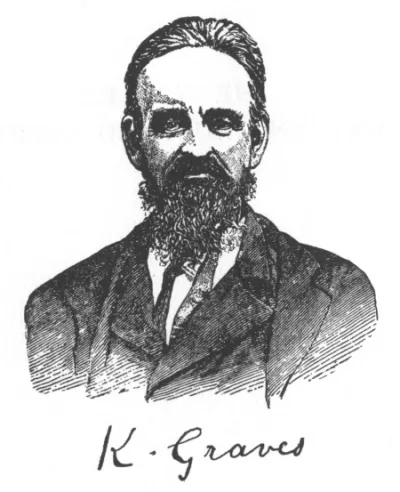
Kersey Graves
Kersey Graves was a 19th-century American freethought writer, skeptic, and spiritualist.
Spiritualist
💡 Why Read This Book?
Delve into the hidden history of a foundational archetype. "The Biography of Satan" offers a unique lens through which to understand the evolution of religious thought and the construction of evil. Ideal for seekers of esoteric knowledge, scholars of comparative religion, and practitioners interested in the symbolic underpinnings of spiritual traditions. Uncover the societal forces that shaped one of history's most potent figures.
⭐ Reader Reviews
Honest opinions from readers who have explored this book.
❓ Frequently Asked Questions
Is this book about demonology or occult practices?
While it touches upon figures often associated with such practices, "The Biography of Satan" is primarily a historical and theological analysis, exploring the *origins* and *evolution* of the concept of Satan rather than serving as a manual for occult rituals.
What is Kersey Graves' main argument about Satan?
Graves argues that the figure of Satan is not an independent supernatural being but a construct that evolved over time through the interplay of ancient mythologies, cultural superstitions, and the influence of religious authorities.
What disciplines does Graves draw upon?
He extensively draws upon comparative religion, ancient history, mythology, and textual analysis to support his arguments, presenting a multidisciplinary approach to understanding the genesis of the Satanic archetype.
Who is the intended audience for this book?
The book is intended for readers interested in the historical development of religious ideas, comparative mythology, and the critical examination of theological concepts. It appeals to scholars, students, and the intellectually curious.
When was the book originally published?
The original publication date for "The Biography of Satan" by Kersey Graves was 1879, making it a significant work from the late 19th century's burgeoning interest in comparative religious studies.
🔮 Key Themes & Symbolism
Mythogenesis of the Adversary
This theme studies the fascinating process by which the concept of Satan, as an embodiment of opposition and evil, was gradually formed and solidified within human consciousness. Graves meticulously traces the threads of this mythogenesis through a vast set of ancient belief systems, demonstrating how disparate cultural narratives and theological interpretations converged to create a singular, potent figure. The exploration highlights the power of collective imagination and the role of storytelling in shaping fundamental archetypes that persist through millennia, offering clear insights into the human psyche's relationship with duality and perceived malevolence.
The Construct of Religious Authority
Graves critically examines how established religious institutions and their doctrines played an important role in shaping and disseminating the narrative of Satan. This theme investigates the interplay between power, control, and belief, illustrating how the figure of an external antagonist could be strategically employed to reinforce moral codes, unify congregations, and legitimize ecclesiastical authority. By dissecting the historical mechanisms through which religious power structures influenced the perception and portrayal of 'evil,' the book invites readers to consider the socio-political dimensions inherent in theological development and the construction of spiritual narratives.
Comparative Mythology and Symbolism
Fundamentally, the book is a profound exercise in comparative mythology, revealing how similar archetypes of opposition and rebellion appear across diverse cultures and eras long before the Christian concept of Satan took definitive form. Graves masterfully draws parallels between figures from Zoroastrianism, ancient Egyptian lore, and various pagan traditions, demonstrating a universal human tendency to conceptualize and personify antagonistic forces. This theme illuminates the rich symbolic language of ancient religions and emphasizes how these symbols, when reinterpreted through later theological lenses, contribute to the enduring mystique and complex nature of the Satanic archetype.
💬 Memorable Quotes
Direct passages from the work, attributed to the author.
“The devil is a shadow cast by divine light.”
— This aphorism suggests that the concept of Satan arises as a necessary counterpoint or opposite to the concept of divinity, implying that evil is defined by its relationship to good, rather than existing independently.
“Dogma is the cage built by certainty.”
— This poignant observation critiques rigid adherence to religious or philosophical doctrines, suggesting that an overemphasis on fixed beliefs can stifle intellectual inquiry and prevent the exploration of new perspectives or truths.
“The serpent whispers what the soul craves.”
— This evocative phrase suggests that temptation, often symbolized by the serpent, appeals to intrinsic desires or hidden aspects of the human psyche, highlighting the internal source of many perceived external influences.
💡 Key Ideas
Editorial paraphrase of the work's core concepts — not direct quotes.
History is but the echo of ancient fears.
This quote posits that recurring historical narratives and societal anxieties are deeply rooted in primal human fears, which often manifest in the archetypes and figures that societies create and perpetuate.
Truth often wears the disguise of heresy.
This quote implies that revolutionary or challenging ideas, which may initially be condemned as heretical by established systems, can ultimately contain profound truths that are not yet recognized or accepted.
🌙 Esoteric Significance
Tradition
This work resonates deeply with the tradition of comparative mythology and the critical examination of religious symbolism, often found within broader esoteric scholarship. It aligns with movements that seek to uncover universal truths beneath the exoteric doctrines of various religions. The book's approach carries the Gnostic emphasis on challenging orthodoxies and seeking hidden knowledge, as well as the Hermetic principle of 'as above, so below,' by examining the earthly influences that shape celestial or spiritual concepts.
Symbolism
The central symbol is Satan himself, reinterpreted not as a literal demon but as a potent archetype representing rebellion, opposition, duality, and the shadow aspects of human consciousness. Graves explores how this symbolism evolved, drawing connections to figures like the Egyptian Set, the Persian Angra Mainyu, and even trickster deities. The book highlights how symbols are fluid, adapting their meaning and function based on the cultural and theological contexts in which they are employed, serving as powerful vehicles for societal anxieties and aspirations.
Modern Relevance
In contemporary discourse, where discussions about 'evil,' societal control, and the nature of belief are ever-present, Graves' work remains remarkably relevant. It provides a critical framework for understanding how narratives of opposition are constructed and wielded, applicable to political ideologies, social movements, and even individual psychological patterns. For practitioners of modern esotericism, it offers a profound lesson in deconstructing archetypes, understanding the power of symbolic representation, and recognizing the human agency involved in the creation and perpetuation of spiritual concepts.
👥 Who Should Read This Book
This book is a treasure for the intellectually adventurous. **Scholars of comparative religion and mythology** will find its extensive research and unique thesis important for understanding the historical construction of religious figures. **Seekers of esoteric knowledge** will appreciate its challenge to conventional dogma and its exploration of hidden layers of meaning within religious traditions. **Practitioners** interested in archetypal psychology and the symbolic nature of spiritual concepts will discover a foundational text for deconstructing and understanding the 'adversary' archetype. Even **beginners** with a curious mind and a willingness to question established narratives will find this work an informative and thought-provoking journey into the origins of belief.
📜 Historical Context
Published in 1879, "The Biography of Satan" emerged during a period of intense intellectual ferment and burgeoning scientific inquiry that challenged traditional religious orthodoxies. The late 19th century witnessed a significant rise in comparative religion, archaeology, and critical biblical scholarship, fueled by discoveries that revealed the ancient roots and diverse origins of religious beliefs. Authors like Graves were at the forefront of this movement, seeking to demythologize religious figures and narratives by placing them within their historical and cultural contexts. This era saw a growing skepticism towards purely supernatural explanations, prompting scholars to explore the social, psychological, and political factors that shaped theological concepts. Graves' work stands as a proof of this era's drive to understand religion not as divinely revealed truth, but as a human construct evolving through history and influenced by societal forces.
📔 Journal Prompts
How does the concept of 'opposition' manifest in your personal beliefs or experiences?
In what ways have societal or institutional powers influenced your understanding of 'good' and 'evil'?
Identify a modern archetype or figure that serves a similar function to the historical Satan in cultural narratives.
Reflect on the power of storytelling in shaping fundamental beliefs and perceptions of reality.
Consider the potential for 'shadow' aspects of human nature to be projected onto external figures or entities.
🗂️ Glossary
Archetype
A universal, inherited pattern of thought or image derived from the experience of the race and present in the collective unconscious. In this context, the archetype of the Adversary.
Esoteric
Intended for or likely to be understood by only a small number of people with a specialized knowledge or interest; relating to or concerned with the occult or mystical.
Exoteric
Intended for or capable of being understood by the general public; the outward or literal meaning, as opposed to esoteric.
Mythogenesis
The process or origin of the formation of myths; the creation and development of mythological narratives and figures.
Theological
Relating to the study of the nature of God and religious belief; concerning doctrine and the nature of divinity.
This book appears in 1 collection
🔮 Readers Also Liked
Browse all →









More by Kersey Graves
All books →


From the “Transcendental Meditation” Collection
View all →








More Free Esoteric History & Biography Books
View all →