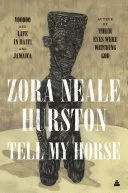
Tell My Horse
 72
72

Tell My Horse
Zora Neale Hurston’s *Tell My Horse* is not merely a travelogue; it is an anthropological immersion penned with the lyrical precision of a literary artist. Hurston’s decision to participate as an initiate, rather than merely observe, grants the work an unparalleled authenticity. Her description of a *zèzè* ceremony in Haiti, where she witnesses the palpable presence of the *lwa* within individuals, is particularly striking, illustrating the profound connection between the spiritual and physical realms. However, the very depth of her participation sometimes leaves the reader wishing for more direct analytical commentary on the socio-political implications of Vodou’s suppression. Despite this, the book's strength lies in its unadorned portrayal of a vibrant spiritual world, challenging Western preconceptions. Hurston’s work remains a vital document of Afro-Caribbean religious life.
📝 Description
72
### What It Is Tell My Horse is Zora Neale Hurston’s firsthand account of her fieldwork in Haiti and Jamaica during the 1930s, focusing on her immersion in Vodou practices. Far from a detached academic study, Hurston, an initiated participant, offers an insider's view of ceremonies, rituals, and the spiritual beliefs that permeated daily life. The book documents her observations of possession, healing, and the complex social structures intertwined with religious expression.
### Who It's For This work is essential for students of Afro-Caribbean religions, anthropologists interested in ethnographic methodology, and readers seeking authentic, unvarnished accounts of spiritual traditions. It appeals to those who appreciate Hurston's literary prowess applied to serious ethnographic inquiry, moving beyond sensationalism to explore genuine belief systems and cultural practices.
### Historical Context Published in 2009, Tell My Horse draws on Hurston’s extensive fieldwork in the Caribbean during the 1930s. This period was crucial for understanding the persistence and adaptation of African spiritual traditions in the diaspora, often viewed with suspicion or outright hostility by colonial powers and mainstream society. Hurston’s approach, emphasizing participation and cultural respect, contrasted with more judgmental anthropological stances of the era.
### Key Concepts The book introduces readers to the core tenets of Haitian Vodou and Jamaican Kumina. It examines the role of the *lwa* (spirits), the significance of trance states, the practice of *zèzè* (spirit possession), and the community-based nature of these religious expressions. Hurston also explores the syncretism of African beliefs with Catholicism and the impact of folklore on spiritual understanding.
💡 Why Read This Book?
• Gain an insider’s perspective on Vodou ceremonies and beliefs, directly from Zora Neale Hurston’s documented participation in Haiti during the 1930s, offering an authentic view unavailable in detached studies. • Understand the cultural significance of *zèzè* (spirit possession) and the role of the *lwa* within the Afro-Caribbean religious framework as presented through Hurston's ethnographic lens. • Appreciate Hurston's unique literary style applied to serious anthropological inquiry, revealing the deep connection between folklore, spirituality, and community life in Jamaica and Haiti.
⭐ Reader Reviews
Honest opinions from readers who have explored this book.
❓ Frequently Asked Questions
What is Zora Neale Hurston's background relevant to Tell My Horse?
Zora Neale Hurston was a prominent anthropologist and author, trained at Barnard College under Franz Boas. Her extensive fieldwork in the Caribbean during the 1930s, including her immersion in Vodou, forms the basis of 'Tell My Horse'.
When was Tell My Horse first published?
Although Zora Neale Hurston conducted her fieldwork in the 1930s, 'Tell My Horse' was first published in 2009, long after her death.
What is the difference between Vodou and Voodoo?
While often used interchangeably, 'Vodou' typically refers to the recognized religion of Haiti, emphasizing its spiritual and cultural aspects. 'Voodoo' can sometimes carry more sensationalized or folkloric connotations, though usage varies.
What does 'lwa' refer to in Tell My Horse?
In Haitian Vodou, 'lwa' are the spirits or deities that serve as intermediaries between humans and the supreme creator god. They are central figures in rituals and ceremonies described in the book.
Did Zora Neale Hurston believe in Vodou?
Hurston was an anthropologist and ethnographer. While she participated in Vodou ceremonies and documented them extensively, her writings focus on objective reporting and cultural understanding rather than personal belief.
What is 'zèzè' as described by Hurston?
'Zèzè' is the term Hurston uses for spirit possession in Haiti, a key phenomenon where an individual becomes a physical vessel for an *lwa* during religious ceremonies.
🔮 Key Themes & Symbolism
Authentic Vodou Immersion
Hurston’s direct participation as an initiate in Haitian Vodou and Jamaican practices distinguishes this work. She moves beyond external observation to document the lived reality of these traditions, detailing ceremonies, the roles of priests (*houngan* and *mambo*), and the profound spiritual connection experienced by adherents. The book offers a rare glimpse into the internal logic and communal significance of Vodou, challenging sensationalized portrayals and emphasizing its role as a living religion.
Spirit Possession and the Lwa
A central focus is the phenomenon of spirit possession, referred to as *zèzè*. Hurston meticulously describes how the *lwa* (deities or spirits) manifest through individuals during rituals. She explains the hierarchy and characteristics of various *lwa*, illustrating how they influence daily life, offer guidance, and facilitate healing. This exploration delves into the ecstatic states and symbolic language through which the spiritual realm communicates with the human community.
Afro-Caribbean Folklore and Syncretism
The work situates Vodou and related practices within the broader context of Afro-Caribbean folklore and the syncretism born from the transatlantic slave trade. Hurston highlights the blending of West African spiritual traditions with Catholicism, demonstrating how these beliefs adapted and persisted. The book examines the function of stories, songs, and superstitions in maintaining cultural identity and spiritual continuity across generations in Haiti and Jamaica.
Ethnographic Methodology
Hurston’s approach in *Tell My Horse* provides a case study in participatory anthropology. Her willingness to engage deeply with her subjects, including undergoing initiation rites, allowed for a more nuanced understanding than purely observational methods. The book implicitly argues for the validity and richness of these spiritual traditions, showcasing her commitment to documenting cultural phenomena with respect and anthropological rigor.
💬 Memorable Quotes
““It is interesting to note that the Negro peasant was a great deal more rational and practical than the white man in his religion.””
— This observation, stemming from her fieldwork, highlights Hurston's critical perspective on the perceived irrationality often attributed to African-derived religions by Western observers. She suggests that the very practicality and rationality of these beliefs, from the practitioner's viewpoint, were misunderstood.
““The ceremonies themselves are to be seen and heard, not told.””
— This statement underscores Hurston's belief in the ineffable, experiential nature of spiritual rituals. She implies that the true essence of Vodou ceremonies transcends mere verbal description, emphasizing the importance of sensory experience and direct engagement.
““When the lwa come, they come for a purpose.””
— This captures the functional aspect of spirit possession in Vodou. Hurston conveys that the manifestation of the *lwa* is not arbitrary but serves specific needs within the community, whether for guidance, healing, or spiritual communication.
““The folklore of the Negro is the most vital part of his religion.””
— Here, Hurston connects the rich tapestry of folklore directly to the spiritual life of the people she studied. She posits that stories, myths, and oral traditions are not mere entertainment but are intrinsically woven into the fabric of their religious understanding and practice.
““The Negro is a very religious person. He is not a pagan.””
— This is a direct assertion against the colonial and often racist framing of African-derived religions as primitive or pagan. Hurston champions the sophisticated and deeply ingrained religiosity of the people she documented.
🌙 Esoteric Significance
Tradition
While not strictly adhering to a single Western esoteric lineage like Hermeticism or Theosophy, Hurston’s work is foundational for understanding the esoteric dimensions of African diaspora religions. It provides primary source material for traditions that draw heavily on animism, ancestor veneration, and spirit communication, which resonate with broader esoteric interests in altered states of consciousness and direct spiritual experience outside Abrahamic frameworks.
Symbolism
Key symbols include the *lwa* themselves, each embodying specific forces and archetypes (e.g., Papa Legba as the gatekeeper, Erzulie Freda as love). The recurring motif of the horse (*cheval* in Haitian Creole) symbolizes the initiate possessed by a spirit, a living vessel for divine energy. The use of drums, altars, and specific ritual objects are also imbued with symbolic meaning, acting as conduits for spiritual power and communication.
Modern Relevance
Contemporary practitioners and scholars of Afro-Caribbean spirituality, comparative religion, and shamanism frequently cite Hurston’s work. Thinkers exploring embodied spirituality, ecstatic practices, and the decolonization of religious studies find her participatory approach invaluable. Her documentation of *zèzè* and the *lwa* continues to inform modern understandings of spirit possession and the dynamics of spiritual ecologies in the Americas.
👥 Who Should Read This Book
• Researchers in comparative religion and African diaspora studies: to access Hurston’s firsthand, participatory ethnographic account of Vodou and Kumina practices from the 1930s. • Students of Zora Neale Hurston: to explore her anthropological work and understand the direct influence of her Caribbean fieldwork on her literary output. • Readers interested in authentic spiritual traditions: to gain an unvarnished, respectful portrayal of Vodou ceremonies, beliefs, and the concept of *lwa* possession beyond sensationalized stereotypes.
📜 Historical Context
Zora Neale Hurston conducted her fieldwork in Haiti and Jamaica in the 1930s, a period marked by significant colonial influence and a pervasive societal skepticism, if not outright hostility, towards Afro-Caribbean religions like Vodou. Anthropologists like Melville J. Herskovits were also actively studying African diaspora religions, though often from a more detached perspective. Hurston’s immersive, participatory approach, documented in *Tell My Horse*, offered a stark contrast to the prevalent ethnographic methods of the time. Her work aimed to present these traditions not as exotic curiosities but as coherent, functional belief systems integral to the lives of practitioners. The reception of such works often faced the challenge of overcoming deeply ingrained prejudices against Vodou, which was frequently misrepresented in Western media.
📔 Journal Prompts
The role of the *lwa* in Haitian Vodou as described by Hurston.
Hurston's personal experience with *zèzè* during her fieldwork.
The connection between folklore and religion in Jamaica.
The significance of the 'horse' metaphor for spirit possession.
Comparing Hurston's ethnographic approach to other anthropologists of her era.
🗂️ Glossary
*Lwa*
The spirits or deities in Haitian Vodou, considered intermediaries between humans and the supreme creator god. Each *lwa* has distinct characteristics, domains, and ways of interacting with devotees.
*Zèzè*
The Haitian Vodou term for spirit possession, where an initiate becomes the physical 'horse' or vehicle for an *lwa* during ceremonies. This is a central and often ecstatic aspect of religious practice.
Houngan
A male priest in Haitian Vodou who serves the *lwa* and leads religious ceremonies. They are spiritual leaders and healers within their communities.
Mambo
A female priestess in Haitian Vodou, equivalent in role to the *houngan*. Mambos are respected spiritual authorities and practitioners.
Kumina
A Jamaican folk religion and ritual practice, closely related to Vodou, involving spirit possession, drumming, and ancestor veneration. Hurston also documented aspects of this tradition.
Cheval
French for 'horse'. In Vodou contexts, it refers to a person who is possessed by an *lwa*, serving as the spirit's mount or vehicle.
Govi
A ceramic pot used in Haitian Vodou to capture and hold the spirits (souls) of the dead, particularly those of ancestors, for communication and veneration.