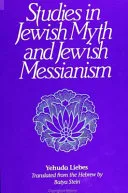
Studies in Jewish Myth and Messianism



📝 Description
 83
83

Yehuda Liebes argues that myth is central to the Jewish religion, not an external imposition.
In Studies in Jewish Myth and Messianism, Yehuda Liebes examines the evolution of Jewish myth from the Talmudic era through Kabbalah and into Hasidism. He traces how this myth transformed across different periods and acknowledges external factors that shaped it. Liebes contends that myth forms the very core of Judaism. He posits that Kabbalah, far from being a product of outside forces, is itself a primary expression of this inherent mythical structure.
The book further addresses the concept of Messianism within Jewish thought. Liebes investigates the unique spiritual characteristics of several key messianic figures from Jewish history. Through this analysis, he demonstrates how myth found embodiment in these individuals, illustrating the living connection between myth and messianic expectation.
This work is situated within the academic study of Kabbalah and Jewish mysticism. It engages with scholarly debates concerning the origins and nature of Jewish mystical traditions, particularly the role of myth and messianic ideas. Liebes's analysis connects historical development with specific textual interpretations, offering insights into the continuous thread of esoteric thought within Judaism. The book's focus on myth's embodiment in messianic figures also touches upon the practical and experiential dimensions often found in mystical traditions.
⭐ Reader Reviews
Honest opinions from readers who have explored this book.