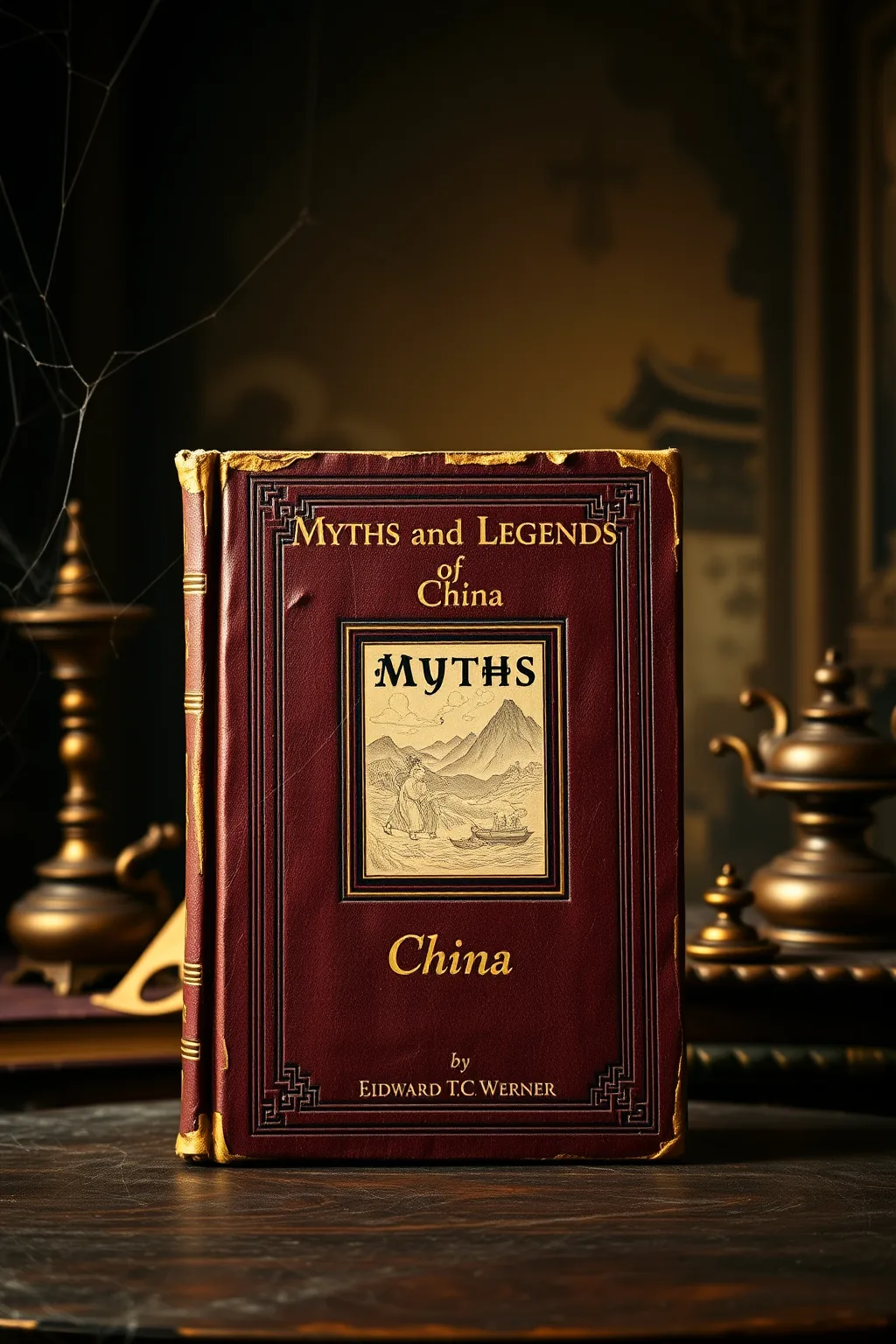
Myths and Legends of China
 74
74

Myths and Legends of China


Cassian Rothmann, Senior Critic, Ancient Wisdom: Edward T.C. Werner's 'Myths and Legends of China' remains an unparalleled cornerstone for understanding the esoteric foundations of Chinese civilization. Werner masterfully synthesizes classical texts, offering a scholarly yet deeply resonant exploration of cosmogony, divine beings, and folk traditions. This work is not merely historical; it is a conduit to the philosophical underpinnings of Taoism, Buddhism, and Confucianism, revealing their mythic origins and symbolic depth. For the serious student of esoteric traditions and comparative mythology, Werner's insights are invaluable, providing a rich tapestry of knowledge often veiled in translation. An essential acquisition for any library dedicated to ancient wisdom.
📝 Description
74
Edward T.C. Werner published 'Myths and Legends of China' in 1922, examining the roots of Chinese cosmology.
Edward T.C. Werner's 1922 book, 'Myths and Legends of China,' examines the origins and structure of Chinese mythology. Werner, a British sinologist, draws on foundational texts to detail the creation of the cosmos, the major deities, and the stories of significant heroes. He also discusses the world of spirits and its connection to the human experience.
The book connects these myths to the philosophical traditions of Buddhism, Taoism, and Confucianism. Werner aims to show how these narratives reflect a worldview where the spiritual and material worlds are closely intertwined. His approach combines scholarly research with clear writing, making the symbolic language of Chinese thought accessible to readers interested in its underlying metaphysical ideas.
Published in 1922, 'Myths and Legends of China' fits within a broader European scholarly interest in Eastern religions and philosophies that began in the 19th century. It engages with the symbolic and metaphysical dimensions of Chinese culture, viewing its myths not merely as folklore but as expressions of a distinct worldview. Werner's work attempts to interpret these narratives through the lens of major Chinese philosophical schools, suggesting a coherent spiritual and intellectual framework beneath the surface stories.
✍️ Author
Edward T C Werner
Edward Theodore Chalmers Werner (1864–1954) was a British diplomat in Qing Dynasty China and sinologist specialising in superstition, myths and magic in China..
💡 Why Read This Book?
Uncover the hidden philosophical and spiritual architecture of ancient China. 'Myths and Legends of China' offers direct access to the symbolic language of Taoism, Buddhism, and Confucianism, revealing profound truths about existence and the cosmos. Ideal for seekers of esoteric knowledge, scholars of comparative mythology, and practitioners looking to deepen their understanding of Eastern spiritual traditions.
⭐ Reader Reviews
Honest opinions from readers who have explored this book.
❓ Frequently Asked Questions
What is the primary focus of this book?
The book primarily focuses on the rich tapestry of Chinese mythology, including creation stories, deities, heroes, spirits, and folk beliefs, as they interrelate with Taoism, Buddhism, and Confucianism.
Who was Edward T.C. Werner?
Edward T.C. Werner was a prominent British sinologist and former consul in China, renowned for his extensive scholarship and deep understanding of Chinese culture and language.
What makes this book 'esoteric'?
Its esoteric nature lies in its exploration of the symbolic meanings, metaphysical concepts, and spiritual underpinnings of Chinese myths, connecting them to philosophical traditions like Taoism and Buddhism.
Is this book suitable for beginners?
Yes, while scholarly, Werner's accessible translation and clear presentation make it suitable for beginners interested in Chinese mythology and its esoteric dimensions.
When was the book originally published?
'Myths and Legends of China' was first published in 1922.
🔮 Key Themes & Symbolism
The Taoist Cosmology and the Great Ultimate
Examine the foundational principles of Taoism as presented through myth. This theme explores the concept of the Tao, the primordial void, the emergence of Yin and Yang, and the cyclical nature of creation and dissolution. Werner illuminates how these abstract philosophical ideas are personified and dramatized in ancient Chinese narratives, offering a profound understanding of the universe's inherent order and the quest for harmony with the natural flow of existence. The myths reveal the subtle energies and cosmic forces that govern all things, providing a framework for spiritual cultivation.
Buddhist Deities and the Path to Enlightenment
Uncover the integration of Buddhist concepts into the Chinese mythological landscape. This section examines the introduction and adaptation of Buddhist figures, bodhisattvas, and narratives within the existing cultural framework. Werner elucidates how these myths explore themes of karma, reincarnation, compassion, and the pursuit of enlightenment. The stories serve as allegories for the human journey towards spiritual liberation, illustrating the challenges and rewards of overcoming worldly attachments and achieving inner peace. The intricate symbolism offers insights into the practice of mindfulness and the overcoming of suffering.
Confucian Heroes and the Principles of Governance
Explore the ethical and social dimensions of Chinese mythology through the lens of Confucianism. This theme focuses on legendary heroes and sage rulers whose lives embody virtues such as righteousness, loyalty, filial piety, and benevolence. Werner analyzes how these figures serve as archetypes for ideal conduct and effective leadership, shaping societal values and governance. The myths provide moral lessons and historical precedents, emphasizing the importance of social harmony, personal cultivation, and the fulfillment of one's duties within the cosmic and human order. Their stories offer timeless wisdom for ethical living.
💬 Memorable Quotes
Direct passages from the work, attributed to the author.
“Heaven and Earth are not humane; they treat the myriad creatures as straw dogs.”
— A powerful statement from Lao Tzu, illustrating the impersonal, natural order of the cosmos, devoid of human sentimentality or bias, operating according to its own inherent principles.
“To know the origin is to know the end.”
— This proverb highlights the cyclical view of time and existence in Chinese philosophy, suggesting that understanding the beginning of something is key to comprehending its ultimate conclusion or purpose.
“The superior man is modest in his speech, but exceeds in his actions.”
— A core Confucian tenet emphasizing the importance of deeds over words, promoting humility and integrity as hallmarks of true character and leadership.
“Man is the medium between Heaven and Earth.”
— This reflects the Chinese belief in the interconnectedness of all realms, positioning humanity as a vital bridge and conduit for cosmic energies and influences.
💡 Key Ideas
Editorial paraphrase of the work's core concepts — not direct quotes.
The Tao is nameless, yet it is the father of all things.
This quote expresses the ineffable nature of the ultimate reality in Taoism, suggesting a primal source beyond human comprehension that nonetheless gives rise to existence.
🌙 Esoteric Significance
Tradition
This work deeply engages with the esoteric dimensions of Taoism, Buddhism, and Confucianism, three pillars of Chinese spiritual and philosophical thought. It reveals the symbolic language and metaphysical underpinnings that inform these traditions, offering insights into concepts like the Tao, Yin and Yang, karma, and the pursuit of the divine. Werner's scholarship illuminates the hidden spiritual currents that have shaped Chinese culture for millennia, providing a gateway to understanding their profound cosmological and ethical frameworks.
Symbolism
The myths presented are rich with symbolism, acting as allegories for universal truths. Concepts like the primordial dragon represent cosmic power and change, while the various deities embody different aspects of the natural world and human experience. The journey of heroes symbolizes the spiritual path, and the interplay of Yin and Yang illustrates the balance of opposing forces essential for harmony. Werner's work deciphers these symbols, revealing their deeper meanings related to creation, destiny, and the quest for enlightenment.
Modern Relevance
In an increasingly interconnected world, understanding the wisdom of ancient traditions is more vital than ever. 'Myths and Legends of China' offers timeless insights into human nature, the cosmos, and the pursuit of a meaningful life. The philosophical principles and ethical teachings embedded within these myths provide valuable guidance for navigating modern challenges, fostering balance, and cultivating a deeper connection to the spiritual dimensions of existence. Its exploration of interconnectedness and harmony resonates powerfully today.
👥 Who Should Read This Book
This venerable tome is essential for **seekers of esoteric knowledge** yearning to grasp the profound metaphysical currents of the East. **Scholars of comparative mythology and religious studies** will find Werner's meticulous research and direct textual engagement invaluable. **Practitioners of Eastern spiritual disciplines**, such as Taoism and Buddhism, will discover deeper context and symbolic richness for their practices. **Anyone with a curiosity about ancient China's worldview**, its creation myths, and its enduring philosophical legacies will find this book an informative and accessible guide.
📜 Historical Context
Published in 1922, 'Myths and Legends of China' emerged during a period of immense upheaval and transformation in China. The late Qing Dynasty had collapsed, and the Republic of China was in its nascent, often turbulent, stages. Western engagement with China was increasing, leading to both academic study and cultural exchange, as well as a burgeoning interest in Orientalism. Edward T.C. Werner's work reflects this era's scholarly fascination with China's ancient past, seeking to preserve and interpret its rich cultural heritage for a Western audience. His background as a consul provided him with unique access and perspective, allowing him to draw directly from primary sources. The book stands as a proof of the efforts to understand and document Chinese civilization amidst profound societal change, offering a bridge between traditional beliefs and the modern world.
📔 Journal Prompts
Reflect on a creation myth from your own cultural background and compare its symbolism to the cosmogony presented in Chinese myths.
How does the concept of Yin and Yang manifest in your daily life or in the natural world around you?
Consider a legendary hero from Chinese folklore; what virtues do they embody, and how might these virtues be applied in contemporary society?
Explore the idea of the 'Tao' as a guiding principle. How can one strive to live in accordance with this 'way' in modern times?
Meditate on the concept of impermanence as suggested by Buddhist narratives and its potential impact on personal peace and acceptance.
🗂️ Glossary
Tao (Dao)
The fundamental, ineffable principle of the universe in Taoism, often translated as 'The Way.' It represents the natural order, the source of all things, and the underlying essence of reality.
Yin and Yang
Complementary and interconnected forces in Chinese philosophy that represent duality and balance in the universe, such as darkness and light, feminine and masculine, passive and active.
Bodhisattva
In Mahayana Buddhism, an enlightened being who postpones their own nirvana out of compassion to help all sentient beings achieve enlightenment.
Filial Piety
A virtue central to Confucianism, emphasizing respect, obedience, and devotion to one's parents and elders.
Cosmogony
The origin or creation of the universe, particularly as explained in mythological or religious accounts.
This book appears in 1 collection
🔮 Readers Also Liked
Browse all →









From the “Transcendental Meditation” Collection
View all →




More Free Esoteric History & Biography Books
View all →