Egypt
 76
76

Egypt
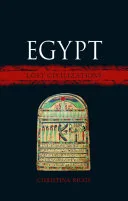
Christina Riggs's "Egypt" offers a compelling argument against viewing ancient Egypt as a static, self-contained entity. Instead, she positions it as a dynamic cultural force, continually reinterpreted to suit evolving societal needs. The strength of the book lies in its meticulous tracing of Egyptian influence from Roman villas to Hollywood productions, demonstrating a consistent pattern of selective adoption. Riggs excels at showing how historical narratives are constructed, particularly how "lost" civilizations are "discovered" to serve contemporary purposes. A limitation, however, is that at times the sheer breadth of examples might leave the reader wishing for a deeper engagement with a specific period or cultural manifestation. For instance, the discussion of Egyptian influence on early Christian symbolism, while present, could have been expanded. A particularly effective section examines how Roman authors absorbed Egyptian religious ideas, often projecting their own anxieties and philosophical debates onto the Nile Valley. Riggs's analytical approach is sharp, cutting through romanticized notions to reveal the underlying motivations behind Egypt's enduring appeal. The book provides a valuable lens through which to view the construction of historical memory and the persistent allure of the ancient past. Riggs ultimately presents a nuanced account of how Egypt's legacy has been a site of ongoing cultural negotiation.
📝 Description
76
### What It Is Christina Riggs's "Egypt" is not merely a historical survey but a critical examination of how the image and concept of ancient Egypt have been constructed and deployed across different eras and cultures. The book traces the persistent fascination with Egyptian civilization, moving beyond the pharaonic period to explore its reception in the Roman world, its influence on early Christian thought, and its pervasive presence in modern media, from the silver screen to academic discourse. Riggs interrogates the selective appropriation of Egyptian motifs and ideas, revealing how these have been reshaped to serve the agendas of subsequent societies.
### Who It's For This work is intended for readers interested in the reception history of ancient civilizations, particularly Egypt, and how its legacy has been interpreted and repurposed. It will appeal to scholars and students of history, art history, classical studies, and cultural studies who are keen to understand the dynamics of cultural transmission and the creation of historical narratives. Those intrigued by the enduring power of ancient imagery in Western consciousness, and how this power has been wielded for various ends, will find substantial material for reflection.
### Historical Context Riggs situates her analysis within the broader academic and cultural landscape that has grappled with ancient Egypt since the Enlightenment and particularly from the 19th century onwards, a period marked by intense archaeological exploration and colonial entanglement. The book implicitly engages with the historiography of Egyptology, a field that often oscillated between rigorous scientific inquiry and romanticized speculation. By examining how Roman authors like Tacitus and later figures interpreted Egyptian religion and society, Riggs highlights a long tradition of using Egypt as a mirror for contemporary concerns, a practice that continued through the Orientalist critiques of scholars like Edward Said and into the 21st century.
### Key Concepts The book centers on the concept of "reception history," demonstrating how ancient Egypt has been perceived and utilized differently across time. Riggs explores "cultural appropriation," showing how elements of Egyptian religion, art, and perceived wisdom were adopted and adapted by Romans, early Christians, and modern Western societies. The idea of Egypt as a "lost civilization" that is "discovered" is also a key motif, highlighting how this narrative serves to legitimize later interpretations and often exoticizes the past. The work also touches upon "iconography," analyzing specific symbols and figures from Egyptian culture and how their meanings have been altered or re-assigned.
💡 Why Read This Book?
• You will learn how ancient Egyptian motifs were selectively adopted and reinterpreted by Roman elites, as detailed in Riggs's analysis of classical sources, offering a concrete example of cultural transmission beyond simple admiration. • You will gain an understanding of how the "discovery" narrative surrounding ancient Egypt has been historically constructed, particularly in the context of 19th-century archaeology, revealing the political and social underpinnings of historical "revelations." • You will perceive the persistent influence of Egyptian imagery in modern media, such as Hollywood films, and how these representations often serve to exoticize or simplify a complex civilization, challenging superficial understandings.
⭐ Reader Reviews
Honest opinions from readers who have explored this book.
❓ Frequently Asked Questions
What is Christina Riggs's "Egypt" about?
Christina Riggs's "Egypt" examines the enduring fascination with ancient Egypt, exploring how its history, art, and religion have been interpreted and repurposed by subsequent cultures, from Roman times to modern Hollywood.
When was Christina Riggs's "Egypt" first published?
Christina Riggs's "Egypt" was first published on April 15, 2017.
Does the book focus only on pharaonic Egypt?
No, the book "Egypt" by Christina Riggs extends beyond the pharaonic period to analyze how ancient Egypt has been perceived and utilized in Roman villas, early Christian thought, and contemporary media.
What historical periods does Riggs discuss in relation to Egypt's influence?
Riggs discusses the influence of ancient Egypt across various periods, including the Roman Empire, early Christianity, the Enlightenment, the 19th century with its archaeological expeditions, and modern times, particularly through film.
What is the central argument of "Egypt" by Christina Riggs?
The central argument is that the ancient past, particularly Egypt, has always been used to serve contemporary purposes, with its image and concepts being continually reshaped by different cultures throughout history.
Who might find Christina Riggs's "Egypt" particularly interesting?
Readers interested in reception history, cultural studies, art history, and the construction of historical narratives surrounding ancient civilizations, especially those fascinated by Egypt's long-lasting impact, will find this book engaging.
🔮 Key Themes & Symbolism
Egypt as a Cultural Mirror
This theme explores how different societies have projected their own values, anxieties, and aspirations onto ancient Egypt, using it as a canvas for self-definition. Riggs demonstrates that the "Egypt" perceived throughout history is often less about the civilization itself and more about the needs and desires of those looking at it. From Roman philosophers seeking esoteric wisdom to modern filmmakers crafting exotic settings, the book shows a consistent pattern of appropriation and reinterpretation, highlighting how historical reception is shaped by contemporary agendas rather than objective historical fact.
The Construction of 'Lost Civilizations'
Riggs investigates the persistent narrative of ancient Egypt as a "lost civilization" waiting to be "discovered." This theme examines how this framing serves to legitimize later interpretations and often exoticizes the past, distancing it from the present while simultaneously making it a subject of fascination. The book traces how this romanticized view, fueled by archaeological expeditions and popular media, has often overshadowed a nuanced understanding of Egyptian society and its complex interactions with other cultures. It critiques the idea of discovery as a neutral act, revealing it as a process imbued with the intentions of the discoverers.
Selective Appropriation of Egyptian Legacy
This theme focuses on the specific elements of Egyptian culture—religious ideas, artistic motifs, architectural styles, and perceived wisdom—that have been selectively adopted and transformed by other cultures. Riggs details how these appropriations have occurred across centuries, from the Hellenistic period onwards, with each era emphasizing different aspects of Egypt to suit its own purposes. The book analyzes how symbols like the pyramid, the Sphinx, and specific deities have been imbued with new meanings, illustrating a continuous process of cultural negotiation and adaptation where the original context is often secondary to the contemporary utility.
Egypt in Roman and Early Christian Contexts
Riggs specifically examines the crucial period when ancient Egypt's influence was absorbed and transmuted by the Roman Empire and early Christian communities. This theme delves into how Roman authors interpreted Egyptian religion and philosophy, often through a Hellenistic lens, and how early Christians engaged with Egyptian symbolism and theological ideas. The book highlights how this engagement was not always direct, but often mediated, leading to complex syntheses and divergences that profoundly shaped Western thought and religious traditions, demonstrating Egypt's foundational role in the development of subsequent cultural and spiritual landscapes.
💬 Memorable Quotes
“Ancient Egypt has been a source of fascination and inspiration in many other cultures.”
— This statement sets the stage for the book's core inquiry: understanding the persistent allure of Egypt and why its image has been so malleable across different historical periods and geographical locations.
“The ancient past has always been used to serve contemporary purposes.”
— This is the central thesis, suggesting that historical narratives and cultural symbols are not static but are actively shaped and reshaped to meet the needs and agendas of the present.
“From Roman villas to Hollywood films, ancient Egypt has been a source of fascination and inspiration.”
— This highlights the vast temporal and cultural scope of Egypt's influence, indicating that its impact is not confined to academic study but permeates popular culture and domestic aesthetics.
“Often characterized as a lost civilization that was discovered by adventurers.”
— This points to a common trope in the reception of ancient Egypt, suggesting a narrative of romantic discovery that Riggs likely deconstructs to reveal underlying motivations and constructions of history.
“Christina Riggs examines the history, art, and religion of ancient Egypt to illuminate why it has been so influential throughout the centuries.”
— This clearly states the author's methodology and objective: a multi-faceted approach to understanding the enduring significance and pervasive influence of ancient Egyptian civilization.
🌙 Esoteric Significance
Tradition
While not explicitly aligning with a single esoteric lineage, Riggs's work touches upon the Hermetic and Gnostic traditions' historical engagement with Egyptian wisdom. These traditions, particularly from the Renaissance onwards, often viewed ancient Egypt as a source of primordial, hidden knowledge. Riggs's examination of how Roman thinkers and later esotericists interpreted Egyptian religion and symbolism provides context for these movements, showing how Egyptian concepts were often re-framed to fit existing mystical frameworks, sometimes diverging significantly from original Egyptian beliefs.
Symbolism
The book implicitly engages with the symbolic power of Egyptian motifs that have attracted esoteric interest. Symbols like the Eye of Horus, often interpreted in esoteric circles as representing protection, health, or divine insight, and the concept of Osiris, embodying death and resurrection, are examples of Egyptian imagery that have been imbued with mystical meanings. Riggs's analysis of how these symbols were understood and utilized by Romans and early Christians provides a foundation for understanding their later adoption and reinterpretation within various esoteric systems.
Modern Relevance
Contemporary esoteric practitioners and scholars of Western esotericism, particularly those interested in Hermeticism, ancient mystery traditions, and comparative religion, draw on the historical understanding of Egypt's influence that Riggs provides. Her work helps to contextualize the modern fascination with Egyptian symbolism and philosophy, revealing the historical layers of interpretation that have accumulated over centuries. Thinkers and groups exploring ancient Egyptian cosmology, magic, or theosophical interpretations of Egyptian myths find Riggs's analysis of reception history crucial for understanding how these elements became part of the esoteric canon.
👥 Who Should Read This Book
• Students of cultural history and reception studies: You will gain a critical framework for understanding how ancient civilizations are perceived and utilized across different eras, moving beyond simple historical accounts to analyze the dynamics of influence. • Enthusiasts of ancient Egypt with an interest in its afterlife: You will discover how the image and ideas of ancient Egypt have been transformed and applied in contexts far removed from its original setting, from Roman philosophy to modern cinema. • Scholars of classical antiquity and early Christianity: You will find valuable insights into how Egyptian religion and symbolism were engaged with, interpreted, and integrated into Greco-Roman and early Christian thought, revealing complex cross-cultural interactions.
📜 Historical Context
Christina Riggs's "Egypt" was published in 2017, a period marked by a mature field of reception studies and ongoing debates about cultural appropriation and the decolonization of knowledge. The book engages with a long intellectual tradition stretching back to Enlightenment thinkers who first systematically studied ancient Egypt, and the 19th-century colonial expeditions that unearthed vast quantities of material. It implicitly contrasts with the work of Orientalist scholars whose interpretations, like those critiqued by Edward Said in his 1978 book "Orientalism," often served imperial agendas. While Riggs doesn't engage directly with specific censorship events or prizes, her work contributes to a scholarly environment where the selective use of ancient cultures, a practice evident in early Roman appropriations of Egyptian religion and art, is critically examined. The book stands as a modern reflection on how historical legacies are continuously negotiated, a process also explored by contemporaries in classical reception studies and medieval studies, who similarly investigate how antiquity is re-interpreted.
📔 Journal Prompts
The Roman villa's appropriation of Egyptian motifs: how did this serve Roman cultural identity?
Egypt as a 'lost civilization': reflect on the implications of this narrative construction.
The Hollywood portrayal of ancient Egypt: analyze its function in contemporary storytelling.
Consider the concept of 'contemporary purposes' in relation to historical reception.
Analyze the selective adoption of Egyptian symbols like the Eye of Horus; what original meanings might have been altered?
🗂️ Glossary
Reception History
The study of how a particular work, author, or historical phenomenon has been understood, interpreted, and used by subsequent generations and cultures.
Cultural Appropriation
The adoption or use of elements of a minority culture by members of the dominant culture, often without understanding or respect for their original cultural context.
Orientalism
A term popularized by Edward Said, referring to the way Western cultures have historically represented Eastern cultures, often in stereotypical, exoticized, and inferior ways.
Iconography
The visual images and symbols used in the study or interpretation of works of art or literature.
Hellenistic Period
The period of Mediterranean history between the death of Alexander the Great (323 BC) and the emergence of the Roman Empire (31 BC), characterized by the spread of Greek culture.
Pharaonic Period
The span of ancient Egyptian history from the unification of Upper and Lower Egypt around 3100 BC to the Roman conquest in 30 BC.
Esotericism
Belief systems, practices, and teachings that are secret, hidden, or accessible only to a select group of initiates, often involving mystical or occult knowledge.