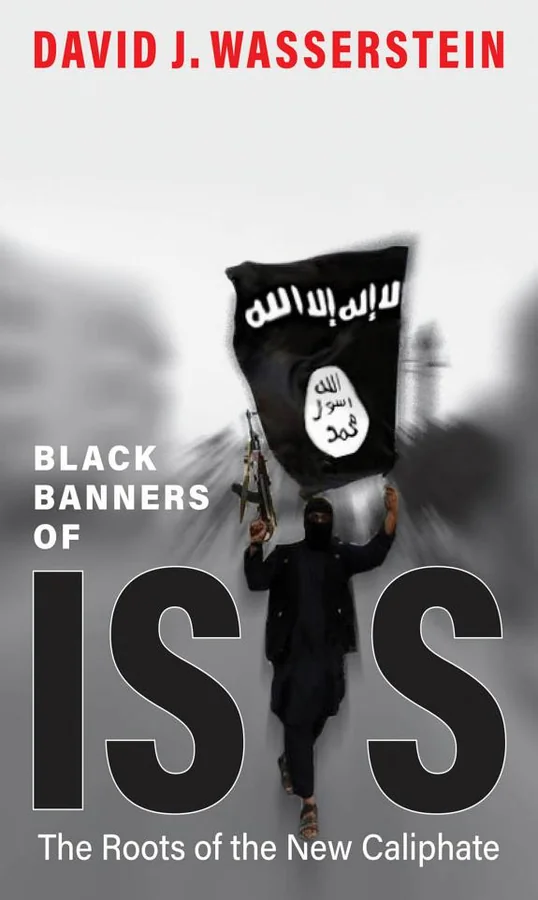
Black Banners of ISIS
 76
76

Black Banners of ISIS
Wasserstein's "Black Banners of ISIS" offers a much-needed, sober dissection of the Islamic State, peeling back the layers of media hyperbole to reveal the group's operational and ideological architecture. The strength lies in its systematic breakdown of the caliphate's administrative and financial structures, providing a clearer picture of its practical functioning than many more polemical accounts. A limitation, however, is the book's occasional dryness; while factual, it sometimes sacrifices narrative momentum. The section detailing revenue streams, for instance, is meticulously researched but dense. Despite this, the exploration of the group's apocalyptic underpinnings in the "Apocalypse now" chapter is particularly illuminating, offering a crucial lens for understanding their strategic choices. Wasserstein avoids simplistic explanations, instead presenting a complex picture of a group driven by both political pragmatism and eschatological fervor. It serves as an essential, if challenging, resource for understanding a critical phenomenon of the early 21st century.
📝 Description
76
### What It Is
David J. Wasserstein's "Black Banners of ISIS" presents a comprehensive examination of the Islamic State, moving beyond sensational headlines to analyze its structure and ideology. The book dissects the group's self-proclaimed caliphate, its administrative apparatus, and its methods of revenue generation. It also explores the group's religious justifications and its impact on various populations, including women, children, Christians, and Jews.
### Who It's For
This work is intended for readers seeking a rigorous, analytical perspective on contemporary extremist movements. Scholars of political science, religious studies, and history will find its detailed breakdown of the Islamic State's internal workings valuable. It also serves those interested in the intersection of religion and politics, and the historical roots of apocalyptic thought within extremist ideologies.
### Historical Context
The book situates the Islamic State within a broader historical narrative of caliphal ambitions and radical Islamism. It implicitly engages with the legacy of earlier caliphates and the intellectual currents that have shaped modern jihadist thought. The analysis of "Apocalypse now" connects the group's actions to ancient prophecies, offering a perspective on its eschatological drivers.
### Key Concepts
Central to Wasserstein's study are the concepts of the Caliphate as a revived political and religious entity, the sophisticated administration required to govern territory, and the exploitation of religious doctrine to legitimize violence. The text also examines the group's strategic use of apocalyptic narratives to recruit and motivate followers, framing their struggle as a divinely ordained end-times conflict.
💡 Why Read This Book?
• Understand the mechanics of a modern pseudo-caliphate by analyzing its revenue streams and administrative divisions as detailed in the "Revenue" and "Administration" sections. • Grasp the specific role of apocalyptic prophecy in motivating extremist action, as explored in the "Apocalypse now" chapter, offering a distinct perspective on radical ideologies. • Gain insight into the treatment of minority populations under such regimes, through the specific focus on "Christians and Jews and ..." which provides concrete examples absent in broader geopolitical analyses.
⭐ Reader Reviews
Honest opinions from readers who have explored this book.
❓ Frequently Asked Questions
What is the primary focus of David J. Wasserstein's "Black Banners of ISIS"?
The book primarily focuses on the Islamic State, examining its self-proclaimed caliphate, administrative structures, revenue generation, religious ideology, and its impact on various religious and social groups.
When was "Black Banners of ISIS" first published?
The work by David J. Wasserstein was first published on January 1, 2017.
Does the book discuss the role of women and children within the Islamic State?
Yes, the book includes a dedicated section titled "Women, and children too," which explores the group's policies and impact on these demographics.
What historical or religious concepts does "Black Banners of ISIS" explore?
It delves into the concept of the caliphate, the group's religious justifications for its actions, and its engagement with apocalyptic narratives, as seen in the "Apocalypse now" chapter.
Who is the author of "Black Banners of ISIS"?
The author is David J. Wasserstein, with a first publication date of 2017.
What is the book's approach to analyzing the Islamic State?
Wasserstein adopts an analytical and structural approach, dissecting the group's internal mechanisms rather than relying solely on sensationalism.
🔮 Key Themes & Symbolism
The Caliphate's Structure
This theme centers on the Islamic State's ambition to re-establish a caliphate, examining not just the ideological claims but the practicalities of governance. Wasserstein details the administrative divisions and bureaucratic machinery the group attempted to implement, treating it as a functioning, albeit brutal, state entity. This analysis moves beyond the group's military actions to scrutinize its attempts at long-term political and social engineering, highlighting the complex systems required to sustain such an enterprise.
Religious and Apocalyptic Justification
A significant aspect explored is how the group weaponizes religious doctrine and eschatological beliefs to legitimize its actions and recruit followers. The "Apocalypse now" section is crucial here, revealing how the Islamic State frames its struggle as a divinely ordained conflict heralding the end times. This provides a potent ideological tool, offering adherents a sense of purpose and certainty within a chaotic world, and driving their most extreme behaviors.
Socio-Economic Control
The book investigates the methods by which the Islamic State sought to control populations and extract resources. This includes analyzing its revenue streams, which were diverse and often brutal, and its policies towards different demographic groups. The specific focus on "Women, and children too" and "Christians and Jews and ..." illustrates the group's attempts to impose its radical social order and manage minority populations, revealing the practical application of its ideology.
Internal Administration and Revenue
Wasserstein meticulously breaks down the operational aspects of the Islamic State, particularly its internal administration and financial mechanisms. Understanding how the group generated revenue—through taxation, illicit activities, and resource control—is presented as key to comprehending its sustainability and reach. The detailed examination of its administrative departments showcases the organizational effort behind its territorial control and governance attempts.
💬 Memorable Quotes
“The Islamic State proclaimed a caliphate, seeking to revive an ancient political and religious ideal.”
— This highlights the group's core ambition: to recreate a historical form of Islamic governance, positioning themselves as successors to a long line of caliphs and asserting universal authority.
“Revenue generation was a critical component of the Islamic State's governance strategy.”
— This underscores that the group's financial activities, beyond funding violence, were integral to its project of state-building and administration, influencing its territorial control and social policies.
“Apocalyptic narratives were employed to imbue the conflict with eschatological significance.”
— This points to the deliberate use of end-times prophecies as a powerful tool for ideological mobilization, providing followers with a sense of cosmic importance and ultimate purpose.
“The administration of territory required a complex bureaucratic apparatus.”
— This emphasizes the practical, organizational challenges faced by the Islamic State in attempting to govern, revealing the underlying infrastructure necessary for its territorial control.
“Policies towards non-Muslim minorities were dictated by a specific, albeit radical, interpretation of Islamic law.”
— This indicates that the group's treatment of groups like Christians and Jews was not arbitrary but followed a defined, albeit extreme, legal and theological framework.
🌙 Esoteric Significance
Tradition
While not explicitly tied to a single esoteric lineage like Hermeticism or Gnosticism, "Black Banners of ISIS" engages with themes relevant to esoteric thought, particularly concerning apocalypticism and the concept of a divinely sanctioned political order. The group's fervent belief in an imminent end times and the establishment of a righteous caliphate echoes certain Gnostic or Manichaean dualistic frameworks, albeit secularized and reinterpreted through a radical Salafist lens.
Symbolism
The titular "Black Banners" themselves serve as potent symbols, evoking historical Islamic standards and conveying an image of purity and opposition to perceived corruption. The concept of the Caliphate, as explored in the book, functions as a powerful symbol of unified Islamic authority and a return to a golden age, a recurring motif in various Islamic reformist and radical movements. The group's manipulation of apocalyptic prophecies also draws on ancient symbolic narratives of cosmic struggle and final judgment.
Modern Relevance
Contemporary thinkers exploring political Islam, radical ideologies, and the psychology of extremism often reference the analytical frameworks presented in works like Wasserstein's. Scholars of religious violence and state formation in non-Western contexts find value in its detailed examination of IS's administrative structures. Furthermore, discussions surrounding the intersection of religion, politics, and violence, particularly concerning eschatological beliefs, continue to draw upon such granular analyses of extremist movements.
👥 Who Should Read This Book
• Students of comparative religion and political science seeking to understand the structural and ideological underpinnings of contemporary extremist groups. • Researchers focused on the history of Islamic political thought and the evolution of concepts like the caliphate, particularly those interested in modern manifestations. • Individuals concerned with the socio-political impact of radical ideologies, looking for detailed analyses of how such groups attempt governance and control.
📜 Historical Context
Published in 2017, "Black Banners of ISIS" arrived at a critical juncture in the assessment of the Islamic State (IS). The preceding years, particularly from 2014 onwards, saw IS seize significant territory in Iraq and Syria, capturing global attention through brutal tactics and sophisticated propaganda. Wasserstein's work emerged in an intellectual landscape dominated by immediate reactions and security-focused analyses. While competing schools of thought focused on counter-terrorism or geopolitical power struggles, Wasserstein aimed for a deeper structural and ideological examination. His work implicitly engages with the long history of Islamic political thought and the evolution of jihadist movements, contrasting IS's specific claims with earlier iterations. The book's detailed analysis of IS's administrative and revenue-generating capacities offered a counterpoint to purely military or ideological critiques, providing a more grounded understanding of the group's operational reality.
📔 Journal Prompts
The Caliphate: Examining the administrative divisions described in the book.
Revenue generation methods used by the Islamic State.
The role of apocalyptic narratives in the group's ideology.
Analysis of the section 'Christians and Jews and ...'.
The portrayal of 'Women, and children too' within the IS structure.
🗂️ Glossary
Caliphate
A form of Islamic government led by a caliph, considered the political and religious successor to the Islamic prophet Muhammad. The Islamic State's claim to caliphate aimed to re-establish a universal Islamic state.
Islamic State (IS)
A designation for the Salafi jihadist extremist group, also known as ISIS or ISIL, which sought to establish a global caliphate and implemented brutal policies in territories it controlled.
Apocalypse
In a religious context, the prophetic disclosure of God's plan for the end of the world. The book examines how IS utilized such narratives for ideological purposes.
Revenue
The income generated by a state or organization. The book details IS's diverse and often illicit methods for funding its operations and administration.
Administration
The process of managing an organization or territory. Wasserstein analyzes the bureaucratic structures IS attempted to implement to govern its claimed lands.
Salafism
A conservative branch of Sunni Islam that advocates returning to the practices of the earliest Muslims (al-salaf al-ṣāliḥ). Radical Salafism informs the ideology of groups like IS.
Jihadism
A militant ideology that advocates for holy war (jihad) to achieve political and religious goals. IS is a prominent example of a jihadist organization.