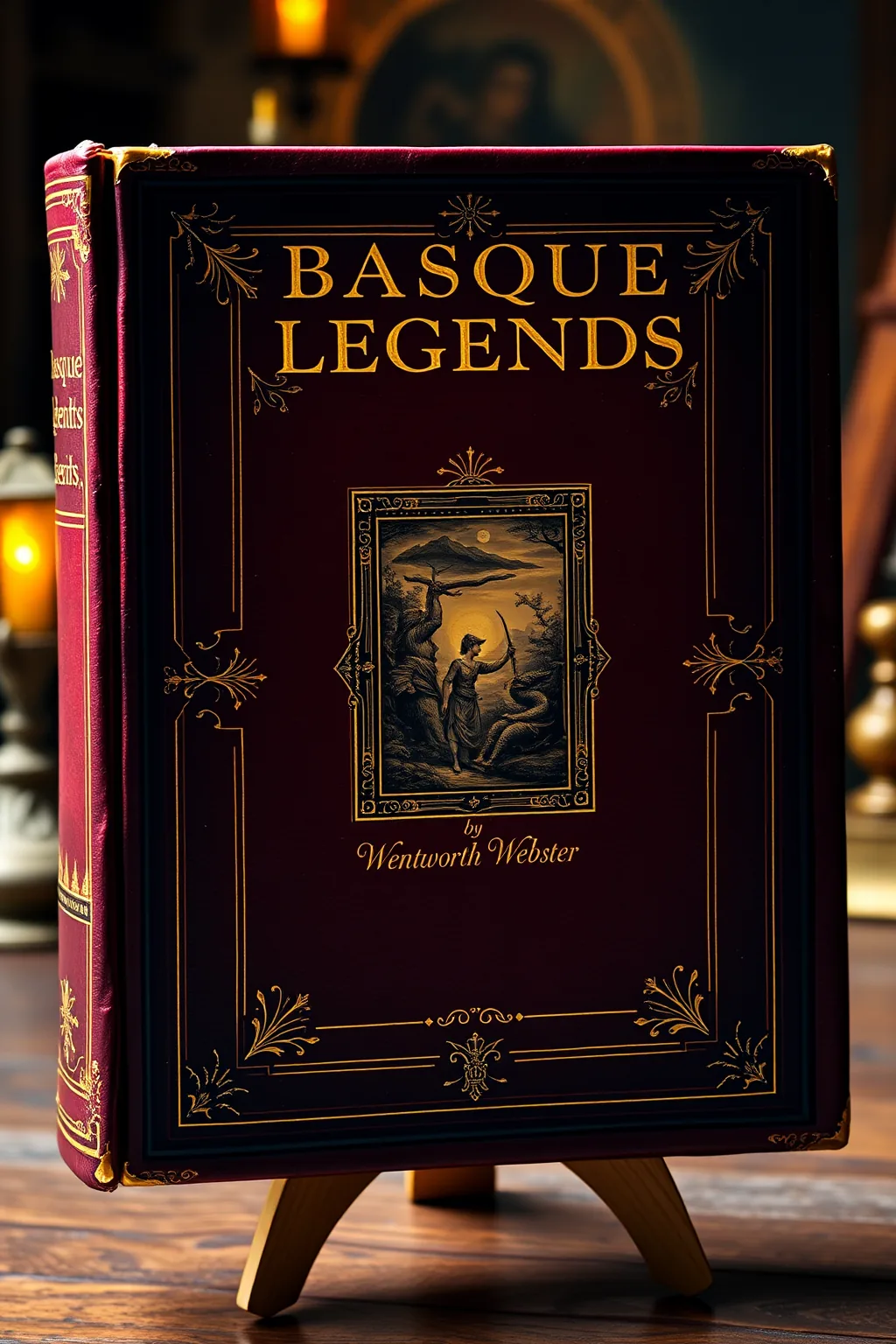
Basque Legends
 78
78

Basque Legends


Evander Ashcroft (Alchemy & Hermeticism Editor) — Wentworth Webster's 'Basque Legends' is an invaluable key unlocking the esoteric underpinnings of one of Europe's most ancient cultures. Webster's ethnographic dedication in the late 19th century preserved a treasure trove of folklore that resonates with deep alchemical and Hermetic symbolism. The tales of the Tartaro, in particular, offer profound insights into primal forces, transformation, and the duality inherent in nature. This collection is not for the faint of heart but for those who seek the hidden currents of spiritual knowledge within seemingly simple narratives. A must-read for scholars of ancient European mysticism and practitioners looking to connect with primordial archetypes.
📝 Description
78
First published in 1877, Wentworth Webster's 'Basque Legends' gathers tales from a distinct pre-Christian culture.
Wentworth Webster collected Basque folk tales in 1877, presenting them as more than simple stories. He saw them as reflections of an older worldview, a way of understanding the Basque people before Christianization. Webster gathered these narratives from areas like Saint-Jean-de-Luz, believing they held fragments of a lost cosmology.
The book includes stories about figures like the Tartaro, who represents primal forces and ancient knowledge. It also details characters who deal with elemental powers and old agreements. These legends reveal animistic beliefs, shamanic practices, and the close relationship between people and their environment that defined the Basque spiritual life.
This collection fits within traditions that seek to preserve or understand pre-Christian European mythologies and belief systems. It focuses on a specific regional culture, the Basques, whose language and ancient customs have long been subjects of scholarly and esoteric interest. The book captures narratives that suggest an older spiritual framework, one that connects human existence directly to natural forces and cosmic principles, prior to the widespread influence of major religions.
✍️ Author

Wentworth Webster
The members of the Wentworth family of both the United States and Australia, as listed below, are descended from Thomas Wentworth and Jane, the daughter of Sir Oliver Mirfield. Sir Oliver died about 1522.
💡 Why Read This Book?
Immerse yourself in the raw, untamed magic of Basque folklore, a rich tapestry woven with elemental spirits, ancient pacts, and forgotten cosmologies. 'Basque Legends' offers esoteric insights into pre-Christian beliefs, shamanic echoes, and the profound connection between humanity and the natural world. Ideal for seekers of hidden knowledge, comparative mythologists, and those yearning to understand the enduring power of ancient storytelling.
⭐ Reader Reviews
Honest opinions from readers who have explored this book.
❓ Frequently Asked Questions
What is the historical significance of Basque Legends?
Published in 1877, 'Basque Legends' offers a vital snapshot of Basque folklore before extensive modernization. It preserves oral traditions and pre-Christian beliefs, providing crucial insights into the region's unique cultural and spiritual heritage for scholars and enthusiasts alike.
Who was Wentworth Webster?
Wentworth Webster was an English folklorist and educator who lived and worked in the Basque Country for over a decade. His dedication to collecting and documenting local legends forms the core of this significant work.
What kinds of creatures or beings are featured in Basque Legends?
The collection prominently features the enigmatic Tartaro, a powerful and often fearsome mythical being. Other figures include various spirits, supernatural entities, and human characters interacting with the mystical elements of their world.
What makes this collection 'esoteric'?
The legends often touch upon animistic beliefs, elemental magic, and pre-Christian spiritual practices, revealing a worldview deeply connected to nature and the unseen forces within it, offering symbolic interpretations beyond simple storytelling.
Is this book suitable for beginners in folklore studies?
Yes, the accessible narrative style makes it suitable for beginners. However, its depth of symbolic meaning and historical context will greatly reward more advanced readers and scholars.
🔮 Key Themes & Symbolism
The Primordial Tartaro: Archetype of the Wild
The Tartaro stands as a central, multi-faceted archetype within Basque mythology, embodying raw, untamed natural forces, primal creation, and ancient wisdom. Often depicted as a solitary, powerful being, the Tartaro represents the wild, the untamed aspects of existence that lie beyond human control and understanding. Its presence in the legends speaks to a deep reverence for, and sometimes fear of, the elemental powers that shape the world, hinting at a pre-civilized consciousness where humanity was intrinsically linked to the earth's potent energies. The interactions with the Tartaro often serve as initiatory trials or lessons in humility and respect for the unseen forces.
Animism and the Sacred Landscape
Webster's collection vividly illustrates the pervasive animistic worldview of the ancient Basques, where the natural world—mountains, rivers, forests, and caves—is imbued with spirit and consciousness. This perspective sees the divine not as distant but as immanent, residing within the very fabric of existence. The legends reveal a deep, reciprocal relationship between humans and their environment, where offerings, respect, and understanding of natural rhythms were paramount for survival and well-being. This interconnectedness highlights a form of earth-based spirituality, emphasizing harmony and balance with the living world, a stark contrast to more anthropocentric belief systems.
Traces of Pre-Christian Ritual and Belief
Beneath the surface of these captivating tales lie discernible traces of pre-Christian rituals, shamanic practices, and ancient belief systems that predated the widespread influence of Christianity. The recurring motifs of pacts with supernatural beings, the significance of specific natural sites as places of power, and the role of intermediaries between the human and spirit realms all point to a collection of indigenous spirituality. These narratives serve as invaluable anthropological and esoteric records, offering glimpses into the spiritual architecture and ritualistic life of a culture striving to maintain its unique identity and connection to ancestral wisdom.
💬 Memorable Quotes
Direct passages from the work, attributed to the author.
“The Tartaro was a being of immense power.”
— This simple statement captures the awe and trepidation surrounding a primordial force, suggesting a connection to primal creation and untamed nature.
“They lived in caves, far from the sight of men.”
— This evokes a sense of hidden realms and beings dwelling beyond the ordinary, hinting at secret knowledge and secluded spiritual sanctuaries.
“The mountain held ancient secrets.”
— This phrase imbues the natural landscape with sentience and memory, suggesting that the earth itself is a living repository of forgotten wisdom and spiritual truths.
“A pact was made under the moonlit sky.”
— This speaks to the power of intention and ritual in ancient times, where celestial alignments and agreements with unseen forces shaped destiny.
“The old ways held a potent magic.”
— This highlights the enduring power and efficacy of ancestral traditions and esoteric practices, suggesting a timeless connection to a deeper, more mystical reality.
🌙 Esoteric Significance
Tradition
This collection is deeply rooted in the esoteric traditions of animism and earth-based spirituality, predating formalized organized religions. It offers useful insights into a worldview where the natural world is alive with spirit, and where humanity exists in a reciprocal, often mystical, relationship with elemental forces and unseen entities. The legends reveal traces of shamanic practices and ancient rituals, providing a window into a forgotten, pre-Christian spiritual architecture that valued intuition, natural harmony, and direct connection to the sacred.
Symbolism
The symbolism within 'Basque Legends' is rich and multi-layered, often drawing from primal archetypes. The Tartaro, for instance, represents the raw power of nature, creation, and the subconscious. Caves symbolize the womb of the earth, hidden knowledge, and the descent into the underworld. Mountains signify spiritual ascent and ancient wisdom. The recurring themes of pacts and trials suggest symbolic journeys of transformation and the negotiation of power between the human and the divine or elemental realms, offering a complex set of meaning for the discerning reader.
Modern Relevance
In an age often characterized by disconnection from nature and a reliance on empirical knowledge, 'Basque Legends' offers a vital reminder of our innate connection to the earth and the subtle energies that permeate existence. The collection's emphasis on animism and the sacred landscape speaks to contemporary movements in eco-spirituality and pagan revival. It provides seekers with symbolic narratives that can illuminate personal journeys of transformation, encourage a deeper respect for the natural world, and offer a rich source of inspiration for those exploring indigenous wisdom and alternative pathways to understanding the divine.
👥 Who Should Read This Book
This captivating collection is a rich source for several distinct audiences. For the **beginner seeker** curious about ancient mythologies, 'Basque Legends' offers an accessible yet profound introduction to a unique cultural narrative. **Scholars of comparative mythology, folklore, and anthropology** will find invaluable primary source material detailing a distinct European tradition. **Practitioners of esoteric arts and pagan traditions** will discover rich archetypes, symbolic landscapes, and traces of ancient spiritual practices that can inform their work. Ultimately, anyone drawn to the enduring power of storytelling, the mysteries of the natural world, and the lingering traces of forgotten magic will find profound resonance within these pages.
📜 Historical Context
Published in 1877, 'Basque Legends' emerged during a period of burgeoning interest in folklore and ethnography across Europe. As industrialization accelerated, scholars and enthusiasts sought to preserve what they perceived as disappearing rural traditions and ancient belief systems. Wentworth Webster’s work is a product of this era, reflecting a desire to document the unique cultural heritage of the Basque people, an ancient and distinct linguistic and ethnic group with roots stretching back millennia. The late 19th century also saw a rise in occult and esoteric studies, making collections of ancient myths and legends particularly appealing to those seeking alternative spiritualities and hidden knowledge beyond mainstream religious doctrines. Webster’s immersion in the region, living and working among the Basque people, allowed him to collect these stories firsthand, imbuing the collection with an authenticity and immediacy that resonated with readers interested in the primal roots of human belief.
📔 Journal Prompts
Reflect on a personal encounter with a place in nature that felt imbued with its own spirit or ancient presence. How did this experience compare to the animistic descriptions in the legends?
The Tartaro is presented as a powerful, often challenging entity. What does this archetype represent in your own inner landscape or in the broader human experience?
Consider a time you felt a deep connection or a pact with something larger than yourself, be it nature, a community, or an ideal. How does this compare to the pacts described in the stories?
Imagine you are living in the Basque Country during the time Webster was collecting these legends. Which story would most resonate with your daily life and beliefs?
How do the themes of respect for nature and unseen forces in 'Basque Legends' contrast with modern societal attitudes? What can be learned from these ancient perspectives?
🗂️ Glossary
Tartaro
A powerful, often primordial mythical being in Basque folklore, representing elemental forces, untamed nature, and ancient, raw power. Its depiction varies but often signifies a connection to the wild and the deep past.
Animism
The belief that natural objects, phenomena, and the universe itself possess a distinct spiritual essence. In Basque legends, this is evident in the personification of landscapes and natural elements.
Esoteric
Relating to or accessible only by a small number of people with a specialized knowledge or interest. In this context, it refers to hidden spiritual meanings and ancient wisdom within the folklore.
Archetype
A recurring symbolic image, character type, or motif that appears in myths and literature across cultures, representing universal patterns of human experience. The Tartaro is a prominent archetype here.
Shamanic Practices
Rituals and beliefs associated with shamans, who are believed to have the ability to heal, commune with spirits, and navigate between the physical and spiritual worlds. Traces of these practices are found in the legends.
This book appears in 1 collection
🔮 Readers Also Liked
Browse all →








From the “Transcendental Meditation” Collection
View all →
![An answer of a letter from a gentleman in Fife, to a nobleman, containing a brief acccount [sic] of the barbarous and illegal treatment, these poor women accused of witchcraft, met with from the baillies of Pittenweem and others, ... To which is adde](/img/thumb/an-answer-of-a-letter-from-a-gentleman-in-fife-to-a-nobleman-containing-a-brief-acccount-sic-of-the-barbarous-and-illegal-treatment-these-poor-women-accused-of-witchcraft-met-with-from-the-baillies-of.webp)






More Free Esoteric History & Biography Books
View all →