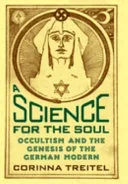
A Science for the Soul
 79
79

A Science for the Soul
Corinna Treitel's A Science for the Soul provides a scholarly yet accessible survey of occult organizations during Germany's Wilhelmine period. The book's strength lies in its meticulous research, situating these often-marginalized groups within the broader currents of late 19th and early 20th-century German intellectual life. Treitel avoids sensationalism, instead focusing on the sociological and ideological factors that propelled these movements. A particular passage discussing the integration of esoteric thought into burgeoning nationalist sentiments offers a compelling, if disquieting, insight into the era's complex spiritual landscape. However, the sheer breadth of organizations covered can sometimes make the narrative feel dense, with certain connections between groups only lightly sketched. Despite this, the work stands as a valuable contribution to understanding the period's spiritual ferment. It is a sober, informative account for those seeking to understand the historical roots of modern esoteric movements.
📝 Description
79
### What It Is A Science for the Soul offers a rigorous examination of occult organizations flourishing during the Wilhelmine era in Germany. Corinna Treitel meticulously details the societal and intellectual landscape that fostered these groups, moving beyond simple historical accounts to analyze their ideological underpinnings and public reception.
### Who It's For This work is essential for scholars of German history, cultural studies, and the history of esotericism. It will also appeal to readers interested in the intersection of fringe spiritual movements and mainstream society, particularly during periods of rapid social and political change.
### Historical Context Published in 2004, A Science for the Soul addresses a period in German history marked by intense industrialization and social upheaval. The Wilhelmine era (1890-1918) saw a surge in interest in spiritualism, anthroposophy, and various occult societies, often as a reaction against perceived materialism and rationalism. Treitel situates these movements within this complex milieu.
### Key Concepts The book explores concepts such as theosophy, anthroposophy, hermeticism, and the broader phenomenon of occultism as distinct yet often overlapping spiritual and philosophical currents. It examines how these ideas were translated into organizational structures and how they interacted with existing social hierarchies and intellectual debates of the time.
💡 Why Read This Book?
• Understand the specific social and intellectual climate of Wilhelmine Germany (1890-1918) that gave rise to numerous occult societies, moving beyond general notions of spiritualism. • Learn about the distinct ideologies of groups like the Theosophical Society and Anthroposophical Society, and how they differed from or influenced each other. • Analyze the complex relationship between esoteric movements and the broader Wilhelmine society, including their reception by both elites and the public.
⭐ Reader Reviews
Honest opinions from readers who have explored this book.
❓ Frequently Asked Questions
What is the Wilhelmine era and why is it important for understanding occultism?
The Wilhelmine era, roughly 1890-1918, was a period of significant industrialization and cultural change in Germany. This societal flux created fertile ground for new spiritual and occult movements as people sought meaning beyond traditional structures.
Which specific occult organizations does A Science for the Soul examine?
The book explores various groups, including detailed examinations of the Theosophical Society, Anthroposophical Society, and other smaller hermetic and spiritualist circles active in Germany during the late 19th and early 20th centuries.
What was the relationship between occultism and science during this period?
During the Wilhelmine era, there was a complex interplay where occultism often sought to present itself as a 'science for the soul,' attempting to offer spiritual or psychological explanations that contemporary science could not, or would not, address.
How did these occult movements interact with German society at large?
Treitel's work demonstrates that these organizations were not entirely isolated. They engaged with, influenced, and were often reacted against by mainstream intellectual, political, and social spheres of Wilhelmine Germany.
Is A Science for the Soul suitable for beginners in esoteric studies?
While academically rigorous, the book provides a clear historical overview and explanation of key concepts, making it accessible to dedicated beginners interested in the historical context of Western esotericism.
What distinguishes Corinna Treitel's approach to occult history?
Treitel's approach is characterized by a focus on the socio-historical context and organizational structures of esoteric groups, rather than purely on their philosophical or magical doctrines, offering a grounded perspective.
🔮 Key Themes & Symbolism
Occultism as Social Practice
The work moves beyond the esoteric doctrines themselves to investigate how occult organizations functioned as social entities. It details their membership, organizational structures, and internal dynamics, revealing them as active participants within Wilhelmine society. By examining their public lectures, publications, and interactions with established institutions, Treitel illustrates that occultism was not merely a private belief system but a public phenomenon with tangible social consequences and aspirations.
Theosophy and Anthroposophy in Germany
Central to the book is the detailed exploration of the Theosophical Society and the emergence of Anthroposophy under Rudolf Steiner. Treitel analyzes their philosophical tenets, their appeal to specific segments of the German population, and their complex relationship with each other. The work highlights how these movements offered alternative worldviews and spiritual frameworks that sought to address the perceived crises of modernity during the late 19th and early 20th centuries.
Esotericism and Wilhelmine Culture
A Science for the Soul situates esoteric movements within the broader cultural and intellectual landscape of Wilhelmine Germany (1890-1918). It investigates how these groups engaged with contemporary debates in science, religion, philosophy, and politics. The book demonstrates that interest in the occult was not a fringe aberration but a significant cultural current, reflecting broader anxieties and aspirations of the era, and sometimes intersecting with nationalist or reformist ideologies.
Reception and Public Perception
The book critically examines how occult organizations were perceived and received by the wider public and by established authorities. Treitel explores the spectrum of reactions, from outright condemnation and suspicion to cautious interest and even adoption of certain esoteric ideas by broader cultural movements. This analysis sheds light on the social boundaries and interactions between mainstream society and esoteric subcultures.
💬 Memorable Quotes
“The work explores the tension between esoteric claims to hidden knowledge and the desire for public legitimacy.”
— This highlights a core challenge faced by occult organizations: how to present their often unconventional beliefs and practices to a society that valued rationalism and established scientific paradigms, especially during the scientifically-minded Wilhelmine era.
“Many occult groups sought to present themselves as modern spiritual sciences, distinct from traditional religion.”
— This reflects the strategy of many esoteric movements in the late 19th and early 20th centuries to align themselves with the prestige of science, offering 'higher' or 'spiritual' knowledge that they believed science would eventually validate.
“The book examines the organizational strategies used to disseminate esoteric ideas.”
— This points to Treitel's focus on the practical, sociological aspects of occultism, looking at how societies were structured, how members were recruited, and how doctrines were communicated to a wider audience.
“Rudolf Steiner's Anthroposophy emerged in part as a distinct path from Theosophy.”
— This signifies the internal developments within esoteric movements, showing how figures like Steiner sought to forge new paths and develop unique philosophical systems that diverged from established organizations like the Theosophical Society.
“The Wilhelmine era provided a unique social and intellectual climate for esoteric flourishing.”
— This emphasizes the importance of historical context, suggesting that the specific conditions of Germany between 1890 and 1918—marked by industrialization, social change, and intellectual ferment—were crucial for the proliferation of occult movements.
🌙 Esoteric Significance
Tradition
A Science for the Soul primarily engages with the Western Esoteric Tradition, particularly its manifestations in the late 19th and early 20th centuries. It focuses on movements like Theosophy and Anthroposophy, which draw heavily on Hermetic, Gnostic, and Neoplatonic ideas, reinterpreting them for a modern audience. The work analyzes how these traditions adapted ancient esoteric concepts to address contemporary concerns about science, religion, and social order.
Symbolism
While the book focuses more on organizational history, it touches upon key symbolic motifs prevalent in movements like Theosophy. The concept of 'Root Races' and the cyclical nature of cosmic and human evolution, central to Blavatsky's Theosophy, represent symbolic frameworks for understanding humanity's place in a vast, unfolding spiritual drama. The search for hidden spiritual hierarchies also represents a symbolic quest for order and meaning beyond the material world.
Modern Relevance
Contemporary scholars of religion, sociology, and cultural history continue to draw on Treitel's work to understand the roots of modern spiritual movements and New Age thought. The book's analysis of how esoteric groups navigated societal skepticism and sought intellectual respectability remains relevant for understanding contemporary alternative spiritualities and their place within secular societies.
👥 Who Should Read This Book
• Students of German history and culture: Gain a nuanced understanding of the intellectual and social forces shaping Germany from 1890-1918 beyond political and economic histories. • Researchers of Western Esotericism: Access a scholarly examination of key occult organizations and their historical development, particularly Theosophy and Anthroposophy. • Cultural historians: Analyze how fringe spiritual movements interact with, influence, and are influenced by mainstream societal trends and intellectual debates.
📜 Historical Context
Corinna Treitel's A Science for the Soul emerged from the academic milieu of the early 2000s, which saw a growing scholarly interest in the history of esotericism beyond its purely philosophical or theological dimensions. The book engages with the specific socio-political climate of Germany's Wilhelmine era (1890-1918), a period characterized by rapid industrialization, burgeoning nationalism, and significant social change. This era witnessed an explosion of interest in spiritualism, theosophy, anthroposophy, and various occult societies, often as a reaction against perceived materialism and the perceived limitations of orthodox science and religion. Treitel situates these movements not as isolated eccentricities but as integral components of the era's intellectual currents, interacting with established thought. Key contemporaries and intellectual forces included figures like Friedrich Nietzsche, whose critiques of modernity resonated with some seeking alternative spiritual paths, and the broader scientific positivism that many occultists sought to counter or transcend.
📔 Journal Prompts
The Wilhelmine era's societal anxieties and their connection to occult group formation.
The organizational structures of the Theosophical Society and Anthroposophical Society.
How occult movements presented themselves as 'spiritual sciences' in the late 19th century.
The reception of esoteric ideas by the broader German public.
Rudolf Steiner's departure from Theosophy and its implications.
🗂️ Glossary
Wilhelmine Era
The period of German history roughly spanning from 1890 to 1918, under the reign of Kaiser Wilhelm II. It was characterized by rapid industrialization, social change, and a complex mix of modernizing and traditionalist currents.
Theosophy
A spiritual movement founded by Helena Blavatsky in the late 19th century, aiming to synthesize Eastern and Western esoteric traditions and promote universal brotherhood. It emphasizes ancient wisdom and spiritual evolution.
Anthroposophy
A spiritual philosophy developed by Rudolf Steiner, originating from Theosophy but diverging significantly. It focuses on understanding the human being and the cosmos through spiritual science and aims for spiritual development.
Hermeticism
A philosophical and religious tradition based on the purported teachings of Hermes Trismegistus. It emphasizes esoteric knowledge, alchemy, astrology, and the interconnectedness of the cosmos.
Occultism
A broad category encompassing secret or hidden knowledge and practices, including magic, alchemy, spiritualism, and divination, often seeking to understand supernatural or hidden forces.
Esotericism
Systems of thought and practice concerned with hidden spiritual knowledge, often contrasted with exoteric or publicly accessible teachings. It encompasses diverse traditions like Kabbalah, Gnosticism, and Hermeticism.
Spiritualism
A religious movement prominent in the 19th century, focused on the belief that the spirits of the dead can communicate with the living, often through mediums.